Book review

A tale of cloaks and daggers

From our UK edition

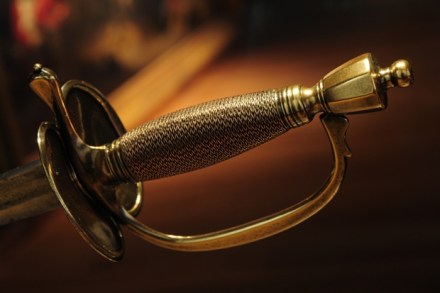
You don’t need to know the opera Tosca to understand and enjoy this book about Puccini’s most notorious villain, Vitellio Scarpia, portrayed on stage as a ‘sadistic agent of reaction’, a cut-throat murderer who enjoys drinking his victims’ blood from their skulls and, as one of my opera-loving Kensington pals puts it, ‘not a nice bloke at all!’ In fact you may not even recognise him in these pages. Here Scarpia appears as an all-round human being, kind-hearted, handsome, likeable, occasionally lonely, even destitute, who also just happens to be a brilliant swordsman and man of action. Brought up in Sicily, his first act of daring is to rescue a girl who has been captured by Barbary pirates, even if it means stabbing her lover in the stomach.

Who was then the gentleman?

From our UK edition

Considering that it was, as Melvyn Bragg rightly puts it, ‘the biggest popular uprising ever experienced in England’, the Peasants’ Revolt of 1381 hasn’t proved particularly attractive to writers of historical fiction. Pierce Egan, better known for his essays on boxing, wrote an interminable novel called Wat Tyler in 1841, and Robert Southey produced a dramatic poem of the same title which he later disavowed. William Morris took another hero of the revolt, the itinerant preacher John Ball, as his inspiration for a time-travelling socialist fantasy; and that’s about it. Historians and political thinkers in the centuries after the revolt have often tried to redress the balance of the unrelentingly hostile monastic chronicles that first told the story of 1381.

What an absolute darling you are!

From our UK edition

Iris Murdoch’s emotionally hectic novels have been enjoying a comeback lately, with an excellent Radio 4 dramatisation of The Sea, the Sea, and an equally gripping rendition, on Woman’s Hour, of A Severed Head. Her books are distinguished by the rate at which her characters fall in and out of love with one another, usually leaving streams of chaos and pain behind them. Iris’s letters, especially the ones which were written before she began to write novels, were blueprints for the fiction.

King of Kings: The Triumph and Tragedy of Emperor Haile Selassie I of Ethiopia

From our UK edition

Great men rarely come smaller than Haile Selassie. In photographs, the golden crowns, pith helmets and grey felt homburgs he often donned can’t conceal the fact that he is the shortest man in the room. It didn’t matter: for the 44 years of his reign — with a five-year interruption engineered by Benito Mussolini’s invading troops — he was effectively lord of all he surveyed. Ethiopia’s current government, established by a former Marxist rebel group, has always harboured mixed feelings towards Tafari Makonnen, as he was baptised.

Long nights of delicious horror

From our UK edition

The thick of autumn is upon us, dear reader, and with it the shivers. Around Hallowe’en you may be tempted to go and see yet another edition of Paranormal Activity (a quotation from the trailer: ‘There’s, like, obviously something going on here’) or something similar. Do not. There is nothing frightening about going to the movies. You are there with a crowd of other human beings, doing something fun and communal. This is not scary. If you’re serious about engaging with the spirit of the season, the thing to do is to stay up late alone, in bed, reading a terrifying book. Fortunately, the bookshop shelves are currently creaking under the weight of exactly that. Here are some of the most delicious horrors lately made available on the printed page.

Behind the scenes at the Brighton bombing

From our UK edition

Sadly, I can’t see it catching on, but one of the notable things about Jonathan Lee’s new novel is that it features a fleeting appearance by John Redwood. The late Geoffrey Howe is there too, distractedly eating fishcakes as he holds forth on the difference between humans and animals. Redwood, Howe and the rest of Mrs Thatcher’s Cabinet have gathered in Brighton’s Grand Hotel on the eve of the Tory conference in October 1984. In Belfast, Dan, one of the Provisional IRA’s brightest young stars, has been given the job of helping real-life bomber Patrick Magee plant the device that would kill five people — there has always been speculation that Magee had an accomplice who was never caught. This, though, is no Day of the Jackal retread.

When English Catholics were considered as dangerous as jihadis

From our UK edition

Martyrdom, these days, does not get a good press. Fifty years ago English Catholics could take a ghoulish pride in the suffering of their 16th-century Tyburn heroes, but in a western world that has learned to be wary of extremist talk of ‘holy war’ or the intoxicating visions of the martyr’s crown that fuelled the prayers of England’s young exile priests — ‘the supreme privilege, of which only divine grace could make them worthy’, as Evelyn Waugh put it — somehow makes for less comfortable reading.

From Spike Milligan — and Marge Simpson — with love, light, peace and great respect

From our UK edition

This book is a serious bit of kit. Its hard covers measure 28.9 by 21 centimetres, and it weighs 1.62 kilograms — 324,000 times the amount of valium, we learn on page 98, that Tom Clancy needed to appear on Good Morning America (‘Sorry to wimp out, but, shit, I was scared’). The illustrations are beautiful. Very often they are simply the letters themselves (don’t worry about handwriting, there are transcripts too), but sometimes they reference the content. For instance a photograph of butterflies accompanies the biologist Rachel Carson’s letter about watching said creatures with a friend..

John Lennon’s desert island luxury

From our UK edition

Beatlebone is an account of a journey, a psychedelic odyssey, its protagonist — at times its narrator — John Lennon, seen through the prism of Kevin Barry’s imagining. Barry’s first novel, The City of Bohane, was a dystopian nightmare of comic vernacular and violence, showered with praise and prizes. Think James Joyce and Flann O’Brien collaborating on a script for Tarantino. Beatlebone, his second novel (on the shortlist for the Goldsmiths prize for fiction) has Lennon fleeing New York in 1978 for a secret visit to Dorinish, the uninhabited island he bought 11 years earlier. Burned-out, creatively blocked, he craves a few days of solitude, to sit and stare at the surf. And scream. (In 1970 Lennon and Yoko took a course of Californian Primal Scream therapy.

What does it really mean to have a tyrannical father?

From our UK edition

What was it like, asks Jay Nordlinger, to have Mao as your father, or Pol Pot, or Papa Doc? The answer is that while all happy families are alike, the children of monsters are unhappy in their own way. Some dictatorial offspring are fairly normal while others are psychos. Nicu Ceausescu, son of the rulers of Romania, was from the age of 14 a figure of ‘comic-book evil’ whose hobbies included raping women. His brother, Valentin, is bookish and quiet, has a close circle of decent friends and works at the Institute of Atomic Physics outside Bucharest. For Svetlana Alliluyeva, being Stalin’s daughter was like being, as she put it, ‘already dead’.

David Mitchell is in a genre of his own

From our UK edition

David Mitchell’s new book, Slade House, is not quite a novel and not really a collection of short stories. It is, rather, a puzzle and an amusement. A member of the same family as last year’s The Bone Clocks, it also has a slight connection to his 2010 novel, The Thousand Autumns of Jacob de Zoet. Mitchell has said in interviews that he thinks of his books being volumes in one mega work, or ‘übernovel’, and like his earlier fictions, Slade House meditates on varieties of predation, a theme explored to most moving effect in Cloud Atlas and Ghostwritten. The territory here is more straightforwardly supernatural, although the otherworldly high jinks are balanced by Mitchell’s generous touch with characters from Britain’s economic and social margins.

Charlotte Brontë: Cinderella or ugly sister?

From our UK edition

Preparations for next year’s bicentennial celebrations of the birth of Charlotte Brontë haven’t exactly got off to a flying start. At Haworth Parsonage the Brontë Society is in disarray after Bonnie Greer, its resigning president, used one of her Jimmy Choo shoes as a gavel to try to bring the membership to order, and subsequently castigated some members as ‘malevolent lamebrains’.

The swastika was always in plain sight

From our UK edition

In 1940, when Stephen Spender heard a German bomber diving down towards London, he calmed himself by imagining that there were no houses, and that the bomber was ‘gyring and diving over an empty plain covered in darkness’. The image consoled Spender with his ‘smallness as a target, compared with the immensity of London’. But it also exposed the ‘submission of human beings to the mechanical forces that they had called into being’. It seemed to Spender that entire nations were gripped by the ‘magnetic force of power’. People ‘no longer had wills of their own’. As Tolstoy complained in the second epilogue to War and Peace, this sort of thinking is tautological.

Mary Beard minds her S, P, Q and R

From our UK edition

Having rattled and routed Mark Antony and his bewitching Egyptian at the battle of Actium in 31 BC, Octavian was on his way home to Rome when he was confronted by some punter. The man produced a talking raven, which obligingly squawked, ‘Greetings, Caesar, our victorious commander!’ Octavian was delighted at this evidence of loyalty, and rewarded the bird-trainer accordingly. However, it later emerged that the man had had another raven in reserve, which he had taught to croak, ‘Greetings, Antony, our victorious commander!’ He hadn’t been taking any chances. Nor, in a sense, does Mary Beard in her ambidextrous history of Ancient Rome, whose title proclaims her bifurcated programme.

The greatest surprise about Nigeria on its centenary is that it exists at all

From our UK edition

A giant was born in 1914, an African giant. The same year European powers set about each other in the trenches a framework was laid out for a nation that over the next century would grow into Africa’s mightiest economy, one with a population so prodigious it will soon overtake every other barring China and India. The founding on 1 January that year of the colony of Nigeria was an act of extreme imperial chutzpah. Desert emirates in the north and coastal kingdoms in the south had for years been under nominal control as British protectorates, but for London to unite such diversity was to believe a mosaic has no cracks. The story of Nigeria, first under Britain, later as an African nation independent since 1960, has largely been the story of those cracks.

Curtain call for Ruth Rendell

From our UK edition

Ruth Rendell’s final novel, Dark Corners, is about how psychological necessity can drive perfectly ordinary people either to terrible deeds or to unwitting acts of great courage — and extraordinary things can happen quite by chance to anyone. Carl, the central character, is a young man pleased with his life. He has written a novel that has been published, inherited his father’s small mews house in Maida Vale with its furniture and, significantly, a large supply of alternative remedies in the bathroom cabinet, and has a beautiful, kindly girlfriend called Nicola. He does not have a job, but he does have a tenant, Dermot, on the top floor who pays him £1,200 a month — enough for Carl to contemplate life as a writer.

The best thing about Harry G. Frankfurt’s On Inequality is the paper it’s printed on

From our UK edition

Ten years ago, a philosophy professor at Princeton wrote a book with a provocative, slightly indecent title. It was a surprise bestseller, reaching number one on the New York Times’s list, and university book shops in America still do a roaring trade in copies of Harry Frankfurt’s On Bullshit, along with the usual Vonnegut and Sartre. In 2014, something similar happened when Thomas Piketty’s Capital in the 21st Century sold 1.5 million copies in English, French, German, Mandarin, Urdu, Norwegian, Choctaw and so on. Not to be outdone, Princeton University Press has enlisted Frankfurt to produce a response to Piketty.