Book review

What lies behind the obsession with race transforming universities?

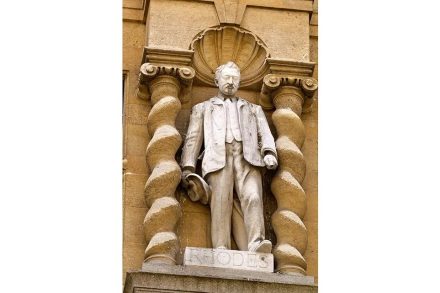
The first problem about decolonization is the word itself. Colonization is the process of establishing control over a foreign territory and its indigenous inhabitants, by settlement, conquest or political manipulation. But decolonization? It has come to mean much more than the reversal of that process. Today, it refers to an altogether wider agenda, whose central objective is to discredit or downgrade the cultural achievements of the West. Objective truth and empirical investigation are mere western constructs. They are optional ideas which need have no weight beyond the western societies which invented them. But the West has imposed them on the rest of the world by a process akin to the colonial conquests of the past four centuries.

decolonization

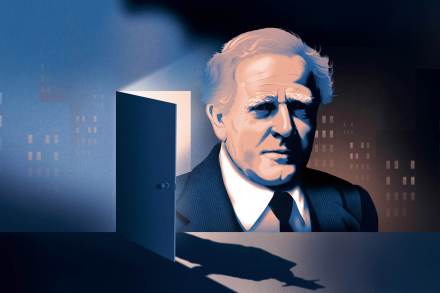
Adam Sisman’s new John le Carré biography entertains and disappoints

The fellow biographer for whom I always felt the most sympathy was James Atlas. Mr. Atlas, who has left an extensive account of his tribulations in The Shadow in the Garden: A Biographer’s Tale (2017), made the fatal mistake of writing a life of Saul Bellow while its subject was still alive. Bellow, you may not be surprised to learn, revealed himself to be a devious, shifty and manipulating old cuss. He interfered, blew hot and cold, disparaged his encomiast’s prose style, intelligence and research techniques and finally remarked, “I like you Atlas, but cut the crap.

le carré

How the CIA interfered in the Congo

As everybody knows, as soon as you start to talk to any historian of postwar life in any Latin American or African or Southeast Asian country, the discussion quickly turns to the role of the CIA in subverting democracy. From the Truman-era coups in Syria and Egypt, through regime change in Guatemala, assassination in the Dominican Republic, the fomenting of industrial unrest in Guyana, and both the military and covert US involvement in Vietnam, it seems overseas intrigue was the rule and long periods of benign neglect the exception.

congo

The gap between technotopia and dystopia are never far apart

Broken Arrow isn’t just the title of a mediocre 1996 film, but the term for a serious accident involving a nuclear weapon. Over the last seventy years, the United States has officially experienced thirty-two Broken Arrows, where a nuclear weapon has been in a crash or fire, accidentally been dropped — or just disappeared. Incredibly, six have been lost and never recovered. Artificial intelligence (AI) pioneer Mustafa Suleyman tells one such story in his new book, The Coming Wave: Technology, Power and the 21st Century’s Greatest Dilemma. In 1961, a B-52 bomber carrying two live hydrogen bombs broke up in the skies above Goldsboro, North Carolina. One bomb disintegrated when it plunged into a muddy field.

Suleyman

Two excellent books that offer new insight into The Iliad

The Iliad, Homer’s extraordinary epic poem, begins with Apollo, the god of light, zooming down from heaven “like night,” bringing plague to the Greek camp before Troy. Many days later, after the Trojan Hector’s funeral rites, the poem ends, at dawn. The light god brings darkness; dawn brings the doom of Troy. Such are the ironies that underpin the epic, revealing it as a work of supreme artistry, probably composed by one hand alone. For decades, I have lived in the light and shadow of The Iliad, reading it at first piecemeal in Greek, then in various translations, then all the way through in Greek (an experience both taxing and exhilarating). My Loeb edition, its prim English translation opposite the raw Greek, is never far from my side.

iliad

Christopher Rufo’s new book is impressively erudite

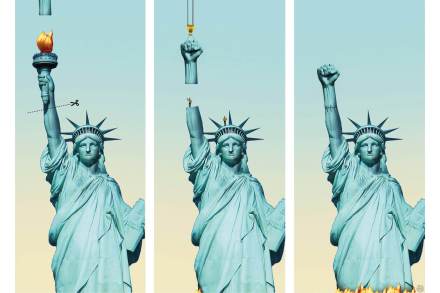
When a new book by an author often characterized as a conservative polemicist earns a rave review in the staid Economist, independent thinkers take notice. Christopher Rufo’s articles on recent US radicalism for the Manhattan Institute’s City Journal have long attracted wide attention, and now America’s Cultural Revolution has been praised as “meticulous” and “cerebral” as well as “persuasive and well-written.” All true, for Rufo’s book is impressively erudite, reflecting a breadth and depth of familiarity with influential leftist writings that will shame any number of “woke” academics.

rufo
carroll

Emily Carroll’s new graphic novel plays on our deepest fears

Emily Carroll’s new graphic novel, A Guest in the House, is an involving, beautifully plotted study of the madness of isolation, steeped in the tropes of fairy tale and horror. And, as all good fairy tales do, it confidently deals in the imagery of the unconscious. Narrated via an innovative combination of text and cinematic, sweeping illustration, it concerns the boundaries of the imagination, and the dynamics of a small family as it threatens to fall apart. Abby is a young wife, listless and bored, who has married an older man (David, a normal kind of guy, with that most humdrum of jobs: dentistry). The setting, depicted with haunting precision in muted tones, is 1990s Canada.

Eliot

An admirable but flawed new biography of George Eliot

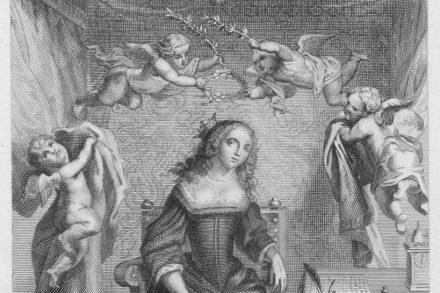
What to call her? The question troubled George Eliot, and challenges Clare Carlisle, her latest biographer. Even this book’s indexer plays along, providing more than one entry for its shapeshifting but steadfast subject. The Marriage Question shows us a woman fragmented, attempting to understand in her various existences how — and if — personal freedom can be achieved when your life is bound to another. Mary Ann (or Anne) Evans was born in Warwickshire, in the West Midlands of England, in 1819. On moving to London in 1850, hoping to make her living as a writer, she became Marian Evans.

taupin

Bernie Taupin is more than just ‘Elton John’s lyricist’

It takes only a couple of hours by train from the southern reaches of rural Lincolnshire to central London. But for seventeen-year-old Bernie Taupin, leaving home in June 1967 to try his luck in the big city, the journey might as well have been to a distant planet, such was the gulf between his life as a casual farm-laborer and his ambitions to become an internationally acclaimed songwriter like his heroes Hank Snow or Merle Haggard.

astor

A diverting but unsurprising new history of the Astor clan

Mention “Astor” to most people and you immediately conjure up tales of fabulous wealth, the sort of Gilded Age beauty and excess expressed to perfection in the paintings of John Singer Sargent. The family name became synonymous at times with luxury and good taste, at others with greed, power and extreme snobbishness. The founder of the dynasty, John Jacob Astor, was a German immigrant and one-time fur trader who came to America in 1783 after the Revolutionary War. His descendants swiftly capitalized on his substantial achievements, creating a Manhattan property empire of unrivaled wealth. There was also plenty of Astor philanthropy and involvement in political and cultural life along the way but then, in the early twenty-first century, came a fall from grace as dramatic as the rise.

Zadie Smith’s latest novel is glittering, grand and powerful

Zadie Smith’s ambitious latest novel, The Fraud, is loosely based on the life of the little-known nineteenth-century novelist William Harrison Ainsworth. He was, at one point, as popular as Charles Dickens, his novel Jack Sheppard even outselling Oliver Twist. But Ainsworth’s fortunes and talents declined, and his forty-odd novels vanished, going out of print soon after his death. Throughout The Fraud, as he sits groaning at his desk, he is an arch reminder not only of the vagaries of literary fame, but the pains of fiction-writing. As his cousin Eliza Touchet observes: “God preserve me from that tragic indulgence, that useless vanity, that blindness!” Ainsworth’s actual writing is redolent of educated middle-class male privilege. (“‘Zounds!

fraud

How missing persons cases work in the wild

The Pacific Crest Trail is one of the world’s great long-distance hikes, running 2,650 miles from Mexico to the Canadian border. It's a chance to see some of North America’s most majestic scenery, encompassing desert and mountain, and millions of people visit parts of it each year, to hike or run. But only a very few ever walk the whole thing. Completing the entire trail — a “thru-hike” — takes five months. The challenge breeds a kind of camaraderie among hikers, who acquire “trail names” (the 2022 finishers included individuals known as “Sparkle Lizard,” “Milkshake” and “Squiggles”) and become part of a select group. Like its Eastern counterpart, the Appalachian Trail, it is a badge of honor for those who make it through.

Lankford

Maureen Ryan exposes the Hollywood horror show

In late July, the actor and director Kevin Spacey was acquitted of a range of sexual offenses against young men, some dating back the best part of two decades. Spacey’s acquittal was greeted with a mixture of relief by his admirers, who are now keen to see a great actor resume his career, and dismay by those who believe that Spacey, and others like him, are powerful figures who have not been held to sufficient account. It is salutary to look at the court case — and indeed the media frenzy surrounding it — and ask what it’s saying about contemporary Hollywood mores, which, in the post #MeToo climate, show few signs of becoming more socially acceptable.

Ryan

Drew Gilpin Faust, a rebel with a cause

In 1957, when Drew Gilpin Faust was nine years old and growing up in the Shenandoah Valley, she learned from the car radio that in Virginia, black children were forbidden by law from going to school with white children. Disturbed by this egregious instance of Jim Crow segregation, she sent a letter to the president. “Please Mr. Eisenhower,” she wrote, “please try and have schools and other things accept colored people.” Young Drew’s sense of what was and wasn’t fair lay at the heart of her childhood rebelliousness, as well as her battle, as a young woman coming of age in the 1960s, against unjust social hierarchies.

faust

William Boyd’s latest novel is immense fun

William Boyd is perhaps best known for his novel Any Human Heart, which charts the adventures of Logan Mountstuart throughout the twentieth century. Mountstuart marries well, divorces, annoys the Duke of Windsor, is imprisoned, becomes an art dealer in America and has sundry diverting escapades. It’s a warm, impassioned and involving narrative, and Boyd winningly returns to a similar formula in his latest book, The Romantic. The prologue presents The Romantic as a fictionalized biography, reconstructed from notes and maps left behind by its subject. All biography, says Boyd, is by its nature fictional.

Boyd
mirski

Visiting a forgotten chapter in American history

Nowadays few Americans could identify what the Monroe Doctrine signifies. Named for the fifth US president, the point of the 1823 policy had been succinctly stated fifteen years earlier by the third, Thomas Jefferson: “The object... must be to exclude all European influence from this hemisphere.” Sean Mirski terms the Doctrine “revolutionary” in his impressively erudite We May Dominate the World, an astonishingly comprehensive and stylishly written account of US foreign policy in the Western Hemisphere during the years 1860 to 1945. Calling the period a “missing chapter” in American history, he rightly asserts that “the story of the United States’s rise to regional hegemony has not received anywhere near the attention it deserves.

page

Elliot Page’s memoir is a tale of tragic self-destruction

In 2010, the twenty-three-year-old actress Ellen Page appeared on the British talk show Friday Night with Jonathan Ross. Plonking herself down on the guest couch, and noticing there was a lot of room left, she announced: “I’m petite.” The affable Ross seized on this new avenue of conversation. “Do people comment on your height when you first meet them?” “They often comment on how incredibly short I am.” “And is this something you welcome or would you rather they didn’t?” “Oh, it’s just fine. I’m used to being short. It’s been a part of my life. And it’s something that I’ve begun to accept.” Back then, Page came across as confident and resilient. But according to Page, this was an act, carefully constructed for her by homophobes.

Why is George Orwell so difficult to pin down?

Outside Broadcasting House, the BBC’s main center in London, is an imposing, eight-foot-high statue of a man. He leans over slightly, as if to accost passersby, and holds a cigarette. A sign behind him declares, “If liberty means anything at all, it means the right to tell people what they do not want to hear.” The man is the author and critic George Orwell and the statue was intended as a permanent commemoration of his writings and values, as well as his short-lived stint at the BBC during World War Two.

orwell
Caroline

Lady Caroline Lamb and the frantic bed-hopping between the great houses of England

“Mad, bad and dangerous to know.” That’s the line Lady Caroline Lamb (1785-1828) is known for — her brilliant, pithy verdict on her lover Lord Byron. Her other great claim to fame — her marriage to Viscount Melbourne, twice prime minister — was marginal from a historical point of view: she died, aged only forty-two, her health shattered by drink and laudanum, before Melbourne became PM; before he became Lord Melbourne, in fact — he succeeded to the title after her death. But, still, as Lady Antonia Fraser reveals in her gripping biography, Lady Caroline Lamb: A Free Spirit, she was a remarkable woman, possessed of exceptional charm, as was Byron.