Book review

Far from ideal

From our UK edition

There were few subjects which escaped Oscar Wilde’s barbed wit: dentists, cynics, Americans, literary critics, democracy, the working classes, the middle classes, the upper classes and Bernard Shaw were all prey for his cutting paradoxes. Family, however, got off lightly. Not for Wilde the sinister or cruel depictions of relations which permeate the novels of Evelyn Waugh and find their dysfunctional climax in Brideshead. On the contrary, family is an affectionate theme running through most of Wilde’s work and is at the very heart of his masterpiece, The Importance of Being Earnest — a play whose plot rests on the fact that the leading protagonist has lost his parents. This does not mean that Wilde was always dutiful towards his family.

El Sid

From our UK edition

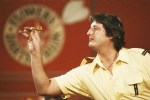
Was there life before darts? I am old enough, just about, to remember such a time. One minute, in or around 1978, there was no darts on TV. Next minute, there was nothing else, and Eric Bristow, if he had felt inclined to stand, would have been elected prime minister by a landslide. As with snooker, the glory years of mass popularity were but brief, but once established as the chosen sporting endeavour of people who don’t like moving too quickly, darts retained a substantial fan base, and continues to thrive even in these slimmer and more austere times.

The man who changed the world

From our UK edition

On 31 October 1517, as every child once knew, an obscure German monk nailed his 95 theses to the door of Wittenberg’s castle church and so began the Reformation. It would seem that there is no firm evidence that this ever actually happened as myth would have it, but whether Martin Luther nailed his theses to the door or glued them or merely posted them to Germany’s leading churchmen, the Christian world would never be the same again. Martin Luther: Renegade and Prophet is an exploration of a man’s interior life and development and not, as Lyndal Roper insists, either a general history of the Reformation or even of the Lutheran revolution in Wittenberg.

The wicked old Paris of the Orient

From our UK edition

Here’s the Mandarin for ooh-la-la! As Taras Grescoe, a respected Canadian writer of nonfiction, shows in this marvellous, microscopically descriptive history of what is now one of the most populous and smoggiest megalopolises on earth, Shanghai in the 1930s was internationally notorious as ‘the wicked old Paris of the Orient’, with ‘as vivid a cast of chancers, schemers, exhibitionists, double-dealers and self-made villains as had ever been assembled in one place’. Grescoe lavishly keeps the promise of his book’s subtitle. In its heyday, the city was both glamorous and squalid, extremely rich and poor, unscrupulous and tough: to shanghai in the lower case means to force people to do what they don’t want to do.

Looking for treasure island

From our UK edition

It is not easy to avoid clichés when writing about J.M.G. Le Clézio. Born in Nice in 1940, the recipient of the 2008 Nobel Prize for Literature is known in the Anglophone world as an ex-experimental novelist. His early work, exploring language and insanity, was praised by Michel Foucault. But since the 1970s his style has become more mainstream and his subjects — childhood, travel and landscape — more lyrical. Reviewers quibble over the quality of translations, especially when there are two of the same novel in relatively quick succession. Le chercheur d’or (The Prospector) (1985), was translated into English by Carol Marks in 1993, and has now been retranslated by C. Dickson.

The people’s prince

From our UK edition

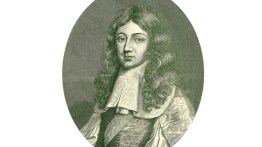
In Pepys’s famous words, James, Duke of Monmouth was ‘the most skittish, leaping gallant that ever I saw, always in action, vaulting, or leaping or clambering’. Reading Anna Keay’s biography of the adored illegitimate son of Charles II, this image of his energy appears paramount — as Monmouth seems to live his life at speed several times over before his death, by order of his uncle James II, at the age of 36, in a horribly botched execution on Tower Hill. Born only months after the regicide of Charles I, he was the product of his father’s brief liaison with Lucy Walter, infamous for loose morals and for having reputedly planned to murder her maid by stabbing a large upholstery needle into her ear as she slept.

Nostalgia and nihilism

From our UK edition

‘Gilded doorknobs,’ spits a Party diehard as she contemplates the blessings of the Soviet Union’s collapse. ‘Is this freedom?’ Dozens of witnesses from the ‘lost generation’ in Russia who had ‘a communist upbringing and a capitalist life’ share Elena S’s disgust and bewilderment as they contribute to this epic fresco of an empire’s bitter aftermath. Some adjust smartly to the post-Soviet disorder, although a 35-year-old advertising manager reflects that ‘I never dreamed of being fucked in stairwells or saunas in exchange for expensive dinners.’ The few winners and many losers agree: ‘You can’t buy democracy with oil and gas… You need free people, and we didn’t have them.

Bohemian life Down Under

From our UK edition

Here’s a pair of little books — one even littler than the other — by Robin Dalton (née Eakin), a celebrated Australian literary agent and film producer, now aged 92, who has lived in London for the past 70 years. As she explains in a prefatory note, Aunts Up the Cross was written as ‘a diary for my children should I, too, die young’, her husband having died at 33. Years later, when the publisher Anthony Blond complained that she never sent him anything, she reluctantly gave him the 22,000-word manuscript, telling him it was by a mad schoolfriend of hers.

A force for good

From our UK edition

When I saw this book, a biography of Huw Wheldon, who was managing director of BBC Television between 1968 and 1975, I thought ‘Aha!’ Inevitably, my mind was filled with images -of Jimmy Savile and Stuart Hall, of the Led Zeppelin guitar riff at the start of Top of the Pops, of the men in charge who had no idea what was going on. Might Wheldon have been one of the guys who had no idea what was going on? I tried to put this thought to one side. The book is by Wheldon’s son, Wynn. It’s a very moving account of a son’s love and regard for his father. Wynn is telling the story of a man he reveres and misses. He thinks Huw was a wonderful person — charming and brilliant, a huge life force.

Loved and lost | 2 June 2016

From our UK edition

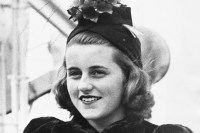
Kathleen Kennedy and her elder brother JFK were the grandchildren of upwardly mobile Irish Catholic immigrants. John F. Fitzgerald, ‘Honey Fitz’, became mayor of Boston, and Patrick J. Kennedy was a saloon-keeper and failed senatorial candidate who sent his sons to Harvard. ‘Kick’ was the fourth child, nicknamed for her ebullient personality, but born just as her mother, Rose, was thinking of leaving her serially unfaithful husband, Joe Kennedy Snr, who made his huge fortune from Hollywood studios and booze. Kick spent her early years schooled at, and confined to, convents, except when the whole family escaped to Hyannis Port or Palm Beach.

Northern lights | 2 June 2016

From our UK edition

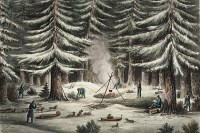
‘The only use of a gentleman in travelling,’ Emmeline Lowe wrote in 1857, ‘is to take care of the luggage.’ My sentiments entirely. The extract from Unprotected Females in Norway reprinted in this book recounts Lowe’s travels with her mother round the Dovrefjeld in the centre of the long country. Tramping through the valleys wearing mosquito veils, ‘solid plaid skirts’ and hobnail shoes, the pair reckoned that the only essentials were a driving whip and a fishing rod. Lowe (who published anonymously) is a spirited companion on the verdant plains and the snowy peaks, and her pleasure in the long boreal gloaming leaps infectiously from the page.

Wise women in wikuoms

From our UK edition

In spurts and bursts and flashes, a sublime novelist at work reveals herself. In Annie Proulx’s new novel, there are breath-taking pages and set pieces of extraordinary power. A man on board a ship, as the temperature plummets, sees all those around him embedded in ice before the catastrophe falls on him; a logging run down a river blocks, builds and explodes with the force of missiles; a wall of fire sweeps across a forested wildness. There are individual chapters of great dramatic force, as Proulx’s people confront the possibilities before them and produce their own solutions. But are those flashes enough?

Why Juan Villoro is the best football writer you’ve never heard of | 28 May 2016

From our UK edition

Football, unlike cricket, has for the most part been ill served by its writers. For every Brian Glanville and Ian Hamilton (the latter having employed his critical authority to become a first-rate reader of the game), the purveyors of hackneyed analysis are legion. In recent years there has been a propensity to celebrate tactics and formation (i.e. pedantry) over poetry. Latin Americans, however, have always fared slightly better with their writers — as they do with their players — who tend not to make the distinction between literature and sports writing. Gabriel García Márquez and Mario Vargas Llosa, both Nobel laureates, took to writing about the game early on in their careers. Juan Villoro is one of Mexico’s foremost men of letters.

Burning passions

From our UK edition

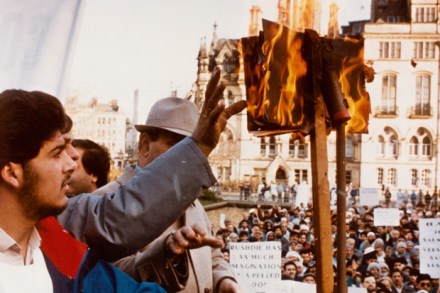
This is a book which, as one eyes its lavish illustrations and dips into its elegant prose, looks as if it ought to come with an option to buy a cut-price John Lewis coffee table. On the Burning of Books is, in fact, much more than that. It wears its scholarship lightly. A weightier treatment of the topic for those interested can be found in Matthew Fishburn’s Burning Books (2008). Kenneth Baker? A name that rings bells. But what did he do? He enjoyed high office in the Thatcher years. At one point he was touted as a contender for Downing Street. His legacy is the National Curriculum. Best forgotten is the Dangerous Dogs Act. Spitting Image caricatured him, spitefully, as a beslimed slug. He was probably the last politician in England seriously to use Brylcreem.

An Oxford treasure trove

From our UK edition

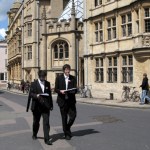
‘What distinguishes Cambridge from Oxford,’ wrote A.A. Milne in 1939, is that nobody who has been to Cambridge feels impelled to write about it… [whereas] every Oxonian has at least one book about Oxford inside him… Oxford men will say that this shows what a much more inspiring place Oxford is, and Cambridge men will say that it shows how much less quickly Oxford men grow up. The hefty and brilliant tome that has escaped from inside Professor Brockliss is very grown up indeed and, as a history of the university, greater than all those that have come before. (The previous, eight-volume account that inspired this one has many fine qualities, but accessibility is not one of them.

On Moses’s mountain

From our UK edition

A medieval party of 800 Armenians at the top of Mount Sinai suddenly found themselves surrounded by fire. Their pilgrim staffs shone like candles but, wisely chanting ‘Kyrie Eleison’, they were relieved that after an hour or so the fire abated and not an eyelash of theirs was harmed. The top of Mount Sinai is no place to be stuck in an electrical storm, even less exposed to the fire of God’s presence. A steep mass of weathered granite 7,616 ft high overlooking the Red Sea, it could be climbed on foot (but not on mule-back) with the help of 3,700 steps built into the rock.

Shakespeare’s crowning glory

From our UK edition

In the 18th century, as Shakespeare began to take on classic status, editors began to notice differences between the texts of the plays preserved by his fellow actors in the posthumously published First Folio of his Comedies, Histories & Tragedies and those that had been published in the playwright’s lifetime in the cheap pocket editions, analogous to modern paperbacks, known in the trade as Quartos. In the case of King Lear, the subject of Sir Brian Vickers’s new book, the Quarto of 1608 is strikingly different from the Folio of 1623. The Quarto has nearly 300 lines that are not in the Folio; the Folio has over 100 lines that are not in the Quarto; there are more than 800 verbal variants in the parts of the play that the two texts share.

One club, no hearts

From our UK edition

Not a single line of this highly distinctive memoir happens out of doors. All of it takes place in rooms: the dining-rooms and living-rooms, mainly, of five elderly, thin, Jewish bridge-playing ladies, Bette, Bea, Jackie, Rhoda and Roz, in a desirable suburb of New Haven, Connecticut. Their napkin rings are made of silver, porcelain, tortoiseshell, bamboo and Bakelite, and they put on their best necklaces and get out the best coffee cups when it’s their turn to host. They have met together to play bridge every Monday afternoon for over half a century. ‘Five ladies, luncheon of silvery fish, two decks of cards and a scoring pad nearby.’ (It’s five in the club, by the way, so there’s an extra if one of them is ill.