Book review

A bit player in the great drama

From our UK edition

There’s a glorious scene in Astrid Lindgren’s first Pippi Longstocking book in which her fearless, freckled heroine strides to the centre of a circus ring and briskly lays out the World’s Strongest Man. Like most of the adults who expect to control her, he quickly learns that his inflated size, age and title are no match for the child’s bold pin-wielding attitude. As a little fan myself in the early 1980s I probably giggled as the strongman toppled. But reading it to my own children this summer I also felt a deep lurch of sadness. The strongman’s name was Adolf, and the book (published in 1945) was written as an equally ridiculous Adolf was sending train loads of bright little Pippis to their ‘final solution’.

Intoxicated with ink

From our UK edition

One of the charms and shortcomings of biography is that it makes perfectly normal situations sound extraordinary. According to Michel Winock, Gustave Flaubert (1821–80), the author of Madame Bovary and L’Éducation sentimentale, contracted ‘an early and profound aversion to mankind’. To Gustave the schoolboy, man was nothing but a coagulation of ‘mud and shit… equipped with instincts lower than those of the pig or the crab-louse’. This might have been the influence of his freethinking father, an eminent Rouen surgeon, but perhaps it was just the spirit of the age. The Napoleonic adventure was over; the sun of Romanticism had set.

A study in alienation

From our UK edition

Looking for the Outsider is the biography of a novel, from conception through publication to critical reception. Alice Kaplan’s life-story of L’Étranger (The Outsider in English translations, The Stranger in American) is a lovely work, lucid and thought-provoking. It makes one feel afresh the sheer strangeness of Albert Camus’s imagination. All genius is, perhaps, freakish; but Camus’s sprang from peculiarly unpromising soil. He was born in a white working-class area of Algiers. His father was killed in the battle of the Marne before he was one. His mother was deaf and illiterate, with a vocabulary of about 400 words; she worked as a cleaner. His uncle was also deaf and nearly mute, and made barrels.

Courting the Iron Lady

From our UK edition

This is a strange book. Peter Stothard, the editor of the TLS, is packing up his office. It is a year after Margaret Thatcher’s death, and Murdoch’s Wapping site is being destroyed to make way for new, expensive flats. As the national memory of Thatcher fades, and transmutes into myth and caricature, so the physical scene of one of the seminal battles of her time, where the old print unions and their rackets were destroyed, crumbles into dust. Into his room comes Miss R, a young and mysterious historian, to interview him for her thesis about Thatcher’s courtiers.

A parable of good and evil

From our UK edition

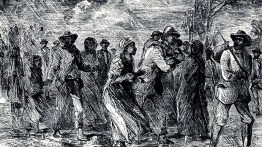
It is difficult to write well about slavery. As with the Holocaust, the subject’s horrific nature lends itself too easily to mawkishness. This tendency is one that Colson White-head consummately avoids in this impressive novel. The Underground Railroad, set before the American civil war, tells the story of Cora, a young slave on a cotton plantation in Georgia, and her escape with a fellow slave, Caesar, via the Underground Railroad, a secret network of routes and activists that enabled slaves to reach the free states of America’s north. It tells it beautifully.

England’s unloved king

From our UK edition

Aethelred the Unready (c.968—1016) has not, as Levi Roach acknowledges, enjoyed a good press. In recent times there may have been some attempt in academic circles to take a more measured view of his calamitous reign, but the fact remains that if most us would have trouble saying quite what he did or did not do, or even what ‘unraed’ actually means, we all know how it ended. ‘And that is called paying the Dane-geld;’ wrote Kipling, But we’ve proved it again and again, That if once you have paid him the Dane-geld You never get rid of the Dane. On the face of it the revisionists have an uphill battle, too, because when Aethelred came to the throne as a child the kingdom was looking in pretty good shape.

Too good to be true

From our UK edition

The McNulty family in the novels of Sebastian Barry have a definite claim to be one of the unluckiest in all fiction. After serving with the Brits in the first world war, the main character in The Where-abouts of Eneas McNulty is branded a traitor to Ireland, and spends the rest of his days in bleak and terrified exile. In The Secret Scripture, his sister-in-law Roseanne is locked up for life in a Sligo mental asylum for having an illegitimate baby (that’s taken from her). In The Temporary Gentleman, Eneas’s brother Jack is an ageing alcoholic reflecting on the failure of virtually everything he’s ever done.

He blew his mind out in a car

From our UK edition

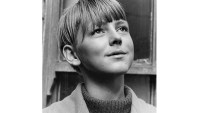
There was a touch of Raymond Radiguet, the young literary sensation of 1920s Paris, about Tara Browne. In life poetically beautiful, poetry-imbued, tender and trusting, deliciously precocious and eerily presumptive, androgenous in looks but not desires, Tara died —‘without knowing it’, as Cocteau said of Radiguet — tragically, but given his penchant for very fast cars, unsurprisingly young. And, like Radiguet, having touched the lives of those who knew him with a kind of iridescence that remained with them more than half a century later.

Paintbrushes at the ready

From our UK edition

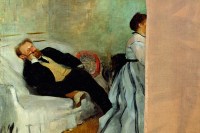
When the old curmudgeon Edgar Degas died in 1917, a stunning trove of works by Edouard Manet — eight paintings, 14 drawings and 60 prints — was discovered in his studio. There, too, was a portrait of Manet and his wife Suzanne, painted by Degas 50 years earlier. But its right-hand third was missing — which included half of Suzanne’s body and all of the piano she was playing. For some reason, Manet had put a knife through the canvas and sent Degas packing with what remained. The duo’s relationship is one of four ‘friendly rivalries’ considered by the Boston Globe art critic, Sebastian Smee, in his new book (Matisse vs Picasso, Pollock vs de Kooning and Bacon vs Freud being the others).

The world in limbo

From our UK edition

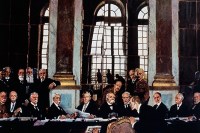
In 1919 the economist and sometime prophet John Maynard Keynes left the glittering ballroom of Versailles feeling profoundly despondent. The treaty that determined the political geography of a postwar world inspired in him a fearful sense of inevitability. The punitive conditions imposed on Germany would be too harsh for the country to tolerate for long. One junior delegate in Paris observed: ‘There is not a single person among the younger people here who is not unhappy and disappointed with the terms.’ This was a world not only united by the devastating results of the Spanish ’flu epidemic, responsible for the deaths of five times as many as had lost their lives in the war, but by political and religious fragmentation that was already endemic.

And the answer is…

From our UK edition

Doorstoppers, slim volumes, loose leaves stacked in a box, bound pages fretworked with holes, epistolary exchanges, online postings, palimpsests…. Fiction comes in all shapes and sizes — and that’s just the format, before you get to the content, which might include fractured grammar, reversed chronology, parallel plots, contradictory footnotes, dead or unborn narrators and labyrinthine text. Never though, until now, have I encountered a work of fiction set out as an examination paper. From first page to last here are 90 questions, a sly parody of the Chilean Aptitude Test for university applicants, right down to the numbered multiple choice boxes to tick.

Behind the fringe

From our UK edition

‘Sexual intercourse began / In nineteen sixty-three,’ Philip Larkin famously announced in his poem ‘Annus Mirabilis’, ‘Between the end of the Chatterley ban / And the Beatles’ first LP.’ But the key line is a far more private confession, caught in parentheses like a gloomy thought bubble: ‘(which was rather late for me)’. Few of Larkin’s contemporaries would have been more sympathetic than Alan Bennett.

Smoke and mirrors | 6 October 2016

From our UK edition

Nell Zink’s route to publication became something of a story in itself: one that involved an email exchange about birds with Jonathan Franzen, which led to Franzen’s subsequently championing her work, and ended with not one but two novels — Mislaid and The Wallcreeper — published together in a lavish, design-savvy edition. But it was Zink’s style and ideas that drew fervid, hyperbolic praise. Fresh and undeniably original, this is fiction at odds with much of American literary convention, Zink’s prose refusing to conform to received ideas of how novels are constructed; time shifts, perspective changes and characterisation, for example, are all treated casually, almost with disdain. The word ‘genius’ was bandied around.

Bolsheviks on board

From our UK edition

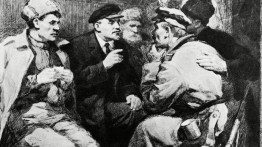
Full allowance must be made for the desperate tasks to which the German war leaders were already committed… Nevertheless it was with a sense of awe that they turned upon Russia the most grisly of weapons. They transported Lenin in a sealed truck like a plague bacillus from Switzerland to Russia. As so often, Churchill has the best lines. Here he is about one of the most famous episodes in European history: the safe passage given to Lenin by a Germany desperate for victory in the first world war. As long as German high command could dream up ways to eliminate the threat from either the West or East, there was hope it would not suffer defeat. Lenin, as Churchill wrote, was imperial Russia’s ‘Vengeance’.

More sinned against than sinning

From our UK edition

The 55-year-old ’flu-ridden John Charles Wallop, 3rd Earl of Portsmouth, his feet in a basin of warm water, shivered in the dock with fever but also with fear. Would the jury, assembled in 1823 in London’s jam-packed Freemason’s Hall at the end of an unpredecentally sensational two-week trial, find him eccentric, delusional, simple-minded or, instead, stark raving mad? Elizabeth Foyster, a historian and senior lecturer at Clare College, Cambridge, was alerted to this enthralling, almost unbelievable true story with the caveat that the vastness of the material in Lambeth Palace archives concerning a scarcely remembered trial of a hugely wealthy, relatively obscure aristocrat had deterred anyone else from attempting to make sense of it.

Derring-do in the desert

From our UK edition

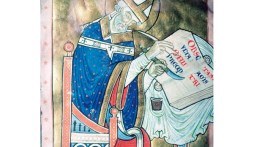
The SAS was the first unit to be granted regimental status for generations. Its chief aim was to damage the enemy from behind their lines in the North African desert. It was an entirely independent unit, not answerable to any superior command and therefore anathema to the regular army mind. Its creator, David Stirling, had a record of complete allergy to discipline or serious work either at school at Ampleforth or later, briefly, at Cambridge, where the Master of his college sent him down after showing him a list of 28 transgressions and asking him to choose the three which ‘would be the least offensive to his mother’.

The spell of the pharaohs

From our UK edition

Here’s a book to make an Egyptologist of everyone. A compendium of accepted gen on the gift of the Nile, Rose-Marie and Rainer Hagen’s (updated and reissued) Egypt: People, Gods, Pharaohs ‘aims to answer some basic questions about life in Ancient Egypt and whet your appetite to find out more’, and achieves both in appropriate abundance. It looks great, reads well, even smells nice — and is positively jam-packed with wonderful things. Citing the fundamental continuity of 3,000-plus years of pharaonic culture, the Hagens tuck away a (very) concise chronology at the back of the book, and then get on with the business of showing us what Ancient Egypt looked like, and who/why/how/when/where.

Over hill and dale

From our UK edition

When it comes to speaking of foreign affairs, Rory Stewart is one of the few MPs who does not peddle bland abstractions. Many of his parliamentary colleagues inhabit a blah-blah land where terms such as ‘peace process’ and ‘international community’ have meaning. An upbringing in the Far East, where his father was a diplomat, as well as years spent in Iraq and Afghanistan, have given Stewart direct experience not only of nations but of town quarters, villages and individuals. Walking was his preferred method in Afghanistan, where he tramped across the country with a dog and a Punjabi fighting stick. The dog couldn’t keep up and died, but here for his latest tramp the Punjabi dang comes out again.