Book review

Band of bickering brothers

From our UK edition

There aren’t many downsides to being a film critic, but one of them is being asked to name your favourite movie. You bluster and bluff, and then cop out by saying the answer changes from year to year and sometimes from day to day. Then you read David Thomson’s new book and realise that from now on you’re going to say that while you’ll probably never have a definitive favourite film, you do have a favourite film factory. Any movie that starts with kettledrums and a blare of brass, and a black and white escutcheon (in later years, gold and blue) emblazoned with the initials WB is likely to be a cut above: intelligent, liberal and seriously amusing.

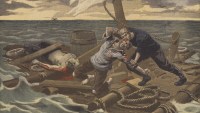
The worst things happen at sea

From our UK edition

This horrifying and engrossing book could scarcely be improved upon. In this age of HRHs Harry, William and Kate-led openness about our mental health, I declare an interest: diagnosed as cyclothymic, and having known more than two attacks of depression and hypomania in the past 30 years, I would have been disqualified from passage as an emigrant to New York by the 1907 US Immigration Act, which prohibited ‘All idiots, imbeciles, feeble-minded persons, epileptics, insane persons and persons who have been insane within five years previous....

Octopus beaks and snake soup

From our UK edition

Driving across Japan’s Shikuko island, the food and travel writer Michael Booth pulls into a filling station to find, alongside the fizzy drinks and chewing gum, ‘vacuum-packed octopus beaks’. Who could resist? Not Booth. ‘Very crunchy,’ he reports. ‘And not in a good way.’ Booth is drawn to the offbeat, and The Meaning of Rice gives us a banquet of the unfamiliar: seaweed caviar, live squid sashimi, sea-urchin tongues, snake soup, bonito guts, silkworm pupae, and more, with all their smells, flavours and textures. I recall my disconcerting first meal in a traditional ryokan: pink wafers of raw horsemeat, boiled firefly squid and dark, gleaming eel. It was delicious; Booth would have approved.

August Auguste

From our UK edition

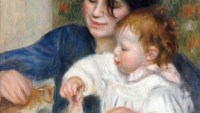
In 1959 the formidable interviewer John Freeman took the Face to Face crew to the 81-year-old Augustus John’s studio. The beetling brow, piercing eye and a succession of roll-ups stuck to his lower lip offer almost a caricature of the undimmed rascality of the old devil. Like all the films in that remarkable series, it offers a glimpse into a world that we thought television was invented too late to record. But how much more extraordinary it is to watch, in a three-minute film made in 1915, another elderly artist — the 74-year-old Pierre-Auguste Renoir, crippled with arthritis, working at his easel.

That’s no lady

From our UK edition

Did I enjoy this novel? Yes! Nevertheless, it dismayed me. How could John Banville, whom I’ve admired so much ever since he published his first short stories, whose great novel The Sea deservedly won the Booker and whose thrillers, written under the pseudonym Benjamin Black, so hauntingly evoke 1950s Dublin, have wasted however long it took to write it? The answer, perhaps, was given some years ago, in an interview with a journalist, when he confessed: ‘The guiding light has always been Henry James.’ Probably all serious novelists in our language revere James beyond idolatry. He calls us to raise the craft of fiction to the level of art. And the trouble is that anyone with an ear soaked in the Jamesian music falls into the danger of parody.

The last great adventure

From our UK edition

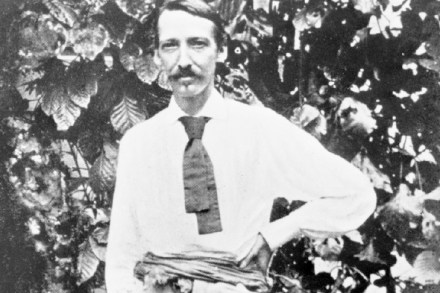
Towards the end of his life, Robert Louis Stevenson travelled widely in the central and southern Pacific Ocean. As well as the region’s exotic reputation, he was drawn by hopes that its benign climate would alleviate his chronic bronchial problems. In 1889 he arrived in Samoa and decided to settle there. He was a hit with the locals. Unlike so many of his peers, he declined to dismiss them as savages. Certainly, he was scathing about their disregard for property rights, which he labelled communism, and he found some of the women’s dancing obscene. But Joseph Farrell tells us that Stevenson was relaxed about extensive tattoos and scanty attire, and that he was a willing participant in kava drinking (kava is a narcotic plant extract, recently banned in the UK).

The art of the arabesque

From our UK edition

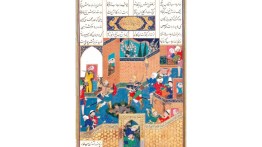
The title of this book, By the Pen and What They Write, is a quotation from the Qur’an and comes from the opening of the ‘Surah al-Qalam’ (Chapter of the Pen), in which the authority of the cosmic scribes in heaven, whose writing determines the fate of humanity, is invoked in order to authenticate the revelation that follows. According to Islamic tradition, the Prophet Muhammad was illiterate (and so presumably were most of his audience). So it is odd to find writing featuring so prominently in this surah and throughout the Qur’an.

A clash of loyalties

From our UK edition

If someone was to lob the name Antigone about, many of us would smile and nod while trying to remember if this is the one about the guy who shagged his mum or the parent who offed their kids. (Bit of both.) For those whose Sophocles is hazy, let me summarise. After a civil war in Thebes that sees two brothers, Eteocles and Polyneices, dead, the new king Creon rules that Eteocles is to be buried with honour, while Polyneices will be left outside the city gates to rot. Their sisters, Ismene and Antigone, have different views. Ismene — concerned that their social position is a bit shaky, given a family history of incest and rebellion — obeys Creon.

A grand inquisitor

From our UK edition

Hidden behind Kensington Palace, in one of London’s smartest streets, there is a grand old house which played a leading role in Britain’s victory over Nazi Germany. Today it’s owned by Roman Abramovich, apparently — it seems he paid £90 million for it. But during the second world war, and for a few years thereafter, 8 Kensington Palace Gardens was a secret interrogation centre known as the London Cage. This is where suspected spies (and, later, suspected war criminals) were broken down. Between 1940 and 1948, thousands of German servicemen passed through here, on their way to POW camps (if they were deemed innocent) or prison (if they were guilty).

Stage fright | 31 August 2017

From our UK edition

Patrick McGrath is a master of novels about post-traumatic fragmentation and dissolution, set amid gothic gloom. His childhood years spent at Broadmoor, where his father was medical superintendent, have given him a solid grounding in psychiatric illness for these disquieting dramas. His ninth novel is set in London’s theatreland in 1947, and the grey, skeletal remains of the bombed East End. As usual with McGrath, the narrator is far from straightforward; in this case it is the ladies of the local theatre-world chorus, who are omniscient, knowing each character’s thoughts.

City of dreadful dusk

From our UK edition

Fantastic fiction loves contrasts made explicit: Eloi and Morlocks, orcs and elves, and above all humans battling vampires, Martians or robots. Small wonder that Claude Lévi-Strauss specifically invoked science fiction for his theory of ‘binary opposition’. Sometimes these tensions are in the mise-en-scene — not just Earth vs. outer space, but settings — Lilliput and Brobdingnag, say — which try to make themes concrete. Classics of that sort are Edwin Abbott’s Flatland (set in two dimensions) and Lewis Carroll’s Alice books.

Well of sorrows

From our UK edition

The Red-haired Woman is shorter than Orhan Pamuk’s best-known novels, and is, in comparison, pared down, written with deliberate simplicity — ostensibly by a narrator who knows that he is not a writer, but only a building contractor. Polyphonic narratives are replaced by a powerful, engaging clarity. This simplicity is the novel’s greatest strength, yet at certain points seems as if it might become a weakness. Part one, which takes up the first half of the book, is superbly concentrated. It describes one summer in 1986 in the life of Cem, a middle-class 16-year-old boy who takes on a summer job 30 miles outside Istanbul to earn money before cramming for university entrance exams.

A flawed and dangerous theory

From our UK edition

If there were a prize awarded to the book with the best opening line, A. N. Wilson would be clearing a space on his mantelpiece. ‘Darwin was wrong’, he announces at the start of this hugely enjoyable revisionist biography, which will be read in certain scientific circles to the background noise of teeth being ground and knives being sharpened. A brilliant Victorian naturalist, certainly, and still an inescapable cultural presence — think of Darwin staring out benignly from the £10 note — but according to Wilson, also a passive aggressive racist whose evolutionary theories no longer stand up to scrutiny. If that doesn’t put the felis catus among the columbidae it’s hard to know what will.

Finally tired of London

From our UK edition

Iain Sinclair is leaving London — like the croakiest of the ravens taking flight from the Tower. It is a proper blow: across five decades, he has been prowling the streets, part poet, part satirist, part prophet. Very few authors have fashioned a London more real than the one we see: Dickens, Conan Doyle, Patrick Hamilton, Angela Carter. Sinclair is firmly among them. While his contemporary Peter Ackroyd understands London as a city of eternally recurring patterns and echoes, Sinclair sees something more malign and gangrenous: forces that endlessly conspire to bend perception and bleach the streets of their real meaning. Oh: and he is also extremely funny.

The writer behind the brand

From our UK edition

Few publishing phenomena in recent years have been as gratifying as Chris Kraus’s cult 1997 masterpiece I Love Dick becoming a signifier of Twitter and Instagram chic. The ‘lonely girl phenomenology’ it exemplified has now attained cultural status, with first person, inventive writing by women often enjoying centre stage. It’s interesting, then, that just as the wider culture has caught up with her, Kraus has pivoted away, delivering ‘what may or may not be a biography of Kathy Acker’ — the underground punk novelist who is still, even 20 years after her death, awaiting the recognition she deserves.

Mozart’s mischievous muse

From our UK edition

If you were to compare Mozart to a bird it wouldn’t be the starling. Possibly the wood thrush or nightingale, with their beautiful, haunting songs; or maybe the lyrebird with its astonishing ear for imitation; or perhaps the composer would find his match in the exotic rarity of the ivory-billed woodpecker or giant ibis. But the common starling? More pest than pet in its adoptive North American home, this ‘ubiquitous, non-native, invasive species’ seems an unlikely fit for a singular prodigy. So thought the ecophilosopher and naturalist Lyanda Lynn Haupt, when she started work on this book, exploring the composer’s relationship with the bird he bought after hearing it singing one of his piano concertos, and kept as a pet until its death.

The fruits of imperialism

From our UK edition

Imagine yourself a middle-class person in England in the 1870s. You sit down to drink a cup of tea while reading The Spectator. It probably doesn’t cross your mind, but in your hand you hold products from around the world. Your tea is from Ceylon, the sugar in it from Jamaica, and your porcelain cup was made in China. Your afternoon refreshment is the culmination of global trade developed over centuries. In A Thirst for Empire, Erika Rappaport traces how tea became a staple of the British diet after arriving in the 17th century, and has not lost its popularity yet. This is a detailed work, at over 400 pages of small print, but provides interesting explorations of the health-giving powers attributed to tea, and how it came to be seen as a wholesome and vital drink.

The search for meaning

From our UK edition

He’s not what you’d call prolific, Bernard MacLaverty. Midwinter Break is his fifth novel in 40 years, and his first in 16. And, in that time, it could be argued that Irish writers have moved away from his bare and declarative style into the wildness of, say, a Barry or a Barrett or a Baume; word-typhoons, of an affinity with the febrile and fervid times. What cannot be doubted, though, is MacLaverty’s awareness of, and wide aliveness to, the world’s flux, its writhings in the decades since his first novel Lamb; in his latest, his deep familiarity with, and angry love for, the workings of the UK, and Europe, and the globe are displayed stark and clear, the stylistic precision of their expression becoming a haven from a hot and hyper-active mediated age.