Book review

Change and decay | 17 August 2017

From our UK edition

Writing of his grandmother’s cremation, Kushanava Choudhury reflects in The Epic City that, while his expatriate Indian cousins are separated from the occasion, ‘I was sipping tea in Nimtala, present in the moment at the centre of our world’. It’s Choudhury’s longing to be back in this centre, which might have seemed less than obviously central to a metropolitan American, that takes him to Calcutta after he graduates from Princeton. He spends a few years working at the Statesman, Calcutta’s most venerable English newspaper, and later returns to the city, eventually getting married to his girlfriend, who happens also to be an American of Bengali origin.

A countercultural upheaval

From our UK edition

‘New York stories in a way are always real estate stories,’ says the journalist Alan Light in Lizzy Goodman’s bustling oral history of the city’s music scene at the dawn of the century. The same goes for all music scenes. Talent clusters and thrives only where there are cheap places to live, hang out, play shows and, crucially, fail. New York in 2001 was such a location. The Lower East Side was still affordably sketchy and Brooklyn far from hip. When Dave Sitek from TV on the Radio moved to Williamsburg and invited his Manhattan friends to visit, ‘It was like I was asking them to go to China on a single--engine prop plane.’ Now Williamsburg, like Manhattan, belongs to the well-heeled.

The man who disappeared

From our UK edition

Walking out of one’s own life — unpredictably, perhaps even without premeditation and certainly without anything approaching a plan — is a common staple of fantasy, and therefore fiction. But why, when we spend so much of the rest of the time fretting about losing what we have and hatching plans to safeguard it? In this short, powerful novel, the Swiss writer Peter Stamm, suggests some oblique but compelling possibilities. Thomas and Astrid have returned from a holiday with their two children and begun the ordinary business of resettling: unpacking, laundry, a last glass of wine in the garden. As Astrid tends to the house, Thomas walks down the path and, after only a momentary hesitation, through the gate.

In Woolf’s clothing

From our UK edition

Martin Amis once said that the writer’s life is half ambition and half anxiety. While one part of your brain is jabbering away to the effect that, with proper application, you might be the next Jane Austen, George Eliot, Virginia Woolf, a larger part — almost always more tenacious and assertive — is busy insisting that you don’t have it in you to pick up a pen. In Fiona Melrose’s second novel, which follows the subtle and reflective Midwinter of 2016, this confluence of aspiration and unease can be felt with unusual force. The book takes place over the course of a single day — 6 December 2013 — in Johannesburg, the city in which Melrose was born and in which she still spends much of her time.

The roots of witchcraft

From our UK edition

Until the mid-1960s many historians believed witchcraft was a pre-Christian pagan fertility ritual, witches worshipping the Horned God, whose consort was the Triple Goddess. The most notable advocate of this theory was the Egyptologist Margaret Murray. Then came revisionists led by Norman Cohn. Examination of witch trials suggested there had been no witchcraft: it was a ‘social construct’ of the Christian patriarchy persecuting innocent women, as it had innocent Jews indicted for the same satanic practices. Professor Hutton is a follower of Cohn.

The end of brotherly love

From our UK edition

You can never completely leave a religious cult, as this strange and touching memoir demonstrates. Patterns of thinking, turns of mind, will linger with and haunt former members long after they escape. Rebecca Stott was born in 1964 into the Brethren, a low-church sect that had broken away from the Anglican church in the early 19th century and then broken away from itself, bifurcating into factions as movements set on purity and unity usually do. Cult is a strong word, but Stott’s branch of the Brethren really earned it. Her great grandfather, a sail-maker, joined the Brethren in Eyemouth, a fishing village not far from where I grew up in Northumberland. Back then the Brethren there was founded on frustration with the tax-collecting Kirk.

Two enquiring minds

From our UK edition

Samuel Pepys, wrote John Evelyn, was ‘universally beloved, hospitable, generous, learned in many things’ and ‘skilled in music’. John Evelyn, wrote Pepys, ‘must be allowed … for a little conceitedness; but he may well be so, being a man so much above others’. Pepys’s assessment of Evelyn was made early in their relationship, in 1665, and Evelyn’s assessment of Pepys was made on the day that his fellow diarist died, in 1703. So rest the reputations of our two great recorders of Restoration England: Pepys, the middle-class son of a tailor, was a man of the people; Evelyn, the heir of a country gentleman, was a notch or two above.

Heroines of the Soviet Union

From our UK edition

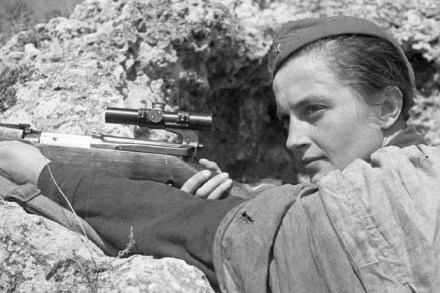
Klara Goncharova, a Soviet anti-aircraft gunner, wondered at the end of the second world war how anyone could stand to give birth after learning about Auschwitz and Dachau. But as it turned out, she was already pregnant. Anastasia Voropaeva, a corporal and searchlight operator, recalled a pretty Russian girl in liberated territory who had been raped and impregnated by her German ‘boss’ and had hanged herself after victory rather than give birth to a ‘little Fritz’. Albina Gantimurova remembered nearly shooting an adolescent member of the German Volkssturm in Berlin before he burst into tears and took her hand. Svetlana Alexievich finished The Unwomanly Face of War, the first of her astonishing oral histories of Soviet life, in 1983.

A choice of first novels | 3 August 2017

From our UK edition

Remember Douglas Coupland? Remember Tama Janowitz? Remember Lisa St Aubin de Terán? Banana Yoshimoto? Françoise Sagan? The voice of your generation? (If you’ve forgotten the voice of your generation, the brilliant Christopher Fowler’s forthcoming The Book of Forgotten Authors will provide you with the necessary reminder. The voice of my generation, as far as I’m able to recall, was a poet called Attila the Stockbroker, who we used to go and see perform in Harlow, and who did an excellent Peel session. Whatever the hell happened to Attila the Stockbroker?) Three new debut novels might all properly be acclaimed as representing the voice of their generation — though who knows, only time will tell.

Torn between envy and contempt

From our UK edition

Arriving at boarding school with the wrong shoes and a teddy bear in his suitcase, the hero of Elizabeth Day’s fourth novel is the latest in a long literary line of suburban lost boys sucked into the intoxicating orbit of a wealthy friend. F. Scott Fitzgerald, Evelyn Waugh, Patricia Highsmith, Ian McEwan, Alan Hollinghurst and Gillian Flynn have all done it before and we know the story never ends well. Day drops references to them all into her book, like olives into an increasingly dirty martini. We know from the outset that a crime has been committed. We first meet Martin Gilmour in a police interview room, the day after his friend Ben Fitzmaurice’s 40th birthday party in the summer of 2012.

No pain, no gain

From our UK edition

It is an unexpected pleasure when fiction has a soundtrack to accompany the work of reviewing. H(A)PPY is ‘best enjoyed in conjunction with Agustin Barrios: The Complete Historical Guitar Recordings’, Nicola Barker advises before her text gets underway. It’s tempting to dismiss this as a gimmick. But Barrios’s music strikes a deep chord with the rebellion at the heart of Barker’s 12th novel. Born in the 1880s, the Paraguayan’s playing was ridiculed because he preferred his guitar strings to be made of steel rather than fashionable gut. His dissonant art, like Barker’s today, could not be accused of courting admiration.

A cacophony of complaint

From our UK edition

What sort of monster gives a bad review to a book by someone who was gang raped as a 12-year-old and subsequently goes on to eat herself to over 40 stone? Probably the sort of monster who’s never read a book about fatness as a feminist issue which she found convincing. Here we go again: ‘This is what most girls are taught — we should be slender and small. We should not take up space. And most women know this — that we are supposed to disappear.’ This ignores the fact that plump women were a benchmark of beauty in the past — when women had no rights whatsoever — and still are in cultures where, again, women have very few rights.

Spirits from the vasty deep…

From our UK edition

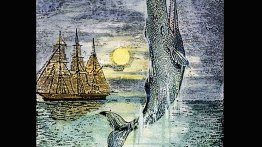
‘The sea defines us, connects us, separates us,’ Philip Hoare has written. His prize-winning Leviathan, then a collection of essays called The Sea Inside and now RISINGTIDEFALLINGSTAR together make a loose, meditative trilogy on people, the ocean, its inhabitants, its threats and delights, the comings and goings, the whole tidal business, its excitements and its ever-present grip on our minds and imaginations. The sea ‘deals life and death for innocent and guilty alike’, he says, and that all-pervasiveness is both his subject and his method. The rather exciting slidtogether words of this title (and of all his chapter titles) give a hint of what the book is about. This is not the sea in any historical, scientific or practical sense.

The dark side of creativity

From our UK edition

In Eureka, Anthony Quinn gives us all the enjoyable froth we could hope for in a novel about making a film in the 1960s — champagne, drugs, threesomes, gangsters, a Silver Cloud Rolls-Royce, hula-hooping girls and Pucci scarves flung over smears of vomit. Underneath, however, lies an intellectual question. The film is an adaptation of Henry James’s ‘The Figure in the Carpet’, a story about obsessively trying to understand the secret key that unlocks an author’s work: ‘The idea that governs the whole and gives it meaning… a string that my pearls were strung on.’ (Ought I admit that I enjoyed Quinn’s saucy 1960s screenplay, spliced between chapters of the novel, more than James’s original?

Rules of behaviour

From our UK edition

It’s the constant dilemma of the pop science author: how to write something flashy enough to grab readers, but solid enough that it won’t be embarrassing in a few years when the science has moved on. Full scientific rigour entails tedious jargon and even more tedious equations, and nobody wants that. But neither should the messy, uncertain world of scientific research be oversimplified. In his lengthy new book, Behave, the Stanford neuroscientist primatologist Robert Sapolsky walks this tightrope as he explains the biology of humanity’s ‘best and worst’ behaviours. Behave is a crammed compendium of scientific findings, organised in an ingenious way.

Black prince or white knight?

From our UK edition

We cannot know for sure how Edward the Black Prince earned his sobriquet. For some it was the volatile mixture of his aggressive temperament and brutal conduct in war; for others it derives from his armour, as displayed on his tomb at Canterbury Cathedral. The cover of Michael Jones’s splendid new biography of this compelling warrior depicts the latter, with Edward arrayed in his suit of plate, his long moustache drooping over the mail of his aventail and the palms of his gauntlets pressed together in prayer, as if seeking God’s forgiveness for all the death and misery he has wrought in his bloody career. Jones convincingly argues that Edward should not be too readily condemned, as he often is by a more censorious modern age.

His own worst enemy | 27 July 2017

From our UK edition

One fail-safe test of a writer’s reputation is to see how many times his or her books get taken out of the London Library. Here, alas, John Lodwick (1916–1959) scores particularly badly. If The Butterfly Net (‘filled with a lot of booksy talk and worldly philosophising,’ Angus Wilson pronounced in 1954) has run to all of five borrowers in the last five years, then The Starless Night (1955) seems not to have left the shelves since 1991. All this suggests that the title of Geoffrey Elliott’s valiant attempt to reconstruct Lodwick’s lost, vagrant and sometimes violent life is painfully accurate.