Book review

Riding for a fall | 8 March 2018

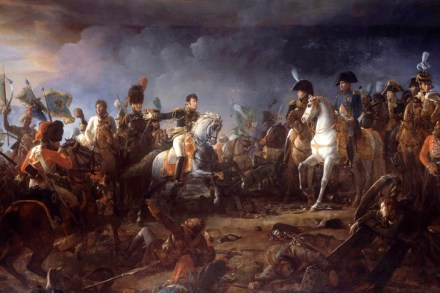
On 20 July 1805, just three months before the battle of Trafalgar destroyed a combined French and Spanish fleet, the Emperor Napoleon ordered his chief-of-staff to ‘embark everything’ for the invasion of England that he had been dreaming of for two years. ‘My intention is to land at four different points,’ he explained to Berthier, ‘at a short distance from one another... Inform the four marshals there is not an instant to be lost.’ While there is possibly no saga in his whole astonishing career — Russia included — that so vividly exposes the curious and almost wilful blind spots in Bonaparte’s make-up, his enemies would have done well to pay closer attention.

An insight into the medieval Muslim mind

  At a press conference in October 1981, Ronald Reagan quoted Ibn Khaldun (1332–1406) in support of what is known as supply-side economics. Although the 14th- century politician and thinker wrote extensively about economics and was almost unique among medieval Arab writers in so doing, it is quite ‘marvellous’ writes Robert Irwin, the author of a new intellectual biography of this famous North African, that he ‘should have anticipated American Republican party fiscal policy’.

Should he stay or should he go?

From our UK edition

This remorselessly slow-moving, hazily allegorical drama about ageing and xenophobia is Jim Crace’s 12th book, and the first to appear since he announced his retirement from writing in 2013. Like much of his other work, it lays its scene in a topographical and temporal bubble of the author’s own devising, where recognisable aspects of society and geography are almost imperceptibly twisted away from true.

A drizzle of nature writers

From our UK edition

A parliament of owls. A gaggle of geese. A convocation of eagles. But what is the generic term for the army that has recently advanced over the literary landscape? Perhaps a drizzle of nature writers? Here they come, heads down in the rain, turning out their pockets for the samples of fungi and moss they have collected on the outskirts of our cities. Bookshops now have whole tables dedicated to contemporary British nature writing. The first wave of this literary phenomenon was far more cheerful: the late lamented Roger Deakin sitting in his pollarded hornbeam and imagining himself at sea; Richard Mabey, the godfather of it all, with his wonderful Flora Britannica; Robert Macfarlane striding across wild places with lyrical intensity; Helen Macdonald eulogising her hawk.

Carry on spying

From our UK edition

That there’s a direct correlation between sex and spying is probably Ian Fleming’s fault. Hard to think of Bond without thinking about his women. For Charlotte Bingham, though, the connection occurred at a deeper level. When her father, John — legendary spook, long believed to be the model for George Smiley — called her into his study to reveal that he worked for MI5, she was terrified that he was about to explain the facts of life, many of which had already been revealed to her by a friend on Bognor beach: ‘I thought I was going to pass out with the horror of what was to come.’ But the particular facts he reveals are no less life-altering.

Cutting up rough

From our UK edition

Powerful memoirs by such eloquent doctors as Oliver Sacks, Atul Gawande, Henry Marsh, Gabriel Weston and Paul Kalanithi have whipped the bed curtains open on a previously secretive profession. Steeped as medicine is in uncomfortable facts about debilitating illness, pain and the stress of treating intractable conditions, it was a subject ripe for exposure. Under the Knife and Anaesthesia admit to the fallibility of medicine and the responsibilities, flaws and complex emotions of its practitioners. Arnold van de Laar does not rely on personal experience. Instead, he explores the world of surgery through 28 clinical conditions; its historical scope makes for a fascinating book.

Biografiends

From our UK edition

I saw a biopic about Morecambe and Wise recently. The actors impersonating the comedians were not a patch on the originals — how could they be? You need a genius to play a genius. I often wonder if my own HBO Peter Sellers movie would have been improved if someone fiery, of the calibre of Gary Oldman or Sacha Baron Cohen, had been cast instead of Geoffrey Rush, who was muffled under prosthetic make-up. But my point is, biopics seldom come off, and nor do biographies. Indeed, it is a reprehensible and misguided genre. Privacy is violated, creative achievements are explained away, and great men and women are unmasked as sneaky, predatory, cruel and ordinary. Humphrey Carpenter wrote all his biographies — of Auden, Britten and Ezra Pound — in this way.

Angels with dirty faces

From our UK edition

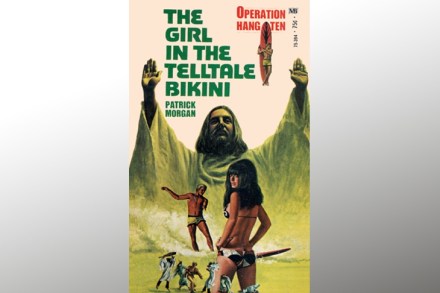
The year 1971 was a busy one for Mary Whitehouse, self-appointed ‘Clean-up TV’ campaigner. Not only did she help establish the Nationwide Festival of Light, making religious inspired protests against the so-called permissive society, she also wrote an autobiography, Who Does She Think She Is?, published by New English Library. Thus her thoughts regarding the impending moral collapse of the nation were brought to the public by the same outfit responsible for a comprehensive range of sinew-stiffening pulp fiction delights such as The Degenerates by Sandra Shulman, Bikers at War by Jan Hudson and Gang Girls by Maisie Mosco.

Nazi gamesmanship

From our UK edition

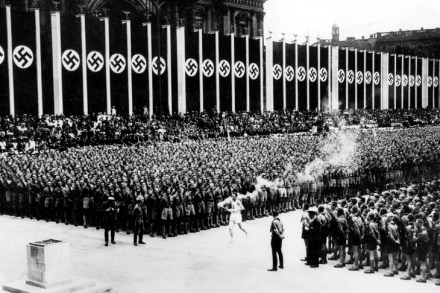
The British diplomat Robert Vansittart had been warning against Nazism for years, so it was a surprise when he and his wife showed up in Berlin for a two-week ‘holiday’ during the 1936 Olympics. ‘Van’ was impressed by German organisation. ‘These tense, intense people are going to make us look like a C nation,’ he wrote in a confidential report. The anti-appeaser had meetings with Hitler and the principal henchmen, and took a particular shine to Goebbels: ‘a limping, eloquent, slip of a Jacobin… My wife and I liked him and his wife at once.’ Van even came to think he might have misjudged the Nazis, though a lapse by the newly appointed ambassador to London, Von Ribbentrop, gave him pause.

Paris mismatch

From our UK edition

There has been much debate recently about what exactly constitutes ‘literary’ fiction. If the term means beguiling, gorgeously crafted novels that are assured of their place alongside other writers, reacting to, and taking pleasure in discussing them; that are aware of the world’s events and their impact on humanity; that have delicately drawn characters; and that range with ease from intense emotions to moments of high drama; and that use careful, subtle imagery, then C. K. Stead’s The Necessary Angel is all this and more. His previous novel, Risk, touched upon banking and Iraq, but was never overwhelmed by them.

Soft dystopias

From our UK edition

Science fiction, as any enthusiast will tell you, is not just about gazing into the future but also about illuminating the present. In a new collection of short stories by the veteran sf author M. John Harrison, lurid visions of aliens and spaceships play second fiddle to melancholic snapshots of plodding suburbia. Many of the tales in You Should Come With Me Now (Comma Press, £9.99) are set in leafy south-west London, amid the banality of modest affluence: from Putney to Chiswick, Twickenham and St Margarets, and along ‘the endless heartbreaking sweep of the A3 to the sea’. In ‘Cicisbeo’, a husband ensconces himself in his loft, and will only communicate with his wife via notes. ‘You found people like Tim all over London,’ the narrator explains.

The bread of life

From our UK edition

Sourdough has all the ingredients of a truly despicable work of fiction. Novels about food are awful, aren’t they? Especially novels about baking; they’re the absolute worst. Sourdough is not only a kooky satire inspired by that bread they sell for £6.50 down the farmers’ market – it’s set in San Francisco, the smuggest city in the world, with a cast of Tesla-driving techies and Kimchi fetishists and anthropomorphic yeast. Oh, and the book’s author, Robin Sloan, is a former Twitter employee. But just as it would be churlish to deny that, mmm, £6.50 bread is kind of tasty, so it’s hard to deny that Sloan has an inventive way with a story.

Death at close quarters

From our UK edition

Alex Jackson is buried alive inside his own body, a body which lies in a long-term coma following a climbing accident. He can’t see, he can’t move, he can’t speak. This is the terrifying fate of the protagonist of Emily Koch’s debut novel If I Die Before I Wake (Harvill Secker, £12.99). The doctors believe that Alex has no awareness of his surroundings, but he can still think and feel, and he can hear people speaking. His family debate withdrawing life support, and his friends talk about his girlfriend Bea moving on, finding someone new. And from these fragments of speech he starts to piece together a shocking truth: that his fall wasn’t in fact an accident.

Wonder of Wenders

From our UK edition

What know they of movies who only movies know? Wim Wenders’s latest collection of essays arrives at a time when the best-known film critic in England is unashamed to claim that tendentious tosh The Exorcist as the best picture ever made. Even though the slightest piece in The Pixels of Paul Cézanne is its title essay, it is good to know that there is still at least one film buff around who is alive to the first six arts. As a young man in Dusseldorf, Wenders fancied himself a painter — so much so that, before the movies lured him away, he was planning to further his studies in Paris.

Raiders of the lost lands

From our UK edition

Graham Robb, apart from being a distinguished historian, biographer and literary critic, is one of our most accomplished travel writers. His The Discovery of France remains a classic, made both engaging and accessible by his very francophile obsession with cycling. Indeed, his new book, The Debatable Land, opens with a declaration that ‘writing and cycling are inseparable pursuits’. The debatable land in question is the thin wedge of territory between England and Scotland on the west coast which, for a period in the late Middle Ages, was officially declared as lawless by the parliaments of each country.

The Saki of sex

From our UK edition

How I love short stories! Long before the internet realised that we can’t sit still long enough to commit to the three-volume novels of yore, these little beauties were hitting the sweet spot repeatedly. I especially love female short story writers — Shena Mackay, Lorrie Moore, Grace Paley — as they often read quite gossipy and friendly-like, as opposed to men who have to go out and shoot something to make some depressing point, or at least try to prove they’re the strong and silent type. Strong and silent writers should be true to themselves and simply shut up.

Three concepts of freedom

From our UK edition

There’s a tiny mistake in Zadie Smith’s new collection of essays. She describes Geoff Dyer’s unimprovably funny ‘trick while introducing an unsmiling J.M. Coetzee at a literary festival’. And it’s a suggestive mistake. The moment she refers to is Dyer, bashful, blurting that he wondered how his younger self would have reacted if he’d one day known he’d be sharing the stage with ‘a Booker prize-winning, South African, Nobel prize-winning novelist’… and then deciding that his younger self would have said: ‘That’s incredible, because Nadine Gordimer is my favourite writer.’ The joke is all the funnier because the camera pans to Coetzee, utterly stony of face as Geoff giggles.

Now it can be told

From our UK edition

Deployed in vastly exaggerated numbers, nuclear weapons were maintained in place not just by secrecy, but by banalities and lies. The atomic bomb has been, from the very beginning, both extraordinarily public and secret. Everyone knew about what was regarded as a momentous development in human history. It kept many clichés in circulation for decades — humanity as scientific giants and ethical infants; the desire for international control; the idea of moral scientists who did, or should, reject the sweet blandishments of the bomb. At the same time, insiders knew and did things which were the deepest and most troubling secrets of the deep state. For those few in the know, and assiduous critics, there was a huge mismatch between rhetoric and reality.