Book review

Ancient success story

From our UK edition

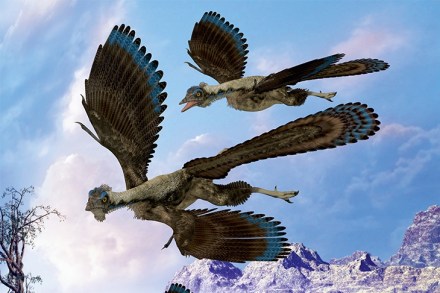
The age of dinosaurs is a perennial favourite on any time traveller’s wishlist. Even though we’re technically still in it — birds carry on the legacy of Velociraptor and company — there’s an irresistible urge to visit the time when towering, scaly, feathery, toothy saurians stomped around the planet. Since backwards time travel is impossible and DNA degrades too fast for us to have any hope of creating a real Jurassic Park, however, what we know of the ‘terrible lizards’ is written in bone and fossil footprints, and paleontologist Steve Brusatte’s The Rise and Fall of the Dinosaurs weaves together these prehistoric pieces into a vibrant view of how dinosaurs originated and what happened to our Mesozoic favourites.
Who needs Jordan Peterson when we have Ferdinand Mount?

You will by now doubtless be familiar with the University of Toronto academic Jordan Peterson. He’s the unlikely YouTube star and scourge of political correctness whose book 12 Rules for Life: An Antidote to Chaos has become a worldwide bestseller, beloved of serious young men seeking intellectual challenge and good old-fashioned fatherly advice. Summary: ‘Sort yourself out, bucko.’ We don’t really need the likes of Peterson here: we’ve got Ferdinand Mount. The book we should all be reading to sort ourselves out, buckos, is Prime Movers. Mount is, admittedly, an unlikely intellectual hero.

Knickerbocker glories

From our UK edition

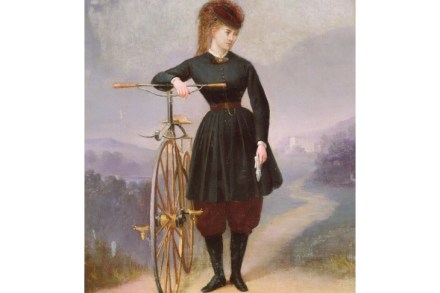
One September day the 16-year-old Tessie Reynolds got on her bike. In a homemade suit, she pedalled from London to Brighton and back, in eight and a half hours. It was 1893. The intrepid velocipedienne made the 190km journey in record time in an age of masculine heroics. But it was not her derring-do that scandalised the press into conniptions but her clothes: she was in short trousers. This was an era when women were shunned for egregious displays of ankle, meaning that Tessie’s dress was both revolutionary and overtly political. Behind the public tutting, her ‘rationals’ ignited women’s imaginations, showing a new way of moving and being in the world. She was inundated with pattern requests. Cycling fever peaked in the 1890s.

The soldier savant

From our UK edition

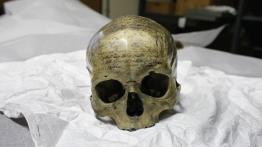
Descartes is most generally known these days for being the guy who was sure he existed because he was thinking. But before he devoted himself to metaphysical meditations, he had spent a decade as a soldier-scholar travelling the hotspots of Europe. How might a greater understanding of this period affect our view of the great man? This is a fascinating if dry kind of pre-intellectual biography, which hopes to hint at how the philosophy grew out of the action. René Descartes was born to a family of minor nobility in 1596, and educated by Jesuits. He studied some mathematics in Paris and then acquired a degree in law, after which he ‘set out to study the art of war’.

School of Soho

From our UK edition

This is an important, authoritative work of art criticism that recognises schools of painters, yet displays the superior distinctions of individual geniuses. Martin Gayford, The Spectator’s art critic, concedes that the identification by R.B. Kitaj, an American painter, of a ‘substational School of London’ was ‘essentially correct’, though in London there was no ‘coherent movement or stylistic group’.The only characteristic shared by London painters has always been merely that they live in London. There have been some influential personal relationships, even cases of a sort of cosiness, especially in the French Pub, the Colony Room and other drinking venues in Soho and Fitzrovia.

Look back, face forward

You will by now doubtless be familiar with the University of Toronto academic Jordan Peterson. He’s the unlikely YouTube star and scourge of political correctness whose book 12 Rules for Life: An Antidote to Chaos has become a worldwide bestseller, beloved of serious young men seeking intellectual challenge and good old-fashioned fatherly advice. Summary: ‘Sort yourself out, bucko.’ We don’t really need the likes of Peterson here: we’ve got Ferdinand Mount. The book we should all be reading to sort ourselves out, buckos, is Prime Movers. Mount is, admittedly, an unlikely intellectual hero.

A brutal band of thieves

From our UK edition

Mark Galeotti’s study of Russian organised crime, the product of three decades of academic research and consultancy work, is more than timely. In these days of ever more bizarre Russian attacks, it reads like the essential companion to a bewildering and aggressive new world, a world that is no longer confined behind Russian borders but seeks actively to penetrate and disrupt our own society. Essentially a history of the development of Russia’s unique form of organised crime, it constantly illuminates and clarifies the familiar, legal narrative of Russian history and the attitudes of Putin’s clique. The Russian mafia’s distinctive culture originally emerged during the years of revolution and civil war.

Overs and outs

From our UK edition

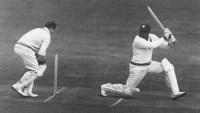
E.W. Swanton’s first published article appeared in All Sports Weekly in July 1926, soon after his 19th birthday. Thence, swiftly, into Fleet Street, covering public-school sports for the London Evening Standard and ‘rugger’ for the Times. In the summer of 1930 he made his Test debut, reporting the Ashes match at Lord’s in which young Don Bradman scored 254 out of 729 for 6 declared. Swanton had not been selected for the cricket XI at school. He forestalled any such humiliations in adult life by founding his own team, the Arabs, whose one absolute club rule was that E.W. Swanton should open the batting. As for the other players, according to Fay and Kynaston, ‘being the son of a Viscount seemed to ensure automatic selection’. All very Wodehousean.

A love letter to France

From our UK edition

When John Julius Norwich was a boy, his father was British ambassador in Paris.School holidays were spent in the exceptionally beautiful embassy which had been purchased by the Duke of Wellington from Pauline Borghese. He would mix dry martinis for Jean Cocteau, and sing songs to the dinner guests which he had been taught by his father’s mistress, the poetess Louise de Vilmorin, who got on famously with his mother, Diana Cooper. It makes you long to have been there. This warm, delightful short history of France, aimed convivially at the general reader, is his love letter to the country he knew so well: and, he writes, most probably his final book.

In search of Pygmalion

From our UK edition

In 1994, Matthew De Abaitua, an aspiring writer and student on East Anglia’s Creative Writing MA, applies for a job as Will Self’s amanuensis. The first interview is preceded by Self passing De Abaitua a tobacco pouch and a large bag of weed, with the instruction: ‘Make something out of that.’ In the second, they meet at Self’s remote cottage and fire an air rifle at whiskey bottles. Matthew is 22, and spent his previous summer working as a security guard in Liverpool; Self is 33, has just published My Idea of Fun and appeared on the famous ’93 Granta list, and is a well-respected author embracing a mad, bad and dangerous to know persona. De Abaitua is not merely an assistant.

Adrift in Tokyo

From our UK edition

Before her death two years ago, Yuko Tsushima was a powerful voice in Japanese literature; a strong candidate for the Nobel. The New York Times rated her ‘one of the most important Japanese writers of her generation’. Tsushima relentlessly quarried her damaged life for her work: she was brought up by her mother after her writer father committed suicide. Abandonment is a recurring theme in her 17 novels, her protagonist often a single mother, as was Tsushima. Joltingly honest, she doesn’t spare herself or her readers. Territory of Light charts a pivotal year in the life of a vulnerable young woman and toddler daughter — both unnamed — adrift in a hostile 1970s Tokyo.

Deathly prose

‘Reading makes the world better. It is how humans merge. How minds connect... Reading is love in action.’ Those are the words of the bestselling author Matt Haig and though I wouldn’t put it quite like that, I too feel that there is something inherently good about reading. Daniel Kalder has no such illusions. His latest book Dictator Literature (published in the US as The Infernal Library) looks at the dark side of the written word. It’s a study of what the great and not so great dictators of modern times read and wrote. In lesser hands this would be a romp (romp isn’t quite the right word, is it?) through Mein Kampf, Lenin’s What is to be Done? and Mao’s Little Red Book, but Kalder is nothing if not thorough.

The man who kept re-inventing himself

From our UK edition

When Romain Gary, a courageous and much decorated pilot in the RAF’s Free French squadron, was presented to the Queen Mother shortly after the second world war and asked about his background he apparently chose to remain silent. ‘Pour ne pas compliquer les choses,’ was his own version of the one-sided exchange. Gary, born Roman Kacew to Jewish parents probably in Vilna in 1914 and educated in Nice where he was taken as a teenager by his ambitious actress mother, was constantly re-inventing himself.

Blood and bile

From our UK edition

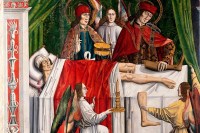
Are books becoming an adjunct to TV? Both of these are good reads, but both feel influenced by — and yearning for — television. Medieval Bodies could be the script for a landmark BBC Four series, while the author of How to Behave Badly in Renaissance Britain came to prominence as farthingale consultant on programmes such as Tudor Monastery Farm. She can tell you everything you never wanted to know about codpieces. Medieval Bodies skips between English, Welsh, Hebraic and Islamic medicine with ease, touching on caliphs and kings, Mamluks and djinns. One gem here is the inventor Ismail al-Jazari, the Heath Robinson of 13th-century Baghdad.

Millions of shattered lives

The fateful day five years ago began like any other for the family. A pot of black tea with cardamon seeds sat on the table as Sara roused her youngest children and prepared them for school. But there were tiny clues. Leila, just turned 16 and wearing a floor-length dress, unusually offered to help. Her older sister Ayan appeared from her bedroom with a suitcase, which she said was being lent to a friend. Before they left, Leila whispered to each of her parents that she loved them. The pair did not return after school. Sara tried to call them, but their phones were switched off. She knew they were good girls, however; it was their brother, slipping away from his Somali heritage, that was her source of concern.

A decade in crisis

From our UK edition

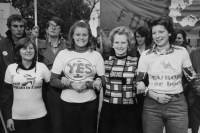
‘I voted to stay in a common market. No one ever mentioned a political union.’ It is the complaint of an entire generation — the generation, by and large, that switched its vote between 1975 and 2016. It is also, as Robert Saunders shows in this eloquent history of the earlier poll, based on a false memory. Anti-Marketeers in 1975, especially Tony Benn and Enoch Powell, constantly talked about ‘our right to rule ourselves’. Supporters of the EEC, for their part, were never happier than when lecturing voters about the benefits of swapping theoretical sovereignty for actual power. But the voters — empirical, practical, Anglo-Saxon — wanted examples. Abstract nouns like ‘sovereignty’ left them cold. What did sovereignty mean?

Shades of Lord of the Flies

From our UK edition

Gina Perry is the eminent psychologist who blew apart Stanley Milgram’s shocking revelations from his 1961 research. Milgram had caused a sensation by alleging that 65 per cent of volunteers had been willing to inflict painful, dangerous electric shocks on others. He drew direct analogies between this ostensible blind obedience to commands to inflict pain/harm on others and that of Nazi functionaries. Perry found that Milgram had misrepresented his results: in fact, 60 per cent of his subjects had disobeyed instructions and refused to continue; while those who had, were pressed into doing so despite protests, sometimes being ordered 25 times to keep going, or told lies, such as that the recipient of the shocks was fine. Others had suspected throughout that the experiment was a hoax.

Feminist firebrand

From our UK edition

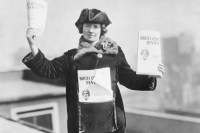
The suffragettes are largely remembered not as firestarters and bombers but as pale martyrs to patriarchy. The hunger artists refusing the rubber tube; Emily Wilding Davison dying under the King’s horse. We forget their destructive acts aimed at men and property; we remember the more sex-appropriate self-destruction. Fern Riddell’s flawed book is intended as a corrective. Its subject, Kitty Marion (born Katherine Marie Schäfer in 1871 in Germany), was one of the suffragettes’ most prolific and dedicated practitioners of political violence: possibly a member of Christabel Pankhurst’s elite terror cell the Young Hot Bloods, undoubtedly an arsonist and a very effective one, the veteran of multiple imprisonments and force-feedings.