Book review

Mocking the mandarins

From our UK edition

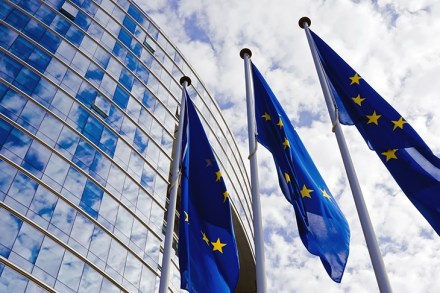
Stendhal likened politics in literature to a pistol-shot in a concert: crude, but compelling. When that politics largely consists of machinations within the European Commission in Brussels, readers may fear that the writer who pulls the trigger wields no more than a pop-gun. Yet the Austrian author Robert Menasse has scoured these corridors of power — and powerlessness — to furnish a thoroughly entertaining fiction that serves both as a sort of campus satire and a novel of ideas. For sure, Menasse has an agenda. His nicest characters tend to believe in the ‘post-national democracy’ of EU integration. Still, their efforts to sell the Brussels system as ‘the moral of history’ pass through enough comically convoluted byways to give succour to sceptics too.
Spot on target

From our UK edition

This is an ebullient, irreverent and deeply serious novel in the noble tradition of Mark Twain, Sinclair Lewis (especially Babbitt and Elmer Gantry) and John Kennedy Toole. Sam Lipsyte certainly hits his prime target — the cultish behaviour around mindfulness, motivational speakers and pallid spiritual beliefs — but one of the joys of the novel is that over and above that there is a scatter-gun sniping at various fads. Although it is laugh-out-loud funny, it swerves towards the end (the reasons would be too much of a spoiler) into slightly more melancholy and mystical modes. At the novel’s centre is the eponymous Hark, a strange, naive man who has developed a sort of lifestyle therapy he calls ‘mental archery’.

A man of great magnetism

From our UK edition

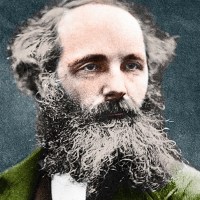
Chances are, you are reading these words in some room or other. Build a wall down the middle of it, and in the middle of the wall, insert a tiny shutter. Conjure up a tiny critter who can open and shut this little door at will. When a hotter-than-average air molecule careers towards it, the creature opens the shutter and lets the molecule pass to the other side of the room. Colder-than-average molecules are allowed to pass in the other direction. Soon enough, one half of the room is sweltering, while the other half is distinctly nippy. Magic? Not yet. A fridge performs exactly this trick, pumping heat out of its interior through that dinky radiator at the back. The refrigerator only becomes magical if it carries on running after you unplug it. Fighting entropy is expensive.

Ninety degrees north

From our UK edition

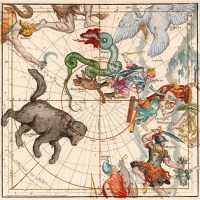
Having spent too much of my life at both poles (writing, not sledge-pulling), I know the spells those places cast. Michael Bravo promises to reveal something of that enigma, claiming at the outset of his book: ‘I will treat the mysterious power and allure of the North Pole in a way you will not have seen before.’ The volume is one of an interesting series on the cultural history of natural phenomena, that includes a title on Fire, and another on Swamp. Bravo structures his book around the struggle of navigators and philosophers to make sense of the strange powers of the North Pole, beginning with the ancients of Greece, Egypt, India and Persia.

Moving images of Christianity

From our UK edition

The Italian film director Federico Fellini was not known for his piety (far from it), yet towards the end of his life in around 1990 he determined to film Dante’s Inferno for national television. The brimstone poem appealed to Fellini for its comico-grotesque scenes of mass writhing human nudity amid firecracker detonations. He was not the first filmmaker to take on the work of the medieval Florentine poet. In the early 1970s, Fellini’s compatriot Franco Zeffirelli persuaded Dustin Hoffman to star as Dante Alighieri in his own version of the Inferno. Hoffman, dressed in a medieval coif hat and Tootsie-red robe, was supposed to wander through a sulphurous underworld accompanied by the Latin poet Virgil. Nothing came of either Zeffirelli’s or Fellini’s Inferno.

Only connect | 14 February 2019

From our UK edition

At the time of his death in 1900, John Ruskin was, according to Andrew Hill, ‘perhaps the most famous living Victorian apart from Queen Victoria herself’. He was a landmark — more or less literally. You could visit Brantwood, where he had his Lake District home in later life, and buy postcards of him. There were ‘Ruskin ceramics, Ruskin linen and lace products and Ruskin fireplaces’ available. In New Jersey, undismayed by the great man’s loathing of tobacco, there was a company that sold ‘John Ruskin’ premium cigars. Postmortem you could get Ruskin souvenir brassware or toasting forks and a scale model of the Ruskin monument near Keswick. But that, Hill also says, was about the peak of his fame.

A true labour of love

From our UK edition

This is a fascinating example of a small genre, in which the author decides at an early stage in his adult life that he would like to devote himself to a great figure whom he idolises, but who needs help of one kind or another to continue with his work, or at least for what he has done to be more widely appreciated.  The classic case in the recent past is that of Robert Craft, who in his early twenties offered his unlimited services to Igor Stravinsky, and can plausibly be claimed to have enabled the Master to create the works of his last decade, but who also fought against being seen as no more than a vassal, and whose copious writings, in all their brilliance, both celebrate Stravinsky and reduce him, at least as a person, to size.

Something sensational to read in the train

From our UK edition

Any memoir is a form of double-entry book-keeping, in which what has been lost is reckoned against what has been gained. It’s always easier to fill in the ‘lost’ column, since boasting is discouraged; sadness gets more attention, too, as it’s generally supposed to be more interesting than contentment. Sophie Ratcliffe includes an actual list of her losses in this wonderful and highly individual book. The items include an Australian opal her uncle gave her, a purse snatched from her at St Petersburg railway station, her father, and the exact memory of a lover’s face. ‘Not that your face was much to write home about,’ she adds. ‘Not that I could write home about it in any case.

The kiss of death

From our UK edition

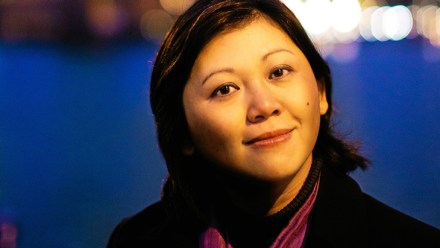
I once threw Tony Parker’s Lighthouse across the fo’c’sle of a ship at sea when I read that his characters were composites. Oral history should be historical, or it goes into the ocean. So it is a shame that I sometimes question Xinran’s authenticity in this account of the loves and lives of four generations of Chinese women. I question conversations recalled verbatim when they clearly weren’t recorded; and perfectly rendered speech when only notes were taken. Is this too severe? Then it is appropriate, because severity is something you must get used to, though this is a book about the Chinese concept of ‘talk love’, defined as ‘the process of cultivating love or interacting on the basis of love’, possibly leading to marriage.

A violent, surrealist world

From our UK edition

Kristen Roupenian’s debut collection, You Know You Want This (Cape, £12.99), comes hotly anticipated. Her short story, ‘Cat Person’, went viral when the New Yorker printed it in December 2017, becoming the second most read article published by the magazine that year. Told in an apparently simple, confessional voice, it recounts 20-year-old Margot’s courtship with 34-year-old Robert, beginning when she flirts while selling him sweets at an art-house cinema, building via text messages, culminating in a night of terrible (for Margot) sex from which she can’t quite be bothered to extricate herself, and continuing in the nasty afterlife of Robert’s increasingly aggressive texts. Everyone read it and everyone argued about it.

The land beneath the sea

From our UK edition

Somewhere deep in the water-thick layers of Time Song, Julia Blackburn says, funnily, that in Danish, ‘the word for book is bog’.And Time Song itself is a kind of beautiful bog, a memoir-cum-meditation focusing on the stretch of land that once connected Britain to the Continent but was drowned by the rising waters at the end of the Ice Age. It is a subject for now — where for God’s sake would Brexit be if Essex and Yorkshire were still parts of the lower Rhineland? — but Blackburn’s thoughts run deeper than that, to the long and subtle conversation between the present and past, to the preservations of time and its erosions.

Kazakhstan is about the size of Europe — but we know almost nothing about it

From our UK edition

Kazakhstan, say signs by the side of the road in this vast Central Asian country, is ‘a land of unity and accord’. Few outside pay a great deal of attention to a state that is almost as large as Europe, and home to eye-popping natural resources, chiefly — but not only — oil. One who does is Joanna Lillis, who used to work in Russia and then for the BBC Monitoring Service in neighbouring Uzbekistan, and knows the region as well as anyone. Her book, Dark Shadows, is astute, refreshing and revelatory; it is also surprisingly tender, showing not only her affection but her care in trying to make sense of a country that needs to be understood warts and all.

The healing art

From our UK edition

In this unusual book, part memoir, part history, Clare Hunter offers a personal meditation on the textile arts. Sewing and its associated skills have been coded as female, and the expertise required to master them has been trivialised. Hunter describes how when women demonstrate intricate embroidery or stitching, a man can be guaranteed to crack a joke about how his trousers need hemming or a button needs sewing on. But embroidery was not always so devalued. Royal families commissioned it for clothing and wall hangings to demonstrate their wealth and power. During the high point of medieval English embroidery (Opus Anglicanum), it was desired all over Europe. Gold thread created shimmering effects, and meant that each piece was worth a fortune.

Heavies in a new light

From our UK edition

Let’s hear it for the heavies, the unsung heroes of noir crime fiction on page and screen. The genre would collapse without them. Without the threatened or actual violence they so selflessly provide, the streets would not be mean and a private eye’s career would be only slightly less risky than an estate agent’s. Yet we rarely glimpse the private lives of these men (heavies are almost invariably male), or explore their hinterland of secret traumas and guilty pleasures. Alan Trotter, then, gets bonus points for originality, from his choice of title onwards: this novel is all about the muscle who supply the heavy weaponry of the criminal world.

Daydreams in the outback

From our UK edition

Gerald Murnane is the kind of writer literary critics adore. His novels have little in the way of plot or even character, and it is hard to tell the narrator from the writer, so that all his stories might be essays; his sentences are weirdly flat but interrupted occasionally by wild visions. Try this, for example: There in a room with enormous windows a man with a polka-dotted bow tie broadcasts radio programmes to listeners all over the plains of northern Victoria, telling them about America where people are still celebrating the end of the war. Where are we? Who can see the bow tie on the radio announcer, and did the war end recently or long ago? At the risk of a little racial profiling, this all sounds so odd that it has to be Australia, and Murnane himself is a perfect Australian type.

The biggest story on the planet

From our UK edition

One of my vanities is that all my novels are different. Yet one astute journalist identified a universal thread: ‘Too many people,’ she said. From among the many other piquant factoids in Paul Morland’s The Human Tide, I was unnerved to learn that ‘Hitler was obsessed with demography’ too. Whether you also suffer from this unhealthy preoccupation or are simply shopping for a new way of looking at the world, this is a readable, trenchant, up-to-date overview of the biggest story on the planet — one in which we’re all actors. The author has a moderate bent, and doesn’t claim that population — its surging, contraction and migration — explains all of human history. But it comes awfully close. After all, the long view is astonishing.

Singular narrative voices

From our UK edition

The large number of novels written in the first person would suggest it’s an easy voice to pull off: that the closeness of ‘I’ to ‘me’ means it can be accessed by the novelist without much difficulty. But in fact, the writer must come up with a legitimate reason for why a character is giving a first-hand account of their experience. For fiction to thoroughly convince the illusion needs to be seamless — and if for a second the reader is jolted out of the narrative by wondering why this person suddenly decided to tell me this story, then the author has failed. It is a voice that must justify its own existence. Why else are so many first-person narrators writers themselves?