Book review

Cuckoo in the nest?

From our UK edition

You might think The Carer rather an unpromising title, but Deborah Moggach’s book delivers a wickedly witty entertainment. Towards the end, she describes the setting where a crucial event takes place — ‘somewhere as humdrum as a caravan park, toilet block, clock golf, Tupperware’. So very good at describing the ordinary, she transforms it into the unusual, shocking and fascinating. Behind the normality of people’s lives there often lies an extraordinary story. It’s this that Moggach tells with insight, acute observation of character and mordant humour. The carer is Mandy, ‘doughy-faced’, fat-legged, stout of person and of purpose: ‘I speak as I find.

Master of the grand spectacle

From our UK edition

Should the man on the Clapham omnibus ever turn his mind to ballet, he is bound to envisage the work of Marius Petipa. The  ballerina holding an arabesque on pointe shoes was his creation, as were The Sleeping Beauty, La Bayadère, Don Quixote, most of Swan Lake, the concept of The Nutcracker and aspects of La Sylphide, Giselle and Coppélia — this being merely the cream of a vast oeuvre dreamed up over the half century he spent based in St Petersburg. When he died in 1910, one obituary claimed (in reference to Louis XIV’s view of l’état) that ‘with just reason, he could have said —“Russian ballet is me”’.

Bold venture

From our UK edition

In 2017’s Goldsmiths Prize-winning novel H(A)PPY, Nicola Barker strewed pages with multicoloured text. The Cauliflower, her joyful previous offering, employed winky-face emoticons while telling the story of a 19th-century Hindu mystic. In her 13th novel I Am Sovereign, huge fonts careen, in the space of an exclamation, into tiny fonts. Bold and underlined text prickles on the page. Barker has many ways of presenting what one of her characters, an estate agent from Llandudno called Avigail, describes as ‘BASTARD WORDS’. And these bastard words are all that the novel’s three protagonists have when trying to distract themselves from their doubts, or break free from what is holding them back.

The wilder shores of Britain

From our UK edition

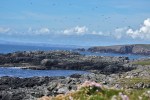
After kayaking solo in a November storm to a square mile of rock called Eilean a’Chleirich in the Summer Isles off the north-west coast of Scotland, and camping overnight on top of its cliffs, David Gange awoke to revelation. To the west he could see almost the entire length of the Outer Hebrides. To the north-east the mainland, with its distinctive peaks, stretched towards Cape Wrath. The British Isles may be diminutive on a global scale but, Gange realised, ‘just how small they really are depends on how you measure them’. Merely the first hundred miles of longitude on the mainland’s north-west coast hold thousands of miles of coastline, with mountains, bays, estuaries, cliffs and islets — ‘enough to repay a lifetime’s exploration’.

The brutal truth

From our UK edition

Novelists will always be interested in enclosed communities — or the ‘total institution’, as sociologists say. When you separate a group of individuals from larger society with a wall and a controlling mechanism, all sorts of interesting facts about the way people interact become apparent. Convents, hospitals, asylums, schools, universities and prisons all serve the purpose. But different nations tend to prefer one sort of institution over another. It’s a curious fact that where the British will enter into a novel of school life with gusto, Americans show a distinct preference for writing about prisons.

Binding love

From our UK edition

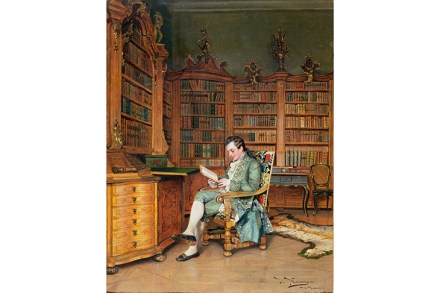
In the spring of 1998, Rolling Stones fans in Germany were disappointed to hear that the band had been forced to cancel a string of gigs. Keith Richards, the ne plus ultra of rock’s wild men, had damaged a rib in a tumble from a ladder while trying to retrieve a book from one of the higher shelves in his Connecticut library. Hide that smirk: it could just be true. Keef, it turns out, has not one but two extensive libraries — on either side of the Atlantic — and even went as far as applying the Dewey Decimal System to bring his sprawling collections into some kind of order. An addictive personality by any measure, Richards clearly has the book-collecting bug — and bibliomania, as Stuart Kells’s entertaining history cautions, can be a cruel mistress.

Ideas are history

From our UK edition

Wallace Stevens called it ‘the necessary angel’. Ted Hughes thought it ‘the most essential bit of machinery we have if we are going to live the lives of human beings’. Coleridge described its role a little more vigorously: ‘The living Power and prime Agent of all human perception… a repetition in the finite mind of the eternal act of creation in the infinite I AM’. The imagination is the subject of Felipe Fernández-Armesto’s latest grand sweep of a book. Not a historian to dwell on individual kings, queens or battles, he has identified the creation of ideas as the driver of history, the imagination as their source and the pool of evidence the past 800,000 years.

Born to be wild

From our UK edition

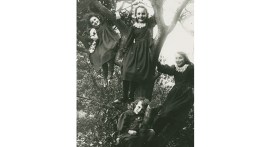
It was high time we had a proper look at the four beautiful, original Olivier sisters. Hitherto, with one exception, they have been seen in glimpses, playing marginal parts on the Bloomsbury stage after about 1910. The exception was the youngest, Noel, who all her life and since has been stuck with her invidious role as the girl who turned down a national hero, Rupert Brooke. Even Sarah Watling cannot help beginning and ending her solid, thoughtful book with that piece of the jigsaw. But admirably, if a trifle laboriously, she goes on to consider each of them as an individual, and succeeds in placing them firmly in the vanguard of the slow progress of women towards a measure of personal and professional freedom. Their lives were not plain sailing.

Mastering rocket science

From our UK edition

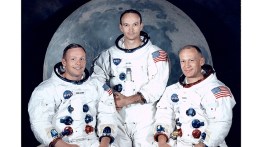
Now that we are stupidly rendering Earth almost entirely uninhabitable by many species including our own (through overcrowding, failing political systems, chemical pollution and climate disorder), a few humans of means are looking forward to migrating soon to other planets, even though, as yet, there are no good hotels and restaurants there. Scientists, stimulated by international rivalry and their own ambitions during the past century, have put together the machines and propellants for interplanetary travel. Here are two excellent, microscopically detailed books about the most important individuals and organisations that achieved personkind’s first progress into space.

A Kan-do attitude

From our UK edition

The defining feature of Chinese millennials is not Instagram, avocado on toast or propertylessness. Born in the early years of China’s growth miracle, my generation idled away days on dusty village roads that would be paved as we grew up. Our adolescence coincided with the arrival of the smartphone; and now, with our jet-setting cosmopolitan ways, we drive China’s global tourism boom. We are as much at home with squatting toilets as with Starbucks menus. In Under Red Skies, Karoline Kan tells her own millennial story of rags to riches. She was born into a poor farming community, where her grandfather tilled the fields. When she was in primary school, the family moved to a nearby town, uprooted by the sheer determination of Kan’s mother, Shumin.

Return of the iceman

From our UK edition

It is more than a generation since the appearance of Barry Lopez’s classic Arctic Dreams. That book’s effortless integration of history, anthropology and ecology, mediated through its author’s radiant prose, introduced a global audience to the frozen north. It freed the frigid ice world from much historical polar literature, conjuring instead landscapes of delicate beauty and extraordinary natural abundance. Lopez also revealed the Arctic as a place of remarkable human achievement, as expressed in the survival skills and spiritual endurance of the indigenous Inuit. A follow-up has long been anticipated and now, 33 years later, Horizon has finally arrived.

Mothers meeting

From our UK edition

Niven Govinden’s This Brutal House is set in the demi-monde of the New York vogue ball. This is an organised, charged battle of display, a peacocking, glitter-fuelled extravaganza, in which transvestites and transsexuals compete against each other for kudos and cash prizes. Eyelashes lengthen, hair is piled up for hours, dresses shimmer and heels clack, as some of the city’s most vulnerable inhabitants seek a place of self-expression and safety. The participants urge each other on with powerful expressions in demotic idiom. One chapter is devoted to a list of vogue ball categories. Running to several pages, it includes everything from ‘Category is: see you in the afternoon realness’ to ‘Category is: dance on my grave madness’.

Between the devil and the deep blue sea

From our UK edition

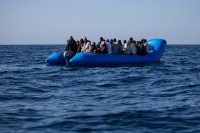
Death by water haunts the stories of Africans in Europe that flow through this fourth novel by Helon Habila. From the drowning of Milton’s swain Lycidas (a sort of tidal refrain for the book) to the capsized boat in the closing pages that offers victims in their hundreds to the ‘enraged leviathan’ of the sea, the imperious waves help wash these personal histories in an aura of myth. Whether privileged or penniless, the migrants whose journeys fill this episodic fresco of a work all crave the stories ‘traded as a currency among homeless, rootless people’. They hunger for narratives because ‘the water they all crossed to come here has dissolved the past’.

Going bats

From our UK edition

When it was recently announced that Robert Pattinson, who played the vampire Edward Cullen in the Twilight films, had secured the role of Batman, a Twitter user wrote: ‘Worst vampire ever. Took him 11 years to turn into a bat.’ This is  probably Twitter’s second greatest bat joke, beaten only by @LRBbookshop’s ‘I reckon Nagel actually knows full well what it’s like to be a bat’. It is in the nature of social media to carp, though, and in that spirit I point out that, while Twilight’s Edward didn’t become a bat (his main uncanny powers beside immortality seemed to be great cheekbones and a Mr Darcy-ish froideur), Batman isn’t really a bat either.

The riddle of Chapel Sands

From our UK edition

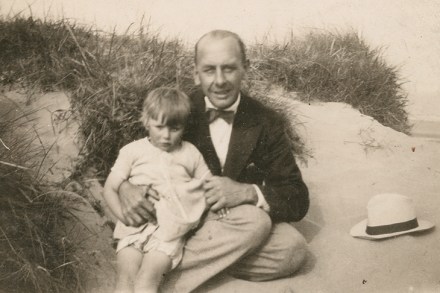
At first glance, Laura Cumming’s memoir On Chapel Sands begins with what appears to be a happy ending. On an autumn evening in 1929, a small child is snatched from a Lincolnshire beach. Her name is Betty Elston and she is three years old. The girl’s mother, Veda, is happy to let Betty play on Chapel Sands, not far from the family’s cottage, keeping an eye on her from a distance. Veda’s attention wanders; when she looks back the toddler has disappeared. Panic sets in and the police are called; Betty has been kidnapped. A few days later, however, the little girl is found safe and well in a neighbouring village, wearing a different set of clothes. She has not been harmed but she has no memory of where she has been or who took her off the sands.

The third oldest profession?

From our UK edition

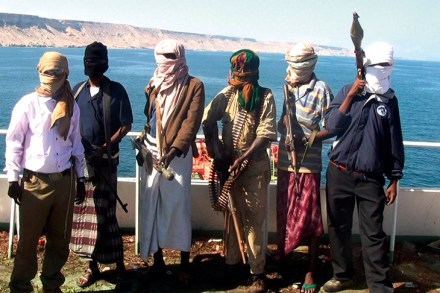
Western attitudes to piracy have dripped with hubris. In his classic history of 1932, Philip Gosse confidently argued that European empires and technological superiority had ‘done away’ with pirates entirely. He and others regretted the sacrifice of these noble savages to the march of progress. Nostalgia imbued pirates with a romantic aura as happy-go-lucky rebels, rough in appearance but pure of heart. Long John Silver aspired to be an MP; the Pirates of Penzance swilled sherry, with ‘dash it all’ their adorable attempt at foul language. Dr Peter Lehr puts the brakes on: 174 incidents of piracy were reported to the International Maritime Bureau last year, with Somali pirates responsible for only three.

Blessed Brian

From our UK edition

Brian Bilston’s life is summed up perfectly by the incident with his neighbour’s dog. The annoying Mrs McNulty comes round to claim that the animal has spontaneously combusted. Brian has his doubts, not least because Mrs McNulty has never owned a dog. But he nevertheless uses the incident as inspiration for a poem, ‘The Day My Dog Spontaneously Combusted’: there he was, chasing sticks, doing tricks, and all that stuff next minute, woof Brian tweets the poem to his 23 followers. This is part of his ‘renewed commitment to social media’, but serves only to reduce his follower count to 17. What’s worse, ‘to add insult to invisibility’ he also gets angry messages from the RSPCA. Bilston is the greatest English anti-hero of our time.

One female sleuth after another

From our UK edition

Susannah Stapleton’s erudite but hugely entertaining debut is a true-life detective story about the quest for a true-life detective. A longstanding fan of Golden Age crime fiction, Stapleton is reading a 1930s Gladys Mitchell novel featuring the sleuth Mrs Bradley when she has a sudden thought: were there any non-fictional female sleuths around at the time? Reaching for her laptop, she soon finds a reference to Maud West, who billed herself as ‘London’s only lady detective’. And with that, writes Stapleton, in by no means the book’s only use of classic detective-story phrases, ‘The game was afoot’. Her first stop is the Times archive, where she discovers an advert for Maud’s services from 1909 (‘Are you worried? If so, consult me!