Book review

Pakistan: A Personal History by Imran Khan

From our UK edition

Imran Khan’s Pakistan: A Personal History describes his journey from playboy cricketer through believer and charity worker to politician. His story is interwoven with highlights from Pakistan’s history. At times he seems to conflate his own destiny with that of Pakistan, and at others to be writing a beguilingly honest personal account. Khan describes how youthful hedonism eventually gave way to faith. His cricketing life led him to realise that talent and dedication were no guarantee of success. In the end, he says, it comes down to luck. ‘Over the years I began to ask myself the question — could what we call luck actually be the will of God?’ Khan’s religious awakening was further stimulated by physical vulnerability.
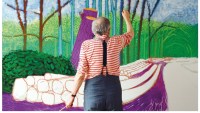
A Bigger Message: Conversations with David Hockney by Martin Gayford

From our UK edition

Like his contemporary and fellow Yorkshireman, Alan Bennett, whom he slightly resembles physically, David Hockney has been loved and admired throughout his lifetime. He painted one of his greatest works, ‘A Grand Procession of Dignitaries in the Semi-Egyptian Style’ in 1961 while still at the Royal College of Art. He has dazzled, surprised and often upset the world of art ever since. Picasso aside, he is the wittiest modern painter, in the sense not just of being funny, but intelligent; a whole history of Western art is both contained and extended by his originality. For example, it was both funny, and in the 1960s brave, to apply Boucher’s soft pornography to bums as well as bosoms.

The Price of Civilization by Jeffrey Sachs

From our UK edition

Half a century ago J.K. Galbraith’s The Affluent Society changed the political consciousness of a generation in the English- speaking world and beyond. It vividly re-established in the minds of civilised men and women the paradox of private affluence in a sea of public neediness — for which, as Matthew Arnold reminds us, Cato reported by Sallust had a name in his description of ancient Rome: ‘publice egestas, privatim opulentia’ (public poverty, private opulence). From this premise he made the case for the mixed economy, one in which the genius and power of market forces is balanced and harnessed by effective government in promoting public goods and correcting market failures — including gross inequality — that mar unconstrained laissez-faire.

An intemperate zone

From our UK edition

Two years before the outbreak of the first world war, a Royal Navy officer, addressing an Admiralty enquiry into the disturbing question of lower-deck commissions, ventured the cautionary opinion that it took three generations to make a gentleman. It is hard to know exactly what he meant by that endlessly morphing concept, but if it bore any resemblance to the historical compound of avarice, bad faith, dynastic ambition and family selfishness that dominates the pages of Adam Nicolson’s dazzling narrative, then the one consoling mercy is that it has always taken a good deal less than three to unmake one.

Day of reckoning | 3 September 2011

From our UK edition

No one could say that we didn’t have warning of these events in the most specific terms. A month before 11 September 2001, the President’s daily intelligence brief was headed ‘Bin Laden Determined to Strike in US.’ Other official warnings from this time and earlier were so specific, and so specifically ignored, that a former National Security Adviser at the White House, Sandy Berger, would on four separate occasions in 2002 and 2003 abstract official top secret documents from the National Archives by stuffing them in his socks. (Because of Berger, we now don’t know what these warnings consisted of). There were any number of commentators, too, who saw exactly what was coming.

A dancer’s progress

From our UK edition

In 1971, at the height of the Indo-Pakistan war, my parents took me with them to Bombay. I was ten and it was my first trip abroad. My father worked for Brooke Bond, and had ‘tea business’ to attend downtown. First we checked into the Taj Hotel. On the waterfront, beggar children with lurid wounds and deformities were shaking tins at passers-by. The poverty unsettled me. The Taj was swank, I could see that, but outside all was dirt and destitution. (At a cinema nearby, jarringly, Carry on Loving was being advertised as the comedy ‘fillum’ sensation of the year.) Over dinner, my parents explained that Bangladesh, formerly East Pakistan, was under attack. Bombay seemed strange enough to me.

Friendships resurrected

From our UK edition

A fact which often surprises those who pick up the Bible in adulthood, having not looked at it for years, is how very short the stories are. Adam and Eve, Noah’s Ark, the Feeding of the Five Thousand — in spite of their familiarity they are raced through in just a few lines. It is, however, perhaps the very terseness of the Bible that has caused at least as much ink as blood to be spilled in its cause; had it spelled the answer out, for instance, medieval scholars could never have whiled away so many jaw-droppingly fatuous hours in wondering how many angels could dance on the head of a pin, and other pressing questions. In his new novel Richard Beard draws attention to this brevity and uses it as a springboard.

Thus do empires end

From our UK edition

‘This book is a chronicle of one day in the history of one city.’ As first sentences go, that one is hard to beat — particularly given that the ‘one day’ is the last day of the Soviet Union, the city is Moscow and the author, an Irish journalist, was there and knew most of the principal actors. ‘This book is a chronicle of one day in the history of one city.’ As first sentences go, that one is hard to beat — particularly given that the ‘one day’ is the last day of the Soviet Union, the city is Moscow and the author, an Irish journalist, was there and knew most of the principal actors.

Little lists for word lovers

From our UK edition

In his Modern English Usage, Henry Fowler used the term Wardour Street for ‘a selection of oddments calculated to establish (in the eyes of some readers) their claim to be persons of taste and writers of beautiful English’. In his Modern English Usage, Henry Fowler used the term Wardour Street for ‘a selection of oddments calculated to establish (in the eyes of some readers) their claim to be persons of taste and writers of beautiful English’. The metaphor was taken from the street in Soho, later occupied by the film industry, once the place for dealers in antique, or imitation-antique furniture. Among Fowler’s examples of Wardour Street English were anent, aplenty, forebears, perchance and well-nigh.

Music, moonlight and dahlias

From our UK edition

The words that echoed constantly in the back of my mind as I read this book were from Paul Simon’s song ‘Train in the Distance’: ‘the thought that life could be better is woven indelibly into our hearts and our brains’. The words that echoed constantly in the back of my mind as I read this book were from Paul Simon’s song ‘Train in the Distance’: ‘the thought that life could be better is woven indelibly into our hearts and our brains’. Paul Hollander’s thesis is that modern America’s ultra-individualism has led its citizens to expect perfection in every aspect of life, relationships included. Which means that Uncle Sam and Auntie Samantha are in for a few disappointments.

Bookends | 3 September 2011

From our UK edition

Dr Temperance Brenner, like her creator, Kathy Reichs, is a forensic anthropologist. She works in North Carolina, specialising in ‘decomps and floaters’. This ensures that in Flesh and Bones (Heinemann, £18.99) you get plenty of authentic sounding detail with your gore. So when a human hand is found sticking out of a drum full of asphalt at the local speedway track, Reichs carefully includes plenty of stuff about how to extract the body — start with a power saw, then move on to an air hammer — and about the drum itself: ‘the size of the drum suggested a 35-gallon capacity.’ But there’s plenty more to Reichs than just insider info.

In a class of his own | 27 August 2011

From our UK edition

Ysenda Maxtone Graham’s Mr Tibbits’s Catholic School captures the hilarity and pathos of an eccentric headmaster and the unusual establishment he founded in Kensington in the Thirties. A.N.Wilson introduces us to his funny, peculiar world There are two sorts of school stories. Much the most popular, of course, are those that observe the drama of school life through the prism of the pupils’ imagination. Malory Towers, the Chalet School adventures, Jennings and Darbishire, Harry Potter, Billy Bunter all belong to this addictive genre.

The call of the wild | 27 August 2011

From our UK edition

Christopher Ondaatje is best known as a member of the great and the good and a generous patron of the arts, notably the National Portrait Gallery. The pieces collected in this book give glimpses of another, quite different life as a traveller and writer. Ondaatje’s family were long-established Dutch tea planters in Ceylon. In 1947 Christopher was sent to Blundell’s School in the West Country, a ‘sallow, thin, frightened’ 13-year-old; transplanted from the ‘carefree wilderness life’ of his father’s tea plantation, he was lonely and bullied. He had been banished from the Garden of Eden. Independence for Ceylon came in 1948, and his father’s descent into alcoholism and debt followed soon after. He never saw his father again.

Art for ransom

From our UK edition

These two books make mutually illuminating and surprisingly contrasting companions, given the similarity of their subjects. Both are written by those with hands-on experience in the field of art preservation and security. Sandy Nairne was Director of Programmes at the Tate Gallery in 1994 when two important paintings by J.M.W. Turner were stolen while on loan to an exhibition in Frankfurt, and was a key player in their eventual recovery. When Anthony Amore became Security Director at the Isabella Stewart Gardner Museum in Boston in 2005, he immediately picked up the threads of the investigation into the theft of three Rembrandts and other works which had been stolen from the museum 15 years previously.

Tallinn tales

From our UK edition

During the Twenties and Thirties, the Estonian capital of Tallinn was known to be a centre for espionage, infiltrated by White Russian intriguers bent on blocking Bolshevik access to north-west Europe. Graham Greene first visited in the spring of 1934  — ‘for no reason’, he writes in his memoir Ways of Escape, ‘except escape to somewhere new’. He spent many happy hours in Tallinn, he records, ‘when I was not vainly seeking a brothel’. (The brothel had been recommended to him by Baroness Budberg, a Russian-Estonian exile living in London and mistress of, among others, H. G.Wells.

In the land of doublespeak

From our UK edition

An Oxford don and poet, Patrick McGuinness lived in Bucharest in 1989, and in this fictionalised account of the regime’s death throes he puts his first-hand experience to compelling use. An Oxford don and poet, Patrick McGuinness lived in Bucharest in 1989, and in this fictionalised account of the regime’s death throes he puts his first-hand experience to compelling use. So compelling, in fact, that at times one feels he can’t bear to leave anything out, and the plot is accordingly tweaked. But even if there’s the odd creak, this first and Booker-longlisted novel is a wonderfully good read, giving one a convincing taste of how it might be to live under the most surreal kind of communist rule. Ceausescu’s Romania was the land of doublespeak.

The bigger picture

From our UK edition

Many among you, I know, have been fretting that thanks to a combination of political correctness, New Labour educational policy and the European Union’s usurpation of everything the free-born Englishman holds dear, big-picture narrative history is on the point of vanishing from the earth. All that our children’s children will know of British history, you worry, will be a vague sense of how beastly the Nazis were to Mary Seacole. Well, there is good news for you. Here are two new histories (of England, mind — not of Britain) by two of our best writers. Gosh, though. They could scarcely be more different. Peter Ackroyd’s is very long — or promises to be.