Book review

A cult of virility and violence

From our UK edition

Mussolini’s brutal sex-addiction makes for dispiriting reading, but provides material for a fine psychological study, says David Gilmour Bunga bunga may be a recent fashion, but adultery for Italian prime ministers has a long history. The first of such statesmen, Count Cavour, had affairs with married women because he was too nervous of being cuckolded to risk having a wife of his own.  One of his successors, Francesco Crispi, suffered such amatory turbulence that the police were often called to break up screeching rows between his wives and his mistresses; in old age he was accused by the press of trigamy because he had fathered children by two women in consecutive years while being married to a third.

Books of the Year | 12 November 2011

From our UK edition

A further selection of our reviewers’ favourite reading in 2011 Richard Davenport-HinesAmidst the din, slogans and panic of modern publishing, my cherished books are tender, calm and achieve a surpassing eloquence by dint of tightly controlled reticence. Anthony Thwaite’s Late Poems (Enitharmon, £10) are written by a man of 80. Each of them is word-perfect: some recall dead parents; others foreshadow Thwaite’s death; and throughout there is the clear, crisp wisdom, pensive sadness and absence of confessional self-pity that show a mastery of language and feeling. Amos Oz’s Scenes from Village Life (Chatto, £12.99) is set in an Israeli pioneer village which is being chi-chied with boutique wineries as jackals circle in the surrounding countryside.

Bookends: About a boy

From our UK edition

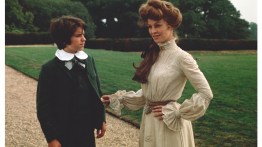
The Go-Between was L.P. Hartley’s best novel, Joseph Losey’s best film, and probably Harold Pinter’s best screenplay. In the novel, the Norfolk house and estate are fairly incidental but, as Christopher Hartop’s charming and generously illustrated Norfolk Summer: Making The Go-Between (John Adamson, £12.99) reminds us, they dominate the film. As a local historian and cinéaste, Hartop recreates the cloudy summer of 1970 — made to seem sunny mainly by sound-effects, of buzzing insects and so on — at Melton Constable Hall, where Losey, Julie Christie, Alan Bates and Edward Fox were visited by various Cokes and Barkers (Elspeth and Raffaella were extras in the cricket match).

The legacies of Jennifer Johnston

From our UK edition

Cross the soaring Foyle Bridge from the East and take the route to Donegal. Shortly before you cross the border — now completely imperceptible — you will find the grand, imposing gates to a country house. As you descend the drive, the hum of traffic subsides and the years, centuries, roll back. Had it been built a few miles to the west it might, like many others, have been consumed in the vengeful aftermath of 1916. Partition protected it from that, but half a century later its Georgian windows shook to bomb blasts from the city. That Jennifer Johnston has spent most of her writing career in this place is magnificently, eerily appropriate. She is a daughter of the Anglo-Irish Ascendancy. Yeats was a friend of the family.

Bird Brain by Guy Kennaway

From our UK edition

Basil Peyton-Crumbe is a multi-millionaire landowner. An embattled man known to all, even his dogs, as ‘Banger’, he claims to have despatched at least 41,000 pheasants with the cheap old 12-bore he’s had since childhood. Shooting pheasants, he believes, is ‘an exquisite accomplishment’, as complex as writing a sonata or designing a cathedral. On the first page of this bloodthirsty novel, Banger’s trusty old gun explodes in his hands and blows half his head off. No one seems particularly upset. Not his half-brother William, who succeeds to the estate, and certainly not his Springer Spaniel, Jam.

The Sealed Letter by Emma Donoghue

From our UK edition

Emily ‘Fido’ Faithfull, a stout, plain, clever Victorian, founder-member of the feminist Langham Place group, manager of the ground-breaking Victoria Press which extends employment possibilities for women, has her story lightly fictionalised in The Sealed Letter. The action starts with the return from a posting to Malta of Fido’s erstwhile best friend, Helen Codrington, a naval wife with a yellow-whiskered colonel in tow. Helen needs an alibi and a trysting-place; the apparently guileless Fido and her drawing-room sofa will do nicely. Before Malta, Fido had lived with Helen and her older, straitlaced husband Harry. Fido’s asthma had been the pretext for Helen to leave the marital chamber and curl up in her friend’s bed each night.

The Conservatives: A History by Robin Harris

From our UK edition

If David Cameron and his friends wish to know why they and their policies are so despised by some Conservatives of high intellect and principle, they should read Robin Harris. His book is a marvel of concision, lucidity and scholarship, with penetrating things to say about Peel, Disraeli, Salisbury, Baldwin, Churchill, Macmillan and the rest. But much of its savour derives from Harris’s disgust — the word is not too strong — with the various forms of bogusness, including intellectual cowardice veiled by complacent politeness, which recur so often in the history of the Conservative party.

The Diamond Queen by Andrew Marr

From our UK edition

‘Of making many books there is no end’, particularly when the subject is Queen Elizabeth II. It is less than ten years since Ben Pimlott and Sarah Bradford independently produced authoritative and excellent biography-centred books on the Queen. Since then a fair number of minor studies have appeared. Can enough have happened in the meantime, can enough new information have been revealed, to justify two new books? The answer, rather surprisingly, is a cautious ‘yes’. Both Andrew Marr and Robert Hardman are serious students of their subject. Both write well and thoughtfully.

Blue Night by Joan Didion

From our UK edition

This is a raw, untidy, ragged book. Well, grief is all of those things. On the other hand, Didion wrote about the death of her husband in an iconic memoir, A Year of Magical Thinking, which apart from being raw was none of them. So she knows how it can be done.  That book was about the horribly sudden death of her husband, about shock and pain and then the confusion of bereavement and loss. But it was also a vivid portrait of the man himself. ‘One never knows when the blow may fall’, yet people have been surprisingly surprised that it fell again so quickly on Didion, when her adopted daughter Quintana, also died, a year later. But blows rain down relentlessly, not to say unfairly, on some individuals. Such as Job.

A History of English Food by Clarissa Dickson Wright

From our UK edition

It is where cookery is involved that tele-vision gives perhaps the greatest succour to the book trade. After Jennifer Paterson’s death in 1999, the remaining ‘Fat Lady’ barrelled into view with Clarissa and the Countryman, Clarissa and the King’s Cookbook, as a gamekeeper in an episode of Absolutely Fabulous and as presenter for a documentary on her soul-mate Hannah Glasse. Such exposure, combined with an unapologetic mien and candour that have attracted the somewhat patronising description ‘national treasure’, could only have helped her autobiography Spilling the Beans scale the heights of the bestseller lists and allowed the next manuscript, a year-long diary and rant called Rifling through My Drawers, to be published.

The Brain is Wider Than the Sky by Bryan Appleyard

From our UK edition

With all the advances of science, we may be no nearer to understanding ourselves than before, says Anthony Daniels — but we shouldn’t dismiss the possibility outright Some years ago I had a patient who believed that his neighbours, unskilled workers like himself, had developed an electronic thought-scanner whose antennae they could, and did, direct at him in order to know his thoughts as and when he had them. He heard them laughing and jeering at the banalities with which, inevitably, his mind was filled most of the time. Needless to say, he found this intrusive and oppressive, and it made him murderously angry. As life follows art, science follows delusion.

Bookends: Spirit of place

From our UK edition

A new book by Ronald Blythe is something of an event. In recent years the bard of Akenfield has mostly published collections of articles, which makes At the Yeoman’s House (Enitharmon £15) especially welcome. It’s an autobiographical meditation on an ancient dwelling-house set in flint-strewn fields: Bottengoms Farm on the Essex-Suffolk border, where Blythe lives. He inherited it from the artist John Nash, and now investigates its history in an enjoyably oblique and fragmentary fashion. In Cobbett’s definition a yeoman was above a farmer but lower than a gentleman, and Bottengoms has never been grand. It began when ‘a man roofed in a spring and dwelt beside it’, and in 1944 the stream still ran through the kitchen.

After America: Get Ready For Armageddon by Mark Steyn

From our UK edition

There are people sent to depress us, and prominent among them is Mark Steyn, whose speciality is apocalyptic predictions. Following his bestseller America Alone: The End of the World as We Know It, which was about the collapse of all of the Western world with the exception of the United States, he is now predicting the collapse of the US as well, leaving the entire ‘free world’, as it used to be called, at the mercy of those great enemies of freedom, China and Islam. He writes: There will be no ‘new world order’, only a world without order, in which pipsqueak failed states go nuclear while the planet’s wealthiest nations are unable to defend their borders and are forced to adjust to the post-American era as they can.

The ripple effect

From our UK edition

Penelope Lively’s new novel traces the consequences of a London street mugging. As the culprit sprints away with a handbag, the victim, Charlotte, a retired widow, falls and cracks her hip. Her daughter, Rose, personal assistant to the once-eminent historian Lord Peters, is meant to be in Manchester to help her employer give a talk on Walpole. When Rose bails out, Peters turns to his own daughter, Marion, an interior designer in hock to the bank. At the pre-talk lunch, she has the good fortune, so it seems, to meet a venture capitalist, who offers her a gig doing up luxury flats. Less fortunate is her married lover, Jeremy, whose wife kicks him out when she spots a text on his mobile from Marion, cancelling a tryst on account of having to head north.

The Empire of Death: A Cultural History of Ossuaries and Charnel Houses by Paul Koudounaris

From our UK edition

In one Capuchin monastery in Sicily, the so-called Palermo Catacombs, locals used to buy a niche where their mummified corpse would one day stand erect, clothed and on display to visitors, the way we might now buy a burial plot. Would-be purchasers would pay a visit to select their niche and stand in it to make sure it fitted. Indeed, by way of voluntary penance, some would remain there for hours, contemplating their end. At the same time, in the early 17th century, a related order of nuns in Rome, the Sepolta Vive or Buried Alive sisters, would sleep in coffins and hail each other with the observation: ‘Remember sister, we all have to die’.

AfterWord edited by Dale Salwak

From our UK edition

‘Conjuring the Literary Dead’ is the sub-title of this outlandish, sometimes beguiling book. Its editor, Dale Salwak, coaxed 19 writers — of the status of Margaret Drabble, Francis King, Jay Parini and Alan Sillitoe — to write essays in which they imagine speaking to dead authors who intrigue them. The resulting chapters are often inquisitive, macabre and teasing, but occasionally flat or laborious. ‘Perhaps all writing is motivated, deep down,’ Margaret Attwood suggests in an introductory survey, ‘by a fear of and fascination with mortality — by a desire to make the risky trip to the Underworld, and to bring something or someone back from the dead.

Cocktail Hour Under the Tree of Forgetfulness by Alexandra Fuller

From our UK edition

There is always a special risk, says Alexandra Fuller, when putting real-life people into books. Not all those who recognised themselves in her terrific memoir of 1960s and 1970s white-ruled Africa, Don’t Let’s Go to the Dogs Tonight, had appreciated their transformation. The author’s own mother, Nicola Fuller, was disquieted to find herself as a character in that ‘awful book’ (as she refers to it today). Was she really that flaky and drunk? Or was that how others perceived her? Most writers make life more interesting than it is; I suspect that Alexandra Fuller is among them. In Cocktail Hour Under the Tree of Forgetfulness she returns to the Africa of her childhood and to her eccentric farmer family.

Why Be Happy When You Could Be Normal? by Jeanette Winterson

From our UK edition

In the 26 years since the publication of her highly acclaimed first novel, Oranges are Not the Only Fruit, Jeanette Winterson has proved herself a writer of startling invention, originality and style. Her combination of the magical and the earthy, the rapturous and the matter-of-fact, is unique. It is a strange and felicitous gift, as if the best of Gabriel Garcia Marquez was combined with the best of Alan Bennett. At her finest, (in which category I’d put The Passion, Sexing the Cherry and Lighthousekeeping) there is no one to match her. The title of this memoir comes from the mouth of Mrs Winterson of Accrington, Lancs, the author’s adoptive mother. This is what she replied when her young daughter told her that she was in love with another girl, and happy.