Book review

Settling old scores | 10 December 2011

From our UK edition

As a boy, Brian Sewell was unimpressed by opera but enraptured by pantomime which, he reveals in Outsider, sowed in him ‘an undying ambition, never fulfilled, to play the Widow Twanky in Aladdin’. Panto’s loss has been art criticism’s gain for, his tremendous erudition and exquisite prose aside, Sewell is surely the funniest art critic of our time, and easily the campest. In his ‘Prelude’ he remarks that he has ‘dug deep into indiscretion’, and ‘some may say that I have dug deeper still into prurience’. They would have a point. The first chapter, which is about his mother, or ‘principal demon’,  sets the tone.

Don’t mention the war

From our UK edition

It wasn’t easy being the daughter of the artist Avigdor Arikha. In this memoir, Alba Arikha mixes teenage fury with glimpses of her godfather Samuel Beckett and a fragmented account of her father’s experiences of the Holocaust. Avigdor Arikha and his wife, the poet Anne Atik, surrounded themselves with the intelligentsia of Paris and drove their daughter mad: ‘I resent their purity and knowledge. Their values and morals. My father’s anger. My mother’s goodness.’ Avigdor Arikha was an irascible, dismissive and earnestly didactic father.

Voyages of discovery

From our UK edition

Roger Louis is an American professor from the University of Texas at Austin who knows more about the history of the British Empire than any other two academics put together. When the Oxford University Press embarked on its mammoth history of the Empire the general editor they chose —to the chagrin of certain professors from the Commonwealth — was Roger Louis. Among his other responsibilities is the British Studies seminar, which was founded at Austin 36 years ago. But Professor Louis is not the university’s only attraction. The Harry Ransom Center houses one of the most, if not the most, important collection of modern literary manuscripts in the English-speaking world.

A beautiful bloody world

From our UK edition

The half-millennium or so that followed the division of the Carolingian empire in 843 AD was a time of profound social and political change in Europe. Kingdoms were established, new forms of law and theories of power were developed and military technology and tactics were revolutionised. Relations between church and state were transformed. The emerging European states developed new cultural identities, while western Christendom as a whole also began to define and assert itself against the Islamic states in the Middle East and north Africa, and the ailing remnants of the Byzantine empire to the east.

Lifelong death wish

From our UK edition

In February 2009, in a review in these pages of Stefan Zweig’s unfinished novel, The Post Office Girl, I wrote: ‘Here surely is what Joseph Conrad meant when he wrote that above all he wanted his readers “to see.’’  In The Post Office Girl Zweig explores the details of everyday life in language that pierces both brain and heart.’ Especially the details of loneliness, I should have added. Intimations of suicide darken this novel, and in 1942, with the manuscript incomplete, Zweig, age 60, and his much younger second wife, Lotte, poisoned themselves in a small Brazilian town and died in bed with her embracing him. It is telling that she did the embracing.

Wizard of the Baroque

From our UK edition

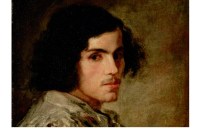
Not content with being the greatest sculptor of his age and one of its most gifted architects, Gian Lorenzo Bernini had some talent as a painter and draftsman. Surviving self-portraits reveal him as the possessor of a positively overstated physique du role. In its most youthful incarnation the face has an air of presumption and entitlement which adulthood will darken with a combativeness that is almost wolfish. Even in the chalk drawing made around his 80th birthday (now in the Royal Collection at Windsor) the glance, under bushy white eyebrows, still smoulders and the slightly parted lips seem poised to challenge or command.

Recent crime novels | 3 December 2011

From our UK edition

The crop of recent crime fiction is generously sprinkled with well-known names; as far as its publishers are concerned, Christmas is not a time of year for risk-taking. The Impossible Dead (Orion, £18.99) is the second novel in Ian Rankin’s post-Rebus series featuring Inspector Malcolm Fox of ‘The Complaints’, the team that investigates allegations of misconduct among the police themselves. Fox and his colleagues arrive in Kirkcaldy, where a detective constable stands accused of corruption — by his own uncle, who is in the same force. But the case mushrooms into something far more momentous that leads to some dark corners of the Scottish nationalist movement in the 1980s.

A serenely contented writer

From our UK edition

Beaming Sir Pelham Grenville Wodehouse, KBE, D.Litt. (Oxon), Mark Twain medallist and co-founder of the Hollywood Cricket Club (1881-1975), personified a rare oxymoron: he was a serenely contented writer. Shortly before the Queen awarded him a knighthood and the Queen Mother, a devoted fan, wrote a letter congratulating him, Madame Tussaud’s sent an artist from London to the final Wodehouse home, in Remsenburg, Long Island, to measure him for waxwork portrayal, which, up to that time, he said, was ‘the supreme honour’. He wrote his first short story at the age of five (the first of more than 300) and at 93 took the half-completed manuscript of his 97th book, a Blandings Castle novel, to his hospital deathbed.

The original special relationship

From our UK edition

Of all the cities in all the world, Paris dominates the American imagination more than any other. Although Americans may admire Rome or London, more have enjoyed a love affair with the French capital since Benjamin Franklin represented the 13 rebellious colonies at the court of Louis XVI. Josephine Baker captured that sentiment with her theme song, ‘J’ai deux amours/Mon pays et Paris.’ And more Americans than Rick Blaine in Casablanca have mused from afar, ‘We’ll always have Paris.’ Just how many Americans had Paris before Woody Allen’s Midnight in Paris crowd becomes clear in David McCullough’s delightful panorama of American life in Paris during the 19th century.

Forthright to a fault

From our UK edition

Her mother was Ellen Terry, the most admired actress of the day. Her brother was Edward Gordon Craig, the celebrated stage designer. Little wonder then that Edith Craig was overshadowed for most of her life by two such towering figures. Yet her theatrical achievements were substantial. She was a talented costume designer and maker, the founder of the radical theatre group the Pioneer Players, and an indefatigable producer and director of countless plays and pageants. She was also an important figure in the suffrage movement, staging many feminist plays, and lived in a famous artistic lesbian ménage-à-trois.

Not for sissies

From our UK edition

Nigeria is not exactly a tourist destination. A colleague chortles over the memory of trying to wangle his way in — without a journalist’s visa — during Sani Abacha’s military regime. ‘Purpose of visit?’ barked the immigration man. ‘Tourism,’ he lied. ‘No one comes to Nigeria for tourism,’ said the official. He was promptly expelled. The official was voicing a truism. Even seasoned Western adventurers avoid Nigeria — ‘is Lagos airport as terrifying as they say?’ you are often asked — while the country’s oil-fattened elite, oscillating between the national superiority complex and hardened self-loathing, regard an international flight as the obligatory start to any holiday.

Entry to the sacred grove

From our UK edition

Some readers may wonder if we need this book. Surely, the argument might go, one can summon up potted ‘lives’ on the internet, while serious biographies take book form. And how can even 294 lives of novelists offer, as the cover to this book claims, ‘a comprehensive history of the English novel’? Reason not the need: this book celebrates enjoyment. And it is itself hugely enjoyable. Few, if any, of those Wikipedia entries are well written, let alone witty; most current literary biographies weigh in at around 800 pages: Sutherland’s brief lives display the soul of wit — whose essence is to encompass the unexpected. There is a difficult balancing act, here. Sutherland’s potentially fatal Cleopatra is the donnish joke.

The Ritz in the Blitz

From our UK edition

‘It was like a drug, a disease,’ said the legendary Ritz employee Victor Legg of the institution he served for half a century. There’s something magical about London’s grand hotels. Even those of us who usually experience them only when we nip in for a five-star pee know that. Matthew Sweet has tapped this glamour to tell tales of the human dramas the hotels hosted during the second world war. It’s surely the variety of people gathered together in one place that explains the fascination held by the Ritz, the Savoy, Claridge’s et al. The good, the bad and the clinically barking all share the same address for a night, then tomorrow the cast-list changes.

Amazing grace

From our UK edition

It was in 1814 that the Benedictine monks arrived in Stratton-on-the-Fosse in Somerset from Douai in Flanders where, in 1606, they had established an exiled, but English, monastic house. They were forced to leave the Continent in 1795 after revolutionary France had declared war on England. They wandered a bit until they finally bought a decent house built in 1700 and a farmhouse with 21 acres at Downside. This book tells a complicated saga of the building of the present abbey and school that will enthral those readers fascinated by the morphology of the Gothic Revival. But it could appeal equally to those gripped by the ultra-montane tendencies in the history of English Catholic life. Downside Abbey’s church tower is what first strikes any visitor.

At opposite ends of the scale

From our UK edition

A book which opens in the bushes of a Venetian garden and ends, more or less, in the cafés of Parma with chocolate panettone and biscotti dipped in coffee knows how to command attention. Given that what unfolds between these sensory episodes is densely constructed and formidable in scope, this is just as well: Peter Conrad writes engagingly and lures his reader into a grand game of cultural chess. There is no winner or loser, but we need to be alert for fear of missing a wry connection or a devilishly clever move. The oddity of the title hints at the awkwardness of the subject matter.

S is for Speculative

From our UK edition

Margaret Atwood has written 20 novels, of which three (The Handmaid’s Tale, Oryx and Crake and The Year of the Flood) are science fiction. Indeed, the first— and far the best of them — won the inaugural Arthur C. Clarke award, Britain’s chief prize for books in the genre. She has, however, long resisted any description of her work as science fiction, for which she was mildly upbraided by Ursula K. Le Guin a couple of years ago. Le Guin wrote that Atwood’s distinction between her own novels, which she maintains feature things which are possible, and may even have happened already, and SF, in which things happen that aren’t possible today, was pointless.

Lust for life | 3 December 2011

From our UK edition

Seduced by the hayseed hair and the Yorkshire accent it’s tempting to see the young David Hockney as the Freddie Flintoff of the painting world: lovable, simple, brilliant, undoubtedly a hero, and delightfully free of angst. In this enjoyable book, which sets out to to ‘conjure up the man he is and in doing so to put his paintings and drawings in the context of his extraordinary life’, Christopher Simon Sykes provides us, naturally, with a more complex story. Hockney is a hero if course — not least to homosexuals, for blazing a stylish and courageous trail to emancipation in the 1960s, and more recently to beleaguered smokers in his stand against politically correct bullying.

Quirky Books: Treasure-troves of trivia

From our UK edition

Connoisseurs of the Christmas gift book market — we are a select group, with little otherwise to occupy our time — will have noticed a couple of significant absences from this year’s line-up. There is no Blue Peter Annual, for the first time since 1964, when even Christopher Trace was still a young man. More tellingly, Schott’s Almanac appears to have ceased publication after six years of, one assumes, gradually declining sales. It was beautifully designed, lovingly compiled, funny and unpredictable, and I shall miss it. No doubt Ben Schott is now holed up in his gothic tower, surrounded by pieces of paper with bizarre facts written on them, wondering what on earth he should do next.