Book review

The making of the modern metropolis

From our UK edition

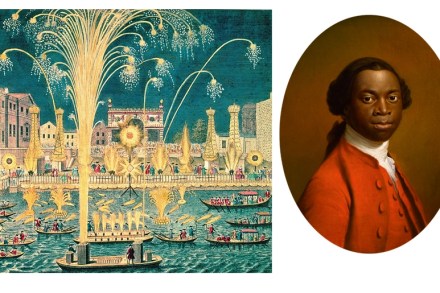
Why in 1737 did Dr Johnson choose to leave his home in Lichfield in the Midlands and travel to London to make a fresh start as a writer, asks Jerry White in his encyclopaedic portrait of the 18th-century capital. It’s a good question. London was dangerous, it was dirty, you could die of ague in a matter of hours, be robbed, crushed to death by the mob, thrown into jail for unpaid debts, and, no matter whether you were rich, poor or of the middling sort, suffer the scourge of bed bugs through every waking hour. To live comfortably (without domestic cares) you needed to earn enough money to employ at least three manservants and four women, reckons White, which would have set you back some 75 guineas a year.
Ecoutez bien!

From our UK edition

The French make it look easy: small babies sleep through the night, toddlers calmly eat four-course lunches, well-dressed mothers chat on the edge of the playground rather than running around after their children, and they hardly ever shout. Pamela Druckerman left New York for Paris and soon found herself with an English husband and several children. While her daughter was throwing food around a restaurant, French children of the same age would be enjoying the cheese course. Druckerman embarked on a painstaking study of parenting à la française. The result is amusing, helpful and charmingly self-effacing. Druckerman was disappointed when she found out that getting pregnant in Paris does not give you carte blanche to eat cheesecake and bond with strangers.

Winter wonderland | 18 February 2012

From our UK edition

Jack and Mabel move to Alaska to try to separate themselves from a tragedy — the loss of their only baby — that has frozen the core of their relationship. They intend to establish a homestead in the wilderness, but it is 1920 and they are middle-aged, friendless and from ‘back east’ — unprepared and ill-equipped for the backbreaking work and unspeakable loneliness of pioneer life. By the middle of their second winter the climate, isolation and sorrow of their situation seem to have got the better of them; at the opening of The Snow Child we find them at the end of their wits and their resources. During a singular moment’s lightheartedness  after a snowfall the desperate couple builds a snow child beside their house and dresses it in hat and scarf.

If only …

From our UK edition

In the early summer of 1910, a naval officer, bound for the Antarctic, paid a visit to the office of Thomas Marlowe, the editor of the Daily Mail. He had come in search of some badly needed funds for his expedition, but just as he was leaving he paused to ask Marlowe when he thought war with Germany would break out. ‘I can only tell you,’ came the reply, ‘that there is a well-informed belief that Germany will be ready to strike in the summer of 1914 and it is thought that she may do so.’ The officer mulled this over, doing his calculations. ‘The summer of 1914 will suit me very well,’ he said, ‘By that time I shall be entitled to command a battle cruiser of the Invincible class.

Many parts of man

From our UK edition

In some ways, you’ve got to hand it to Craig Raine. Two years ago, after a distinguished career as a poet and all-round man of letters, he published his first novel — and received a series of reviews that, as Woody Allen once put it, read like a Tibetan Book of the Dead. According to virtually all of them, Heartbreak was fragmented, name-dropping, pretentious, and not really a novel anyway: more a loose collection of thoughts, revealing an alarming obsession with sexual organs. But with The Divine Comedy, Raine responds with almost heroic defiance. If you felt like that about the last book, it seems to shout, try this one for size. In Heartbreak, for instance, the fragments were comparatively chunky, even featuring some recognisably extended narrative.

Loves, hates and unfulfilled desires

From our UK edition

Montaigne, who more or less invented the discursive essay, had a method which was highly unmethodical: ‘All arguments are alike fertile to me. I take them upon any trifle . . . Let me begin with that likes me best, for all matters are linked one to another.’ Geoff Dyer could say very much the same thing, and it follows that Zona, though nominally a book about Tarkovsky’s maddening 1979 masterpiece Stalker, goes off in any number of directions. There are other ways of describing a circle than setting out to draw all its tangents, but that is Dyer’s preference. If the style of approach hasn’t changed, then the cultural context certainly has.

Saviours of the sea

From our UK edition

The last time we went out for lobster in Lyme Bay we found a dogfish in the creel.  A type of shark that roamed the seas before dinosaurs existed, a dogfish won’t slice your leg off the way a Great White might, but it is very scratchy to hold onto, thanks to its denticles, the teeth that cover its entire body (Speedo, the swimsuit company, is trying to imitate its streamlining qualities). Ours was about two foot long and snappy, with a wide rictus mouth, and it rubbed us raw thrashing about before we dropped it back in the water. While its 400-million- year-old contemporaries are embedded in the Jurassic cliffs where Mary Anning found ichthyosaurs, dogfish can still be sampled in fish and chip shops as rock salmon, or huss.

Bookends: A network of kidney-nappers

From our UK edition

Raylan Givens, an ace detective in the Raymond Chandler mould, has encountered just about every shakedown artist and palooka in his native East Kentucky. His creator, Elmore Leonard, is a maestro of American noir; Raylan (Weidenfeld, £18.99), his latest thriller, presents a familiar impasto of choppy, street-savvy slang and hip-jive patter that verges on a kind of poetry. Typically, Raylan charts a murky underworld where criminals are in cahoots with politicians, and where murder is a consequence of this corruption. In his curl-toed cowboy boots, Federal Marshal Givens is summoned to investigate a case of trafficking in human body-parts. A man has been found moribund in a bathtub with his kidneys apparently removed by surgery.

Menace, mystery and decadence

From our UK edition

It is fitting that Charles Dickens’s bicentenary coincides with Lawrence Durrell’s centenary, for the two novelists have crucial resemblances: both of them are triumphant in the intensity and power of their writing, but capable of calamitous lapses of taste; both of them are riotous comedians who sometimes plunge into hopeless melodrama. It is true that Einstein’s theory of relativity, which Durrell foisted on the structure of The Alexandria Quartet (reprinted, with a new introduction by Jan Morris) has no more part in Martin Chuzzlewit than the ludicrous sexual obsessions derived from Sade and Henry Miller which sully Durrell’s plot. But Dickens in certain moods was, as Angus Wilson said of Durrell’s novels, ‘floridly vulgar’.

Storm in a wastepaper basket

From our UK edition

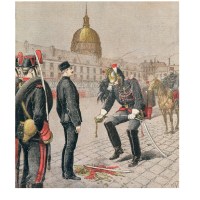
‘It’s the revenge of Dreyfus,’ came the cry from the dock. The speaker was the veteran right-wing ideologue, Charles Maurras, found guilty of treason in 1945 for his support of the collaborationist Vichy regime. It wasn’t of course that, and yet there is a sense in which Maurras spoke the truth. The Dreyfus case had divided France half a century before Maurras was put on trial in Lyon. The division between what Piers Paul Read, in this masterly and eminently balanced account of the Affair, calls ‘the France of St Louis and the France of Voltaire’ had never been closed. The end of the Third Republic and its replacement by Vichy’s ‘Etat Français’ in 1940 represented the victory of the anti-Dreyfusards.

A holy terror

From our UK edition

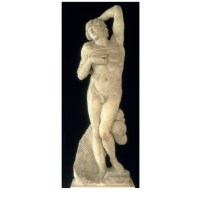
In the summer of 1520, Michelangelo Buonarotti wrote a letter of recommendation on behalf of his protégé, the painter Sebastiano del Piombo, to Cardinal Bibbiena, an influential figure at the court of Pope Leo X. The testimonial carried some weight, for Michelangelo was by now Italy’s most admired sculptor, with what are nowadays called ‘signature achievements’ such as the David, the Pietà and the Dying Slave to his credit. Seven years earlier, what is more, he had completed the magisterial decoration of the Sistine Chapel ceiling, among the most ambitious  projects in the history of painting, for Pope Julius II.

Time to sit and stare

From our UK edition

Hermitic, oneiric withdrawal from responsibilities and threats is the most effective way of alleviating the pangs of middle age, suggests Marcus Berkmann. In his fifties, he is a frank and eloquent expert on ageing, by turns indignantly curmudgeonly and philosophically resigned. He is observant and witty, but there were moments when he reminded me of complaints in Punch of neighbours who failed to return borrowed lawnmowers — perhaps my fault, rather than his. He recommends a shed of one’s own as a refuge in which to escape from stressful reality. ‘If I had a garden,’ he writes, ‘I would have a shed. In fact the main reason for getting a garden would be to get a shed.

Frank exchange of views

From our UK edition

Solomon Kugel is morbidly obsessed with death: his own, and that of those he loves, including his wife Bree and his only son Jonah. He spends his idle hours writing down possible last words in a notebook, and contemplating the undignified and senseless extinctions that await him around every corner. His outlook is not helped by his therapist, Professor Jove, who is convinced that hope is the cause of all human suffering and works hard to extinguish it; nor by his brother-in-law, the unsubtly named evolutionary biologist Pinkus Stephenor — a professional optimist whose latest book is You’ve Got To Admit It’s Getting Better, A Little Better All The Time. (He is a best-seller; Jove can’t get his book published.

Bookends: Short and sweet

From our UK edition

Before texts and Twitter there were postcards. Less hi-tech, but they kept people in touch. Angela Carter (pictured above) and Susannah Clapp were friends, and over the years, postcards from Carter arrived from wherever her travels took her. They could be quirky, surreal — from America a huge chicken swallowing a truck; the Statue of Liberty drowning in a lake. Others were greetings, scribbled comments, hand-drawn cartoons. Fourteen are scattered through Susannah Clapp’s A Card from Angela Carter (Bloomsbury, £10): black-and-white reproductions evoking experiences riotous with colour,  charting the progress of a turbulent life that ended too soon. Carter died of lung cancer in 1992 aged 51.

‘A world dying of ugliness’

From our UK edition

Some writers’ lives are estimable, some enviable, some exemplary. And some send a shudder of gratitude down the spine that this life happened to somebody else. It isn’t necessarily about success or acclaim — most rational people would very much prefer to have had Rimbaud’s life rather than Somerset Maugham’s. But sometimes it is. In the ranks of Mephistophelean terror, there are few more frightening stories than the life of the Austrian novelist Joseph Roth. Everything went wrong for him, and it must have been simply appalling to have had to live within that head, with those thoughts. That he is also a great novelist merely adds to the horror that this collection of his letters conveys. He saw too clearly for his own sanity.

All to play for | 4 February 2012

From our UK edition

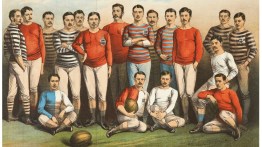
There was a time when sportsmen fretted about the morality of being paid to play. Now the question is whether you are taking money to win, or taking money to lose. Mervyn Westfield, the Essex fast bowler, was only 20 when he accepted £6,000 to bowl deliberately badly in a county match. Three Pakistani cricketers, of course, are in prison for the same offence. How quaint the old distinction between the amateur who plays for love and the pro who toils to make ends meet now appears. How did sport become so morally complicated? It was the Victorians, as Mihir Bose explores in The Spirit of the Game, who decided that sport had to be good for you. The Georgians, in contrast, had been content with sport’s more obvious pleasures of gambling, blood-letting and licentiousness.

Talking tough

From our UK edition

This thoughtful, challenging and deeply depressing book takes as its launch pad the Nuremberg Trials, in which the author’s father played so prominent a part. Churchill would have executed the Nazi leaders out of hand. Eisenhower wanted to exterminate all the German General Staff as well as all of the Gestapo and all Nazi Party members above the rank of Major. Wiser counsels prevailed. The Nazi leadership must be put on trial, it was agreed, and not in such a way as would rubber-stamp a verdict that had already been tacitly agreed. ‘You must put no man on trial under the forms of judicial proceeding,’ said the distinguished jurist Robert Jackson, ‘if you are not willing to see him freed if not proven guilty.

Making sense of a cruel world

From our UK edition

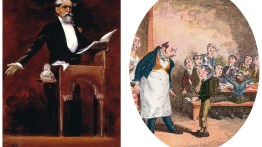
The actor-biographer Simon Callow has played Dickens, and has created Dickensian characters, in monologues and in a solo bravura rendition of A Christmas Carol. Now he suggests that the theatricality of Dickens’s own life is a subject worthy of exploration in book form. So it is, and if Callow had done so, it might have made a useful addition to what he rightly identifies as the ‘tsuanami’ of books that are appearing for Dickens’ bicentennial. But in this cursory biography, he merely makes token gestures in that direction: we learn rather a lot about Charles Mathews’ one-man shows; and Callow describes the theatrical impulses behind some of the novels.