James Buchan

The Scot who became more Canadian than the Canadians

From our UK edition

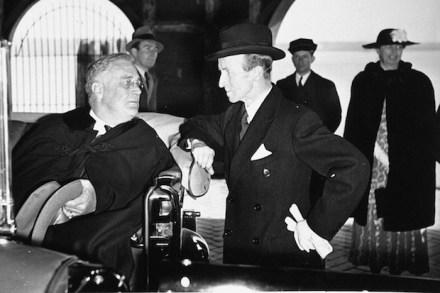
When John Buchan was appointed Governor General of Canada in 1935, the country was deep in depression, the western provinces a dustbowl and a quarter of a million people on public relief, while the prospect of war in Europe threatened great stresses in a newly independent country and its relations with Britain. Many or even most Canadians wanted one of their own and a commoner. They were given a Scot and a Lord Tweedsmuir. In his four and a half years as Governor-General, Buchan/Tweedsmuir had to take care. Canadians, from Prime Minister Mackenzie King downwards, were alert to any sign the self-governing cominion was being put back ‘into any colonial status’.
‘On Glasgow and Edinburgh’, by Robert Crawford – review

From our UK edition

Glasgow and Edinburgh are so nearby that even in the 18th-century Adam Smith could breakfast in one city and be in the other for early-afternoon dinner. For all that, these two cities cherish a rivalry and have followed different paths. Edinburgh, a royal capital until 1603 and a seat of parliament until 1707, and again in recent years, home to a great university and medical school and nurse to writers from Walter Scott to Joanne Rowling, has made almost as much history as Jerusalem. Edinburgh peers down from Castle Hill as if over a newspaper on its toiling rival to the west, besmirched with tobacco and slavery and laden with locomotives, boilers, ships, Vanguard-class nuclear submarines and incessant rain.

A bloody waste

From our UK edition

The US invasion of Iraq in 2003 was an act of frivolity without parallel in United States history. The destruction of the Baathist state caused Iraqis to flee into their ancient sectarian and racial communities, and laid out a killing-ground where animosities suppressed in other Muslim countries could be fought out to the last Iraqi. By early 2006, when Sunni extremists (usually called al-Qa’eda) blew up the holy Shia mosque in Samarra, the country was in civil war. The United States kept its nerve. With the dogged support of President George W. Bush in Washington, five additional fighting brigades and uncounted tons of reinforced concrete, Generals David H. Petraeus and Raymond T.

A certain tragic allure

From our UK edition

Towards Mohammed Reza Pahlavi (1919–1980), the last or most recent Shah of Iran, there are two principal attitudes. Towards Mohammed Reza Pahlavi (1919–1980), the last or most recent Shah of Iran, there are two principal attitudes. To the Islamic Republic and many in Europe and the US, Mohammed Reza was a tyrant, womaniser and poltroon, who was put on the throne by Britain and Russia in 1941 and maintained there by the US, till a popular uprising sent him scurrying abroad in 1979 where he died, unlamented, in Egypt 18 months later. The second attitude, which is gaining ground even in Iran, is that Mohammed Reza was a man of intelligence and industry.

A foot in both camps

From our UK edition

As a five-year-old in the Arab quarter of Jerusalem in the 1950s, Kai Bird overheard an elderly American heiress offering $1 million to anyone who could solve the Arab-Israeli conflict. Tugging on his father’s sleeve, he said: ‘Daddy, we have to win this prize.’ Crossing Mandelbaum Gate, Bird’s memoir of growing up in the Middle East, is full of such generosity and innocence. In 1956, Kai’s father, Eugene Bird, moved his young family from Oregon to East Jerusalem, where he was to serve as American vice-consul in a city divided in two by the 1949 armistice line.

Dangerous liaisons | 1 May 2010

From our UK edition

For the impartial reader, this book is doubly disagreeable. An account of National Socialist short-wave radio broadcasts to the Arab world in the second world war, it prints pages of anti-Jewish propaganda as monotonous as it is vile. The author then shows no sympathy at all for Arab grievances, which makes the brew no more palatable. Jeffrey Herf, who is a professor at the University of Maryland, contends that Nazi anti-Semitism broadcast across the Middle East from Berlin and Bari between 1939 and 1945 has borne fruit. Hatred of the Jews, discredited in mainstream politics in Europe by the Holocaust, has found ‘renewed life’ in the Arab world and Iran.

Tensions that disrupt the world

From our UK edition

In 1981, two books on Saudi Arabia were published within days of each other: The House of Saud by David Holden and Richard Johns and The Kingdom by Robert Lacey. If the first had the faint air of the Financial Times and the second the hothouse scent of Town & Country, they nevertheless advanced our knowledge of Saudi Arabia and its ruling house by a distance. At a time when the very institution of monarchy in the Middle East seemed doomed by the fall of the Shah of Iran, neither book was ready to write off the Al Saud (‘the clan of Saud’). If both books are now dated, it is for the same two reasons. There was next to nothing in either about Saudi women, immured away from Western eyes by jealous families and Wahhabi custom, and not nearly enough about religion.

The man for the hour

From our UK edition

At the turn of 2007, the United States was facing defeat in Baghdad. Shia and Sunni were on killing sprees, the supply line from Kuwait was under constant attack, and F-16s were in action on Haifa Street, less than a mile from the fortified US embassy. Yet commanders in Iraq, and civilians from Defense Secretary Donald Rumsfeld downwards, clung to a bankrupt strategy: withdraw US forces to colossal operating bases outside town — Camp Victory, Camp Liberty — and leave the streets to an untrained Iraqi army, the sectarian national police and to the thieves and murderers. Meanwhile, success was measured in body count whatever the cost to the population, summed up by Col.

Great expectations dashed

From our UK edition

Origins: A Memoir, by Amin Maalouf, translated by Catherine Temerson The Lebanese Amin Maalouf is best known as a writer of historical novels in French, such as Le Rocher de Tanios, which won the Prix Goncourt in 1993. Yet before moving to Paris during the Lebanese civil war of the mid-1970s, Maalouf was a newspaper journalist in Beirut like his father before him. These two elements in his character, romancier and reporter, come together in this fine essay in family history. First published in French by Grasset as Origines in 2004, it is based on a trunk of family letters, photographs, newspaper clippings, receipts and title deeds preserved by the author’s mother in the family house in a part of Mount Lebanon known as the Northern Metn.

Worldly and otherworldly

From our UK edition

In ‘The Arrest of Oscar Wilde at the Cadogan Hotel’, John Betjeman has Wilde whimper to Robert Ross: ‘So you’ve brought me the latest Yellow Book:/ And Buchan has got in it now:/ Approval of what is approved of/ Is as false as a well-kept vow.’ It is a marvellous scene, but not quite accurate. As a thousand Buchanites will clamour, Wilde was arrested in April 1895 and Buchan’s first story appeared in Aubrey Beardsley’s gorgeous fin-de-siècle magazine only the following January. Meanwhile, just a glance at this illustrated new selection of stories shows that John Buchan was the opposite of conventional.

The great negotiator

From our UK edition

Prince Bandar bin Sultan bin Abdul Aziz, the Talleyrand of our age, was for over 20 years the dominant personality in Arab relations with the English-speaking countries. Born into the obscurest royal poverty, Bandar turned himself into a fighter pilot of dash and elan (if not of the very first proficiency), before serving as Saudi Arabia’s ambassador in Washington from 1983 until 2005. He is now secretary-general of something called the Saudi National Security Council, but it is hard to descry through the desert sand and wind his latter-day power and influence. This biography, written by a British classmate from the Royal Air Force College at Cranwell, is the usual courtier’s mixture of hero-worship and good information. The challenge is to tell them apart.

How the catastrophe happened

From our UK edition

Ali A. Allawi has spent much of his life in exile from his native Iraq. Born into a family that had served the royal family that came to grief in 1958, he spent his childhood at schools in England and his career abroad as an academic, engineer and banker. Active among the émigré anti-Baathists in the 1990s, he returned in September 2003 to find his unfortunate country disintegrating into civil war with Britain and America and a troupe of home-grown adventurers and crooks hurrying it on.

Geography is destiny

From our UK edition

Listing page content here Charles Glass, an American reporter for many years based in Lebanon, in 1987 set off to portray what used to be called the Levant, starting in Iskenderun in what is now Turkey and ending in Aqaba in what is now Jordan. This project, which sought to tell the political story of the Middle East through its cramped topography, was disrupted when Glass was kidnapped by Hezbollah in Beirut. He wrote a book out of it called Tribes with Flags (1990). It was another 14 years, and that ominous September of 2001, before Glass picked up the thread of his interrupted journey. Great changes had taken place, all for the worse.

The holy terror himself

From our UK edition

Osama: The Making of a Terrorist is not so much another biography of old beardie as a worldly and suave example of a once thriving subclass of literature, the newspaper correspondent’s memoir. Born in Buffalo, New York on ‘the day President Roosevelt closed the banks’ in 1933, Jonathan Randal reported for 40 years on the wars of the post-colonial era, beginning with the struggle for independence in Algeria in the 1950s and ending with Bosnia in the 1990s. For most of that time, he was correspondent for the Washington Post.

Before and after Babel

From our UK edition

The origin of language is one of the riddles of mankind. History begins with languages already formed, the intricate relics of vanished civilisations. As history progresses, so languages deteriorate. Latin and Sanscrit are richer and more expressive than any of their living successors. As Adam Smith wrote in his beautiful essay of 1761, Considerations concerning the first Formation of Languages, the breakdown of the Latin inflexions left Romance languages that were wordy, unpleasing to the ear and rigid in their word order. Amaveram decayed into ego habebam amatum and then io aveva amato. The God of Genesis created different languages to thwart the insolence of humanity. As an explanation of the origin of linguistic diversity, the Tower of Babel is as convincing as anything since.

Tom Tiddler’s ground

From our UK edition

For many people in the West, the Middle East is a source of perplexity and foreboding. Home to morose despotisms, political violence and a thoroughly ruined natural environment, the Middle East now sends us its refugees, headscarves and, most notably since 11 September 2001, violence. The peoples of the Middle East reply that their lives and political arrangements have been mutilated beyond repair by Western exploitation and bullying. This conversation, never very illuminating, has become even less so of late. Western reporters in the Middle East, restricted in their movements but relatively safe in their persons till the early 1980s, now find some stories simply too dangerous to report.

Different heavens, same hells

From our UK edition

Now in his late eighties, Bernard Lewis is one of the last representatives of a once venerable scholarly type, the Orientalist. Born and brought up in a Jewish family in London, Lewis effortlessly mastered Arabic, Hebrew, Turkish and Persian, wrote his doctoral thesis on the mediaeval Muslim sect known as the Assassins and taught at the School of Oriental and African Studies in London before being lured over to Princeton as Professor of Near Eastern Studies in 1974. In 1978, he was one of the chief targets of Edward Said’s truculent essay Orientalism. Said proclaimed that Western scholars of Islam such as Lewis were not selfless searchers after truth but volunteers in the old enterprise of colonial exploitation.