Book review

‘Lord Horror: Reverbstorm’, by David Britton and John Coulthart – review

From our UK edition

As the son of the last British artist to be successfully prosecuted for displaying obscene paintings, I have some empathy with David Britton, the last person successfully prosecuted in Britain for publishing obscene literature. Unlike my father, who accidentally strayed into the purview of the police, Britton’s prosecution in 1992 was almost inevitable. His publisher, Manchester-based Savoy Books, was raided by the police with vindictive regularity between 1976 and 1997. Ironically, Savoy has often been reviled as much by the left for its lack of political correctness as by the right for attacking the shibboleths of authority. It embodies a longstanding tradition of non-conformist and essentially anarchist thinking in Britain that also underpins Reverbstorm.

‘Ware’s Victorian Dictionary of Slang and Phrase’, by J. Redding Ware – review

From our UK edition

James Redding Ware, with his idiosyncratic treatment of slang, plunges the reader straight into the late 19th-century Bartholomew Fair of undeserving paupers, loafers, Ally Slopers, theatrical types and demi-mondaines. He drew on his own Grub Street life for this discursive lexicon, from A.D. (‘a drink’) to Zulu Express (the nickname for a Great Western service), published, days before his death in 1909, as Passing English of the Victorian Era: A Dictionary of Heterodox English, Slang and Phrase. The Bodder has faked it up nicely in smudgy facsimile, with burgundy end-papers, a new title and an introduction by John Simpson of the OED, who devours dictionaries with his morning porridge.

‘On Glasgow and Edinburgh’, by Robert Crawford – review

From our UK edition

Glasgow and Edinburgh are so nearby that even in the 18th-century Adam Smith could breakfast in one city and be in the other for early-afternoon dinner. For all that, these two cities cherish a rivalry and have followed different paths. Edinburgh, a royal capital until 1603 and a seat of parliament until 1707, and again in recent years, home to a great university and medical school and nurse to writers from Walter Scott to Joanne Rowling, has made almost as much history as Jerusalem. Edinburgh peers down from Castle Hill as if over a newspaper on its toiling rival to the west, besmirched with tobacco and slavery and laden with locomotives, boilers, ships, Vanguard-class nuclear submarines and incessant rain.

‘Mimi’, by Lucy Ellmann – review

From our UK edition

Harrison Hanafan is a plastic surgeon in New York. Every day, he slices and stitches deluded women, reshaping healthy flesh to pander to 21st-century aesthetics. One Christmas Eve, absent-minded Harrison finds himself prostrate on the icy sidewalk of Madison Avenue. ‘Ya can’t sit there all day, buddy, looking up people’s skirts,’ says a plump, sweaty-faced middle-aged woman as she hauls him to his feet. This is Mimi, the antithesis of Harrison’s neurotic patients, and — it transpires, after a few more twists and turns — the love of his life. Harrison has recently parted from pretentious Gertrude, a woman who conceived a child by ‘parthenogenesis’ and ‘batiks without irony’.

William Burges and the High Victorian Dream’, by J. Mordaunt Crook – review

From our UK edition

It is 32 years since the first edition of this hefty book appeared in 1981. The original was based on the research materials amassed by Charles Handley-Read, the pioneer scholar and collector of Victorian decorative arts and one-time art master at Bryanston, who killed himself in 1971. Other people’s research notes are often not easy to use, and Joe Crook has greatly expanded that core material, and presented it in an illuminating schematic way. This second, revised and enlarged edition, as well as correcting errors and fine-tuning matters of detail, incorporates many hitherto ‘lost’ art objects by Burges, rediscovered in the aftermath of the first edition. The rich ‘cream and brandy’ literary mannerisms have also been toned down slightly.

‘Fanny and Stella: The Young Men Who Shocked Victorian England’, by Neil McKenna – review

From our UK edition

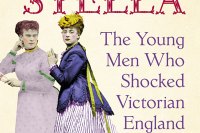
Mick Jagger, the Danny La Rue of rock, impersonates a woman on the cover of the 1978 Stones album Some Girls. Vaudeville performers in the Jagger mould love to put on lipstick and ‘false bubbies’ (as Neil McKenna calls them). Boy X-Factor contestants, with their shaved eyebrows, diamond earrings and nails lovingly manicured, present an almost Gloria Swanson-like image of adornment. Perhaps it is merely romantic to suggest that the stylised wigs and gowns worn by our bishops and high court judges also have a homoerotic component. The former Pope Benedict XVI’s ruby-red pumps were nothing compared to the faux ermines worn in the House of Lords.

‘O My America!’, by Sara Wheeler – review

From our UK edition

You might not expect Sara Wheeler, the intrepid literary traveller, to be anxious about passing the half-century point. Surely a person who can survive the mental and physical rigours of Antarctica, as she brilliantly documented in Terra Incognita, can cope with ageing and menopause? Wheeler herself was not so certain. In her restless, creative way, she met the advent of what she calls ‘the Frumpy Years’ by taking to the road, following the trails of six indomitable Victorian women across the United States. The combination of that nation of eternal makeover and of Wheeler’s travelling companions makes O My America! a curious and teasing book.

‘The Infatuations’, by Javier Marías – review

From our UK edition

A café in Madrid. From her table across the room a solitary woman watches an attractive couple share breakfast morning after morning and speculates pleasurably about their relationship. One day they fail to appear and as time passes she feels a deepening sense of loss. Later she learns that the man has been murdered, stabbed to death in the street — an apparently senseless crime. The tragedy of the happy couple touches and disturbs her. Then, almost accidentally, she finds herself becoming involved with the widow and the dead man’s best friend. At first all is straightforward: loss, grieving, consolation. Gradually the relationship becomes more complex: she begins an affair with the friend, recognising that she is little more than a stopgap in his life.

‘Daphne du Maurier and Her Sisters: The Hidden Lives of Piffy, Bird and Bing’, by Jane Dunn – review

From our UK edition

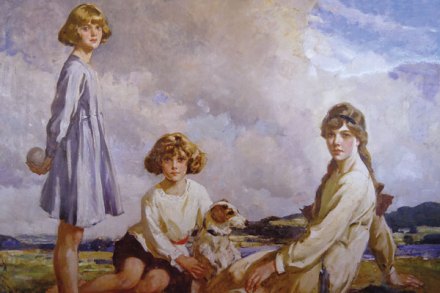
Jane Dunn is something of a specialist on sisterhood. She has — we learn from the dedication — five sisters of her own; she has already written a book about the sisters Virginia Woolf and Vanessa Bell, and another about the cousins Elizabeth I and Mary, Queen of Scots. Now the du Maurier sisters are in line to capture the public imagination like the Brontës or the Mitfords, their group celebrity fortified by genuine claims to fame. The fascination for readers is the different character and destiny of each sister, plus their relationships with one another and with the dynamics of the family romance —  and few family romances have been more potent than that of the du Mauriers.

The world in arms

From our UK edition

The long summer that led up to the last days of peace in Europe in 1939 — the vigil of Hitler’s assault on Poland and the subsequent Phoney War — gave little hint of the storm to come. As German troops engulfed Poland, however, Britain at last declared war on Hitler. Infamously, the Nazi science of massacre was put to the test in occupied Poland. Within two months of Hitler’s invasion, over 5,000 Jews were murdered behind the Polish lines. One year into the occupation a ghetto was established in Warsaw as a holding place for Jews prior to their deportation and death. A total of 265,000 of the city’s Jews were gassed over a single summer at Treblinka nearby. It was the largest slaughter of any single community in the second world war.

Hero or villein?

From our UK edition

‘Not one word’, exclaimed Turgenev of Tolstoy, ‘not one movement of his is natural! He is eternally posing before us!’ The recurrent underlying theme of A.N. Wilson’s prize-winning biography of Tolstoy, now re-issued after a quarter of a century, is the novelist as grand impersonator. Wilson (a prolific novelist himself) believes that there is a strong impulse in novelists to don masks or test alter egos, and that this impulse rioted in Tolstoy’s character. Throughout his long life Tolstoy switched between playing at sad orphan, landowner, libertine, crazed gambler, spiritual elder, holy fool, paterfamilias, historian, village idiot, cobbler and dissident.

Girls and boys come out to play

From our UK edition

‘You are in the polymorphous-perverse stage,’ the school psychiatrist tells the assembled boys of Favorite River Academy in Vermont in the late 1950s. Just how polymorphously perverse his audience turns out to be would have surprised even Dr Grau, had he not fallen over drunk one evening and frozen to death. It is no accident that the all-male private school in which much of the action of John Irving’s new novel takes place should be in a town with the unusual name of First Sisters. Irving’s narrator is a bisexual novelist called William Abbott, known to friends and family as Billy. ‘Abbott’ is in fact the name of his stepfather, who teaches at the school: Billy’s real father disappeared during the boy’s infancy and is rarely talked about.

The dirty dozen

From our UK edition

I have this fantasy in which I’m the Emperor Nero. I’m relaxing in my toga, and there are these slave girls dancing for me, and one of them has the most incredible … Like all the best fantasies, it’s a little unrealistic, let us say, but I didn’t know how unrealistic until I read this magnificent book by Matthew Dennison. For Nero’s life, as absolute ruler of the known world, was hell, haunted by twitching doubts and gibbering fears. He was bisexual, to begin with. That was OK in ancient Rome, but when it came to sleeping with men he received rather than gave, and that was definitely uncool. (During the act itself, the sources say, Nero would ‘imitate the cries and laments of a maiden being deflowered’.

The pen was mightier than the brush

From our UK edition

Of the making of books about the Pre-Raphaelites, it appears, there is no end. Like the Bloomsberries, most of the PRB are more interesting to read about than the study of their work would suggest: a few towering talents stalk the mountaintops, while many lesser ones lurk in valleys and foothills. George Boyce was one of those lesser talents — a watercolourist of some small fame among his colleagues (although he was 52 before he was elected to full membership of the Old Water-Colour Society). His friend Henry Tanworth Wells had more worldly recognition, if not the esteem of the avant-garde: as a portraitist he painted the great, the good, the socially eminent or the just plain rich. The two men were also connected through a third painter, Boyce’s sister Joanna.

Rus in urbe

From our UK edition

One of the pleasures of my week is walking across St James’s Square. The slightly furtive sense of trespassing as one opens the ironwork gates; the decision as to whether or not to follow the circuit of gravel paths or go straight across the grass; the equestrian statue of William III and readers from the London Library eating sandwiches. Although the surrounding architecture is an odd mishmash, the shape of the square and its urban form preserves a strong sense of its original 17th-century layout. St James’s Square plays a prominent role in the narrative of Todd Longstaffe-Gowan’s magisterial account of the ups and downs of the London square.

Paths of enlightenment

From our UK edition

In which Robert Macfarlane goes for a walk, again. But, as admirers of his previous works will know, Robert Macfarlane never just goes for a walk. This book’s four parts, each divided into three or four sub-sections, tell the stories of 16 expeditions: their declared intention to investigate ‘walking as a reconnoitre inwards’. His theme is the way that walking can be not just the occasion for thought but, in some sense, the method by which it is done; the way in which our experience of ourselves is shaped by moving through a landscape: Landscape is still often understood as a noun connoting fixity, scenery, an immobile painterly decorum.

In a Greene shade | 26 May 2012

From our UK edition

One of the unanticipated benefits of British rule in India is the body of distinguished writing in the English language coming from the Indian diaspora — Naipaul, Seth, Rushdie, Mistry, Mishra and Pico Iyer. Iyer, however, is atypical in that he was born in Oxford, lived in California, and was educated at Eton and Oxford. Thus he is less an Indian than a global author. He is coy about having been to Eton, which he does not name: it is the ‘high school near London’, ‘somewhere between the grey towns of Slough and Windsor’, which was founded by a king, has the oldest classroom in the world, and has provided Britain with 19 prime ministers.

Doctor in distress

From our UK edition

It is winter 1936. Every weekday morning a group of young people travel by train from Ferrara, their home city, to Bologna where they are studying at the university. Theirs is a six-carriage stopping train, often infuriatingly late because of delays on the line, thus contradicting the famous Fascist boast about improvement of Italian railways. But these youths enjoy their ride, its camaraderie and little rituals. Only one carriage is not third class, and here, they notice, an eminent member of their own community is sitting: Dr Athos Fadigati. To this ENT specialist’s clinic most of them have, during childhood, been taken.