Book review

Empire of the Deep, by Ben Wilson – review

From our UK edition

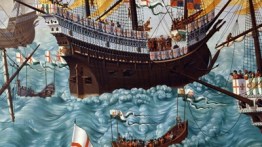
‘I never before came across a man whom I could fancy being a Napoleon or a Nelson…His ascendancy over everybody is quite curious: the extent to which every officer and man feels the slightest praise or rebuke would have been before seeing him incomprehensible.’ Thus wrote the 22-year-old Charles Darwin of Robert Fitzroy, the 26-year-old captain of the Beagle, a good but not unusual example of captains during the Royal Navy’s zenith in the decades following Trafalgar.

The Ghosts of Happy Valley, by Juliet Barnes – review

From our UK edition

Rift Valley, Kenya The other day when I told the headmaster of a top British public school that I came from Kenya, he quipped, ‘Ah, still living in Happy Valley?’ We will never shake it off, this idea of a Happy Valley in the equatorial highlands where aristocrats supposedly indulged in orgies and drugs — what Cyril Connolly dubbed the three As: Altitude, Alcohol and Adultery. It culminated in Joss Erroll’s 1941 murder. ‘Perhaps Africa was to blame,’ Connolly wrote. ‘It insinuates violence.’ It is 30 years ago that James Fox, inspired by Connolly, resurrected these tawdry events in his book White Mischief. It has never been out of print since.

A Slap in the Face, by William B. irvine – review

From our UK edition

A friend of mine who works for the NHS has been told recently by a superior that his ‘attention to detail is bordering on the obsessive’. Aside from observing that an obsessive attention to detail might serve the health service well, this is an example of the kind of insult that Professor Irvine would ascribe either to low self-esteem or to narcissism (high self-esteem with no self-knowledge). The speaker wasn’t offering constructive criticism (my friend had been praised for his attention to detail only days before, by a perhaps less negligent superior) but rather emphasising her superiority, something she had no need to do, unless she felt it threatened. My friend’s attention to detail is clearly her problem rather than his. Irvine begins with examples of insult.

Shire, by Ali Smith – review

From our UK edition

Pastoral elegy is not what you expect to find in a collection of short stories, but then Ali Smith is a wonderfully unexpected writer. In the first story, ‘The Beholder’, which was shortlisted for the Sunday Times Short Story Award, a patient develops a growth on her chest — ‘woody, dark browny, greeny, sort-of circular, ridged a bit like bark, about the size of a two pence piece’. The doctors are mystified, but a gypsy recognises it as ‘a young licitness’, a pun of mishearing later revealed to be ‘a Young Lycidas’, a rose named after Milton’s pastoral elegy.

The Son, by Philipp Meyer – review

From our UK edition

Colonel Eli McCullough, formerly known as Tiehteti, is a living legend. The first male child born in the Republic of Texas, wrested from Mexico in 1836, Eli has miraculously reached the age of 100. Captured by Comanche Indians in boyhood, he mastered their survival skills, and was well on the way to becoming the most respected member of the tribe when smallpox struck. The all-powerful Comanches — ‘the earth had seen nothing like them since the Mongols’ — had no defence against this invisible enemy. But Eli/Tiehteti, immunised in infancy, survived. Eli rampages through the next few decades, including a spell as state ranger when he is obliged to hunt down what remains of the people to whom he once belonged.

Land of Second Chances, by Tim Lewis – review

From our UK edition

This is a book about Rwanda. It’s a book about cycling. But it’s not, in the end, a book about Rwandan cycling. Well, it is. Tim Lewis gives us the story of Adrien Niyonshuti’s attempts to qualify for the 2012 Olympics under the tutelage of American cycling legend Jock Boyer. Adrien and his teammates are desperate to put Rwanda on the world map for something other than the 1994 genocide. But while the tale has its dramatic moments, it never really bursts into life. It’s too messy for that; as Lewis himself says, ‘situations in Africa are rarely, if ever, neat’. For instance, one of the cyclists refuses to train, being too busy pirating videos for the profitable film showings he organises.

Edwardian Opulence, edited by Angus Trumble – review

From our UK edition

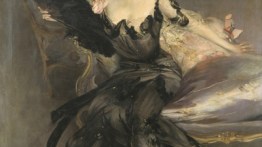
She sits there on the cover exuding sex and wealth and a certain knowingness. Mrs Lionel Phillips, who came from a modest background in South Africa, had the good sense to marry one of the ‘Rand Lords’ who made their piles in the new gold and diamond fields. She and her husband bought their way into society in Britain, accumulating houses and furniture and having themselves painted, as in this wonderful portrait, by the fashionable Giovanni Boldini. That of Mr Phillips is more subdued, even sombre.   The face, said the Athenaeum, ‘is amazing in its unscrupulous vulgarity’. Well, one might think, the anonymous critic could have taken a look around him.

The Breath of Night, by Michael Arditti

From our UK edition

There is always meat in Michael Arditti’s novels. He is a writer who presents moral problems via fiction but is subtle and shrewd enough to know that ‘issue books’, which are tracts not works of the imagination, are dull to read and rarely work as fiction should. He presents us with characters who are fully rounded, credible human beings living through moral dilemmas, affected by them, caring about them, living and dying within their context. In other words, he is an intelligent novelist.

The Annals of Unsolved Crime, by Edward Jay Epstein – review

From our UK edition

Edward Jay Epstein is an American investigative journalist, now in his late seventies, who has spent at least half a century trying to find answers to the troubling theories and nagging questions that always swirl around notorious crimes. The more famous the crime, the harder it is to get at the truth, especially if the crime has political consequences. For example, John Wilkes Booth, who murdered Abraham Lincoln in 1865, was quickly proven to have been part of a conspiracy involving leaders of the defeated Confederate states; but when a reunited country was later seeking reconciliation, it was found expedient to suppress this fact and portray him instead as a deranged individual who had acted alone.

Wreaking, by James Scudamore – review

From our UK edition

An abandoned lunatic asylum, a nasty pornographer in a wheelchair, a bizarre glass-ceilinged viewing dome beneath a scummy lake, a vast henchman, a mother who hears angels telling her she must harm her child: these are some of the places and people to be found in James Scudamore’s new novel. Dickensian excess is the name of the game here. It is as if Mr Murdstone and Steerforth and Magwich (and even the foggy salt-flats which herald his startling arrival in fiction) appeared in the same story as Fagin, together with a couple of lost boys, ripe for criminal exploitation. Scudamore’s relish for names, too, is Dickensian.

Foreign Policy Begins at Home, by Richard N. Haass – review

From our UK edition

A year or so after the ‘liberation’ of Iraq, an unnamed senior Bush administration official (later revealed to be Karl Rove) boasted: ‘We are an empire now, and when we act, we create our own reality.’ Yet a decade later, America’s power and influence has diminished considerably and the American people are suffering from foreign policy fatigue. The greenback is weak, the debt mountain is of Himalayan proportions, the credit rating is downgraded and economic growth is exceptionally sluggish for a nation that is four years out of a recession. The Chinese own more and more of the US debt and they show no inclination to heed Washington’s demands to revalue the yuan or end their cyber-espionage or prevent North Korea from using nuclear weapons.

Horace and Me, by Harry Eyres – review

From our UK edition

After Zorba the Greek, here comes Horace the Roman. The peasant Zorba, you’ll remember from the film, releases uptight, genteel Alan Bates from his cage of repressed Englishness. Now it’s Horace, the Augustan lyric poet, releasing another repressed Englishman: Harry Eyres, Old Etonian scholar, Cambridge graduate, poet and author of the ‘Slow Lane’ column in the Financial Times. This charming, moving book calls itself ‘Life Lessons’, as if it were a general teaching guide for the reader. Really, though, it’s a personal guide for Eyres — who realises that the poet he first struggled to appreciate at school has valuable lessons to teach about love, wine and friendship.

Music & Monarchy, by David Starkey – review

From our UK edition

British royalty, considered from a purely mechanistic angle, cannot function adequately without music. Deprived of marching bands, trumpeters and choristers or even of those ever so well-mannered regimental ensembles which dispense selections from favourite musicals at an investiture or a garden party, the royal performance would lose much of its authenticity. Playing the king in this country has always depended on being able to do the whole shtick to the right tunes. If, from time to time, a genuinely gifted or truly inspired composer should become available, so much the better. Dash and panache for parties and parades, decorous gloom for funerals and the occasional wedding anthem or victory Te Deum sound more like the real thing when knocked off by a Purcell, a Handel or an Elgar.

Dark Actors, by Robert Lewis – review

From our UK edition

No book about Dr David Kelly could start anywhere other than at the end. Kelly is found, dead, in a wood near his Oxfordshire home. A public inquiry, headed by Lord Hutton, concludes that Britain’s leading germ warfare expert has committed suicide. Those who question the procedure or the verdict are scorned as conspiracy theorists. Four years later, in response to a Freedom of Information Act request, the police reveal that there are ‘no fingerprints whatsoever’ on Kelly’s knife, on the tablet packets in his coat pocket or on the water bottle found nearby. This single stark fact — which was simply not mentioned at the public inquiry — seriously undermines the suicide verdict. There are countless other odd and perplexing aspects to the story.

Against Their Will, by Allen M. Hornblum – review

From our UK edition

After the Morecambe Bay Hospital scandal a new era opens of compassion, -whistle-blowing, naming names and possible prosecutions. But what about 70-odd years of harming children in ‘care’ homes, and prisoners, with toxin injections, -radioactive blasts, electro-shocks to the brain and frontal lobotomies — all done in the interests of medical advance by leading American doctors and scientists, one of whom was -awarded a Nobel Prize? Furthermore, what if the CIA sponsored such work in the interest of defending the US against Soviet threats?

Laidlaw by William McIlvanney – review

From our UK edition

Laidlaw was first published in 1977, 36 years back from now, 38 on from The Big Sleep. Like Chandler’s classic it has survived the passage of time. William McIlvanney did for Glasgow what Chandler had done for Los Angeles, giving the city its fictional identity. Hemingway used to say that all American literature came out of Huckleberry Finn; all Scottish crime writing — ‘tartan noir’ — comes out of Laidlaw. Two years before Laidlaw McIlvanney had won the Whitbread Prize for fiction with Docherty, a novel set in a mining community. This established him as the best Scottish novelist of his generation, and some of his admirers were dismayed when he followed it with a crime novel.

The Professor of Poetry, by Grace McCleen – review

From our UK edition

Elizabeth Stone, English professor at UCL,  has long lived on ‘paper and words and thin air’. Single, friendless, dessicated, respected, she passes out during a faculty meeting and wakes to find herself ‘attached by a chain of spit to her own cardigan’. A brain tumour is diagnosed, and removed. Expecting death, Elizabeth receives the news that her treatment was apparently successful as a gift: ‘Time had been returned to her.’ She takes her bravest decision in 30 years and goes back to ‘the city of books’ where, as an undergraduate, she had the only profound emotional experience of her adult life.