Book review

Is Northamptonshire not scenic enough to visit?

From our UK edition

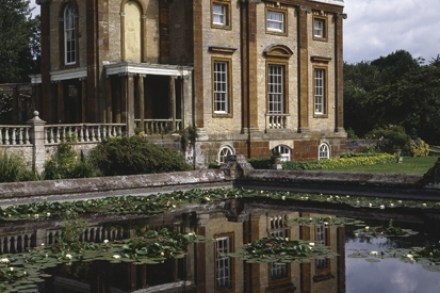
I don’t know whether Bruce Bailey, a proud Northamptonshire man, agrees with the late Sir Nikolaus Pevsner that no one would visit his county for its landscape. In the introduction to the first edition of this architectural guide, published in 1961, Pevsner wrote that although Northamptonshire bordered on more counties than any other in England (nine in all), it lacked ‘any of the memorable scenic qualities one may connect with some of them’. ‘Its beauty spots are few,’ he said. ‘There is no coast, nor a spectacular range of hills.’ Pevsner was, of course, German-born and therefore perhaps of the German romantic view that landscape without rocks and peaks and waterfalls is not really worth bothering with.

The thrill of the (postmodern neo-Victorian) chase

From our UK edition

Charles Palliser’s debut novel The Quincunx appeared as far back as 1989. Lavish and labyrinthine, this shifted nigh on a million copies, while more or less inaugurating the genre of ‘neo-Victorian literature’, whose ornaments are still clogging up the bookshop shelves a quarter of a century later. There have been three other novels since, at least one of them set in the here- and-now, but Palliser’s fifth outing straightaway returns us to the world of creaking lawsuits, high-grade subterfuge and lickerish kitchen-maids in which he made his reputation. In fact the territory occupied by Rustication is so familiar as to make the case-hardened reader of A.S.

The man who shared a bed with D.H. Lawrence and Dylan Thomas (though not together)

From our UK edition

Rhys Davies was a Welsh writer in English who lived most of his life in London, that Tir na nÓg in the east, the place of eternal youth and beauty to which in the mid-20th century many Welsh writers in English, adulterers and homosexuals ran. There were few chapels in London, but many bedsits. Also publishers. And guardsmen. Here Davies followed a career unique by Welsh standards, for he did not sell milk or teach. For 50 years he just wrote.

Portobello’s market mustn’t be allowed to close

From our UK edition

After reading Portobello Voices, I feel more strongly than ever that the unique Portobello market mustn’t be allowed to close. It gets over a million visitors a year and is one of London’s most frequented sites. Blanche Girouard interviewed a cross-section of people involved with the market and has written up their recorded interviews verbatim, using their own voices. This has the effect of making the market feel very immediate and alive. And what a rich cross-section is here.

The best funny books for Christmas

From our UK edition

Books do furnish a room, and quirky books for Christmas do furnish an enormous warehouse somewhere within easy reach of the M25. There are more of them than ever this year, some purportedly comic, some wilfully trivial, a few of them uncategorisable in their oddness, but all of them have one thing in common: they will be outsold by the Hairy Bikers’ diet book. Anyone who tells you that the world is a just and fair place has never written a quirky book for Christmas. In the still popular trivia category — which has survived the stark retraction of the Ben Schott empire — two books stand out. The Unbelievable Truth (Preface, £16.99, Spectator Bookshop, £13.99) is a spin-off from the Radio 4 panel show, where hard-to-believe facts vie with easy-to-believe lies.

Can virgins have babies?

From our UK edition

Mrs Christabel Russell, the heroine of Bevis Hillier’s sparkling book, was a very modern young woman. She had short blonde hair which she wore in two large curls on the side of her head, she was wildly social and she was a fearless horsewoman. In 1920 she set up a fashionable dress shop, Christabel Russell Ltd, at 1 Curzon Street. At the end of the first world war she had married John Russell, known as ‘Stilts’ (he was 6’5” tall), the heir to Lord Ampthill, a cousin of the Duke of Bedford. His snobbish and crusty parents disapproved furiously of the marriage. The young couple spent little time together. Christabel, who adored dancing, went out night after night with one of her many admirers.

Mary Killen: Sandi Toksvig is wrong about the placement of the pudding fork

From our UK edition

Sandi Toksvig, as this book’s cover declares, ‘makes Stephen Fry look like a layabout’. The broadcaster, author, comedian, actress and mother of three has also had time to churn out 20 books in 20 years. This one, a guide to modern manners, although dedicated to ‘Mary’, an eight-year-old girl whom she addresses regularly throughout, is said to be aimed at adults, or Mary when she grows up. There is no snobbery within, but Toksvig makes the point early on that The fact is you will do better in life if other people like you and find you are a pleasure to have around; if you know how to behave.

How much can you tell about E.E. Cummings from this photo?

From our UK edition

Do you think you can tell things about writers from the way they look in a painting or photograph? A more demanding test: from their books can you predict how authors look? It sounds unlikely, yet, upon seeing a photograph of an author, we do find ourselves exclaiming: ‘That’s not how I thought he’d look!’ In Portrait of the Writer there are 250 photographs with a potted biography opposite each. ‘In the best instances,’ says Goffredo Fofi in the foreword, ‘we can see in the photograph that the writer (although not just the writer) has discovered something about himself or herself that he or she was unaware of or had not reflected upon sufficiently.’ Can we, though? Take E.E.

Bill Bryson’s ‘long extraordinary’ summer is too long

From our UK edition

Hands up Spectator readers who can remember the American celebrities Charles Lindbergh, Babe Ruth, Al Capone, Jack Dempsey, Zane Grey, Edgar Rice Burroughs and the  adulteress and husband-killer Ruth Snyder  who all, in 1927, lit up what Bill Bryson calls ‘one hell of a summer’. Born in America only five years later, I knew about most of these characters. Lindbergh, in particular, whose flight across the Atlantic from the east coast to Paris made him for some years the most famous man ‘on the planet’ (one of Bryson’s favourite phrases), attracted vast crowds; once, in a welcoming frenzy, they almost tore his plane apart — an easy feat considering that it was covered in fabric.

Roman baths didn’t make you clean — and other gems from Peter Jones’s Veni, Vedi, Vici

From our UK edition

Spectator readers need no introduction to Peter Jones. His Ancient and Modern column has instructed and delighted us for many years. Now he has written an equally delightful and instructive book with the alluring subtitle ‘Everything you ever wanted to know about the Romans but were afraid to ask.’ Well, it may not be quite everything, but it is a near as dammit. He captures you from the start: ‘Romans came up with two stories about how they were founded. One (bewilderingly, we might think) was pure Greek.’ Well, all nations are uncertain and sometimes confused about their origins. So it’s no surprise to be told that ‘any account of Rome up to 300 BC needs to be taken cum grano salis’ (with a grain of salt).

Slow Train to Switzerland, by Diccon Bewes – review

From our UK edition

In 1863, the pioneering travel agent Thomas Cook took a group of British tourists on the first package holiday to Switzerland. One of them, a jolly young woman called Jemima Morrell, kept a diary — and 150 years later, English émigré Diccon Bewes has followed in her footsteps. His Slow Train to Switzerland (Nicholas Brealey, £18.99) is a fascinating survey of how that country (and ours) has changed. The main thing that strikes you about this charming book is how gung-ho those early tourists were. The trains were rickety, the hotels were spartan, and the toilet facilities virtually non-existent. Yet rather than moaning about these hardships on TripAdvisor, Jemima rose before dawn every day to hike up endless Alps and glaciers.

What would Auden have deemed evil in our time? European jingoism

From our UK edition

‘Goodbye to the Mezzogiorno’ was the first Auden poem that Alexander McCall Smith read in his youth. He discovered it in an anthology, and it puzzled him because he had not then visited Italy. A little later, Smith found Auden’s elegy to Sigmund Freud, and was enthralled by its promise that psychoanalysis frees people ‘to approach the future as a friend/ without a wardrobe of excuses, without/ a set mask of rectitude or an/ embarrassing over-familiar gesture.’ When Smith began his careful, systematic reading of Auden while living under civil war conditions in Belfast, he found the hostility, menace and anxiety of Auden’s pre-1939 poems attuned to his environment. The poet’s hold on Smith’s imagination and intellect has not slackened.

Why do we pounce on Wagner’s anti-Semitism, and ignore that of the Russian composers?

From our UK edition

Before ‘nationalism’ became a dirty word, it was the inspiration for all sorts of idealistic and reform-minded people. This was never more true than in the history of music. Clearly, subsequent events have discredited some of those 19th-century ideals. It is striking, however, that we have become uncomfortable with Wagner’s German nationalism while continuing to regard Smetana’s Czech nationalism as an admirable, even inspiring quality. At times one feels that some musical nationalists are given too easy a ride — as if what happened in the opera house couldn’t conceivably affect anything outside it.

The imitable Jeeves

From our UK edition

For as long as I can remember — I take neither pleasure nor pride in the admission — I have been one of those people who feels an irresistible curling of the lip at reviews of the ‘I laughed till I cried’ variety. Something about that hackneyed claim, invariably trumpeted in bold letters outside West End theatres, inspires absolute scepticism. No longer. At two memorable moments in Jeeves and the Wedding Bells I did indeed laugh until I cried. To readers unfamiliar with his role as a team captain on Radio 4’s The Write Stuff, the literary quiz which culminates each week with a pastiche of an author’s style, Sebastian Faulks, still best known for his novels Birdsong and Charlotte Gray, may appear an unlikely candidate for donning the mantle of P.G.

Carlos Acosta, the great dancer, should be a full-time novelist

From our UK edition

Carlos Acosta, the greatest dancer of his generation, grew up in Havana as the youngest of 11 black children. Money was tight, but Carlos won a place at ballet school, and before long he was enthralling audiences at Covent Garden as a half Jagger, half Nureyev figure with a twist of the moon-walking Jackson in the mix. Now Acosta is about to leap into the world of literature with a debut novel, Pig’s Foot, written over a period of four years during rehearsal breaks. For all its manifest debt to Latin American so-called ‘magic realists’ (Marquez, Borges, Vargas Llosa), the novel stands triumphantly on its own. In pages of salty-sweetprose, it traces five generations of a black family through Cuba’s tumultuous recent history.

Why did Penelope Fitzgerald start writing so late? 

From our UK edition

‘Experiences aren’t given us to be “got over”, otherwise they would hardly be experiences.’ The opening sentence of the first draft of The Bookshop, published in 1978 when Penelope Fitzgerald was 62, didn’t survive in the finished version, but its author had found her voice, and, in a way, her subject. She had learnt how to look back. She had begun publishing only four years earlier, with a life of Edward Burne-Jones. There followed a thriller, written to amuse her husband as he lay dying, and a second biography, The Knox Brothers. This was about her father, ‘Evoe’ Knox, editor of Punch and author of light verse, and his three brothers, two of whom became priests in different denominations.

Why Jeremy Paxman’s Great War deserves a place on your bookshelf

From our UK edition

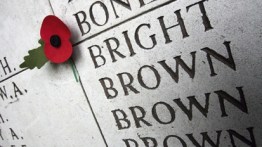
The Great War involved the civilian population like no previous conflict. ‘Men, women and children, factory, workshop and army — are organised in one complete unity of social resistance, to defend themselves both by offence and by ordinary defence,’ said Ramsay MacDonald. Geoffrey Studdert Kennedy, the popular army padre nicknamed ‘Woodbine Willie’, declared ‘There are no non-combatants.’ This premise underpins both these books. While Kate Adie specifically addresses ‘the legacy of women in World War One’, Jeremy Paxman discusses more generally the state of the embattled nation, its press, its political, industrial and social life, its assumptions and priorities. The strengths and weaknesses of both offerings are surprisingly similar.