Book review

Fairytales of racism

From our UK edition

A preview of Helen Oyeyemi’s Boy, Snow, Bird appeared in Granta’s Best of Young British Novelists issue in April last year, the decennial list identifying 20 writers under 40 as the names to watch. The previous four novels of the Nigerian-born Oyeyemi (who was first published at the age of 18) revolve around deeply psychological retellings of folk tales, laced with questions of race, gender and, above all, youth. Her protagonists tend to be ‘seers’, characters somehow displaced from their environment and thereby privileged to construct their own story — the lot of the lonely novelist.

A spectacular faller in the Benghazi stakes

From our UK edition

What an unedifying affair the war in the North African desert was, at least until November 1942 and the victory at El Alamein. As the author of this brisk study of one of its more admired practitioners writes: In no particular order, the following were casualties [i.e. sacked]: Wavell, Cunningham, Auchinleck, Norrie, Ritchie, Lumsden, Gatehouse, Rees, Godwin-Austen, Beresford-Pierse, Dorman-Smith, Corbett, Hobart, O’Creagh, Ramsden and Messervy. There might well have been a separate desk in the military secretary’s department in London dealing with officers who had taken a fall in what was laconically referred to as the Benghazi Stakes. And it had all begun so well.

Secrets of Candleford: the real Flora Thompson

From our UK edition

When Richard Mabey was researching this biography of Flora Thompson, author of Lark Rise to Candleford, he happened to stay at a farmhouse B&B near Bath. Ambling around, he found something very curious ... There were two rows of cottages facing each other, with a dusty track between them ...There were clean curtains in the windows. The gardens were in good order, with sweet peas in flower and rows of fat cabbages. It was a vision of an English village as idyllic as a Helen Allingham painting ... I edged round the back and realised they were two dimensional ... a façade but nothing behind.

First novels: When romance develops from an old photograph

From our UK edition

The intensely lyrical Ghost Moth is set in Belfast in 1969, as the Troubles begin and when Katherine, housewife and mother of four, finds herself remembering an old love affair. Michèle Forbes achieves a vivid depiction of family life — the daily squabbles and teasing, the nuances of Katherine’s love for her children through a haze of exhaustion, one daughter’s struggle to be liked by bullying friends and another’s blushingly awkward first crush. Interwoven with these domestic scenes are chapters set 20 years earlier, in which we see the unfurling of Katherine’s haunting romance.

A family novel that pulls up the carpet before you’re even in the door

From our UK edition

I first mistook David Gilbert’s second novel for the sort of corduroy-sleeved family saga at which American writers excel. The main character, Dyer, is an elderly author gathering his sons about him in Manhattan after the funeral of a boyhood friend, Charles. There’s Richard, a Hollywood screen hack whose teenage journal Dyer lifted for a prize-winning novel; his half-brother Andy, 17, on a mission to pop his cherry with Dyer’s sassy young agent; and Jamie, a documentary maker whose time-lapse footage of an ex-girlfriend’s death from cancer has gone viral. What muddies their stories is that they reach us via Charles’s son, Philip, a frustrated writer who left his wife and kids for a 20-year-old Vicodin addict he met on a sex site.

When Israel was but a dream

From our UK edition

‘On the night of 15 April 1897, a small, elegant steamer is en route from Egypt’s Port Said to Jaffa.’ ‘At the end of October 1898 the small steamer Rossiya made its way from Alexandria in Egypt, via Port Said, to Jaffa.’ It is unusual, or maybe even unique, for the first chapters of two books published at the same time to open with almost identical sentences. But then My Promised Land and Herzl are telling different sides of the same tale: the story of Zionism from the beginning, one of the strangest, most romantic, most bewildering episodes in modern history, and to this day one of the most bitterly contentious Aboard that first steamer to Jaffa was ‘the Rt.

Hillary, Obama, Osama — and a hapless Bill

From our UK edition

The actor David Niven was once badgered by the American columnist William F. Buckley to introduce him to Marc Chagall, a neighbour of Niven’s in Switzerland. Buckley, a keen amateur painter, wanted to know what Chagall thought of his work. With grave misgivings, Niven agreed to set up a meeting. Chagall in silence gazed at Buckley’s pictures for some time until Buckley could restrain himself no longer. ‘Well, what do you think?’ he asked — whereupon Chagall clapped his hand to his brow and groaned, ‘Poor paint!’ I felt something similar on reading this book about Hillary Clinton’s time as US Secretary of State.

The Artist Formerly Known As Whistler

From our UK edition

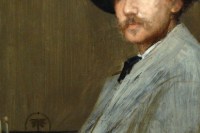
When James Whistler was two years old, he was asked why he’d disappeared from company and hidden under a table. ‘I’s drawrin,’ he replied. He started as he meant to go on. Daniel E. Sutherland’s well-appointed new biography of the American-born painter — whom Henry James described as a ‘queer little Londonised Southerner’ — keeps the attention there, making its central emphasis Whistler’s ferocious single-mindedness in the making of his art. The striking thing is how much the other aspects of him — Whistler the rebel, Whistler the public combatant, Whistler the philanderer, the dandy, the show-off, the semi-delinquent father, the wit and conversationalist — fed into that rather than distracting from it.

Isabel Allende’s Ripper doesn’t grab you by the throat

From our UK edition

Isabel Allende is not an author one usually associates with the thrillers about serial killers. Ripper, however, lives up to its title. It’s the name of an online game, set in Jack the Ripper’s London. Six players — five teenagers and an elderly man — inhabit their personas with fanatical fervour. They switch their forensic attentions to modern San Francisco when the corpse of a security guard is found obscenely displayed in a high-school gym. The father of Amanda, the group’s games master, is the deputy chief of San Francisco’s homicide department. Her divorced mother is Indiana Jackson, a Reiki healer whose patients are often more interested in her Barbie-doll good looks than in her holistic techniques.

Where did the Right and the Left come from? 

From our UK edition

What is the origin of left and right in politics? The traditional answer is that these ideas derive from the French National Assembly after 1789, in which supporters of the King sat on one side and those of the revolution on the other. Yuval Levin in The Great Debate, however, argues not for seating but for ideas: that left and right enter the Anglo-American political bloodstream via the climactic public clash in the 1790s between Edmund Burke and Thomas Paine, the prime movers in a pamphlet war that convulsed opinion and engaged readers on two continents. If this is right, then the touchstone of modern political debate in Britain and America is not capitalism v. socialism, or religious fundamentalism v.

Did Hurricane Katrina have an angel of mercy — or an angel of death? 

From our UK edition

On 28 August 2005 — Sheri Fink’s Day One — Hurricane Katrina reached New Orleans. The National Weather Service warned that ‘human suffering will be incrdible by modern standards’. Fink’s enormous book chronicles that suffering as experienced inside the Memorial Medical Centre, one of the city’s biggest hospitals. Traditionally, staff had sheltered from hurricanes in Memorial, bringing along kids, parents and grand-parents, dogs, cats and rabbits, and coolers and grocery bags packed with party chips, cheese dip and muffulettos. (With this book it helps if you can read American fluently.) About 2,000 people, sick and well, awaited rescue.

The man who gave the world (but not London) the glass skyscraper

From our UK edition

Modern Architecture, capitalised thus, is now securely and uncontroversially compartmentalised into art history, its bombast muted, its hard-edge revolutions blurred by debased familiarity. You have been to Catford? You have seen a heroic vision compromised. Modern Architecture is no more threatening than abstract art, although the Swiss-French Le Corbusier retains a heady whiff of the opprobrium which attaches to bogeymen. His rival in stature was the German-American, Ludwig Mies van der Rohe, a very different designer. With Corb we think of head-butting bravura concrete. With Mies, as he is always known, we think of magnificently refined steel and glass: the beautiful architectural full stop of Hegel’s history.

The enlightened king of Iraq

From our UK edition

‘King of Iraq’ has an odd ring even to those who know that Iraq was called Mesopotamia and was part of the Ottoman empire before falling into and out of the clutches of the British. Many people, including Iraqis, seem unaware that it was a monarchy until 1958. Some 45 years after its overthrow, members of Iraqi families that flourished in those royal days launched ambitious plans to restore the monarchy after Saddam Hussein’s demise. One of them was Ali A. Allawi, the author of this first major biography of Iraq’s founding father, King Faisal (r. 1921–1933).

Where artists went to drink and die

From our UK edition

Once below a time (to quote the man himself) the bloated poet Dylan Thomas slouched back to New York’s Chelsea Hotel in the dead of night and informed his mistress that he had just drunk 18 straight whiskies, which he suspected was a record. He then dropped to his knees, lowered his head onto her lap and mumbled his last words: ‘I love you, but I’m alone.’ On another occasion, during a fund-raising lunch, Jackson Pollock drunkenly vomited on the Chelsea’s carpet, inadvertently improvising, you might say, one of his own drip paintings. On yet another, plastered, the novelists Jack Kerouac and Gore Vidal decided that they ‘owed it to literary history’ (the phrase was Vidal’s) to go to bed together.

Why you shouldn’t keep elephants

From our UK edition

On 15 September 1885, the world’s most famous elephant, Jumbo, was killed by a train. Jumbo, the star attraction at P.T. Barnum’s travelling circus, was crossing the track at a station in Ontario, Canada. His handler, Matthew Scott, saw the danger. But ‘the elephant, fatally confused, trumpeted wildly and ran towards the oncoming train’. The force of the locomotive crushed Jumbo’s skull and drove one of his tusks ‘back into his brain’. But was this really an accident, or had Barnum, or Scott, or both, committed  elephanticide? When the engine hit him, Jumbo was dead within minutes. A bull African elephant is no match for a freight train.

Toowit-towoo! At long last, a Collins book on owls

From our UK edition

Owls have more associations for us than perhaps any other family of birds, suggested Jeremy Mynott in Birdscapes, so it is puzzling that it has taken Collins 70 years to add this ‘Natural History of the British and Irish Species’ to its famous New Naturalist Series. It is of course primarily a zoological work, with statistics, charts and sentences such as: ‘A real breakthrough in resolving this problem has been the advent of affordable molecular and biochemical methods.’ But the science, if sometimes beyond the simple owl-lover, reveals plenty of fascinating facts. The five principal species found in Britain are tawny, barn, little, long-eared and short-eared. The tawny is easily the most abundant, at possibly 20,000 breeding pairs.

Germaine Greer’s mad, passionate quest to heal Australia

From our UK edition

Like an old woman in a fairy story, Germaine Greer, now in her late seventies, has taken to lurking in a forest. Always inclined to reinterpret the world through her own changing needs and perceptions, and to instruct the rest of us accordingly, she has now written a book of passionate didactic energy about her quest for regeneration, personal, national and global. She explores in exquisite, sometimes  overwhelming detail the story of how in 2001 she bought a patch of subtropical rainforest in southern New South Wales, what she found there and what it has taught her and could teach the rest of us if we would only pay attention. In its slightly mad way, this is a rather marvellous book. But then the whole venture was more than a little mad.