Book review – philosophy

In praise of uncertainty over hollow conviction

When I met Brian Dillon in February 2023, he seemed to have a lot on his mind. We had arranged to speak about Affinities, the newly published final instalment of Essayism, his sprawling three-part survey of literature, art and aesthetics. That morning, as he sipped decaf coffee in a quiet corner of the Barbican Kitchen café in London, he still didn’t know what his book was about. ‘At this point you don’t,’ he confessed. But even though he hadn’t made up his mind about Affinities, Dillon had already begun to think about his next project. It was to be a memoir of his education, called Ambivalence. This has now come to fruition.

A world history of morality is maddeningly optimistic

The memory of Tsutomu Yamaguchi will be with me for some time. Though wounded, he survived the Hiroshima atom bomb and returned to his home town, Nagasaki. Three days later, he survived another nuclear attack. He died in 2010, aged 93. This fat, complex, good-natured and intriguing book is full of such memorable material. Hanno Sauer is a German philosopher with an all-encompassing mind and a capacity to entertain. His arguments are sometimes clogged and improbable and I don’t find his primary thesis – basically that things can only get better – credible, but then I feel the same about most philosophers. The thesis is based on Sauer’s belief that moral norms are what made us the dominant species and will continue to do so.

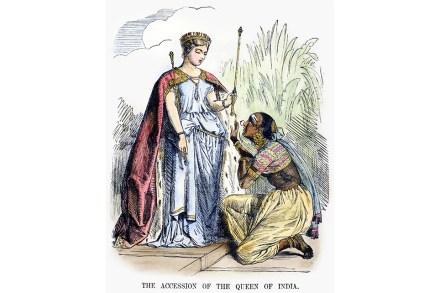
The British Empire’s latest crime – to have ended the Enlightenment

What is the Enlightenment, and when did it come to an end? Neither are easy questions to answer. The Enlightenment, as a historical phenomenon or a phenomenon of ideas, coalesced into an attempt to rid humanity of rigid superstitions and fanaticism and liberate it from tyranny of every sort. Its first movements were discernible in Europe in the 17th century, and it became a continent-wide experiment of thought in the following one. But when did it end – as the title of Richard Whatmore’s book takes for granted? There’s a good case for stating that it never came to an end. Once tyranny and religious certainty were dismissed as universal conditions of existence by the thinkers and writers who followed Voltaire, they could never be reinstated.