Book review

Carl Jung, the man behind the psychobabble

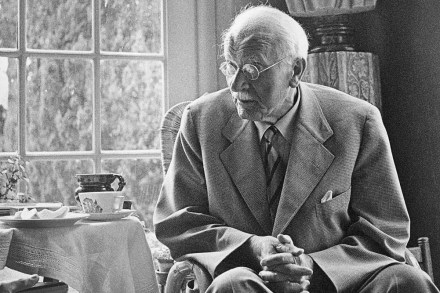
A surefire way to alienate people is to talk about the dream you had last night. In polite society, we’re generally told nobody cares about the goings-on of our subconscious and that it’s probably best to keep quiet. Nothing, then, quite prepares one for the oneiric delights to be found in Jung’s Life and Work, a new edition of the collected interviews between Professor Carl Gustav Jung, the renowned Swiss psychiatrist and founder of modern analytic psychology, and his former student, Aniela Jaffé. The tone is set in the very first interview, where Jung recalls a childhood dream involving a gigantic “erect phallus” reaching “almost to the ceiling” equipped with
carl jung

Inside the Murdoch family fallout

Terrific scripts, marvelous acting and glamorous locales – plus that haunting theme song – made HBO’s Succession superlative television. The show also took the sheen off being a billionaire. Who among us, watching Logan Roy (a barely veiled stand-in for media mogul Rupert Murdoch) mess with his children’s psyches, didn’t think “Isn’t it perilous to be quite so loaded?” Journalist Gabriel Sherman’s new book prompts a similar, aversive recoil. Every family has squabbles, but the Murdochs have fallen out with shocking animosity. Though it’s hyperbolic to claim, as the author does, that the struggle for control of News Corp broke the world, his gruesomely detailed account reveals how shattering the

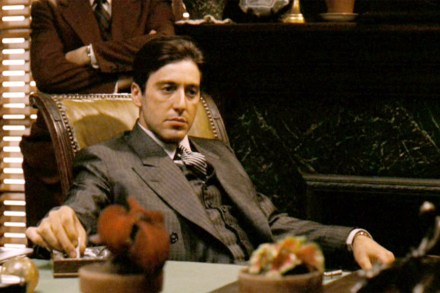
Coppola, Lucas and Spielberg’s outsized impact on 1970s cinema

For any serious lover of cinema, the 1970s were both a golden decade and the beginning of the end of film as an art form. After the permissiveness and countercultural impact of the 1960s, a whole generation of new filmmakers emerged, many of whom remain household names. These men – and they were almost exclusively men – produced work that shook up expected norms and took the medium in new, thrilling directions. It is impossible to list all the pictures and their directors who made this difference, but there are good reasons why they remain celebrated today. And then Star Wars came along in 1977 and changed the trajectory of

coppola

The inside story of how America got to the Moon

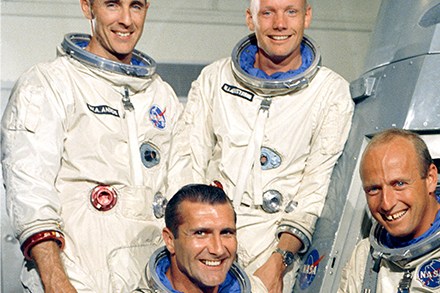
On March 16, 1966, Neil Armstrong and David Scott became the first astronauts ever to dock with another spacecraft when they linked their Gemini 8 capsule to the uncrewed Agena target ship. However, the cheers had barely died down at Mission Control Houston when Scott realized they had a problem. The conjoined spacecraft had begun a gentle leftward pitch. Armstrong and Scott watched in horror as the capsule’s gentle pitch became a tumbling motion that increased, turning the craft into a centrifuge. In desperation, Scott undocked the two ships before gravity ripped them apart. But Gemini 8 continued to spin faster. At 60 revolutions per minute, the astronauts began to

This Tucker Carlson biography is a chronicle of an era

Tucker Carlson may be the most divisive man in America, a human tuning fork vibrating at frequencies that delight half of the country and drive the other half demented. Few public figures inspire such simultaneous loyalty and loathing. To his admirers, he’s a truth-teller with a preternatural instinct for cultural anxiety. To his critics, he’s a fabulist with a talent for setting fires and selling the smoke. This tension – this strange mix of menace and magnetism – is what Jason Zengerle captures in Hated by All the Right People, a biography that becomes, almost inevitably, a portrait of the contemporary conservative movement itself. This is Carlson’s gift: to move

How Fatima Bhutto’s dog saved her from a toxic relationship

Americans who are concerned with heightened levels of political violence should understand that we are fortunate compared with Pakistan, whose most visible political family, the Bhuttos, have a history that makes even that of the Kennedys look tame. One survivor, journalist Fatima Bhutto, born in 1982, encapsulates the family tragedies. Her grandfather, the charismatic prime minister Zulfiqar Ali Bhutto, was executed under trumped-up charges by the government serving the man who deposed him, army chief Zia-ul-Haq. Her uncle, Shahnawaz Bhutto, died in mysterious circumstances, possibly murdered, at the age of 26. Her father, Mir Murtaza Bhutto, was executed gangland-style outside his home in Karachi during his bid to take power

How the West can win

It is no overreaction to look at the current state of western culture, through academia and the arts alike, and to feel that Rome has fallen all over again. Whether it’s a crowd chanting in support of terrorists at Coachella, or a horrific political assassination on a university campus, cheered by some, we are witnessing something far more sinister than a mere surge in political violence. We are watching the collapse of the fundamental preconditions that make civil society possible, as a civilization tears itself apart. Many are of the opinion that it is already too late: that the unique and unprecedented advances in western culture over the past three

Jon Fosse’s Scandi-lit revival

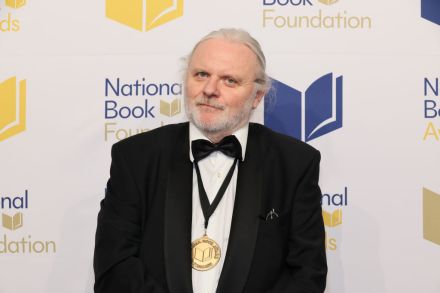
Jon Fosse, the Norwegian novelist who won the 2023 Nobel Prize in Literature, has sat center stage in the recent revival of interest in Scandinavian literature. Fosse’s one-time creative-writing student Karl Ove Knausgård became the very definition of a publishing sensation when the first volume of his six-part memoir Min Kamp (“My Struggle”) – in which he dragged all his family skeletons out of the closet for all to see – was published in 2009. Danish novelist Solvej Balle’s seven-part On The Calculation of Volume, of which only the first three parts have been published in translation, has caused a similar stir in the past two years. The series recounts

Louis C.K. fails to follow in Faulkner’s footsteps

The Great American Novel is a holy obsession – the Everest every writer dreams of summiting. For most, that dream begins and ends with William Faulkner, whose winding sentences and sunburned Southern landscapes birthed prose that seemed to breathe. His words marched; crookedly, yes, but always with purpose. Louis C.K., a would-be Faulkner disciple, trudges into the same swamp in Ingram, minus the map, the bearings and any sense of control. What was presumably intended to echo the Mississippian’s hypnotic disarray becomes instead a masterclass in incoherence. The story, told in long and sweaty first-person narration, follows a boy wandering through a Texan landscape of mud, hunger and half-formed memories.

louis ck
mitfordmania troublemaker

Mitfordmania in Carla Kaplan’s Troublemaker

I won’t attempt to explain Mitfordmania; we’d be here all night. Suffice it to say that fascination with the British sisters – Nancy, Pamela, Diana, Unity, Jessica and Deborah, born to the 2nd Baron Redesdale between 1904 and 1920 – shows no sign of waning. This year alone, the six have inspired Outrageous, a lavish (and fatuous) multi-episode television drama available on BritBox; The Party Girls, a play by Amy Rosenthal; and Do Admit: The Mitford Sisters and Me, a graphic novel by cartoonist and fangirl Mimi Pond. Now comes biographer Carla Kaplan’s Troublemaker: The Fierce, Unruly Life of Jessica Mitford. I did wonder if there was anything left to

Michelle Obama’s new book about style lacks substance

First lady is a strange role. Even when your husband is the first black president, and you’re a Princeton and Harvard-educated former corporate lawyer, America still projects its most regressive ideas about gender onto you. So I understand that Michelle Obama, like Hillary Clinton before her (skipping Laura Bush, a more classical first lady, along with, more recently, Jill Biden and Melania Trump), might have felt constrained, faced with expectations she could never satisfy. I don’t doubt that being black added enormously to that burden. Yet there is nothing more irritating than the person of Michelle Obama complaining. And she is always complaining. There is always sexism or racism or

michelle obama