Biography

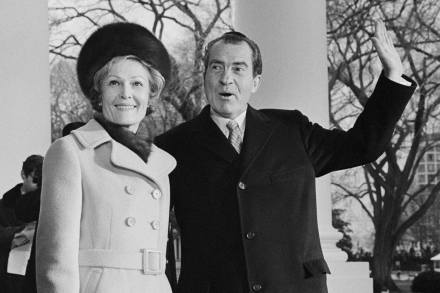
Pat Nixon, ambassador of goodwill

The Watergate scandal already commands a wide bookshelf. In the fifty years since Richard Nixon fell on his sword, we’ve had the big-ticket books by the tag-team of Woodward and Bernstein, and others, by contrast, seeking to exonerate Nixon and pin the whole thing on his adversaries; tales about secret sources and White House interns and plucky whistleblowers like the oleaginous John Dean and that human hand grenade Martha Mitchell; not to mention self-serving memoirs from all the principals, some now on their second or third helping at the table; or the ones saying it was all a conspiracy involving an unholy alliance of the FBI, MI6 and KGB, with the little green men from Mars thrown in.

Pat
Turner

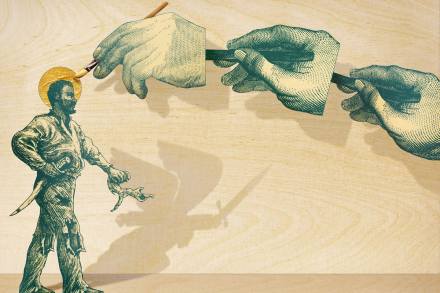
A new and compelling study of the life of the iconic rebel Nat Turner

In 1831, while the slave rebel leader Nat Turner sat in jail awaiting trial in Southampton County, Virginia, he was visited by a local lawyer named Thomas Gray. Turner spoke at length to Gray, who subsequently published his record of their conversations. At one point Turner said he had been visited many years before by the spirit. “What do you mean by the spirit?” Gray asked. “The Spirit that spoke to the prophets in former days,” Turner replied. Gray was unmoved by Turner’s claims of divine inspiration and concluded that he was a “gloomy fanatic” moved to mass murder by religious delusions.

The irrepressible musical gift of Huddie Ledbetter

From our UK edition

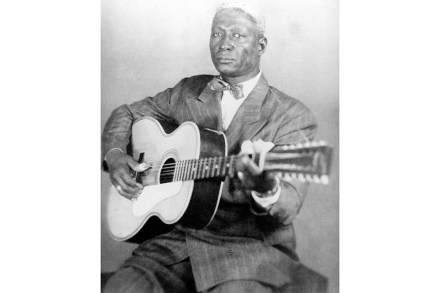
Huddie Ledbetter, better known by the prison moniker Lead Belly, was a musical genius born in the southern United States just as Jim Crow laws were starting to bite. He fell foul of an unapologetically racist legal system and ended up serving on a chain gang in 1915, later doing time in state penitentiaries in Texas (1918-25), Louisiana (1930-34) and at Rikers Island in New York (1939). Sheila Curran Bernard takes as her focus the years 1933 to 1935 when, after years of imprisonment, Ledbetter took an academic, John Lomax, to be his manager and organise his entrance into the larger musical world of northern America.

Dedicated to debauchery: the life of Thom Gunn

From our UK edition

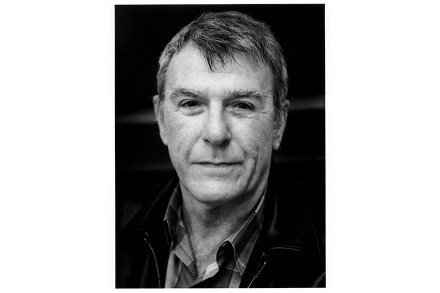
In 1876, writing to his friend Gertrude Tennant, Gustave Flaubert set down a principle that artists and writers should live by: Soyez réglé dans votre vie et ordinaire comme un bourgeois, afin d’être violent et original dans vos œuvres. (Be regular in your life and ordinary as a bourgeois, in order to be violent and original in your work.) The life of the English poet Thom Gunn had its disciplined aspect (he managed to hold down a job at least), but, overall, it was so dedicated to debauchery and excess that it’sa wonder it lasted as long as it did. The story, told in detail by Michael Nott, makes even the least censorious reader sometimes wonder why this seemed like a good idea. Gunn was born in Kent in 1929 to an upper-middle-class intellectual family.

Paris is perhaps the greatest character in Balzac’s Human Comedy

From our UK edition

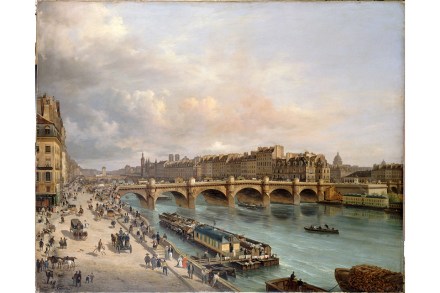
Open one of the major novels by Honoré de Balzac and you are likely to encounter a sentence such as this, from Cousin Bette: ‘Towards the middle of July, in the year 1838, one of those vehicles called milords, then appearing in the Paris squares for the first time, was driving along the rue de l’Université.’ Or this (from César Birroteau): ‘On winter nights there is no more than a momentary lull in the noise of the rue Saint-Honoré.’ It is the same story in Père Goriot (rue Neuve-Sainte-Geneviève), Cousin Pons (Boulevard des Italiens) and others. From the first words of the tale, the reader is cast into the drama of the street. One of the first things to beware of is the mud.

A long goodbye to Berlin

From our UK edition

Christopher Isherwood pioneered what is now known as ‘autofiction’ long before it acquired that label. His best known work, Goodbye to Berlin (1939), which later inspired the musical Cabaret, was based on the diaries he kept while living in the Weimar Republic in his twenties. He’d already used the material before in Mr Norris Changes Trains (1935), a brilliant black comedy thriller that deserves to be read alongside more supposedly serious works of modernism. Forty years later, he reworked the experiences yet again in Christopher and His Kind (1977), in which he finally made explicit, for the new gay liberation era, what had been suppressed in the earlier works: his homosexuality, which had previously been outlawed.

The recklessness of George Mallory

From our UK edition

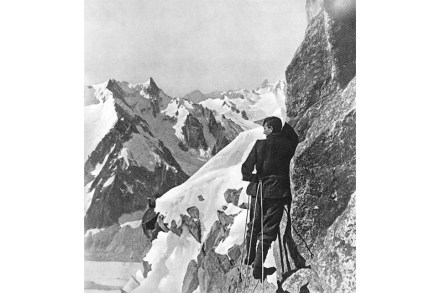
George Mallory bookended the 20th century history of Everest with his pioneering attempts in the 1920s to climb the mountain – and with the spectacular discovery, in 1999, of his body high up on the North Face, preserved by the ice for 75 years after he had failed to do so. His flip remark to a journalist that he was climbing Everest ‘because it was there’ became mountaineering’s most celebrated quote, while masking other less noble reasons. Mick Conefrey has become one of our finest gazetteers of the Himalaya, with successive books on K2, Kangchenjunga and later exploits on Everest. Now he turns his attention to a great conundrum of mountaineering history.

Agent Zo: the Polish blonde with nerves of steel

From our UK edition

In recent years, far from diminishing, the number of books on the Nazis, Occupied Europe and the Holocaust – events that now lie three quarters of a century in the past – seem only to grow. New archives are opened and attics are raided for forgotten diaries and letters. One historian who has mined them with great skill is Clare Mulley, the author of books on spies and Hitler’s pilots. She has now unearthed a story about a bold and resolute Polish agent, Elzbieta Zawacka, who went by the name of Zo. Her adventures are extraordinary, and their background is no less fascinating.

Edwin Lutyens: the nation’s remembrancer-in-chief

From our UK edition

In unduly modest remarks at the opening of this immaculate book, Clive Aslet, one of our most distinguished architectural historians, notes that there have been substantial biographies of Sir Edwin Lutyens, and he does not pretend to emulate them. His achievement, however, is considerable. Aslet has spent more than 45 years in intense and enthusiastic study of ‘Ned’ and his works, and has not merely an encyclopedic knowledge of what Lutyens built, but two other invaluable qualities. First, he appreciates the sort of man Lutyens was, the influences upon him, and how he interacted with his family (especially his wife Lady Emily) and his clients.

The identical twins who captivated literary London

From our UK edition

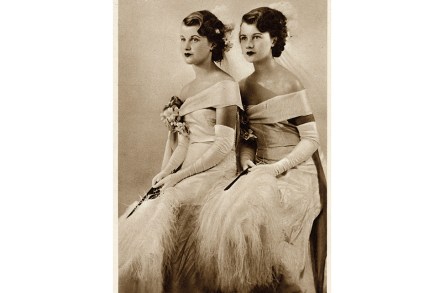
The dazzlingly beautiful identical twins Mamaine and Celia Paget were born in 1916 and brought up in rural Suffolk – not the greatest springboard, you would think, for lives at the intellectual heart of the mid-20th century. Yet the list of their friends reads like a roll call of literary notables: Dick Wyndham, Peter Quennell, Cyril Connolly, Bertrand Russell, Sacheverell Sitwell and Laurie Lee. Between them, the twins were proposed to by, among others, Arthur Koestler and George Orwell; had liaisons with Albert Camus and the formidably clever Oxford philosopher Freddie Ayer; quarrelled with Jean-Paul Sartre and Simone de Beauvoir; and received love sonnets from the historian and poet Robert Conquest. At the heart of this book, however, lies the girls’ twinship.

The circus provides perfect cover for espionage

From our UK edition

The hall was before me like a gigantic shell, packed with thousands and thousands of people. Even the arena was densely crowded. More than 5,600 tickets had been sold. Cyril Bertram Mills started his circus career accompanying his father to European horse fairs in the 1920s. The two of them were soon familiar faces on the German circus scene, travelling between shows to recruit acts for London. The Munich Circus was a particular draw; but sometimes they hired out their circular wooden building to other local acts. The opening quote of this review comes from Adolf Hitler. Mills was at first dismissive of the Munich Nazi party leader, pointing out that hippos, monkeys and pigs ‘also received enthusiastic receptions in the same circus arena’.

Four female writers at the court of Elizabeth I

From our UK edition

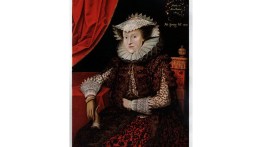
Almost a century ago, in A Room of One’s Own, Virginia Woolf claimed that if William Shakespeare had had an equally talented sister the obstacles to her sharing his vocation would have been insurmountable. Woolf’s argument that a woman needs ‘money and a room of her own’ in order to write proved persuasive. ‘Shakespeare’s sister’ has become a pop-cultural trope. So perhaps it’s unsurprising that the distinguished American scholar of the Renaissance Ramie Targoff should borrow the phrase for a study of four woman writers. Her title offers a shortcut to understanding how significant this immensely accomplished quartet is for readers and writers today. Not that Targoff’s elegantly readable, immaculately researched book needs any establishing gimmick.

Alone and defenceless: the tragic death of Captain Cook

From our UK edition

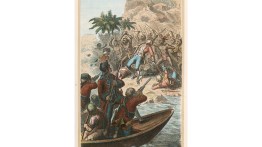
The principal purpose of Captain James Cook’s last voyage, which began in Plymouth on 12 July 1776, was to discover the elusive Northwest Passage. Attempts had been made before, in vain, from the Atlantic, but this time it would be from the west, from the Pacific.  On the way, Cook was to return an Anglicised Polynesian named Mai to Raiatea, ‘a ragged volcanic island’ about 130 miles north west of Tahiti. Mai takes up much of Hampton Sides’s narrative, offering ‘a poignant allegory of first contact’, before being deposited home with his cargo of English domestic farm animals and his suits.  Prior to that, Cook had investigated, in New Zealand, the massacre of ten crew members of the Adventure, the Resolution’s sister ship on his previous voyage.

John Deakin: the perfect anti-hero of the tawdry Soho scene

From our UK edition

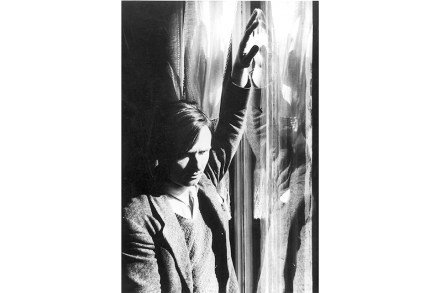
During the various lockdowns I found myself wondering how Iain Sinclair was coping with the restrictions. It seemed unthinkable that this unflinching punisher of pavements could be stuck with 30 minutes round the park. But, as it turns out, sequestering, in a fashion that only the Scots word ‘thrawn’ can do justice to, has resulted in the most archetypal Sinclair book yet. John Deakin is the pariah genius of the title. During the ‘brain-dead hibernation’ of the pandemic, Sinclair got a short-term loan of ‘17 albums of John Deakin’s photographs, fresh prints made from recovered contact sheets; a substantial history of his labours, a flickbook parade of the stunned and waxy faces of his time and place’. From this Sinclair tried to create a ‘psycho-biographic fiction’.

They felt they could achieve anything together: two brave women in war-torn Serbia

From our UK edition

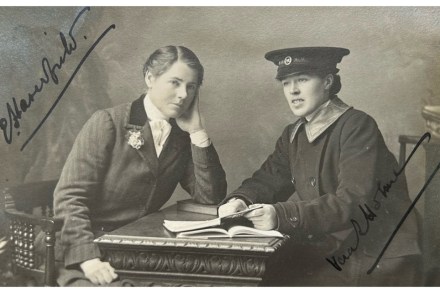
Lesbian military fiction is a popular genre, featuring titles such as Silver Wings and An Army of One, but Jack and Eve is a true story. Written by the journalist Wendy Moore, whose previous books tackled medical and social history, it tells of two suffragettes who caused havoc in the first world war and exposed the absurdity of Edwardian homophobes. Before the war, the jobbing actor Vera Holme, who liked to be known as Jack, changed careers to become Emmeline Pankhurst’s mechanic and chauffeur. In 1908 she met Evelina Haverfield, the conventionally beautiful, wealthy daughter of a Scottish baron. The two fell in love, began living together and soon became the public faces of the suffragette movement. Brave and out-spoken, they fought their corner fearlessly and went to prison.

What we owe to the self-taught genius Carl Linnaeus

From our UK edition

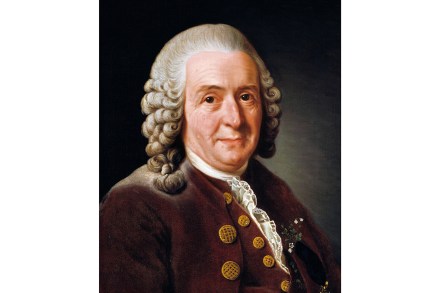
Carl Linnaeus and Georges-Louis Leclerc, Comte de Buffon were both taxonomists, born in the same year (1707), but apart from that they had little in common and never met. Buffon was French, Linnaeus Swedish. Buffon was suave, elegant, tall and handsome (Voltaire said he had ‘the body of an athlete and the soul of a sage’), whereas Linnaeus was a bumptious little man (under 5ft), who was widely regarded as uncouth. Buffon’s funeral was attended by 20,000 mourners but Linnaeus died almost forgotten, after suffering from a brain disease for 15 years. Yet the Linnaean system of taxonomy has survived much better than Buffon’s, which was hardly a system at all.

Sir Roger Casement never deserved to hang

From our UK edition

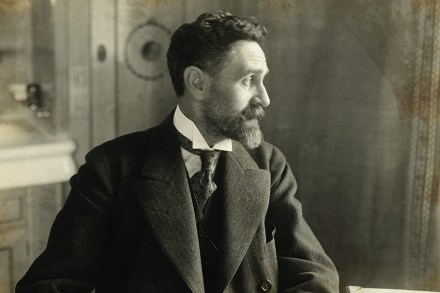
Telling the story of Sir Roger Casement’s life is a challenge for any biographer. In the land of his birth, he is remembered as a national hero. His remains lie in the Glasnevin Cemetery in Dublin beside the graves of Daniel O’Connell and Charles Stewart Parnell. He is there because he was hanged in Pentonville Prison in August 1916 as one of the leaders of the Easter Rising. The awkward fact that Casement had become opposed to the Rising and had tried to prevent it does not fit either the heroic Irish narrative of his life or the official English account of the wartime traitor who died on the gallows.

How country living changed the lives of three remarkable women writers

From our UK edition

Very fine hot day. (Bank Holiday). Sound of band in Lewes from the Downs. Guns heard at intervals. Walked up the down at the back. Got plenty of mushrooms. Butterflies in quantities. Ladies Bedstraw, Roundheaded Rampion, Thyme, Marjoram. This isn’t what we expect from Virginia Woolf, known for her caustic investigations of friends and filigree portraits of her own inner life. But in 1917, after three years of mental illness, she moved to Asheham in Sussex and began a slow but dogged recovery that took the form of these daily walks and list-filled diary entries, which rarely contain the word ‘I’.

A look into Billie Holiday’s final year

If ever a singer were difficult to pin down, it was Billie Holiday (1915-59), whose harrowing life story was first told in an unreliable memoir published just three years before her death. With Lady Sings the Blues, the jazz legend known for her emotional honesty not only allowed herself to be misrepresented (after all, she wasn’t even a blues singer), but actively participated in fabricating the fake stories which proliferated through the book. Some of these — such as a misstatement of her place of birth — are still repeated to this day. Two decades after the publication of Lady Sings the Blues a steady stream of more accurate biographies began to appear.

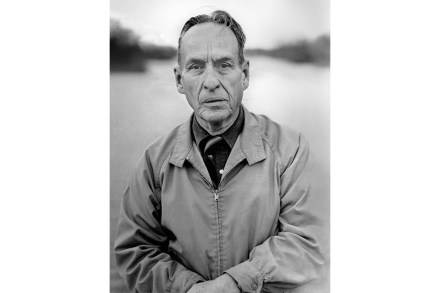
Holiday

The stark horror of Barbara Comyns’s fiction was all too autobiographical

From our UK edition

Barbara Comyns’s reputation rises and falls like a Mexican wave, making her one of the most rediscovered novelists of recent times. She’s credited with anticipating Angela Carter and for being in the vanguard of tackling themes of traumatic dissociation and the realities of childbirth. Yet younger, trendier writers have regularly eclipsed her. Aged 29, Barbara was broke: a single mother who’d weathered affairs, an abortion and a suicide attempt Every fan remembers their first Comyns novel: the visceral jolt of black humour, the suckerpunch of stark horror. Knowing that she drew from life, we have longed for a biography, and hooray, it’s finally here.