Biography

In a class of his own

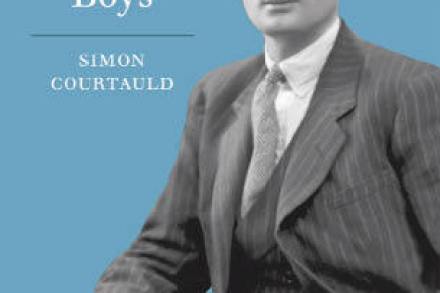
‘Voltaire and the Sun King rolled into one’ is how Elizabeth Longford has described her Oxford tutor Maurice Bowra. As Fellow and then Warden of Wadham College from 1922 to 1970 and successively Professor of Poetry, Vice Chancellor of the University and President of the British Academy, this short, powerfully built, unbeautiful, but magnetic man for years gave the tone to the university. He was a brilliant wit and a challenging and imaginative college tutor. Late in his career, he fought an intelligent rearguard defence of the University’s independence. His biographer, Leslie Mitchell, well-known for his works on Whig history, has drawn on years of local Oxford knowledge and unpublished

Now universally acknowledged

Jane’s Fame: How Jane Austen Conquered the World, by Claire Harman What does Mr Darcy look like? Anyone who has read Pride and Prejudice will be able to give an answer. I believe that he is tall, square-jawed, beetle-browed, slightly weather-beaten and dark-haired. Is any of that at all controversial? But on returning to the novel, we find a strange thing. The one feature in that list which I would have thought beyond dispute is that he has dark hair. This, however, is what Jane Austen has to say about his personal appearance. On his first entry, he is said to have a fine, tall person, handsome features, noble mien

The world of big brother

If the past is a foreign country, who governs it? Who has the right, particularly in dealing with his parents and siblings, to patent very private memories, and sell them to the public? These are questions that generally nag at the readers of family memoirs, and it is a measure of the quality of The Music Room that it does not provoke them. William Fiennes is driven neither by self-indulgence nor a desire to rub salt into old wounds, but by an urge to comprehend and dignify the past, in its joys and its sorrows; to give it shape and meaning. This is, essentially, a prequel to The Snow Geese,

Opposites attracted

Privately printed books are now all too often castigated as ‘vanity publishing.’ But at a time when publishers pay vast advances for the ghosted memoirs of people ‘celebrated’ for kicking balls around or howling into microphones but refuse to take a minuscule financial risk on one as elegantly written and entertaining as this one, that old pejorative must surely be abandoned. Lord (Anthony) Quinton is a distinguished academic, the breadth of whose interests is indicated by the title of a previous book of his, From Wodehouse to Wittgenstein. His American wife Marcelle is a talented painter. In this collaborative work they each give accounts of their lives before they met

Old gipsy-man

Who reads Ralph Hodgson’s poetry today? Probably few people under the age of 40 have even heard of this strange Englishman who died in 1961 in a small town in the American mid-west. His most famous poems are those once learnt by schoolchildren like ‘Time you old Gypsy Man’ or ‘The Bells of Heaven’, both little more than pleasant rhymes. But in his day Hodgson was admired by (among others) Robert Lowell, Siegfried Sassoon, Stephen Spender and T. S. Eliot, who wanted him to illustrate the book that he had partly inspired — Old Possum’s Book of Practical Cats; the lazy Hodgson could have made a fortune from the project

Barking up the wrong tree?

The Vanishing Face of Gaia: A Final Warning, by James Lovelock He Knew He Was Right: The Irrepressible Life of James Lovelock and Gaia, by John Gribbin and Mary Gribbin James Lovelock is an English scientist, recip- ient of many awards, and he is a pleasant writer, moderate in tone and conciliatory towards his critics. In the late 1960s he became famous in New Age circles for his Gaia theory. The name, which is that of the old Greek goddess of Earth, was suggested to him by William Golding, his neighbour and pub companion in their Wiltshire village. It was immediately popular, and so was the image that Lovelock attached

The mother’s tale

‘I’m sick of this story of yours, this idea that it’s about drugs. If you want that to be the story then go away and write one of your f***ing novels about it, OK?’ says the angry son towards the end of The Lost Child, which goes nowhere slowly, despite the rollercoaster ride of publicity it has received. It is hard not to think that the boy has a point. Why didn’t Myerson do the decently indecent thing and write a novel? Plenty of writers — good writers — make little up, but nontheless deploy the mask of fiction which also provides protection for traduced parents, children, lovers and friends

Wit and wisdom | 14 March 2009

Judicial biography is out of fashion: Lord Chancellors apart, the lives of the bewigged great and good are confined within the narrow boundaries of the Dictionary of National Biography. Judicial autobiography is too often driven more by the self-esteem of the authors than the intrinsic interest of the subject. Anthony Lentin convincingly establishes his subject’s claim to resurrection. Born John Andrew Hamilton and of Mancunian middle-class origins, the future Viscount profited from an education at two great forcing houses of talent, Manchester Grammar School and Balliol. Called to the Bar by the Inner Temple, he was no instant success either in London or on the Northern Circuit. For many years

Member of the In and Out

Most MPs who start writing diaries do so in order to prove to themselves how central they are to the political process. But by the time the diaries come to be published, they tend to prove the opposite. The effect is either comic or tragic, depending upon one’s point of view.     Who wrote this, for example? ‘I will have a crack at the leadership as soon as I can, partly because I am in touch with real people, partly because I can offer some leadership.’ The answer? Edwina Currie. It comes in her diary entry of 7 October 1988, when she was a parliamentary under-secretary. ‘I look at rivals

Heroes and villains

This book falls into two distinct parts. The first is the author’s account of his own life until he left Oxford in disgrace. John Joll- iffe, the son of Lord Hylton, passed his childhood and youth at Mells, in Somerset, the home of the Asquith family, and at neighbouring Ammerdown, the seat of the Hyltons. Children in large houses were shoved upstairs to the nursery. In his father’s world, Jolliffe writes, the gap between generations ‘was deep in a way that would be unthinkable today, where parents and children live at such close quarters from the start’. This may have been a sea-change in the mores of the upper class,

More gossip with less art?

To say that this first volume of Samuel Beckett’s collected letters is a puzzle and a disappointment is to suggest that one might have had specific expectations of it. Where did this cryptic and poetic writer come from? What did so very affectless an author sound like when he was talking in his own voice to his intimates? And, considering the remote relationship most of his writing bears to the world, how did he look at it? Added to this specific anticipation is the knowledge that Beckett, in tthe Thirties, had an exceptionally interesting life. He was an intimate of the Joyce household, trusted by all members of it. He

From palace to cowshed

Madame de la Tour du Pin’s Journal d’une Femme de Cinquante Ans, with its vivid descriptions of her experiences during the French Revolution and the Napoleonic Empire, is one of the most enthralling memoirs of the age: a hard act, one would think, for a biographer to follow. Caroline Moorehead succeeds in doing so triumphantly in a rich and satisfying book which not only adds to our appreciation of her story but brings the whole tumultuous period and its characters to life. Born in 1770 into the highest reaches of the French nobility, Lucie-Henriette Dillon spent a lonely and unhappy childhood, brought up by a tyrannical grandmother after her mother’s

No pains spared

Matthew, the author’s son, and the subject of this memoir, had Downs Syndrome, but I should state at once that the book is much more than a guide for parents, or carers, of such children. It stands on its own as a work of literature and should win the PEN/Ackerley prize for memoir and autobiography. The author, in her poised, sometimes old-fashioned prose, beguiles the reader. As a little girl, she befriended a neighbour’s child whom she first saw through the hedge: Large and silent … she wore a bow in her hair and usually carried a doll in her arms. Her smile melted my heart, and though I could

Perfectly unreliable

Memoirs? No one writes them any more. If you wish to distinguish yourself from the sweaty masses, you are far better off publishing a diary, or notebook, call it what you will (Frederic Raphael naturally calls it a cahier). To publish one, of course, you need to have written one, ideally some years ago, full of gossip and spleen and brutal judgments on your contemporaries, some of whom are now dead, and the rest of whom soon will be when they read it. It may not have the form or the contrivance of a memoir — it may, in truth, ramble a bit — but we will forgive this because,

Challenging Zeus

Senior civil servants are generally expected to be shadowy figures, influential rather than powerful, discreet rather than flamboyant, probably — in Gladwyn’s generation at any rate — educated at Winchester. To describe such a being as a Titan might seem an oxymoron. The Titans, it will be remembered, were a family of giants who had the temerity to challenge Zeus and duly got their comeuppance. In this well-researched and thoughtful book Sean Greenwood convinces one that in the case of Lord Gladwyn — not least in the ill-judged challenge to the superiority of Zeus — this far-fetched analogy is amply justified. Greenwood identifies three fields in which Gladwyn’s contribution was

Freedom and houghmagandie

The Bard: Robert Burns, A Biography, by Robert Crawford Robert Burns: A Biography, by Patrick Scott Hogg How to account for the phenomenon of Robert Burns? Not the man or his poetry, but the national icon, a Caledonian amalgam of Alexander Pushkin and Bob Marley? The process of idolisation began with the instant acclaim that greeted the publication of Burns’ first collection, Poems, Chiefly in the Scottish Dialect, in 1786. That it continues today in this the 250th anniversary of his birth is demonstrated by the publication of two new biographies. But to explain why is harder than it might seem. Logically Scotland and Burns should have been incompatible. A

The life of the heart

Love’s Civil War: Elizabeth Bowen and Charles Ritchie, Letters and Diaries from the Love Affair of a Lifetime edited by Victoria Glendinning, with Judith Roberts It is probable that the Anglo-Irish writer Elizabeth Bowen (1899-1973) was a virgin ten years after her marriage to Alan Cameron, the retired Secretary to the Central Council of School Broadcasting at the BBC. Victoria Glendinning tells us that ‘their alliance was always close — but companionable, not sexual.’ But then she began to have affairs: with the Irish writer Sean O’Faolain, and with Humphrey House, a young Oxford don; a lesbian relationship with May Santon, the Belgian-American poet; and a brief liaison with Goronwy

His own best biographer

Byron in Love, by Edna O’Brien ‘We would entreat him to believe that a certain portion of liveliness, somewhat of fancy, is necessary to constitute a poem,’ wrote Henry Brougham in the Edinburgh Review, when the young Byron was unwise enough to expose his first, dismal book of juvenilia to the gaze of ‘Citizen Mob’, ‘and that a poem in the present day, to be read, must contain at least one thought, either in a little degree different from the ideas of former writers or differently expressed’. It is as well for a lot of us that there seem to be different standards for biographers ,because there can be even

The misery of an intellectual

Reborn: Susan Sontag, Early Diaries, 1947-1964, edited by David Rieff Swimming in a Sea of Death: A Son’s Memoir, by David Rieff Susan Sontag, who died in 2004, was one of the late- 20th century’s famous public intellectuals. A stupendously well-read novelist, essayist and critic, strikingly good looking with her white badger-lock, she was engagé, pronouncing on many subjects, from Chinese dissidents to the meaning of disease. She appeared unassailably self-confident, so it is sad, but a bit of a relief, to learn from this first volume of her journal, begun when she was 14, that Sontag was precocious but also deeply depressed. I can’t recall reading a more melancholy

The Millers’ tale

Arthur Miller, 1915-1962, by Christopher Bigsby Arthur Miller was born in 1915 in Jewish Harlem, the son of immigrants from the shtetl, enjoying comfortable family wealth until his father’s business collapsed. The key events in forming his political outlook were the Depression, the Spanish Civil War, the Cold War — and the slow-to-dawn truth about Stalinism. The ever-present corollary is ‘New York Jew’. At the outset of a biography encompassing the man and his work, Christopher Bigsby points up Miller’s recurring debt to the classical Greek theatre, ‘where a society could engage with its myths, its animating principles.’ Tall and strong, Miller remarkably was never conscripted during the second world