Biden

No, Biden didn’t just snub Brexit Britain

For European Union enthusiasts, the ‘trade deal with America’ has joined ‘£350 million pledge on a bus’ as one of the great Brexit lies. A certain amount of gloating has therefore greeted the news that Joe Biden last night ‘downplayed’ the possibility of a US-U.K. Free Trade Agreement. It’s a ‘snub’, Brexiteer hopes are dashed, and so on. But did Biden actually ‘downplay’ anything? Not really, since nobody has been seriously playing up the possibility of late. Many journalists are today talking as if the Prime Minister had been hoping to announce with Biden the trade deal Donald Trump promised Britain in 2017. But Boris has been the one minimising the government’s hopes.

Biden is losing Nato

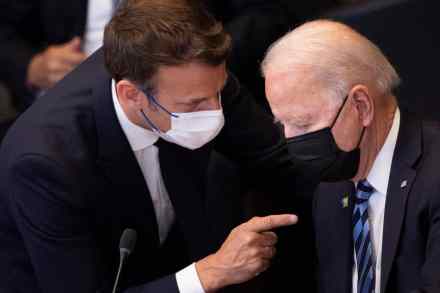
The forming of the Australia-UK-US (Aukus) military alliance in the Pacific shows how everything Trump can say, Biden can do. The problem is, Biden isn’t doing it very well. Biden’s administration, like Trump’s, is committed to building its Pacific alliances while sustaining Nato. Yet on Australia as in Afghanistan, the Biden team are doing exactly what they accused Trump of: unpicking the frayed bonds of Nato without a clear idea of what might replace it. The government has three tasks: to keep American workers at work, win contracts for American exports, and secure America’s interests overseas. Two cheers for Biden for getting the Trump memo on the first two points.

The real reason France was excluded from Aukus

The fallout from Australia’s cancellation of its submarine contract with France and the new trilateral Indo-Pacific security pact between Australia, the US and the UK continues. France has recalled its ambassadors from Canberra and Washington (though significantly not from London) for ‘immediate consultations’; the well-worn diplomatic gesture of discontent. This is the first occasion ever in over two centuries of Franco-American friendship.  Last night in another outburst of petulance, the French embassy in Washington cancelled the gala to celebrate Franco-American friendship. The festivities were to mark the 240th anniversary of the crucial Battle of the Capes when the French navy defeated its British counterpart in defence of American independence.

Hunter Biden, artist of modern life

From our US edition

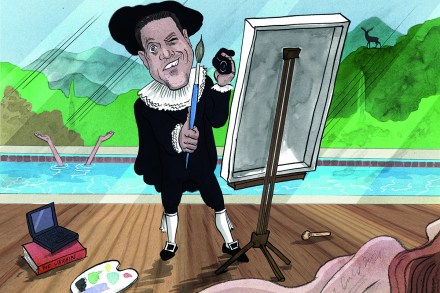
Why do we keep hearing about Hunter Biden? Why is this disgraced political son and aspiring amateur pornographer now making art? Why must we even contemplate his creations? The reason is that much of our culture — at least its sanctioned, outward-facing elements — now operates ‘against nature’. I refer to that 1884 novel by the Symbolist author Joris-Karl Huysmans. À Rebours, known in English as Against Nature, is the book in which French literature dispensed with naturalism and its common-man struggles, and instead gave voice to the rot of the elite. Before we dwell on Biden fils, let us briefly revisit Jean des Esseintes, the main character of Against Nature. He is the withered end of a once noble family.

hunter biden

What exactly was the plan in Afghanistan?

From our US edition

The collapse of the Afghan army and state was so rapid and so total that, mercifully, talking heads have already moved on from debating whether the country might have been saved from a Taliban takeover. Everyone now agrees that was impossible, and the trillion dollars spent to prevent it was thoroughly wasted. Instead, because pundits and politicians must fight over something, the scrum has been over the frantic manner of America’s withdrawal. Was the Biden administration warned that Afghanistan would collapse in the amount of time typically reserved for a test cricket match? And if so, did it simply ignore those warnings?

taliban kabul

Joe Biden and the grand battle of ideas

From our US edition

Well, Donald Trump doesn’t seem so bad now, does he? I don’t say that because Joe Biden has turned out to be as competent or less, but because at his press conference in reaction to the fall of Kabul, he sounded Trumpian. By which I mean, honest. Honest that staying in Afghanistan so long was a mistake, that their government was corrupt, that if its army wasn't prepared to defend itself then we shouldn't do it for them, and that this is what a withdrawal looks like: horribly, brutally honest. The endgame was a disaster because America’s intel was wrong, so the US had less time to get out than it thought, and because Biden lacks the acuity to respond to changing conditions. Biden looks like Brezhnev after heart-attack number seven.

biden

The China challenge has no precedent

The US has never been more worried by the rise of China than it is today. In my Times column today, I mention a new book by Joe Biden's China director on the National Security Council which sets out why ‘China now poses a challenge unlike any the US has ever faced’. Rush Doshi notes that American hegemony has been based, in considerable part, on its economic might. In the second world war, Germany and Japan combined did not reach 60 per cent of US GDP. Throughout the Cold War, the Soviet Union failed to hit this mark. Yet, China passed it seven years ago. The book sets out how China is attempting to replace the US-led world order with its own system, and how the US should try and counter this. It highlights that great power competition is very much back.

New York’s vaccine passport scheme could have a nasty side effect

The latest French export to the United States is a requirement that people show proof of vaccination to visit indoor bars, concert venues, restaurants and gyms. But will it work? On Tuesday, Mayor Bill de Blasio announced that New York City will be the first American metropolis to import the French health pass. Marketed like an upscale perk, the 'Key to NYC Pass' program will begin on 16 August and become mandatory on 13 September. De Blasio is doing his best to sell the pass as a carrot, rather than the stick it really is. But his rhetoric is still ominous. He said: 'It is so important to make clear that if you are vaccinated, you get to benefit in all sorts of ways. You get to live a better life. Besides your health in general, you get to participate in many, many things.

Could street protests finally topple Cuba’s communist regime?

Could the growing tide of protests finally topple Cuba's communist government? Many Cubans are certainly angry: Sunday marked the largest-ever demonstration against the island’s regime. Organised through social media, the protests, which began in a town twenty miles outside Havana, quickly spread across Cuba. Thousands of demonstrators marched along some of Havana’s most iconic streets, chanting ‘Freedom!’, ‘Fatherland and Life’ and ‘Down with the dictatorship!’ Discontent with the regime, which took power in 1959, has been rising for the past year. Before this weekend, the most high-profile protests had been from artists and intellectuals demanding freedom of expression. But this discontent is spreading rapidly.

Why the Biden-Putin summit wasn’t a waste of time

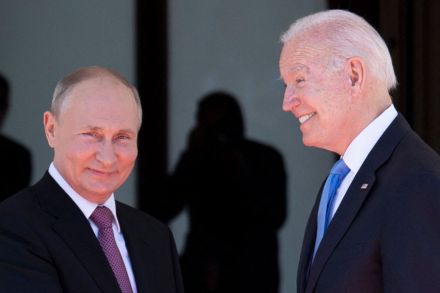
The meeting between U.S. president Joe Biden and Russian president Vladimir Putin in Geneva started cordially enough. A quick handshake, toothy smiles for the cameras, and some standard words of diplomacy. 'I would like to thank you for the initiative to meet today,' a slouching Putin told an attentive Biden. 'Still, U.S.-Russian relations have accumulated a lot of issues that require a meeting at the highest level, and I hope that our meeting will be productive.' Putin's words were something of an understatement. U.S.-Russia relations are scraping the bottom of the barrel and may very well be at their lowest point since the early 1980s, when Washington and Moscow were turning Europe into a parking lot for intermediate-range missiles.

Biden’s tax plan spells bad news for Ireland

Biden’s America, of course, is all about re-engaging with the world after four years of isolationism. But if you are the Irish finance minister, perhaps the new administration isn’t looking quite so cuddly at the moment.  Biden’s first big achievement in international cooperation looks like being a global minimum corporate tax rate. It seems that G7 nations are about to announce they have agreed on such a tax, set at 15 per cent. It will mean corporations paying a minimum of 15 per cent tax on their profits regardless of where they are based in the world, where they do business and where they pretend to do business.

Can Biden bring relations with Russia back from the brink?

Russian foreign minister Sergey Lavrov delivered a depressing assessment on the state of U.S.-Russia relations earlier this month. While holding out a sliver of hope that ties between Washington and Moscow could improve, Lavrov said 'the confrontation has hit the bottom'. His remarks came a fortnight after U.S. president Joe Biden and Russian president Vladimir Putin scolded one another like two children in the schoolyard, with the former calling Putin 'a killer' and the latter hinting that Biden may be suffering from ill health. Relations, in turns out, weren’t at the bottom as Lavrov thought.  We know this because the dynamics between the U.S. and Russia have only gotten worse in the weeks since. You can excuse someone for thinking U.S.

Biden’s sanctions send a warning to Putin

It’s not easy to frame sanctions, these days. They occupy that huge, hazy diplomatic no man’s land between sternly-worded but essentially vacuous expressions of concern – grave concern, if you really want to pretend you’re serious – and sending a gunboat. When it comes to trying to make an impression on Vladimir Putin, who has no qualms about causing the West concerns – and has a good few gunboats of his own – this is a doubly-difficult challenge. The latest US sanctions are a case in point, a mix of the cosmetic and the consequential that are more about political signalling than anything else.

Boris needn’t outflank Biden on China

‘We must prepare together for a long-term strategic competition with China… We cannot and must not return to the reflexive opposition and rigid blocs of the Cold War. Competition must not lock out cooperation on issues that affect us all.’ These words were not spoken by Boris Johnson as he presented the integrated review to the House of Commons this week. Rather, they were said by President Joe Biden, in his speech to the Munich security conference a month ago. In setting out his vision for a future relationship with China, the Prime Minister and this week’s integrated review may well have been taken from Biden’s script. So why has the IR caused so much controversy?

Biden must learn from Trump’s mistakes on North Korea

Anniversaries are usually celebratory occasions, but not this one. It's now been two years since the infamous Hanoi summit between Donald Trump and Kim Jong-un, and there is precious little to show other than an important lesson in how negotiations with North Korea can sour.  Joe Biden is now nearing his first one-hundred days in office. Little has been said about dealing with the North Korea problem. But one thing is for sure: a US-North Korea summit is far from imminent. Following their first encounter in Singapore in June 2018, it suited Trump and Kim to meet again. For both leaders, the theatre and optics of their gathering was too good to resist a second outing. It is then that things appeared to go wrong.

Welcome to Trump’s second term

President Biden’s emphatic assertion that 'America is back' at the Munich Security Conference last month was met with a lukewarm reaction from European leaders. 'Europe has moved', William Galston explained in a Wall Street Journal column pointing to a recent survey by the European Council on Foreign Relations that revealed a persistent distrust of the United States among Europeans and a resistance to taking the US side in America’s competition with China. Yet there is another side to the story. America is not really back. True, president Biden was quick to rejoin the Paris Climate Accord and to extend warm and fuzzy feelings toward our traditional allies.

Is Joe Biden’s administration fit for the 2020s?

Joe Biden’s Cabinet nominees have been warmly received by the massed ranks of anti-Trumpists in Washington. But the warmth stateside is nothing compared with the rave notices the incoming administration is receiving in much of Europe. There is particular delight in the UK, where the special Boris-Donald relationship evaporated within seconds of Biden’s election victory. The enthusiasm derives partly from a sense that, as some have put it, the adults are back in the room. The image of Trump as ‘toddler-in-chief’ was projected on to his whole volatile administration. Now the line-up announced by the incoming President looks and sounds serious, sober and a lot more like US administrations are supposed to be.

What does Trump want now? Revenge — and a second term

The figure of the ex-president is one of the most endearingly republican features of American politics. He who was the most powerful man in the world for as many as eight years turns overnight into a political fossil. He’s no longer the leader of his party, much less his country. Whether in his fifties or in his seventies, his battles are over. Now there’s just millions to be made on the corporate lecture circuit and publishing ghosted memoirs. If you’re Jimmy Carter, you build houses for the poor. If not, the spotlight returns only when you’re the opening act for your party’s next nominee at the convention. The only big national event that’s all about you, once your time as president is up, is your funeral.

How the ‘diploma divide’ helps explain the US election result

If the US election was a television drama, the drum-roll end credits of the penultimate episode played this week and we are now waiting for the denouement. Only, there was never supposed to be a cliffhanger. An exhausted nation should have chosen boredom. Biden was meant to have been the clear victor and the political clock reset to a pre-2016 normality. But, in a plot twist that is by now so familiar we have no excuse for not anticipating it, opinion polls and commentators alike called it wrong. It’s not just in the US. All around the world, elections have become more difficult to predict. Traditional party loyalties have been shattered and old certainties have given way to new divisions in voting patterns.

Trump is right not to concede

I am happy to see that President Trump is acting on the maxim of the month: Don’t concede if you didn’t lose. Any other GOP president would be on the defensive now. ‘Yes, there was voter fraud, but, but, but…’ That dangerous conjunction is a fledging concession just waiting to spread its wings and fly. Donald Trump does not trade in concessions. It’s one of the things about him that infuriates people. It’s also one of the reasons he is so effective. He abhors clutter. He seizes upon the main issue – there’s too much illegal immigration, our trade practices are unfair to American workers, the deep state has created a suffocating regulatory nightmare that benefits a tiny class of bureaucrats.