Benefits

Why Universal Credit delay is a good thing, not a political failure

'Iain Duncan Smith must now ask himself if he is fit for purpose.' That's what Liam Byrne thinks of the Work and Pensions Secretary's admission that the roll-out of Universal Credit is being delayed. The original plan was for all new claims for out-of-work support to go into the universal credit rather than the current benefits system from October 2013. But a written ministerial statement yesterday said the pilots of the new benefit will be extended to six hub JobCentres instead. Labour says the 'we have final confirmation that the welfare revolution we were promised has collapsed'. If deep down you don't want universal credit to succeed, then you must be quite chuffed with the slowing of the timetable. But its supporters should be happy, too. Why?
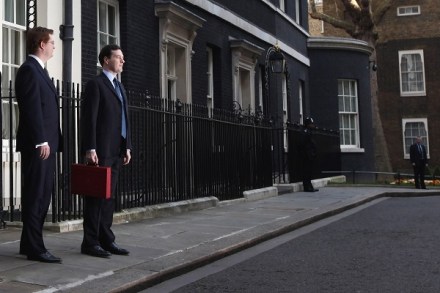
George Osborne’s big idea

What are the Ashes? This question was put to former England cricket captain Ted Dexter, the guest of honour at the launch last night of the writer and broadcaster Simon Hughes’s latest book. Dexter replied that the Ashes is an idea; the terms of engagement that had united two sporting nations in rivalry for nearly 150 years. Few things in life are more durable than a simple idea. The idea of ‘austerity’ drives our political debate and yesterday's spending review has extended the life of the idea deep into the next parliament. It is a political concept rather than a purely economic issue.

Jane Austen! Why can’t we have Anjem Choudary on the new ten pound note?

I see that they have gone for Jane Austen as the face of the new ten pound note, after a long and bitter row. I find it incredible that they decided not to take the chance to show a true commitment to multicultural diversity and have instead chosen some boring dead white woman.  I wrote to the authorities demanding that the fiery Islamic organiser Anjem Choudary have his face on the note. After all, as taxpayers we give him enough of the stuff every year. But this was rejected out of hand, sadly. Choudary has backed a new organisation, called Islamic Emergency Defence.

Can you really give back your pensioner perks?

This weekend, Iain Duncan Smith sparked a furore when a Sunday Telegraph interview quoted him as saying he would ‘encourage everybody who reads the Telegraph and doesn’t need [their winter fuel allowance], to hand it back’. This morning, however, he appears to have offered a retraction, telling the Today programme that ‘I’m neither encouraging nor discouraging anybody to hand their money back’, adding that if pensioners are eligible, ‘it’s wholly their money to take if they wish.’ And his colleague Ken Clarke claimed there wasn't even a mechanism for doing this. So, if you normally spend your winter fuel payment on your family's Christmas presents or on restocking your wine supplies, can you hand it back to the government? And how?

Why don’t Labour talk about welfare reform?

Philip Collins is shackled by the epithet 'Tony Blair’s former speechwriter'; shackled because his columns prove him to be his own man. His latest (£) is a carefully argued critique of the Labour Party’s total lack of a welfare policy, titled 'Labour Can't Win If It's On Mick Philpott's side' . The most arresting section is: ‘There is no better illustration of the self-harm of Labour’s position than that it is driving me into the arms of the Tory backbencher Bernard Jenkin. I usually regard Mr Jenkin as the prime specimen of perspective-free hyperbole on Europe and tax cuts. But Mr Jenkin was one of a number of Tories who suggested that child benefit be limited to the first two children; this would save £3.

Welfare Reform is this government’s most difficult but most popular policy.

I always enjoy Peter Oborne's columns not least because his opinions are as entertaining, predictably unpredictable, quixotic and changeable as his cricket captaincy. This is not a bad thing. This week he's back in full-on Cameron as Disraeli mode, arguing that the coalition's reforms of education (in England, though sadly the Peter and the Telegraph refer to "Britain's schools") and welfare (across the UK) are so important that success here dwarfs any failure anywhere else. I think he may be right. Coincidentally, I've an article in today's Scotsman that, though chiefly concerned with Iain Duncan Smith and welfare reform, makes passing reference to Gove too.

George Osborne’s benefits speech – full text

George Osborne’s speech is below. As you will see, it is a bold defence of the government’s policies on tax and welfare, including the 50p rate cut. There was a clear moral tone to Osborne’s words, which may go some way to challenging the notion that he is an insubstantial political figure. It was, he implied, wrong to delay deficit reduction, wrong to penalise work, wrong to condemn people to poverty. There was bald politics too as he sought the votes of ‘hard-working families'. He attacked the ‘vested interests’ which were on the wrong side of the debate, goading them to carry on complaining and alienate themselves.

Two versions of Osborne’s benefits speech

The Times' Sam Coates picked up on a couple of discrepancies between the text of George Osborne's Morrisons speech sent out by CCHQ, and the one published by the Treasury. Here's the CCHQ text: 'In 2010 alone, payments to working age families cost £75 billion. That means about one in every seven pounds of tax that working people like you pay was going on working age benefits.' But the Treasury version reads: 'In 2010 alone, payments to working age families cost £90 billion. That means about one in every six pounds of tax that working people like you pay was going on working age benefits.' Osborne actually delivered the Treasury version, and that does seem to be the more accurate one.

Osborne and IDS promise a ‘better deal’ for working families. But a better deal is not necessarily a good deal

As Fraser says, the welfare changes, cuts to legal aid and so forth, which have come into force today, have got a universal thumbs-down in the left-wing press. I expect that the barrage of negative headlines will please No.10 (you cannot make an omelette etc.). It also has the comfort of knowing that the public is broadly in favour of reform. But the government might be disgruntled at the comparatively muted reaction of the right-wing press. The Telegraph’s coverage is intriguing. It concentrates on the Tories’ clash with the church over benefit cuts, which was mentioned by Christian Guy in a post yesterday.

How will the Tories sell more welfare cuts?

David Cameron is making noises about further welfare cuts as he tours India, reports the FT's Kiran Stacey. This isn't surprising: the PM has got a gaggle of Cabinet ministers pecking at him and squawking about cutting DWP spending even more in order to protect policing and defence in the 2015/16 spending review, which will be settled in the next few months. But are we going to see the same pattern of decision-making and the same rhetoric on welfare spending as has emerged for previous budgets and autumn statements? This is how it has worked recently: Spending decisions approach. Nick Clegg (or an acolyte) says he's blocked further cuts to the welfare budget. Iain Duncan Smith makes a similar noise. The Treasury (or sometimes even the PM) starts flying kites on welfare cuts.

The Myth of the Immigrant Benefit-Moocher, Part Two

I am afraid, dear reader, that I have misled you. Yesterday's post on immigrants and benefit-claimants contained an inaccuracy. I repeated a claim I'd seen in the Telegraph that there are almost 14,000 Polish-born people claiming unemployment benefit in Britain. This is not the case. The true picture of Polish benefit-dependency is very different. There are, in fact, fewer than 7,000 Poles claiming the Job Seekers' Allowance. Indeed, there are fewer than 13,000 JSA claimants from the "Accession Eight" countries (Poland, Czech Republic, Hungary, Slovakia, Lithuania, Latvia, Estonia and Slovenia). Whatever else these eastern europeans have been doing in Britain, they've not been mooching off the benefits system. And it is a lie - dirty and simple - to suggest they are.

Winter fuel payments, broken promises, and the EU referendum

Another day, another confusing briefing about public spending. Yesterday Downing Street got itself into a lather over defence spending. Today it's pensioner benefits. The Independent's story that the Lib Dems would only consent to further welfare cuts in the 2015/16 spending review if the Tories were prepared to cut pensioner benefits came up at the Number 10 Lobby briefing this morning. The Downing St spokeswoman said: 'We've done an awful lot to help pensioners but, clearly, speaking generally there are some difficult decisions to be made and the Treasury is leading on the spending review for 2015/16. The Prime Minister stands by what he set out in the Coalition Agreement.

Webb vs Byrne on the ‘bedroom tax’

One of the most frustrating things about being a policymaker must surely be when something that sounds so very sensible and straightforward in your ivory tower ends up being a bit messy in practice. Take the 'bedroom tax': it's not actually a tax, but Labour enjoy calling anything they don't like a 'tax' (odd, given their own penchant for taxation). This is a housing benefit cut for social tenants living in homes with more bedrooms than they need. It was announced in the 2010 emergency budget and comes into effect from April. Very sensible, you might think, especially when private tenants don't get extra housing benefit for spare rooms. The policy is in theory a no-brainer.

Labour opposes benefit cuts: for now, anyway

Last night's debate on the bill capping benefit rises at 1 per cent was far more revelatory than it might first have appeared. It wasn't Labour's conclusion that the Tories were evil and the Lib Dems (those that turned up, at least: there were nine rebels, but a further 11 Lib Dem MPs were mysteriously absent) just as bad. But the most interesting revelation was the way the party handled this exchange: Charlie Elphicke: Is it therefore the right hon. Gentleman’s and the Opposition’s policy that uprating should be not by 1%, but by inflation? Is that a commitment? Stephen Timms: Uprating should indeed be in line with inflation, as it always was in the past. This was significant.

Former housing minister calls for review of benefit rises bill

The Welfare Benefits Uprating Bill returns to the Commons this afternoon for committee and remaining stages. As I reported last week, rebel backbench Lib Dems, the Labour front bench team and Green MP Caroline Lucas have tabled a number of amendments to the legislation to change the uprating itself, which may provoke heated exchanges on the floor of the House but little more. But there is one more amendment for discussion which, even if it doesn't get accepted this afternoon, could well reappear in the House of Lords.

Lib Dems and Labour to push for changes to benefits uprating bill

Round two of the row over rises in benefit payments is on the way, with Lib Dems and opposition parties tabling a series of amendments to the government's legislation. I have learned that Lib Dem Andrew George has already laid his proposals for changing the welfare uprating bill, which will return to the House of Commons for the report stage and third reading next Monday. George's amendments are backed by four other Lib Dem MPs: and two of them were neither rebels nor abstainers at last week's second reading vote. While Charles Kennedy and John Leech abstained and rebelled respectively on the second reading, Dan Rogerson was loyal, and Alan Reid was absent.

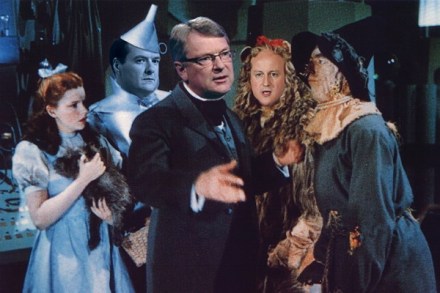
Follow Lynton’s yellow brick briefing

The benefits debate in Westminster will rage on long after today’s vote in the Commons. It’s not just a straight row between the government and opposition over who is really on the side of hard working people, nor is it just a debate within the two governing parties. It seems that divisions are now opening in the higher echelons of the Tory machine over just how hard to push the rhetoric. More outspoken MPs — like Dr Sarah Wollaston — have taken to the airwaves to decry the term ‘scroungers’ and ‘skivers’, but most surprisingly even Lynton Crosby, who Labour are desperate to paint as a rather rash and extreme antipodean, is calling for things to be toned down. Or at least that’s what someone told the Fiancial Times.

Ed Balls reverses over his own progress on fiscal responsibility

The battle-lines over the Welfare Benefits Up-rating Bill — which faces its second reading in the Commons this afternoon — have been drawn. Labour has tied its opposition to the Resolution Foundation's analysis showing that the bulk of the policy will hit working families. As Ed Balls put it last week, 'Two-thirds of people who will be hit by David Cameron and George Osborne’s real terms cuts to tax credits and benefits are in work.' They've labelled the move a 'strivers' tax', a continuation of the divisive rhetoric from both them and the Conservatives that seeks to pit 'hardworking families' against 'people who won't work' (as a recent Tory ad put it).

Sarah Teather dents the Coalition’s unity message by announcing her benefits rebellion

Coupled with Lord Strathclyde's resignation over the way the Coalition worked in the House of Lords, Sarah Teather's announcement that she will rebel against the government tomorrow is extremely poor timing. Today was supposed to be about unity, the Coalition working well together in the national interest. Now there are suggestions that this unity isn't visible in the Upper Chamber, and that senior Lib Dems aren't quite as ecstatic about key policies as Nick Clegg might try to argue. Ever since she went AWOL on the day of a vote on the benefit cap, Teather was a rebellion waiting to happen.

Why the Tories aren’t worried about the benefit wars

The government has just published the Welfare Benefits Up-rating Bill, and everyone's pointing to polls which underline their own point about whether limiting the rise in benefits payments to 1 per cent is going to play well with voters. Labour types are brandishing the Independent/ComRes poll, which says 'a surprising high 43 per cent disagree' that the government is right to cap the rise at 1 per cent. What they aren't mentioning, of course, is that 49 per cent think the government is right: so hardly a resounding rejection of the policy. On the right, there's a Populus poll for the Conservative party which tests Labour's argument that support for the Bill drains away when voters hear it includes in-work benefits. Respondents were asked to agree or disagree with a series of statements.