Benefits

How to warm your mansion with other people’s money

Let no one say this is not a redistributive government. It is taking benefits away from the poor and giving them instead to people with large houses and a bit of spare capital. How? Through a great green energy scam, originally devised by Labour, which could not be better designed to penalise the poor and reward the rich. In fact, the government might just as well have come up with Spat Credits or a Top Hat Top-Up Allowance. Here is a brief guide to benefits for the better-off. Got a roof space the size of half a football pitch? You can coin it by covering it with 4kW worth of

There is a lot more to immigration than simply totting up the net migration figures

The good news is that most people in Britain think that people in their local area mix pretty well  regardless of differences in race, religion and the rest of it. According to the latest Citizenship Survey from the Department for Communities and Local Government for April-September last year, about 85 percent of people think that their neighbourhood is cohesive, community-speak for the absence of overt ethnic and religious tension. But when it comes to attitudes to immigration a slightly different view emerges. About 78 percent of Brits would like to see immigration reduced; well over half, or 54 percent, want to see it reduced a lot. That’s roughly the same

Five more things you need to know about the IDS reforms

Last November, I put together a ten-point summary of IDS’s benefit reforms – so why add five more points now? Two reasons. First, it’s worth dwelling on what, I believe, will be one of this government’s defining achievements. Second – and far more prosaic – the Insistute for Fiscal Studies released a report on the matter yesterday. The following points have all been harvested from that document, and represent the IFS’s judgement, so to speak. Only one judgement among many, but one that warrants some attention. Here goes: 1. Who gains and who loses (in financial terms)? This question courses through most of the IFS report, and stands out in

Cameron and Clegg play the expectations game

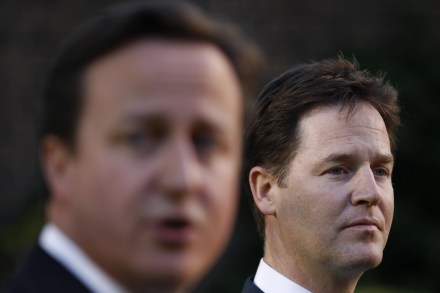
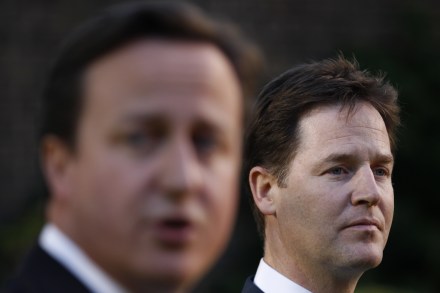
You know the drill by know: a Cameron and Clegg joint press-conference, so plenty of easy bonhomie and political japery. And today was no different. The Lib Dem leader set the tone with his opening gag, aimed at Vince Cable: “I haven’t seen as many journalists in one room since my constituency surgery.” After that, it was pretty much a gag a minute. Underneath all that, though, was some serious business. Cable came up (“very apologetic,” apparently), along with his claims about Winter Fuel Allowance (“not true”). But, as Iain Martin has noted, the most intriguing moment was when Cameron claimed only that he “expects” the Tories and Lib Dems

Leaked Cable

Loose lips sink ships – but can they sink sages too? Probably not, but Vince Cable has certainly entered tumultuous seas with the publication of candid remarks he made to a couple of Telegraph journalists posing as Lib Dem voters. In the tapes – which you can listen to above – the Business Secretary rattles on unrestrainedly about the inner workings of the coalition. The stand-out line is his claim that “If they push me too far then I can walk out of the government and bring the government down” – but there’s more, including: 1) The arguments that are being waged, and won. “We have a big argument going

Too clever by half, Miliband pitches for the squeezed middle with the vacuous promise of change

Ed Miliband has made an inauspicious start to his second political relaunch of the week. The Sun has dubbed him Buzz Lightweight, after he adopted the Pixar-inspired catchphrase ‘Beyond New Labour’ to describe his vision for the party. Miliband’s media presence is already wooden; migrating to plastic is hardly a promotion. Miliband and his elders have arrived at Labour’s national policy forum. In so far as it’s possible to determine what he stands for, Miliband is not aiming for the middle ground of British politics, as David Cameron and Tony Blair did. But he is courting the ‘squeezed middle’ with the promise of change. So far, that promise is more vacuous than profound

The Big Squeeze

The media pack is often blind to an impending political car-crash.  For instance, very few in Westminster, or the media, noticed the scrapping of the 10p tax band until the screech of twisting steel turned heads. The same is happening now in relation to living standards. The media and political establishment are yet to wake up to the fact that working families in Britain are about to become poorer (though hat-tip to Allister Heath for being quick off the mark on this front). The gathering wisdom is that, with the recession now behind us, household budgets will start to recover.  We have just published a new report – Squeezed Britain 

Abolish National Insurance Contributions

Government plans for a universal state pension of £140 per week were reported in the media in late October. We should be getting more information in a Green Paper soon. While this announcement was most welcome, it raises two important questions which go to the heart of our tax and benefit system: what should happen to National Insurance Contributions (NICs)? And should we now recognise that the contributory principle behind benefit payments is effectively redundant? NICs are an important source of government revenue. The total paid in 2009/10 was £97bn, significantly more than VAT (£84bn), and over 20 percent of government receipts for that year. Yet how the NIC system

Flight’s loose tongue

Has Howard Flight just done a Keith Joseph? The latter’s run for Tory leader ended when he made a speech about poor people breeding.  As David said earlier, plain speaking can have its problems. But Flight’s danger is in being mistranslated. He sought to make a simple point: that many working families can’t afford to expand their families, while the state provides a substantial cash incentive for those on benefits to do so. But his use of the word “breeding” sounds like he’s into eugenics, and the language – talking about the poor – sounds dodgier still. Given his struggle with foot-in-mouth disease, it’s surprising that Cameron ennobled him.  But

IDS shows how arguments are won

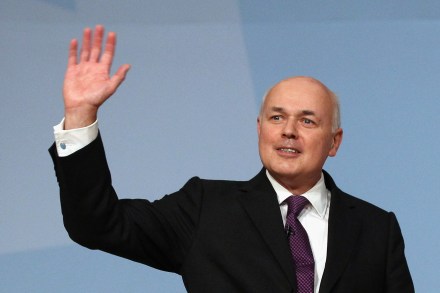
For years, I have complained that the Conservatives have timidly stayed within Labour’s intellectual parameters, arguing that they need “permission” to make certain arguments and need to stay within the limits of what the public find acceptable. Such intellectual timidity confined them to opposition: they can never win, playing by Labour rules. Iain Duncan Smith is breaking free of this. It may be rash to predict it now, but I believe he is on the brink of a breakthrough in the way that welfare is regarded in Britain. This victory in a battle of ideas could be the greatest single blow against poverty in a generation. The extent of this

The pledge divide

Over at the FT’s Westminster blog, Alex Barker asks why it is that David Cameron’s expensive personal pledge on pensioner benefits has survived the spending review while Nick Clegg’s personal pledge to scrap tuition fees, which would have cost roughly the same amount, has been spectacularly ditched. As Alex argues, one reason is that Clegg himself was not particularly attached to his pledge on fees. Indeed, he had tried to change the policy several times in opposition. The other is that George Osborne, who is the Tories’ chief election strategist as well as the Chancellor, is determined to protect the Cameron brand. When one right-winger made the case to him

Going beyond the IDS reforms

Iain Duncan Smith deserves credit for fully understanding the nature and scale of the welfare problem. But that’s the easy bit. Finding a solution with the right balance of carrot and stick and making it somehow affordable in these austere times is the tougher part of the equation. And it’s not at all clear that the IDS proposals have either enough carrot or enough stick.   He has certainly gone some way to tackling the lunacy of huge withdrawal rates – if by entering the workforce your new post-tax pay packet is less than the benefits you stand to lose, then don’t be surprised when an entrepreneurial work ethic fails

Ten things you need to know about the welfare White Paper

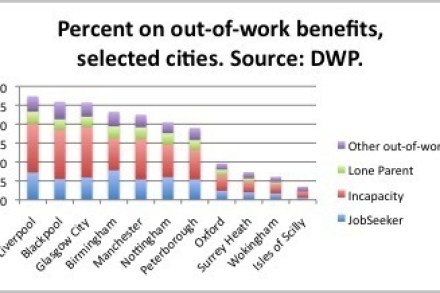
I’ve sifted through yesterday’s welfare White Paper, and thought CoffeeHousers might appreciate a ten-point guide to its contents. This is by no means the entire picture – and some of it will be familiar from past Coffee House posts – but hopefully it should capture the broad sweep of IDS’s reforms: 1) The problem. Fundamentally, the issue is that there are a lot of people stuck on out-of-work benefits: around 5 million at the last count. This means different things for different groups. For the Treasury and taxpayers it contributes towards an unwieldy working-age welfare budget that has increased by 45 percent, in real terms, over the past decade –

A considerable achievement

This morning’s welfare event was one of the great “Who’da thunk it?” moments of this government so far. Here we had the Lib Dem leader providing backing vocals for a former Tory leader who has not only become a minister, but who is implementing an agenda that only a few months ago was little more than an idea in a think-tank report. Reviewing that Centre for Social Justice report for Coffee House at the time, I said it deserved to influence welfare policy for years to come. Now, it looks as though it will do just that. The immensity of Iain Duncan Smith’s achievement should not be underestimated. No doubt,

The coalition pins a number on its welfare reforms

The coalition has few better defenders of its cause than Nick Clegg. And if you need proof, then I’d point you in the direction of his article for the FT when the IFS first called the Budget “regressive”; his article on welfare reform for the Times in September; or his summertime speech on social mobility, which, along with his 2009 conference speech, is perhaps the defining statement of his politics. I mention all this now, because there’s another effective Clegg article in the papers this morning – again on welfare reform, and again dripping with punchy arguments in the coalition’s defence. Rather than buckle to the charges made by the

The new welfare consensus

The New Statesman’s George Eaton has already homed in on the key passage from James Purnell’s article in the Times (£) today, but it’s worth repeating here. According to the former welfare minister, he pitched something like Iain Duncan Smith’s Universal Credit to Gordon Brown, and the reception it received catalysed his departure from government: “Before I resigned from the Cabinet, I proposed a similar plan to Mr Brown. But he was scared that there would be losers, and his refusal to give me any answer made me think that there was no point in staying inside the Government to try to influence him.” This is of more than simple

Breaking dependency

IDS has played the party politics of welfare reform adeptly. He has built a coalition beyond the government, convinced of the need for urgency and dynamic reform. Even Labour is on side, only criticising when valid and necessary. It has not proposed a comprehensive alternative because it is protecting its record in government – sensing, correctly, that it is vulnerable to its history. Douglas Alexander rallies to New Labour’s defence in the Independent on Sunday. Labour’s record on welfare was not uniformly baleful: Purnell, Hutton and Murphy did important work, on which IDS has drawn. But Alexander overlooks some inconvenient truths. Gordon Brown’s definition of ‘poverty’ was an arbitrary line

Waiting for welfare reform

After a summer of sporadic announcements, IDS’ welfare reforms will be published in a white paper next week. As in 1997, when Tony Blair urged Frank Field to think the unthinkable, there is consensus on the need for radical welfare change. IDS has earned respect as a moral and pragmatic reformer, and he attracts goodwill from across the House. The Liberal Democrats, Nick Clegg and Steve Webb particularly, were ‘vital’ in securing a spending concession from George Osborne, whilst Douglas Alexander has described IDS’ plans and ‘noble’ and pledges to support principle that welfare should be a safety net, not a vocation. He warms to the theme in today’s Guardian.

EXCLUSIVE: What about those who aren’t pulling a housing benefit scam?

Most sensible taxpayers think Britain’s current housing benefit costs to be a terrific scam. In the last five years the bill has risen by 25 percent. We now pay £21billion each year, a good chunk of which flows private landlords turning a healthy profit from the state’s responsibility to the poor. We all know by now that a slew of reforms designed to cut the bill by at least £2bn will stop the indefensible abuses of taxpayers’ money like this and this. That’s why Danny Alexander, among others, claims that the coalition must be ‘brave’ on housing benefit. But cast aside the most extreme exploiters of the system and ask

All is not quiet of the welfare front

Welfare is fast becoming this parliament’s Ypres Salient – strategically critical, it is constantly contested. £20bn on social housing, £100bn on out of work benefits and £billions on universal benefits: welfare reform is where spending cuts are most conspicuous. A rhetorical confrontation is building and various tactical dispositions are being made. The Staggers’ George Eaton has an analysis that assumes that Labour’s current wedge-strategy (which I critiqued here) is not working because it is avowedly sectional, privileging those who might be caricatured as ‘undeserving’. Eaton argues that Labour must ‘launch a defence of the hard pressed majority’; those who work but still stand to lose, particularly families. Indeed, Westminster’s number-crunchers