Ben nicholson

The art of resurrecting forgotten artists

A retired priest in North Wales told me that after the war he had been asked by Billy Butlin to buy 19th-century paintings for the holiday-camp chapels, because they were going cheap. One he bought, for 49 guineas in 1947, was William Dyce’s 1835 ‘Lamentation of the Dead Christ’. In 1983, after the Butlin’s chapels had closed, it made a handy £125,000 at auction, when it was bought by Aberdeen Art Gallery. As late as 1962, Lord Leighton’s great ‘Flaming June’ (1895) was sold for £50. Today? Millions. Talk about ‘the bubble reputation’. The pattern of artistic fame followed by subsequent obscurity has been repeated through the centuries.
Jim Ede and the glories of Kettle’s Yard

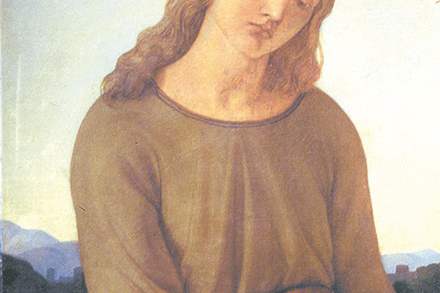
Jim Ede started early. At the age of 12 he used £8 of his hard-won savings to buy a Queen Anne desk. No bicycle, air pistol or football for him: this solid piece of old furniture was the thing, the first step in a long life of acquiring objects that lived, breathed and spoke to him. To call him a compulsive collector is to understate the passion that over the years saw the desk followed by an avalanche of stuff, from porcelain and glasses to pebbles and feathers, textiles and above all paintings, drawings and sculpture. Each acquisition admired, loved, cherished and shared for its uniqueness – what Gerard Manley Hopkins would have called its ‘instress’.

The art of the Christmas card

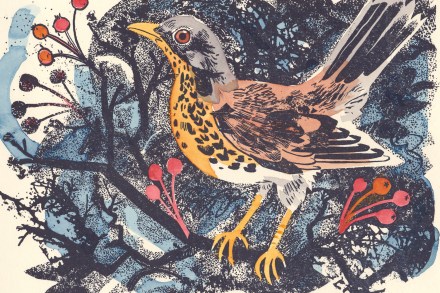
It’s the thin end of the wedge, the slippery slope, the beginning of the end of a civilised Christmas. It is the first week of December and I still haven’t started my cards. My friend Charlotte was at it in October. She signed up for a lino-cutting class, cut holly boughs and robin redbreasts and printed her own cards. She sent me photos of the fruits (berries?) of her labours and very merry they were, too. Usually, I am a Charlotte. By November, I have made cards, addressed envelopes, applied thumbs to 80 stamps. But after an illness in the autumn, I’m feeling as uncreative as a turkey. Could I cheat and send emails with a pious little homily about how, for the sake of the planet, I’m forgoing paper cards this year?

One of the greatest of all outsider artists: Alfred Wallis at Kettle’s Yard reviewed

Alfred Wallis (1855-1942) should be an inspiration to all late starters. It was not until he had passed the age of 70 that, after his wife of many years had died and having previously worked as a sailor, fisherman and rag and bone merchant, he decided to take up art. ‘Aw! I dono how to pass away time,’ he explained to a shopkeeper in his native town of St Ives. ‘I think I’ll do a bit a paintin’ — think I’ll draw a bit.’ Three years later, his work was spotted by the leading British modernists Ben Nicholson and Christopher Wood. By and by, Wallis’s pictures were being exhibited in London, and Nicholson presented one to the Museum of Modern Art, New York.