Belgium

‘Is Andrew free already?’

The 2018 Florida governor’s race will go down as one of the great sliding-doors moments in American politics. Ron DeSantis, after “begging” for Donald Trump’s endorsement, eked out a 0.4 percent win over the Democratic mayor of Tallahassee, Andrew Gillum. In the years since, DeSantis became an anti-lockdown Covid champion, a very expensive failed presidential candidate and is now hotly tipped to fill a Trump cabinet vacancy once he leaves the governor’s mansion in November. Gillum has had a… different trajectory. Police officers found him in a hotel room with a male escort, suffering from a suspected crystal meth overdose in 2020. The married father-of-three checked himself into rehab and came out as bisexual later that year.

Belgium has a free speech problem

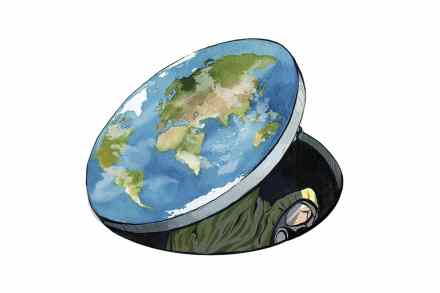
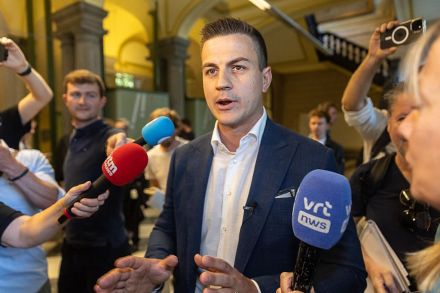
The conviction by a Belgian court of far-right activist Dries Van Langenhove has alarmed both the country’s right and left. Van Langenhove – let there be no doubt – belongs to some of Belgium’s darker far-right movements. He has previously been convicted of racism and Holocaust denial. Yet he has now been fined €4,000, for what the judge described as  "apparently having the intention' to incite hatred and violence, rather than for a crime he was clearly proven to have committed. Bart Eeckhout, chief commentator of Belgium’s left-leaning daily De Morgen – certainly no friend of Van Langenhove – unexpectedly described the conviction for incitement to hatred, violence and racism as an injustice.

belgium

Why Belgium is sending in the army to defend its streets

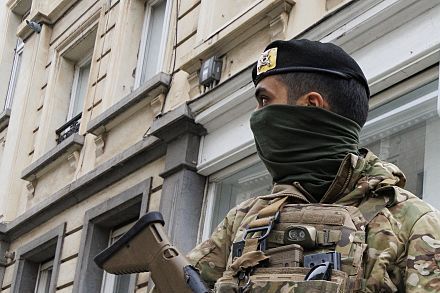
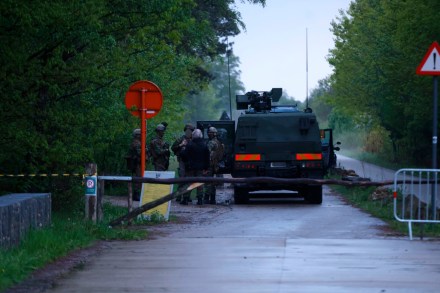
It’s not uncommon to see camouflage on the high street in Belgium. It is a peculiarly Belgian reflex: when the state feels the strain, it reaches for the army. This week, the federal government has done so once more. Soldiers have been deployed to bolster security around Jewish sites and neighborhoods in Brussels and Antwerp, following a spate of clumsy but troubling attacks across Belgium and the Netherlands. Synagogues have been targeted with arson and a Jewish school struck by an explosion. Mercifully, no one has been injured and the damage has been minor. Yet the intent is clear, and the authorities have been quick to identify the incidents as anti-Semitic acts.

Europe has left Ukraine living on borrowed time

Russia started the war on Ukraine, so Russia should pay for the damage it has wrought. Such was Volodymyr Zelensky’s forceful message to European leaders last night as he pleaded for a "reparations loan" backed by the €190 billion ($222 billion) of Russian Central Bank capital frozen in a Belgian clearing bank since Putin’s full-scale invasion. "Just as authorities confiscate money from drug traffickers and seize weapons from terrorists, Russian assets must be used to defend against Russian aggression and rebuild what was destroyed by Russian attacks," Zelensky told his European allies. "It’s moral. It’s fair. It’s legal." But after negotiations that went late into the night, Europe ultimately shied away from grabbing Russia’s money.

zelensky loan ukraine

Art deco gave veneer and frivolity a bad name

From our UK edition

The jazz style was the blowsy filling between the noxious crusts of two world wars. More than 30 years passed between its flourishing and its remonikered second coming as art deco, no longer gaudy ephemera, now a legitimate addition to the inventory of fashions. The coinage was initially ascribed to the antique dealer John Jesse. It is, more probably, Bevis Hillier’s. He was a scholar of the style, then organiser of its first retrospective, far ahead of the game, in Minneapolis-St Paul in 1971.

Fight or flight?: 33 Place Brugmann, by Alice Austen, reviewed

From our UK edition

In May 1940, as the Nazis invade Belgium, the residents of a sedate apartment block in Place Brugmann, Brussels, wake to find that their longtime neighbours, the Raphaëls, have disappeared. Alice Austen uses this moment as the starting point for her subtle debut novel about how a diverse group of Belgians react to the Nazi occupation. She tells her story in snapshots, writing in the multiple first-person voices of those who remain at 33 Place Brugmann and those who flee. Charlotte is a young artist who may not see colours, but has ‘vision’. Miss Hobert is a gossip with ‘a rabid imagination’. The courageous and pragmatic Colonel Warlemont resists the occupation with the assistance of his dog Zipper.

Nazis, killer dogs and weird sex: Empty Wigs, by Jonathan Meades, reviewed

From our UK edition

Jonathan Meades is, you might say, a baroque artist in a mannerist age. Whereas today’s younger and more widely feted writers think small – a Brooklyn sublet, a Camden Town love nest, the cracked mirror of the self – Meades goes big. And not just in physical terms (Empty Wigs tips the scales at nearly 3lb), but in scope. Where his contemporaries’ prose can be affectless and somehow skinless (a Paris Review interviewer said of Rachel Cusk, with apparent admiration, that her writing ‘feels contemporary, swift and “clean”’), Meades piles on the style, packing in metaphors, coinages and allusions until the crystals can’t take it, swooping between social classes, doing the police in different voices.

The prescient politics of Tintin

From our UK edition

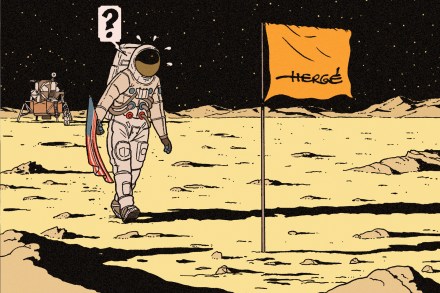
Georges Remi, better known as Hergé, the creator of Tintin, was a failed journalist. His first job after leaving school was on a Brussels newspaper, Le Vingtième Siècle, but boringly in the subscriptions department. His mind was set on becoming a top foreign correspondent like some of the leading names of the 1920s. Having failed to join the ranks of renowned reporters, Hergé had created one in Tintin He really had started on the bottom rung, for subscriptions were located in the basement of the newspaper building. At every opportunity he would migrate upstairs, to the busy newsroom and especially to the cuttings library, where he discovered the world at his fingertips.

The good soldier Maczek – a war hero betrayed

From our UK edition

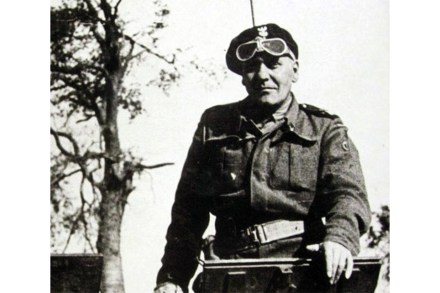
Who could forget the Polish squadrons in RAF Fighter Command when, in the 1969 film The Battle of Britain, a British squadron leader, frustrated by the excited radio chatter on being allowed into action at last, orders ‘Silence! In Polish!’ Or the Polish Parachute Brigade at Arnhem, whose commander, Stanislaw Sosabowski, played by Gene Hackman in A Bridge Too Far (1977), thinking the venture disastrous, growls ‘God Bless Field Marshal Montgomery’ as he jumps from his Dakota? Commander Eugeniusz Plawski, the captain of the Polish destroyer Piorun which first spotted the Bismarck and charged at her to draw fire, might be better known if he had featured in the 1960 film Sink the Bismarck! – but that wasn’t expedient, with the honours going instead to a Royal Navy officer.

‘Now I have been made whole’: Lucy Sante’s experience of transition

From our UK edition

Lucy Sante concludes her thoughtful and occasionally poetic memoir with the words: ‘Now I have been made whole.’ Before transitioning at the age of 66 she had lived her life as a deeply divided man. This is an affecting book that could help move the trans debate forward from its currently undignified state of abuse and polarity. Sante interweaves the story of the first 18 months of her transition with that of the first three decades of her biography. Her parents emigrated to New Jersey from Belgium, initially when she was four (there were subsequent toings and froings). She writes a lot about her identity as a working-class Walloon, an ‘only child of isolated immigrants’, and notably about her relationship with her pious, difficult mother.

London to Amsterdam via Brussels: taking the long way

Brexit, the gift that keeps on giving: from June 14, 2024 to January 2025, a reduced Eurostar service will run between London and Amsterdam. Why? Part-closure of Amsterdam Centraal leaves no space for the extra bureaucracy now necessary. Passengers returning to London will change at Brussels to go through security and passport checks, adding up to almost two hours of extra journey time. Global travel booking platforms such as OMIO have reported a surge in train travel in recent years. Cheaper prices (compared to flying) and environmental concerns are cited as the main drivers. But Eurostar’s capped passenger numbers and indirect routes will surely increase air travel in 2024, literally flying in the face of Dutch sustainability policies.

brussels

Brussel or Bruxelles? Even the locals can’t agree

Brussels is the source of all evil to many of those who supported Brexit, and even for Americans. “What’s a good Christian boy like you doing in Satan’s den?” was the question of an Austin friend when I told him work had brought me to the capital city of the European Union. To its critics, Brussels is the bastion of the worst sort of Big Government, with the European Commission and Parliament issuing diktats to more than 500 million people across twenty-seven nations. But while the city is “full of nets” with which to trap you, as described by another friend who worked here on human rights legislation, it’s also a city of “hope.” Brussels has a rich comic book culture. There are the intrepid reporter Tintin and his sidekick Snowy.

brussels

In defence of Brussels, Europe’s most underrated city break

From our UK edition

Strolling around the Belgian Comic Strip Center, admiring the elegant artwork of Hergé (creator of Tintin), I wonder for the umpteenth time why so many of my British friends are so disparaging about Brussels. It's one of my favourite cities, but most Britons I know wouldn’t dream of planning a break here. They don’t know what they’re missing. I’ve been here countless times, yet on each visit I discover something new. It’s full of quirky shops and exquisite restaurants, and there are some excellent museums too. If your idea of fun (like mine) is nosing around art galleries and antique shops, with plenty of pitstops en route, you’ll have a terrific time. I’ve never eaten better than in Brussels – and the beer (and the coffee) is superb.

How to eat frites the Belgian way

From our UK edition

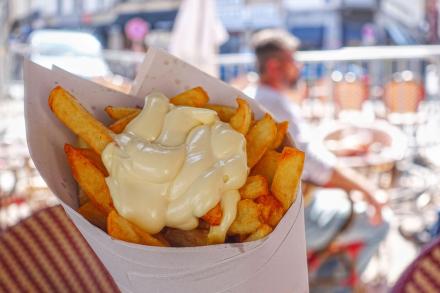
Many things about Belgium are impenetrably mysterious to the incoming foreigner: the commune system, which language to use, how to politely eat moules. But few are as cryptic as the menu of sauces that accompany Belgian frites. Ketchup, tartare, barbecue and mayonnaise seem fine. But what is Samourai? Andalouse? Mega?  Unlike many great Belgian things that have successfully been exported (Trappist beer, chocolate, Tintin, speculoos biscuits, Audrey Hepburn), frites can only be experienced on home turf. And my, aren’t they so Belgian. First, the friteries or fritkots in Dutch – chip shop kiosks found wedged on to street corners and in city squares – are totally egalitarian and the service is totally grumpy.

Why Antwerp should be your next city break

From our UK edition

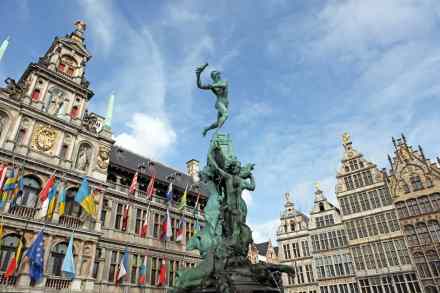
In a sleepy side street around the corner from Centraal Station, there’s a restaurant I return to whenever I’m in Antwerp. From the outside it doesn’t look like much – a perfunctory shopfront, more like a takeaway café – but inside it’s charming, like eating in someone’s home. Welcome to Hoffy’s, a cosy Yiddish enclave renowned for comforting, nourishing cuisine in the centre of this flamboyant, unruly city. For me, this kosher restaurant sums up the spirit of Antwerp, a cultural crossroads since the Middle Ages, a refuge for outsiders of every sort.

Europe gripped by a fifth wave

From our UK edition

How quickly things change. Just a month ago many EU countries were being praised for keeping some Covid restrictions in place, in many cases operating vaccine passport systems. By contrast, Britain was being attacked for removing most Covid restrictions in July. The UK suffering elevated infection rates ever since, leading to predictions that we could be back in lockdown by Christmas. Now, many EU governments are panicking as infection rates soar — and protesters have taken to the streets to oppose new lockdowns and, in the case of Austria, compulsory vaccinations from next February. What is the situation in the worst-affected countries?

The manhunt dividing Belgium

From our UK edition

Belgium's leading virologist is in hiding, holed up with his family in a government safe house. The reason? A right-wing Flemish soldier. Jürgen Conings disappeared from his home on 17 May, leaving behind a booby-trapped car and a series of letters laying out his grievances against 'the regime'. In a goodbye letter to his partner, Conings wrote: The so-called political elite, joined now by the virologists, are deciding how you and I should live... I don't care whether I die or not, but I will live my last days the way I want. The muscular 5ft 9in former corporal is now officially a grade-4 terror risk. But that hasn't stopped the emergence of pro-Conings groups in Flanders, the richer, Dutch-speaking part of Belgium.

Bring on the Brexit songs, England fans

From our UK edition

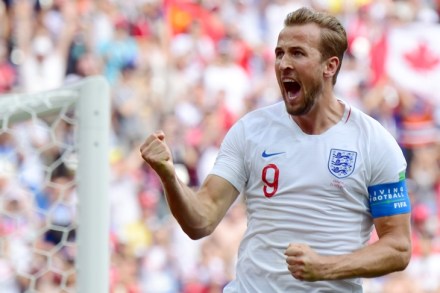
Fifa is worried. It is freaking out over the possibility that England fans will take a Brexit-related swipe at Belgian fans in tomorrow’s game. Our boys face the Belgians at Kaliningrad tomorrow evening. And given that a great many England fans are a) fond of Brexit and b) known to have a few pints ahead of a game, Fifa stiffs are concerned that a bit of Brexit-loving and Belgium-bashing might leak into their chants. ‘There is a risk of punishment’, Fifa has warned members of the En-ger-land lobby who are thinking of mentioning Brexit. What a bunch of miserabilists. It is further proof that the overlords of football don’t actually understand football. The role of the football fan is straightforward: to big up one’s team and dent the confidence of the other.

Enigma variations | 3 November 2016

From our UK edition

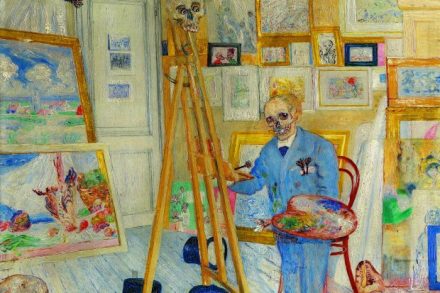
On 2 August 1933 one of the more improbable meetings of the 20th century took place when Albert Einstein had lunch with James Ensor. Apparently, Einstein attempted to explain his theory of relativity to Ensor, who doesn’t seem to have understood it. That evening the painter gave a speech, entitled ‘Ensor to Einstein’, ending with a sort of apology. Painters, he exclaimed — ‘alas and alack!’ — were slaves to vision and resistant to ‘positive reason, to calculations, to probabilities’. However, Intrigue: James Ensor by Luc Tuymans at the Royal Academy is an exhibition that is subject to the principle of relativity.

First aid

From our UK edition

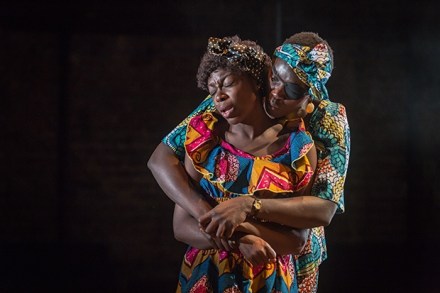
In the 1980s, supermarkets stocked a fruit juice named ‘Um Bongo’ with the strapline ‘They drink it in the Congo!’. This is the starting point for Adam Brace’s examination of Britain’s relationship with the Congolese (whose word ‘mbongo’ means money). A group of do-gooding Londoners host a festival to celebrate the Congo’s culture and history but they rapidly become mired in controversies about age-old injustices and white-to-black ratios on steering committees. The Congolese party includes a few rogue terrorists whose death threats the British publicists find rather glamorous and titillating. The characters rarely reach beyond the obvious. The Londoners are bloodless yuppie go-getters.