Beirut

Trump can’t give up on diplomacy with Iran

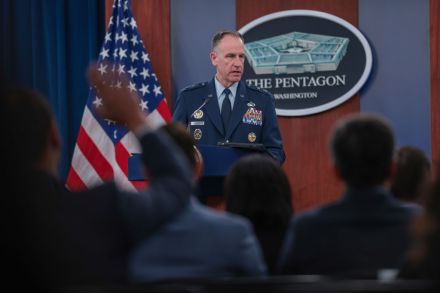
The New York Knicks may have lost Game 3 of the NBA Finals, but President Trump was still in a somewhat buoyant mood. Negotiations with Iran were going swimmingly, Trump claimed to reporters as he was headed back to Washington, so much so that an agreement could be reached in two or three days.  Two days later, though, and a deal remains just as elusive today as it was last week and the week before that. In fact, not only is diplomacy apparently stuck, but the United States and Iran are increasingly taking shots at each other. The April 8 ceasefire is still in effect but resting on weaker foundations.

trump

I think I’ve found the new Van Morrison

Young male singers won the right to be sensitive in 1963, when The Freewheelin’ Bob Dylan was released. And in the 63 years since, being young and vulnerable and questing has been one of the great default settings. I’d say you can’t go far wrong singing sadly about your feelings, but of course you can, as the great mountain of discarded troubadours proves. Yet the size of that rejects mountain also tells us how alluring the prospect of baring one’s feelings to strangers can be. Zach Condon, who works as Beirut, and Dove Ellis are at different points on the sensitive young man spectrum. Condon is 39 for a start, so the young bit doesn’t even hold true.

A shaky truce in Beirut

From our US edition

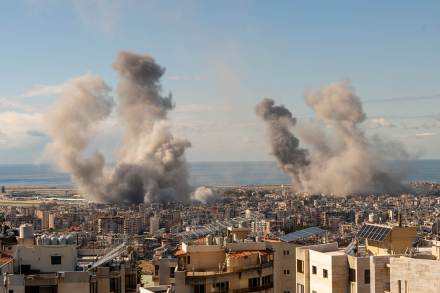
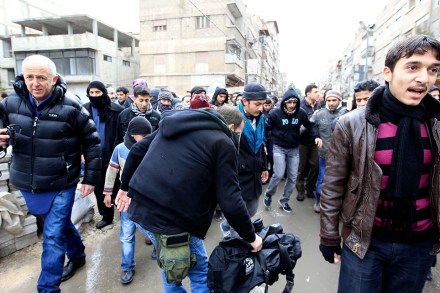
There was an Israeli drone buzzing over Beirut at 8 a.m. on November 27, four hours after a ceasefire was signed and the shooting stopped. It soon disappeared and a feeling of elation set in. It was the best day we had in months. The Christmas spirit was palpable in Gemmayzeh, a Christian neighborhood in central Beirut. Christmas decorations were going up and the bars were packed that night. Lebanese in the diaspora who’d canceled their holiday trips to Beirut rebooked that day. But the Lebanese also know how to manage their expectations — they always hedge good news with dread. The agreement lays out an initial sixty-day truce, during which Hezbollah is required to withdraw its forces north of the Litani river, and the Lebanese Army is to take its place.

beirut

With Israel, the US is caught in a world of contradictions

From our US edition

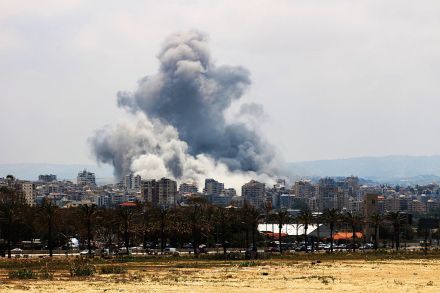
Ever since a 2,000-pound bomb demolished Hezbollah’s headquarters in Southern Beirut last Friday and killed Hassan Nasrallah, the leader of the organization since 1992, there was an expectation among the commentariat that Iran would retaliate. The scope of that response, however, was very much in dispute. The Iranian government was reportedly divided about whether to respond at all, with the newly-elected president, Masoud Pezeshkian, taking the position that an attack against Israel would likely ruin his foreign policy agenda — he offered the West the thinnest of olive branches during his time in New York for the UN General Assembly meetings — and give the Israeli government an excuse to strike inside Iranian borders.

An exposé of drug smuggling and terrorism reads like a first-rate thriller

The crucial moment in this vivid exposé of the murky world of transnational crime comes in 2015. Mustafa Badreddine, one of two Lebanese Shia cousins who for three decades had led the deadliest Iranian-linked terrorist network in the Middle East, was finally indicted by a UN special tribunal investigating the assassination of the Lebanese prime minister Rafic Hariri a decade earlier. After an extraordinary career of mayhem, Badreddine had spent the previous three years leading an elite Hezbollah militia shoring up President Bashar al-Assad’s regime. But the tide had turned, and in July 2015 Qasem Soleimani, the commander of the Iranian Quds force in Syria, secretly flew to Moscow to beg for Russian military support.

The agony and frustration of reporting from the Middle East

For 25 years, Abed Takkoush assisted foreign reporters like Jeremy Bowen when they arrived to cover the chaos and conflicts in Lebanon. He drove them around in his battered Mercedes, pointing out with grim relish the places where dark deeds had taken place: the assassinations, atrocities, kidnappings and slaughter of civilians that scar this mesmerising nation. During one Israeli onslaught in 1996, Abed sped past a gunship firing at cars on the highway between Sidon and Tyre, laughing with relief when shells exploded on the road rather than the car. ‘We laughed with him,’ writes the veteran BBC reporter. ‘It was a calculated risk. The alternative was turning back to Beirut without a story.’ Four years later their luck ran out on the last day of Israeli occupation.

Goodbye, Lebanon

From our US edition

I’m sorry, Lebanon. We love you but we just can’t take it anymore. We’re breaking up with you. We’ve lived in Lebanon, on and off, for almost a decade. Our retreat began over the summer when we decided we couldn’t risk going to the beach with our daughter, who’s almost two. Every year, the Lebanese National Council for Scientific Research puts out a report that says that the seawater around many of Lebanon’s beaches is full of fecal bacteria. Raw sewage is discharged into the sea: you are literally swimming in shit. From some beaches, you can see the pipe and a murky flow of streptococci. We tried. We really did. We visited a private beach club that was supposed to have some of the cleanest water in the country.

lebanon