The New York Knicks may have lost Game 3 of the NBA Finals, but President Trump was still in a somewhat buoyant mood. Negotiations with Iran were going swimmingly, Trump claimed to reporters as he was headed back to Washington, so much so that an agreement could be reached in two or three days.
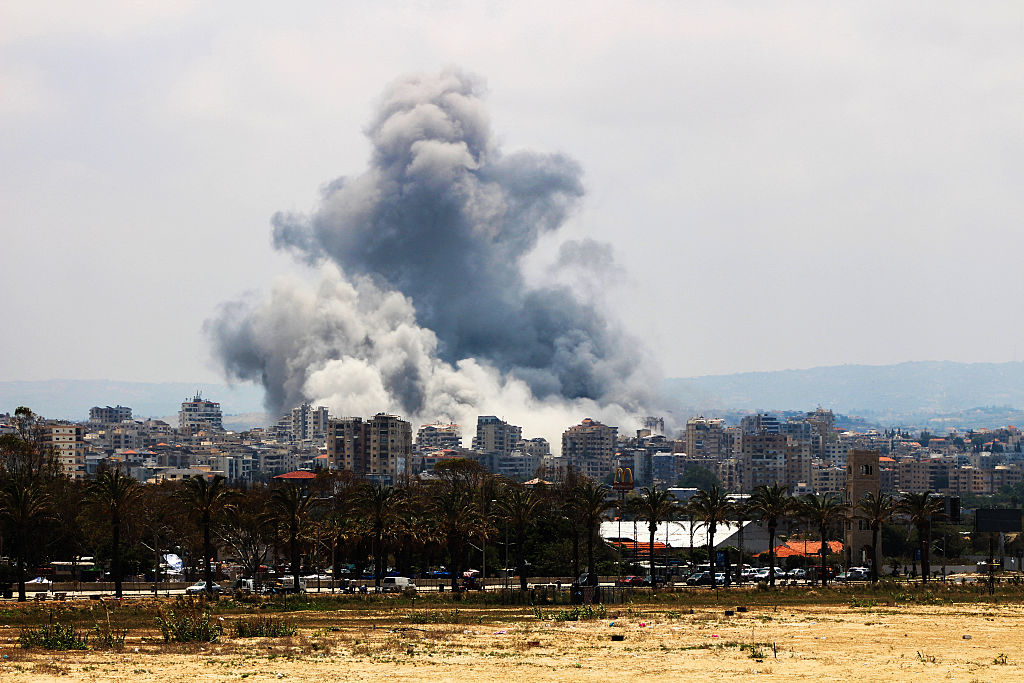
Two days later, though, and a deal remains just as elusive today as it was last week and the week before that. In fact, not only is diplomacy apparently stuck, but the United States and Iran are increasingly taking shots at each other. The April 8 ceasefire is still in effect but resting on weaker foundations. On June 9, Trump ordered retaliatory airstrikes against multiple Iranian targets, including air defenses, ground control stations and radar sites, after Tehran crashed a drone into a US Army Apache helicopter, bringing the aircraft down and forcing the Pentagon to organize a rescue operation for the crew. The next day, Trump threatened more airstrikes. “We hit them [Iran] hard yesterday, and we’re going to hit them again hard today…We were really close to a deal, but they keep tapping us along, they keep playing us for suckers.”
Is diplomacy going off the rails?
At the risk of predicting the actions of an inherently unpredictable man, it’s unlikely Trump is prepared to throw diplomacy to the wind. Despite the ongoing tussle between US and Iranian negotiators over what a future nuclear accord and peace settlement should consist of, Trump at least appears to still be invested in a diplomatic process that began shortly after the war started on February 28. US officials are still passing messages, positions and clarifications to the Iranians through intermediaries like Pakistan and Qatar, and the Iranians are doing the same thing. Indeed, hours after the US bombed Iranian positions over the weekend, a Qatari delegation was in Tehran in an attempt to narrow the gaps that have turned US-Iran diplomacy into one of the slowest marathons ever. For Trump, the latest tit-for-tat between Israel and Iran, combined with US strikes on Tehran’s military infrastructure, are part of the negotiation, not the end of them.
In short, it’s not in Trump’s interest to call it quits. First, doing so isn’t politically viable. The war has long since turned into a albatross around Trump’s neck. The conflict is deeply unpopular, in part because the White House didn’t bother to sufficiently explain to the American people why it was absolutely necessary for the United States to do battle in the Middle East again. The threat of an Iranian nuclear weapon was grossly overrated – even the US intelligence community assessed that Iran was not operating a nuclear weapons program. Secretary of State Marco Rubio’s contention early on that Washington needed to eliminate Iran’s so-called conventional military shield to ensure those crazy ayatollahs couldn’t acquire a bomb in the future fell flat. And the average American, frankly, had far more important and immediate matters to worry about, like finding a way to pay for their kid’s college tuition and catching up on their credit card bills.
The war has made all of those financial problems even more pressing. Inflation is now at the highest point in three years, fueled by rising energy costs whose impact will be front-of-mind for Americans who vote in the midterms this November. Republicans are beginning to chafe, with a 33 percent plurality of GOP survey respondents in a recent poll saying the war has had a more negative than positive impact on US interests at home and abroad. Four House Republicans even crossed the aisle last week to join Democrats on a war powers resolution that called for a withdrawal of US forces from hostilities against Iran, helping the measure pass the lower chamber. The politics of re-starting the war aren’t great for the White House.
The other reason Trump is unlikely to give up diplomacy entirely is because there isn’t a better option on the table. Maintaining the April 8 ceasefire and keeping up the US blockade on Iranian ports is being sold by the administration as a risk-free option the US Navy can sustain indefinitely. But enforcing a blockade of this duration costs money, will eventually wear down the US Navy’s long-term readiness and force US defense planners to borrow fighter and surveillance aircraft, air defense systems, intelligence assets and personnel from other regions, like East Asia, that the Pentagon wants to retain for a possible Taiwan contingency. This option also presumes that Iran would just sit back and allow itself to be squeezed economically in perpetuity, which is a difficult to envision given the fact that the Islamic Revolutionary Guard Corps (IRGC) couldn’t even sit still when Israel was bombarding Hezbollah in Beirut’s southern suburbs.
Returning to full-scale war is a loser too. Sure, the United States could bomb Iran to kingdom come if it wanted. And sure, Defense Secretary Pete Hegseth would have a lot of video clips to post on the Pentagon’s social media feeds. But on a strategic level, would a few more weeks of US bombing succeed in doing what past bombing failed to do? If Trump is looking for Iran to hoist up the white flag and capitulate with a smile on its face, then he’s priming himself for a massive disappointment. After all, this is the same regime that fought Iraq’s Saddam Hussein to a standstill for nearly a decade, at a time when its military capacity was even more antiquated than it is today. More war is unlikely to produce different results and would play into the hands of a growing crop of officials in Tehran who insist that nuclear weapons are the only shield that can protect the regime from future aggression.
Trump is stuck. He seems to recognize negotiations are his best course of action but remains unable to come to the realization that some very tough negotiations will need to be offered to get a deal to the finish line.






Comments