Barack obama

Obama 2.0

The piece in the New York Times magazine this weekend on the Obama presidency illustrates how far he has fallen. A large chunk of it is devoted to whether or not he can win re-election, something that most of his supporters used to take for granted.  Significantly, the Obama White House itself is admitting that things could have been done better: “While proud of his record, Obama has already begun thinking about what went wrong — and what he needs to do to change course for the next two years. He has spent what one aide called “a lot of time talking about Obama 2.0” with his new interim chief of staff, Pete Rouse, and his deputy chief of staff, Jim Messina.

The X-Factor

Bob Woodwood could write a cookbook and it would be a bestseller, but Obama's Wars, his latest book, will wreak quiet havoc beyond bookshops because Afghanistan already lours over Obama’s presidency. 9 years into the conflict and the limits of victory have been re-defined in the Taliban’s favour. The spat between the White Hosue and Stanley McCrystal has been replaced by further controversy with Petraeus over the withdrawal strategy. Woodward’s book is impartial, but he has given an acidic interview to the Sunday Telegraph where he implies that, when it comes to war, Obama doesn’t have the ‘x-factor’.

General Conway versus the Commander-in-Chief

President Obama’s folly in setting a fixed date to start troop withdrawals from Afghanistan has been highlighted by the US Marine General James Conway. He told reporters on Tuesday that Obama’s July 2011 start date for withdrawal was “probably giving our enemy sustenance….In fact, we’ve intercepted communications that say, ‘Hey, you know, we only have to hold out for so long.’” As Mark Mardell noted on the Today programme, after having relieved General McChrystal of the Afghan command for his criticism of the civilian leadership Obama is keen to avoid another clash with a member of the senior brass. So there will be no White House reprimand for Conway. But there can be little doubt that the marine is right.

Strategic differences

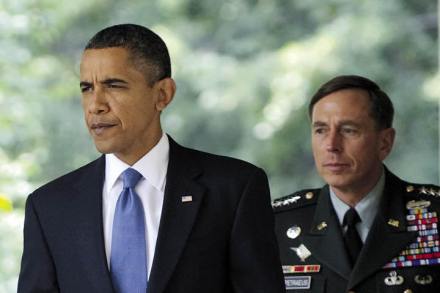
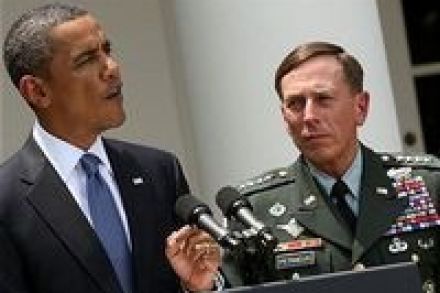
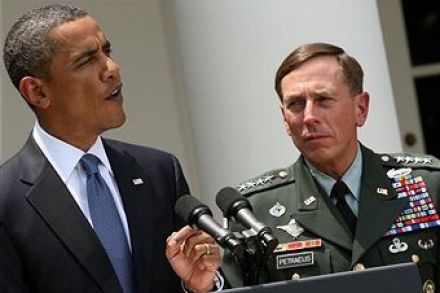
When President Obama asked General Petraeus to take over the Afghan command after General McChrystal’s Rolling Stone implosion, there was much speculation that the two men would clash over the date for America to begin withdrawing troops. Obama had set down July 2011 as the starting point but Petraeus was almost certainly going to want more time than that. In Petraeus’s Meet the Press interview on Sunday, Petraeus made clear he might argue that withdrawal cannot begin that quickly 'MR. GREGORY:  I just want to clarify this.  Did — could you reach that point and say, “I know that the process is supposed to begin, but my assessment as the commander here is that it cannot begin now”? GEN.

Obama defeats our shameful libel laws

Here's one divergence between the US and the UK where we can all get behind our American brethren. Yesterday, Barack Obama signed into law a provision blocking his country's thinkers and writers from foreign libel laws. The target is "libel tourism," by which complainants skip around the First Amendment by taking their cases to less conscientious countries. And by "less conscientious countries," I mean, erm, here.         As various organisations have documented, not least the Index on Censorship, the libel laws in this country are a joke – and a pernicious one at that.

Cameron lambasts Pakistan whilst on Indian trade mission. Bad move

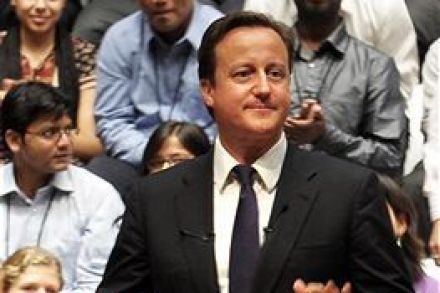
Oh for the days of inactive prime ministers. After yesterday’s hot-headedness about Gaza, comes an even more deliberately pointed statement. Cameron said: ‘[Pakistan] should not be allowed to promote the export of terror whether to India, whether to Afghanistan or to anywhere else in the world.’ I agree, providing of course it is established that the Pakistani state is fomenting terror and the Wikileaks revelations do not give that impression. That said, the Pakistan government is responsible for all of its agents, and they should curb S-Wing’s collusion with the Taliban and its affiliates in Waziristan. Cameron and Obama are right to press the Pakistani authorities. But a goodwill tour to India is plainly not the stage on which to do it.

The Hayward saga draws to a close

There has been an inevitability about Tony Hayward's departure from BP ever since the first aftershocks of the Deepwater Horizon disaster. But now, despite BP's peculiar denials this morning, that inevitability has reached fever pitch - and it's widely expected that Hayward will be booted out of his job tomorrow morning. As a thousand comment writers have quipped, he can now get his life back. The question on most observer's minds is, does he deserve it? And it's a question which Allister Heath answers persuasively in City AM today. My quick take is that, yes, Hayward came under unfair and politically-motivated fire at times, but much of the criticism flung in his direction was warranted and understandable.

Few smoking guns in these leaks

Courtesy of WikiLeaks, the Guardian and The New York Times have obtained classified documents pertaining to the killing of civilians in Afghanistan and the duplicity of Pakistani spies. The White House is furious, condemning the leaks for ‘endangering US and allied servicemen’ on active duty – a statement that seems reasonable until the White House added that the documents pre-dated President Obama’s assumption of office and that they ‘do not reflect current on-ground realities’. But that makes the allegations contained therein irrelevant or dated. Judging by the two newspapers' coverage, the leaks are vague and certainly not novel. It’s obvious that Pakistan is an unwilling ally, and one which has its own ambitions in the region.

All for show?

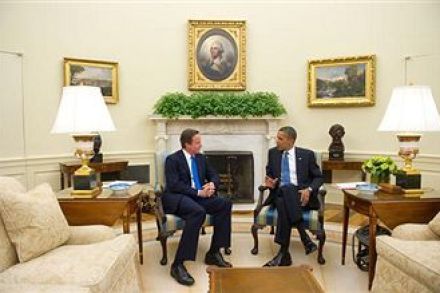
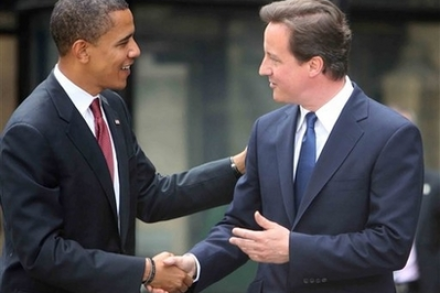
Gordon Brown will be seething, and with some justification: he never got photo-ops like these with Barack Obama. Shots of a cosy chat in the Oval Office are usually reserved for Benjamin Netanyahu, following the latest impasse between Israel and America. The Obama administration has gone to great lengths to repair the damage it did to Anglo-American relations at the start of its term. The President was all sparkle and bonhomie during the joint press conference, and he was careful to name-check ‘The Truly Special Relationship’ twice. Obama may be faking it but he looks comfortable with Cameron. He has always given the impression of being a cold fish, short on empathy, and I suspect he objects to leaders fawning at his throne.

A special relationship in the making?

I’ve spent the morning contending with the WSJ’s Heath Robinson-esque subscription service so you don’t have to. Inside the paper, David Cameron explains what the Special Relationship means to him. 1). The Special Relationship is close and robust because British and American values are essentially the same, which explains why our national interests are often aligned: 'The U.S.-U.K. relationship is simple: It's strong because it delivers for both of us. The alliance is not sustained by our historical ties or blind loyalty. This is a partnership of choice that serves our national interests.

Europe rises from its slumber

Emblazoned across the Times is the headline: ‘Europe warns Obama: this relationship isn’t working.’ The piece is teeming with quotations from diplomats and representatives of major European governments, voicing their concern that post-Cold War America no longer offers Europe a privileged relationship. The goodwill that Europe offered Obama has entirely evaporated. Few diplomatic spats are ever one-sided, and the Americans are deeply frustrated with the European Union.

Why Obama did not consider pulling out of Afghanistan

The implosion of General McChrsytal’s career has refocused attention on Afghanistan. Reading Peggy Noonan’s column on the subject I was struck by this paragraph reflecting on Jonathan Alter’s reporting of Obama’s decision making process when he ordered the surge: More crucially, the president asked policy makers, in Mr. Alter's words, "If the Taliban took Kabul and controlled Afghanistan, could it link up with Pakistan's Taliban and threaten command and control of Pakistan's nuclear weapons?" The answer: Quite possibly yes. Mr. Alter: "Early on, the President eliminated withdrawal (from Afghanistan) as an option, in part because of a new classified study on what would happen to Pakistan's nuclear arsenal if the Islamabad government fell to the Taliban.

Cameron wants troops out of Afghanistan by 2015

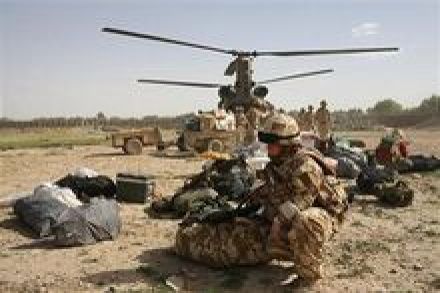
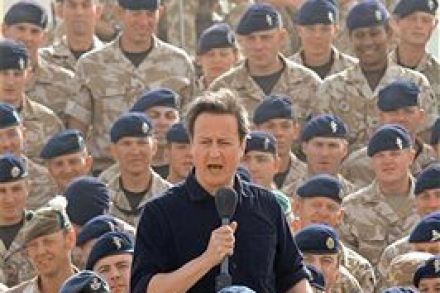
Everything about the Cameron government comes in fives. Five year terms, a five-year coalition and now we learn that it is Cameron’s considered opinion that British troops cannot remain Afghanistan for another five years. All Cameron has offered is the hope that troops will be home before the proposed May 2015 election. Five more years in Helmand on the current trajectory would be extremely costly and unpopular, especially given the political pressure surrounding defence cuts. Cameron realises this but will the nature of Britain’s engagement change? The assumption was that Britain would mirror President Obama’s timetable and begin a gradual withdrawal next year. That political and military strategy depended on the success of COINS entirely.

Obama wants ‘global concert’ to delay cuts

G20 summits are usually turgid affairs, but this one has some (limited) potential. Relations between the White House and Britain and the White House and Europe have been frosty of late. Afghanistan, BP, the Falklands, Merkel and Sarkozy’s irritation at Obama’s personal and political aloofness, all of these have been contentious. Diplomatic tension has now developed an economic arm. The broadly centre right governments of Britain, France and Germany are committed to cutting public spending now. Each has introduced an austerity programme, and Cameron has made retrenchment is his international cause. Obama still stands for stimulus.

Talking to the Taliban is key – but no magic formula

The proverbial shoe is dropping. Following General Stanley McChrystal’s forced retirement, a consensus is forming that President Obama's Afghan strategy is not working. The Economist says: ‘Since November, when Mr Obama promised 30,000 more of his country’s soldiers to the campaign, little has gone right. General McChrystal’s plan was for a “surge” that would seize the initiative from the Taliban and create the scope for Afghanistan’s government, backed by its army and police, to take charge. In practice that has not happened.’ In the Financial Times, Ahmed Rashid makes a similar point, arguing that the military strategy in Afghanistan is "failing".

Hail to the chief

How wrong I was. President Obama, lambasted by his critics for being ponderous, has acted with lightening speed: less than 24 hours after that Rolling Stone article, General Stanley McChrystal was forced out of his job in place of the only person that could pick up where he left off, namely General David Petraeus. In acting swiftly, the US president has moved to restore the authority and respect his position as Commander-in-Chief deserves; and he has begun to re-establish the kind of civil-military relations that need to exist in militarily-capable liberal democracies like the United States.   What effect the change of commander will have in Kabul remains unclear. But it will have a long-term positive effect on US democracy.

General concern

The Taliban are expanding their area of influence, NATO allies are eager to leave Afghanistan, the forthcoming parliamentary elections are likely to be even more fraudulent than last year’s presidential election – in other words, how can it get any worse for President Obama’s AfPak strategy? Oh yeah, the man the US president has trusted to execute the strategy, the man whose name is now synonymous with the international community’s’ plan, General Stanley McChrystal gives an interview to Rolling Stone magazine (in itself a dubious choice), which paints a picture of the commander as insubordinate, unwise or simply not in control of his headquarters.

Pakistan: friend or foe?

One of the biggest obstacles for NATO in Afghanistan has been the role of Pakistan and its intelligence apparatus in supporting the Taliban insurgency. Officially, the Pakistani government deny backing the Taliban insurgency, but even Admiral Mike Mullen, chairman of the U.S. Joint Chiefs of Staff, and General David Petraeus, head of U.S. Central Command, have said they suspect Pakistan's Inter-Services Intelligence service of being engaged in anti-NATO activities. Now, a new report by the Harvard-based analyst and former head of OXFAM in Kabul, Matt Waldman, takes the accusations to a new level.

Should Cameron mention McKinnon?

Lord Tebbit poses the question on his latest blog, pointing out that Nick Clegg campaigned against Gary McKinnon’s extradition, and urged the government ‘to do the right thing’.   Well, now he can and it would be a popular decision in the current circumstances. The US-UK extradition treaty should be unacceptable to any government that considers itself sovereign, but this is no time for bluster and confrontation. Barack Obama has leapt about with shrill adolescent abandon; it would be hypocritical for Cameron to return fire in kind. Despite what Obama protests, BP is not solely liable (Halliburton and TransOcean have a case to answer).

The end of BP

BP is in trouble. Deep trouble. American lawmakers are threatening to take away its dividends and now President Obama is huffing and puffing in order to deflect attention from the role of his administration. BP is struggling to get a word in with the media, pundits, talking heads, politicians and environmental experts monopolising the airwaves.      Not a lot of people will be sympathetic to BP’s plight. The Deepwater Horizon explosion and oil spill is first and foremost a human and natural tragedy: 11 workers were killed, others were injured and now many Gulf Coast residents will end up losing their homes and livelihoods while their natural environment will be polluted for years to come. BP should, rightly, share much of the blame for this.