Bangkok

The vast landscape of American barbecue

From our US edition

Some 25 years ago, I walked into the University of South Carolina library to check out a book on the history of barbecue. I had just finished a PhD in American literature, but had become more interested in culinary history. I had also taken to driving the state’s backroads, seeking out old-school barbecue restaurants. Researching the history of barbecue seemed the perfect next move. To my surprise, no one had published a book on the subject. The most that had been written about pre-20th century barbecue were a few sparse paragraphs in larger works on food history. I ended up having to write one myself. It took a while. The first edition of Barbecue: The History of an American Institution was published in 2010.

Gavin Mortimer, Colin Freeman, Lawrence Osborne, Lionel Shriver and Anthony Cummins

34 min listen

On this week’s Spectator Out Loud: Gavin Mortimer looks at how the French right can still win (1:48); Colin Freeman interviews Americans who have fought in Ukraine and feel betrayed by Trump (11:01); Lawrence Osborne details his experience of last week’s earthquake, as he reads his diary from Bangkok (18:38); Lionel Shriver defends traditional, monogamous marriage (24:07); and, Anthony Cummins examines media satire and settled scores as he reviews Natasha Brown’s Universality (31:13).  Produced and presented by Patrick Gibbons.

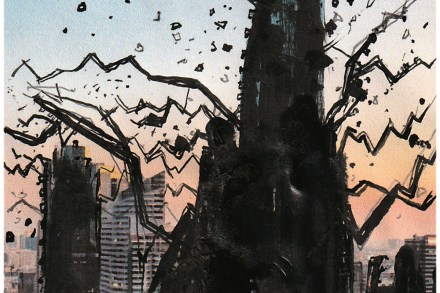
The day Bangkok crumbled

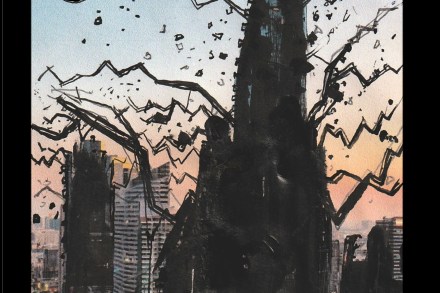
Last Friday I was on my 15th-floor balcony with an early afternoon coffee, watching dogs play among the banana trees below. It was strangely quiet. Looking across the skyscrapers that form my horizon, I noticed the 137 Pillars – a luxury high-rise hotel famous for its rooftop pool perched 37 storeys above my own street. Down the tower great cascades of water, thousands of gallons, were pouring from that rooftop pool. I looked at the jungle plants on my balcony. They were moving back and forth, the blades of the rubber trees swaying as if issuing a warning, and I felt dizzy. Soon all the towers around me were exploding with the same cascades of pool water. For a few seconds, before I had realised anything, I thought: ‘How beautiful.’ Then I stood up and keeled over.

If only Britain knew how it was viewed abroad

A London-based foreign correspondent is probably not the target audience of Michael Peel’s latest book. Indeed, what Peel (himself a former Financial Times correspondent in Lagos, Abu Dhabi, Bangkok and Brussels) discusses in eight lively, well-researched chapters won’t come as a surprise to any of his UK-based foreign colleagues: how Britain is perceived abroad; and how little it seems to permeate the national consciousness. This blindness – or the British inability to realise how they appear to others, as opposed to the image they have of themselves – often has foreign correspondents pulling their hair in disbelief. If only Britain knew how it was seen! One senses that Peel’s return to London from Tokyo after 13 years of foreign postings must have felt like a crash landing.

Why hasn’t Hamas freed its American hostages?

From our US edition

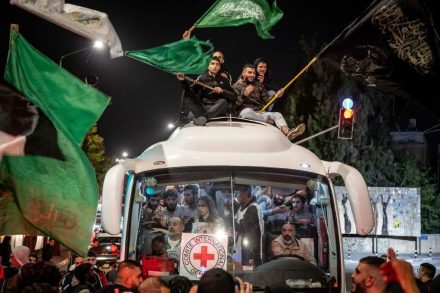
Hamas’s most valuable assets are the American hostages it holds. That simple fact means the terrorist organization will demand the highest value in return. What can America give Hamas in exchange? Not prisoners, since the US doesn’t hold any Hamas fighters. That means the US cannot follow the Israeli pattern of giving Hamas three Palestinian prisoners in exchange for every one held by Hamas. Nor can America provide boatloads of cash, as the Biden administration has for Iran. Biden could continuing giving Iran money, but that is much harder in the midst of war. And it is untenable politically to pay Hamas directly while the fighting continues. The Biden team might promise to help rebuild Gaza later, but that’s not valuable to Hamas right now, as it fights for its life.

hamas

Superb but depraved: BBC1’s The Serpent reviewed

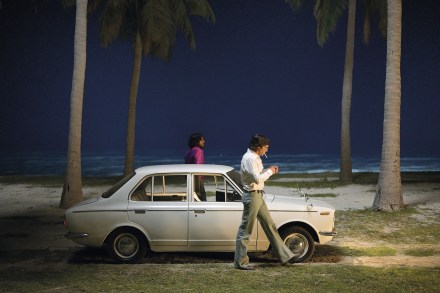
The Serpent is the best BBC drama series in ages — god knows how it slipped through the net — but I still think it most unlikely that I shall stick it through to the final episode. It’s not the style that’s wrong but the subject matter: do we really want to spend eight hours of life in the company of a smug, ruthless serial killer who murders at least 12 people — and more or less gets away with it? Up to a point The Serpent has addressed this problem by trying to make the central figure not the killer, Charles Sobhraj, but the persistent Dutch junior diplomat, Herman Knippenberg, who eventually nabs him.

Killing time in Thailand

From our US edition

Thailand is famous for many things, some of which are unmentionable in these pages. It has long been considered the perfect location for ‘winter sun’, if you are the type of person to whom a piña colada on a white sandy beach appeals. In recent years, it has become a hotspot for hypochondriacs requiring non-essential medical care and hysterics after a nip-and-tuck (pre-COVID, the health-tourism industry was thought to be growing at 14 percent a year). Home to the orchid, pad thai, the Monkey Buffet festival (what it says on the tin), the Siamese cat and the bumblebee bat, Thailand’s gentle and healing culture has earned it a reputation as a cleaner, greener land.

thailand