Ballet

The Trocks’ shtick is getting tired

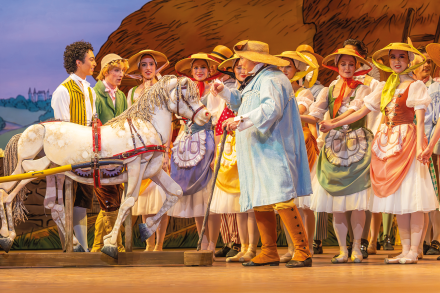
Les Ballets Trockadero de Monte Carlo were popular regulars at Washington’s Kennedy Center until Trump’s demented blast against decadent queerness. In truth the company is simply blameless pantomime, innocent fun for all the family. Based in the USA and clocking up 50 years tirelessly on the road, it consists of male dancers in drag gently parodying an art form deeply encoded in elaborate conventions that are ripe for mockery. The Trocks, as they are affectionately known, also draw on a now-forgotten phenomenon: the hand-to-mouth touring companies of the postwar years that themselves traded off the model of Diaghilev’s great enterprise.

Excruciating tedium from Pina Bausch

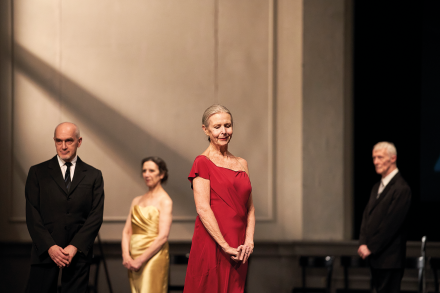
You’re never too old to dance we are told nowadays. This encouraging injunction has been taken up by everyone from the likes of Mikhail Baryshnikov and Alessandra Ferri, who have found wondrously creative ways to compensate for their declining virtuosity and stamina, to septuagenarians who insist on bopping to Abba at their grandchildren’s wedding parties. I confess that in the interests of research I took to ballet classes when I was well into middle age: it was not a pretty or edifying sight. There is a lot to be said for oldies sticking to the military two-step. The Australian choreographer Meryl Tankard has a different view of the matter. Kontakthof is the work of the sainted Pina Bausch, dating from 1978.

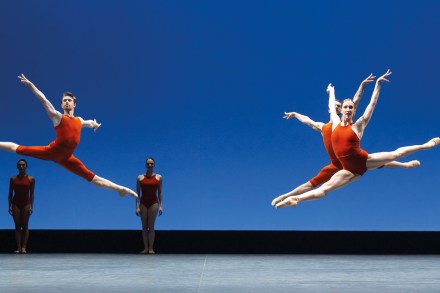
Exhilarating – but also exhausting: ENB’s The Forsythe Programme reviewed

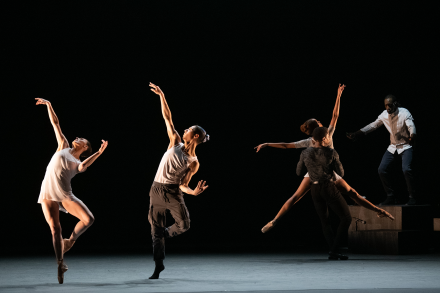
The first time I saw the work of Trajal Harrell I stomped out in a huff muttering about the waste of public money and is this what the art of dance has come to. But perversely I was drawn back for more of its weirdness, and after The Köln Concert I am relenting. The guy might be on to something. A middle-aged, Yale-educated African-American with a melancholy air on stage, Harrell should probably be classified as post-post-postmodernist. In any case, don’t expect meaning to emerge clearly or logic to govern the movement he creates. His territory is queer in every sense of the term, dippy-hippie in spirit, and aesthetically far to the left in its rejection of order or hierarchy. Yet it is also open-hearted, innocently comical and slyly beguiling.

A mesmerising new work from English National Ballet

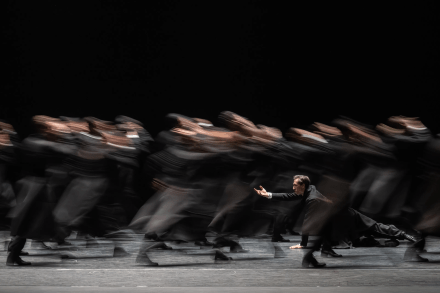
Crystal Pite is one of a handful of truly original choreographers today, extending the boundaries of her art form without going all doolally about trendy gender issues, AI or neuroscience. She is rooted in something more universal – the tension between conflict and connection, between what draws us together and what keeps us apart. ‘We want to individuate,’ she says. ‘Yet we want to belong.’ Out of this grows Body & Soul, in which individuals fight their way out of great swarms and cocoons, only to be sucked back into an inexorable flow that snakes and stiffens, multiplies and divides.

Today’s ballerinas are too perfect

‘Ballet is woman,’ Balanchine once gnomically pronounced. A remark not to be taken too literally, but essentially true. Like every afflicted balletomane, I can map out my lifelong passion for the art in terms of my adoration from afar of a succession of ballerinas – any awe I feel for their male counterparts is something quite different. First for me came Margot Fonteyn, of course – though I saw her only through the autumn of her career, when her body was stiffening and she relied on some divine inner grace to make an effect. (Meredith Daneman’s magnificent biography illuminates this weirdly complex woman, with her steely self-control, enormous generosity and poisonous political views.

Why is Ukraine trying to cancel Swan Lake?

Two of Ukraine’s most famous ballet dancers face dismissal, cancellation and possible mobilisation into the army. Their crime? They dared to dance a segment of Russian composer Pyotr Tchaikovsky’s Swan Lake during a European tour. The Ukrainian Ministry of Culture slammed Serhiy Kryvokon and Natalia Matsak’s performance as ‘promoting the cultural product of the aggressor state’. The National Opera of Ukraine cancelled Kryvokon’s next scheduled performance – as well as his exemption from compulsory military service and permission to travel. If the dancer returns to his homeland, he will not be able to leave again.

The pioneering women of modern dance

Arms outstretched, head thrown back, flounced skirt rippling over a raised leg. The 1942 photograph of Sophie Maslow dancing in her own creation Folksay makes her look as if she is performing in Seven Brides for Seven Brothers or some MGM musical spectacular. Yet Maslow was a radical artist, who asserted that modern dance was a transformational power for good, and devoted her 50-year career to the belief that it belonged to everyone. In Folksay, she danced to the Dust Bowl ballads of Woody Guthrie, conjuring an inclusive version of America by reshaping the view of its pioneer spirit. Loie Fuller’s groundbreaking serpentine dance transformed her into a flame, or an orchid, or a cloud She told Dance Magazine in 1946: This is the Age of the Common Man.

The best thing Cathy Marston has ever done

The Royal Ballet has scheduled what – on paper at least – looks like one of the most dismally dull and cautious seasons I can recall. The company is hobbled by a £21.7 million government loan (that had tided the place over during Covid), which the Royal Opera House is being forced to ‘service’. One bright spot of interest comes with the commissioning of a new work from Cathy Marston and an import from New York City Ballet’s Justin Peck, slotted into a triple bill alongside Balanchine’s nocturne, Serenade. There’s not much to say about Peck’s Everywhere We Go. Big, bold, bright and much too long, it is devoid of shape or implication but bursting with jazzy Broadway energy, pumped up by a crude score by Sufjan Stevens.

‘Ballet is antiquated, and it works’: Royal Ballet principal Matthew Ball interviewed

The history of the male ballet dancer is a chequered one. In the early 19th century, he was the star of the show, albeit more as an acrobat and tumbler than fairy-tale prince. The vogue for sylph-like damsels floating in white tulle put paid to that, reducing him to the auxiliary role of porter and attendant. Then came the comet of Nijinsky, introducing a note of mysterious Slavic androgyny that left the male dancer suspiciously homosexual and prone to the ‘pink tights’ cliché. Nureyev and Baryshnikov cemented the exotic Russian connection, until the late 1990s when the allure of the musical Billy Elliot and Matthew Bourne’s version of Swan Lake opened ballet up to a generation of British boys who would otherwise have preferred kicking a football around.

Michael Keegan-Dolan’s How to be a Dancer is worthy of Flann O’Brien

Michael Keegan-Dolan’s show doesn’t even pretend to live up to the arresting proposition in its title – anyone hoping to glean a few useful tips on becoming a dancer would come away bitterly disappointed. What the Irish choreographer offers instead is a witty and touching exercise in autobiography in which he is ably abetted and illustrated by his resourceful wife, Rachel Poirier.  Born into a large and unlettered working-class family in north Dublin, Keegan-Dolan grew up jiving to Talking Heads and emulating Gene Kelly. Pigeon toes hobbled his four gruelling years in ballet training and as a performer he didn’t make it beyond the chorus line in West End musicals. He switched to choreography, mainly for opera, but soon jumped off that unrewarding treadmill.

Picasso’s ravishing work for the ballet

Visitors to the Victoria and Albert Museum’s new storehouse in Stratford’s Olympic Park are being enthralled by an atmospherically lit chamber devoted to the display of one vast and magnificent work of art: Picasso’s 10 metre-high, 11 metre-wide drop-curtain for Le Train Bleu, a popular hit of Diaghilev’s Ballets Russes, first seen in 1924. The canvas, for many years rolled up in storage, isn’t strictly the work of Picasso himself: Diaghilev’s scene painter Prince Alexander Schervashidze had meticulously expanded it overnight from a small gouache on plywood known as ‘Two Women Running on the Beach’ (1922), but Picasso was so delighted when he saw the result that he decided to endorse it with his signature on the bottom-left-hand corner.

Depressingly corny: Quadrophenia, a Mod Ballet, reviewed

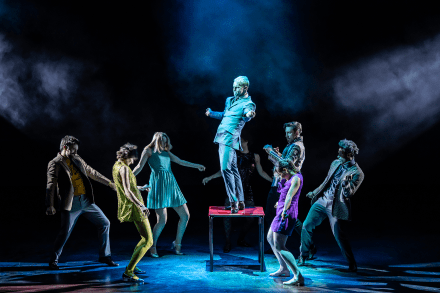
It’s all very well for people like me to sneer at dance makers for drawing on classic rock as a quick way of pulling in the punters, but the trick clearly does the business. Sadler’s Wells was pretty well full on the night I saw Pete Townshend’s Quadrophenia, a concept album that has endured several iterations and rewrites since the recording was first released on vinyl by the Who in 1973. An audience of all shapes and ages seemed to be having a good time, but although there’s nothing disgraceful about the show that director Rob Ashford has overseen, it seemed to me depressingly corny and laboured – a bumpy ride hitched to a creaky old bandwagon.

The past is another country: Ripeness, by Sarah Moss, reviewed

Sarah Moss is a prolific and vital novelist whose books encompass an array of subjects from Victorian social reform and 19th-century Japan to broken Brexit Britain and eating disorders. She combines teaching at University College, Dublin with writing in real time: The Fell, set during the second lockdown, came out in the summer of 2021, while My Good Bright Wolf, an experimental memoir about her anorexic breakdown in late 2020, was published last year. A forthcoming Channel 4 adaptation of Summerwater, which explored national identity and isolation against the backdrop of a soggy Scottish holiday park, may catapult her into the sort of gold-foil territory enjoyed by Maggie O’Farrell or Ali Smith. If not, then perhaps Ripeness, her ninth novel, will.

Christopher Wheeldon’s real gifts lie in abstract dance

Christopher Wheeldon must be one of the most steadily productive and widely popular figures in today’s dance world, but I’m yet to be persuaded that he has much gift for narrative. His adaptation of the novel Like Water for Chocolate was a hopeless muddle; his response to Alice’s Adventures in Wonderland is mere vaudeville; and I’m praying to St Jude that nobody is planning to import his dramatisation of Oscar Wilde’s downfall, premièred in Australia last year. But as the elegant craftsman, and sometimes the inspired artist, of more abstract dance, he is without doubt a great talent. The Royal Ballet’s programme of four of his shorter pieces showcases his strengths.

Perfection: The Rest is Classified reviewed

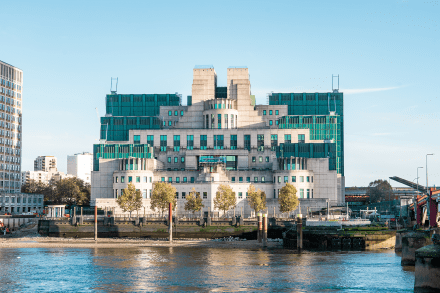
Interviewing for MI6 sounds to have been even scarier a century ago than it must be today. Candidates would enter an office to find a man with a ‘large intelligent head’ seated behind a desk and absorbed in paperwork. Everything would appear normal until he picked up a penknife and stabbed his own leg. A prospective agent who flinched at the sight might do himself out of the job. It is brilliant: carefully crafted, closely scripted, immaculately edited and best of all perfectly cast Rather like one of those rumoured Oxbridge interviews (candidates for a fellowship at All Souls were reportedly served a cherry pie at dinner to test what they would do with the stones), the ordeal was intended to weed out the weak.

Rejoice at the Royal Ballet’s superb feast of Balanchine

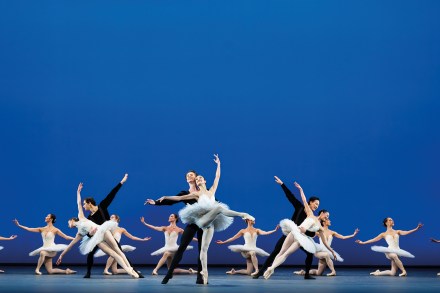
Any evening devoted to the multifaceted genius of George Balanchine is something to be grateful for, manna in the wilderness indeed, but the Royal Ballet’s current offering left me hungry for more. Three works were on the programme, all created in the early stage of the great man’s career, two of them widely familiar, none of them reflective of anything he created post-war for New York City Ballet. Are his executors reluctant to licence productions of later masterpieces such as Agon or Stravinsky Violin Concerto, or is the Royal Ballet fighting shy of their stylistic challenges? Gripe over, and let’s just rejoice in a feast of superb choreography at Covent Garden, performed with much excellence by dancers coached by Balanchine’s apostle Patricia Neary.

Irresistible: Osipova/Linbury reviewed

One of the few indisputably great ballerinas of her generation, Natalia Osipova is a magnificent exemplar of the Russian school, her training at the Bolshoi furnishing her with a steely security of technique, powerful stage personality, and spirit of dauntless daring. Happily based at the Royal Ballet since 2013, she’s now also one of ours. As popular inside the company as she is with audiences, and much missed while she recuperated from an ankle operation last summer, she returned as the focus of a ‘curated’ evening in the intimate environment of the Linbury Theatre. First came a revival of a modernist classic: Martha Graham’s Errand into the Maze dates from 1947, with exiguous designs by Isamu Noguchi and an acerbic score by Gian Carlo Menotti.

Clouded memories: Ballerina, by Patrick Modiano, reviewed

There are, broadly speaking, two types of artist: the explorer and the miner. The explorer keeps moving on, staking out new aesthetic or thematic terrain, while the miner keeps returning, digging deeper into the same earth each time. Patrick Modiano, the French Nobel prizewinner for literature in 2014, is an artist firmly of the second camp. Ballerina may be Modiano’s 32nd novel, but it feels more like the latest haunting chapter of the one long book that makes up his career. Blending noir, elegy, Paris and an obsession with memory, Modiano writes like Proust conducting a police line-up.

What a sad thing Strictly Come Dancing has become

Those of a violently masochistic disposition would have heartily enjoyed the Saturday matinée of the Strictly Come Dancing: Live Tour at the Utilita Arena, Birmingham. Talent loses out to glitter and hype, as shrieking vulgarity envelops all What deliciously perverse pleasure was to be drawn on this bleakly cold afternoon from the vast, snaking queues, the blared injunctions from the Tannoy, the drear concrete ambience, the over-priced merchandise tat and the chaos of the ultra-processed catering outlets – not to mention the £15 charge for leaving an empty backpack in the cloakroom. And then there was the show.

A jewel in the English National Ballet’s crown: Giselle reviewed

Since its première in Paris in 1841, Giselle has weathered a bumpy ride. For St Petersburg in 1884, Petipa gave Coralli and Perrot’s original choreography the once-over and Fokine grafted on further innovations when Diaghilev brought the ballet to London in 1911. Despite casts led by Pavlova, Karsavina and Nijinsky, it bombed here with critics and audiences, who considered its archetypal Victorian plot of the innocent village maiden betrayed by the local squire prissy and musty. Only a generation later, when the likes of Markova and Ulanova assumed the title role, did the scenario’s mythic simplicity find new life, albeit in versions that departed quite radically from the primary text.