Assyrians

What Ovid in exile was missing

A notable recent trend in popular history is the revival of interest in the ancient world. Mary Beard, Tom Holland, Bettany Hughes and Peter Stothard are just some of the historians whose books and television series have cashed in on our thirst for knowledge of distant forebears and their civilisations. Now Owen Rees joins the merry band with a strikingly original take on the subject. He argues that our interest in classical history focuses almost entirely on the Graeco-Roman world, specifically on the capital centres of those cultures. We therefore miss much of what was going on at the periphery of empires, with their vibrant cities and peoples.

The Assyrians were really not so different from us

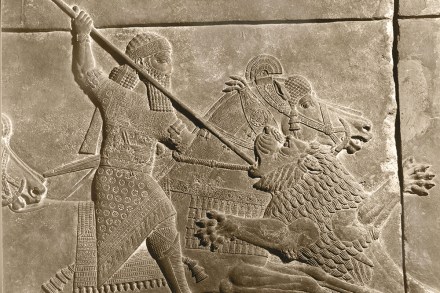
Among the most striking and memorable exhibits in the British Museum are the Assyrian reliefs depicting the royal hunt. These huge panels show the king, Ashurbanipal, shooting, spearing and stabbing a succession of lions, albeit ones that had been trapped beforehand and released from cages for the occasion. It is a magnificent work of art, carved in the city of Nineveh – on the outskirts of modern-day Mosul in northern Iraq – around the middle of the 7th century BC. My favourite section shows the king on horseback, riding full pelt, with no reins in his hands but only his bow and arrow.

Pulling US troops out of Syria will prove to be the right decision

From our US edition

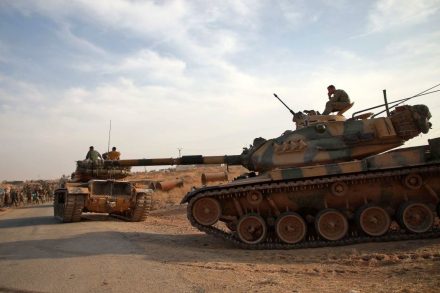
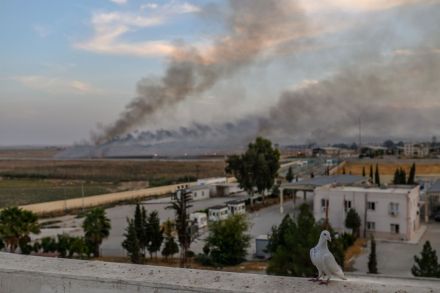
This article is in The Spectator’s November 2019 US edition. Subscribe here. Whenever neoconservatives and liberals chant in unison about American policy in the Middle East — as when they championed the Iraq invasion, for example, or the overthrow of Colonel Gaddafi in Libya, or the thwarted attempt to topple the Assad regime in Syria — it means we are being told a pack of lies. Par for the course is the hysterical response to President Donald Trump’s ‘betrayal’ of the Kurds in the wake of Turkey’s invasion of northern Syria. Turkey’s goal was to repatriate at least two million of 3.6 million Syrian refugees inside Turkey in a border zone controlled, until the invasion began, by the US-allied, Kurdish-led Syrian Democratic Forces.

turkey syria kurds

Syria’s Christians are suffering in silence

From our US edition

The White House’s decision to move aside and allow a Turkish assault in northeast Syria highlighted the morass that is the US’s foreign policy in the Middle East. Criticism of the decision, rebuked as ham-fisted and reckless, was bipartisan. This is the kiss of death for the Kurds (the US’s allies, who are left defenseless),  the largest ethnic minority in Syria, and one of the victims of Turkey’s human rights abuses that have spanned centuries. Lost in the turbulent tangles of the news is another one of Turkey’s victims, a population of Christians who are a distinct ethnic group that has been historically targeted by the Ottoman Empire.

syria christians