Art

The Tate’s grubby cancellation of Rex Whistler

Tate Britain’s Rex Whistler restaurant will never reopen the gallery announced yesterday. The restaurant – once known for its excellent and well priced wine list – won’t reopen due to the apparent offensiveness of the mural on its walls. Diners used to be embraced by the mural, The Expedition in Pursuit of Rare Meats, a painting by Rex Whistler, an artist best known for his decorative murals in grand country houses. He was killed in France in 1944 fighting the Nazis, in other words engaging in anti-racist action. When the Tate restaurant first opened in 1927 it was described as ‘the most amusing room in Britain’. It was a favourite

The magic of champagne

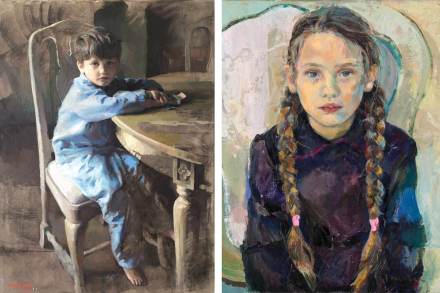
The four portraits of four siblings that Catriona had painted from their photographs over four months were framed, hung and lit and ready for a viewing by the loving parents. That so much creative endeavour should succeed or fail at a glance made me terribly glad I wasn’t a painter. At the appointed hour of six o’clock, I was still in bed upstairs, but listening out, as anxious as she was. Then I heard the parents’ optimistic tattoo on the front door. We needn’t have worried. I heard them spot their children hanging on the rock face, then their overjoyed exclamations at the interpretations and likenesses. She’d captured their two

My plan for the Turner Contemporary

I learnt a horrible new word during the holidays: Twixmas. It refers to the 27-30 December period and has its roots in the word ‘betwixt’, although why anyone would refer to those dates as ‘betwixt’ Christmas and New Year rather than ‘between’ is beyond me. Caroline, who now works in travel, introduced me to it and the reason it came up is that she booked an Airbnb in Margate for precisely those dates. This was to be our Twixmas holiday. Not ideal because there were QPR games on the 27th and the 30th, one of them in Bristol, but by criss-crossing the country in our VW seven-seater I made it

Are Bored Apes racist?

A plague of apes has spread across social media. Wherever you look, blank simian faces stare back at you. Their features? Sickening. Their prices? Equally so. The apes have brought in more than $1 billion (£750 million) in sales. Eminem, Mark Cuban and Shaquille O’Neal are just some of the famous names who own an ape. Where have they come from? What do they mean? How can we get rid of them? The Bored Ape Yacht Club sells NFTs. In essence, an NFT — which stands for ‘non-fungible token’ — is a unique piece of data stored on a blockchain, a digital ledger, which can be associated with a work of

What musicians like me learned from the pandemic

My mother died earlier this year aged 85. She left me her old pianola. These were popular in the 1920s and 1930s before people had records and hi-fis. You would put the rolls on the pianolas and they were cut by the great pianists of the day, from the popular players like Charlie Kunz, as well as the star jazz and rhythm pianists like Fats Waller or Jelly Roll Morton, and also the great concert pianists like Rubinstein. You would simply put the piano roll on and then pedal away. The old war-damaged pianola had been left to her by her mother — and I learnt in my grandmother’s front

The art and science of Fabergé

After all the magnificent presents she’d received from his workshop, Queen Alexandra was eager to meet the most famous jeweller in Russia. ‘If Mr Fabergé ever comes to London,’ she said to Henry Bainbridge, a manager of the design house, ‘you must bring him to see me.’ Peter Carl Fabergé paid a rare visit to the capital to inspect his new shop — the only one located outside the Russian empire — at 48 Dover Street in 1908. ‘The Queen wants to see me! What for?’ he asked an exasperated Bainbridge. ‘Well, you know what an admirer she is of all your things.’ Insisting that she would not wish to

How do we calculate the value of a painting?

There’s an intriguing conversation on YouTube between Mark Carney, former governor of the Bank of England, and the artist Damien Hirst. It will be easy to find on Google, since these are not names normally found on the same page. Ten minutes in, Hirst makes an engaging observation about the value we attach to art. He explains that art collectors will pay anything for a painting, even though the raw materials cost almost nothing. It’s a hundred quid’s worth of canvas, wood and paint, but you can sell it for millions. ‘The problem happens when you make something like a diamond skull. Suddenly people want to know what you paid

Sale of the century: the contents of the Sitwells’ mansion are going under the hammer

In my bedroom there is a small lidded laundry basket. It was designed by Geoffrey Lusty for Lloyd Loom, a company that has, since 1917, been producing surprisingly durable furniture made from lacquered woven paper fabric for the middle classes. The basket is globular and stands on three spindly legs. It is weatherbeaten, and slightly worn, because it was produced in 1957, at the dawn of the Space Era. Indeed, it is a Sputnik wicker linen basket, designed in the style of the famous satellite. Only 100 were ever produced. Why is this double design classic not in a museum? It may be that one is. As far as this

The political power of Roy ‘Chubby’ Brown

There is a rather sweet moment in the middle of each Roy ‘Chubby’ Brown show where, after some magnificently obscene one-liner, he addresses the howling audience. ‘I love you people,’ he says. ‘Just like me, you’re rough.’ The audience laughs and applauds at this observation of itself. The wall is broken and the performer and audience are as one. This is ‘rough’ used primarily in its north-east of England context, meaning not so much violent or abrasive (although both are also possible), but cheap and low-down and a little bit ugly. Roy’s now 76 and has been knocking them dead for 40 years, packed houses wherever he goes. But you

The art of selling vaccines

I was bemused when I first saw the photograph of spaced-out chairs and vaccination booths in the Turbine Hall of the Tate Modern. Was this an art installation designed to probe the relationship between personhood and state? Were we supposed to question the transformational power of medicine, in a live enactment of biomedical transubstantiation in the cathedral-like space? Alas, this was not art, à la Kara Walker, Olafur Eliasson or Carsten Holler. This was an NHS pop-up vaccination clinic, replete with a DJ ‘spinning tunes’. Presumably some clever behavioural psychologists have had a stab at what ‘groovy’ looks like, in an attempt to induce London’s trendy youngsters to be vaccinated. The

How I was stitched up by the Royal Academy

Recently I found myself cancelled by the Royal Academy. It was a strange affair, and this is how it happened. I’m an artist who makes a living out of creating intricate hand-embroidered portraits and flowers. I was working in my garden one afternoon last month when a glance at Instagram took me aback. My friend Laura was defending me against… well, I didn’t quite understand who or what. Laura was at work and couldn’t talk, so it was only later that evening that I began to realise what was going on. It turned out that some keyboard warriors had mounted a witch-hunt against me with the intention of getting me

Welcome to the Impasse Ronsin – the artists’ colony to beat them all

Of all creatives, visual artists are perhaps the least likely to work in isolation; the atomised life of garret-installed solitude is not for them. Artists have always bounced off one another, whether in colonies, studios, collectives or co-operatives. The YBAs would not have been a thing, let alone a now-unfashionable acronym, had a significant group of them not chosen to hang out together. There are outliers, of course, but for the most part artists seem to like rubbing along together, perhaps in the belief that the fumes of oil from one studio can inspire brushwork in the one next door. The Impasse Ronsin, a tiny cul de sac in the

The art of Dolly Parton’s bra

New York I hope this is my last week in the Bagel. I plan to fly first to Switzerland and then on to London. There’s the annual Pugs Club lunch I cannot afford to miss, but now that Boris is married I don’t suppose he gives a damn about the poor little Greek boy and his club lunches. Incidentally, the little bird has answered my last week’s query about The Spectator bash: the sainted editor is waiting to hear what, yes you guessed it, the new bridegroom premier will allow this summer. Boris doesn’t seem to be able to make up his mind whether the magazine he headed for close

The art of politics: what ministers hang on their walls

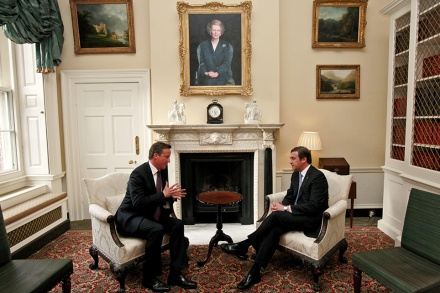
On the walls of the Chancellor’s office hangs a print of Eric Ravilious’s lithograph ‘Working Controls while Submerged’ (1941). Two engineers in blue overalls heave the levers of a submarine. A third slumps asleep on a bench. An image, perhaps, of the ship of state, several hundred feet underwater, but by no means sunk yet. We might picture Rishi Sunak in the Treasury control room, changing the gears, working the pumps, keeping the country bumping along even at the bottom of the economic ocean. Or perhaps Sunak looks at his four framed screen-prints by the artist Justine Smith — ‘Pound’, ‘Euro’, ‘Dollar’, ‘Yen’ — and thinks: if only it were

Seven walks inspired by artists

As we all discovered during lockdown, going for a walk is one of the best things you can do to keep your mind and body in good working order, and for me it’s even better if there’s some artistic or literary interest en route. Some of my favourite outings over these last few years have been spent following in the footsteps of artists and writers, and now Britain is opening up again it’s the ideal time to get back on the cultural trail. Here are a few of my favourite arty walks. I’d love to hear about some of yours. Simon Armitage, The Pennines Back in 2010, those clever, creative folk at Ilkley

The strange magic of the mountain hare

The numbers of the dear old mountain hare in England are becoming perilously depleted. A researcher, Carlos Bedson, has suggested there may be only 2,500 left in the Peak District. Warmer weather seems to be finishing them off. It is time to appreciate them and their cousins, the brown hare, more and to look after them. I was in my thirties when I’d head up on to Saddleworth Moor with my father-in-law to watch the white-furred mountain hares. We didn’t say much, we just took in the old magic of those beautiful creatures. I’m not the only one to love hares. That great English poet and hymnodist William Cowper suffered

It is impossible to imagine Henrician England except through the eyes of Hans Holbein

‘Holbein redeemed a whole era for us from oblivion,’ remarks the author of a trilogy of novels set at Henry VIII’s court. ‘He has forced us to believe that his vision of it was the only feasible one.’ This is a bit of a tease. It’s not written by Hilary Mantel, as you might be expecting, but by Ford Madox Ford, who, a century before Wolf Hall, published a sequence of novels about Henry’s fifth queen, Katharine Howard. Nevertheless, Ford’s point is irrefutable. It is impossible to imagine the England of Henry VIII except through the eyes of ‘the King’s Painter’, Hans Holbein. Not just the king, portrayed as massive,

The high and low life of John Craxton

Charm is a weasel word; it can evoke the superficial and insincere, and engender suspicion and mistrust. But charm in its most authentic sense was surely the defining quality of the painter John Craxton, and it flavours this lively and richly coloured account of his life. Ian Collins only met the elderly Craxton — by now sporting the moustaches, shepherd’s stick and general demeanour of a Cretan chieftain — in the last decade of his life (he lived to 88), and was immediately seduced by his joie de vivre and his fund of recondite knowledge, stories and jokes, and drawn into Craxton’s charmed circle. He became the artist’s Boswell, taping

How 20th-century artists rescued the Crucifixion

Two millennia ago, in the outer reaches of the empire, the Romans performed a routine execution of a Galilean rebel. Tortured and publicly humiliated in front of family and friends, Jesus of Nazareth was slowly asphyxiated over six hours. The Crucifixion is the centrepiece of Christianity. But artists have long adapted the devotional image of the Cross for their own purposes. As far back as the early 5th century, woodcarvers working on a door for the Basilica of Santa Sabina in Rome crafted a Christ whose palms are impaled with nails, but who is not hung on a cross. A devotional statue in Panama dating from the 17th century made

Which Covid vaccine is really the most effective?

State of the art Graffiti on Edvard Munch’s first version of ‘The Scream’ was revealed to be the work of the artist himself. There is a tradition of artists damaging their own work: — In 2018, a Banksy, ‘Girl With Balloon’, was partially shredded moments after being sold for $1.4 million at Sotheby’s by a device fixed inside the frame. — In 1920, Dadaist Francis Picabia arranged for his friend André Breton to rub out his chalk drawing, ‘Riz au Nez’, shortly after it went on display in Paris. — In 1960, ‘Homage to New York’, a sculpture by Jean Tinguely, auto-combusted after going on display in the city’s Museum