Art

Who says Lauren Sánchez Bezos doesn’t belong at the Met Gala?

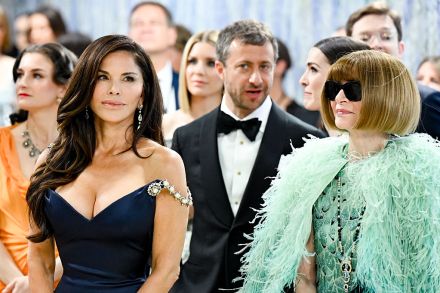
Lauren Sánchez Bezos, with her blown-out lip filler, understands fashion. She understands that, unlike the gatekeepers of painting and literature, fashion figureheads aren’t ashamed to dirty their hands by digging around in the money pot. It was only fitting, then, that Lauren and her husband Jeff Bezos sponsored this year's Met Gala. Its theme was "Fashion Is Art." All Kardashian-Jenners present came in bodices protruding in the shape of their nipples Sánchez Bezos showed up to the Met red carpet in a navy-blue gown that nodded to John Singer Sargent's painting of Madame X, a socialite and the wife of a French banker. The painting's portrayal of a pale, corpse-like, high-society woman was considered indecent because of the single strap falling off her shoulder.

Trump’s presidential library is predictably crass

Maybe a tad prematurely for a term that ends only in 2029, the Trump Organization has released a short video on Truth Social revealing, with a dizzying CGI fly-throughs, proposals for the Donald J. Trump presidential library. Any great memorial should be both surprising and inevitable. The Donald J. Trump presidential library is neither, being woefully predictable in its crassness and feeble as a design It’s not about Making America Literate Again: there’s not a book in sight. I could not even see a reference to Trump’s own great contribution to world literature: The Art of the Deal. By contrast, the Ptolemies’ great library in Alexandria had perhaps 700,000 papyrus rolls. But that was there-and-then and POTUS 47 is nothing if not here-and-now.

library

Palm Beach gets a European twist

In these parts, it is always said that the most disappointing aspect of Palm Beach life is… well, the beach itself. Yes, it has sand, sea, minimal surf (and, as often as not, “dangerous marine life,” as the deep purple flags flown at the lifeguard stations indicate). But that is all. There is nothing like what you get, for example, in the north shore of the Mediterranean where, from Gibraltar in the west to Bodrum in Turkey, thousands of miles to the east, every few hundred yards you have a chic café or a ritzy restaurant, or boutiques selling everything from bikes to bikinis. No, the beaches of Palm Beach are socially inept, empty of entertainment, where the most exciting thing I have seen (twice) is a seven-foot shark caught on a line, which is a touch off putting for bathers.

The predictable politics of the 2026 Grammys

When Billie Eilish declared, during her acceptance speech for song of the year with “Wildflower” at last night’s Grammy awards, that “I feel like we just need to keep fighting and speaking up and protesting, and our voices really do matter,” she was speaking in the approved register. "Fuck ICE," she added but it was more of the same. In contrast to the Golden Globes, where the neutral tenor of the event was made up of tame jokes about the age of Leonardo DiCaprio’s girlfriends, the Grammys have turned into an opportunity for musicians to express political outrage. The awards themselves went as expected last night. Kendrick Lamar and Bad Bunny were the big winners of the night along with Eilish.

South America is flush with Nazi-looted art

This summer, a niche story from the art world caught fire: an Old Master painting, stolen by the Nazis from a Dutch-Jewish art dealer, surfaced in Mar del Plata, Argentina. Remarkably, journalists from a Dutch newspaper spotted it on the wall of a house in a promotional photo that was part of a “for sale” real-estate listing. It turned out that one of the sellers of the house was the daughter of a Nazi official who worked for Reichsmarschall Hermann Göring, a notorious art plunderer. When the stolen painting was recognized, the daughter allegedly removed it from the wall, replacing it with another artwork – a tapestry. Argentine authorities then arrested her and her husband and charged them with concealing a crime.

nazi

Rauschenberg is a bore

Pity the security guard at the Guggenheim who must patrol the gallery in which Robert Rauschenberg: Life Can’t Be Stopped is installed. Mounted in commemoration of the artist’s centennial – Rauschenberg was born in Port Arthur, Texas, in October 1925 – Life Can’t Be Stopped includes “Revolver II” (1967), a set of plexiglass discs with images overlaid. A cord leads from the back of this contraption to a pedestal on which there is a control panel – a set of buttons placed in proximity to the viewer. These switches set the plexiglass discs in motion, and they beg to be pushed. On my trip to the museum, visitor after visitor was shushed away from “Revolver II” with the age-old plaint: “Please don’t touch the art.

Adam McEwen’s small masterpieces of the uncanny

We meet at Adam McEwen’s apartment on the Upper East Side, a few hours before he makes a lightning trip back to London, where he was once a journalist working for the Daily Telegraph. After studying art, McEwen worked for a while writing obituaries, and his eureka moment came in 2000 with the decision to turn his day job into art. He began to write fake obituaries for living subjects, adopting the detached prose and visual design of a broadsheet newspaper. Each text was presented as a black-and-white C-print, and subjects included Jeff Koons, Marilyn Chambers, Macaulay Culkin and Nicole Kidman. McEwen’s fictitious obituaries are small masterpieces of the uncanny. In the instant of reading one, the hypothesized death seems real.

McEwen

Ben Shahn’s work remains as timely as ever

How can an artist express social and political dissent in a polarized, volatile time? Look no further than the sobering and rousing Ben Shahn: On Nonconformity. Throughout his decades-long career, Shahn (1898-1969) crafted paintings, murals, posters, drawings, photographs and prints chronicling the news of the world, with a focus on the suffering of society’s most wounded. This is the first major retrospective of his work to appear in the US since 1976. The country has changed, and yet Shahn’s work remains as timely as ever.  His social-realistic approach fell out of fashion as critics came to prefer abstract and pop art. But Shahn remained true to his own aesthetic, as the show’s 175 works demonstrate.

Shahn

Vermeer’s Love Letters is something of a riddle

Johannes Vermeer (1632-75) is doubtless a blockbuster artist, but the Frick’s exhibition, Vermeer’s Love Letters, is the size of a postage stamp – or, maybe more fittingly, a wax seal. The Frick has three Vermeers of its own, but only one made the cut: “Mistress and Maid” (c. 1664-67). From the 37 known works by the artist, the museum has only borrowed two to bolster the show: “Woman Writing a Letter with her Maid” (c. 1670-72) and “The Love Letter” (c. 1669-70). Each depicts a woman, her maid and at least one letter somewhere in the mix. Though we don’t know exactly what’s written in those papers, it’s fair to say that these discreet works have an air of romance. The show’s effect is something of a riddle. Why has the Frick picked these three?

Vermeer
Esther

How Esther inspired the imagination of Rembrandt

If you attended Sunday or Hebrew school, you know the story. There once lived in the ancient Persian city of Susa a King Ahasuerus and his Jewish wife, Queen Esther. At first she hid her Jewish identity from the king, only revealing it in order to foil the plot hatched by Haman, her husband’s Jew-hating second-in-command, to exterminate all who shared her faith. In doing so, Esther saved her people from destruction – and earned a volume in the Hebrew Bible named for her. Less well-known is that centuries later, in the Amsterdam of Rembrandt van Rijn (1606-69), Esther’s valor also made her a heroine to the citizens of the predominantly Protestant Dutch Republic.

‘Being a mom sometimes sucks’: an interview with Sarah Hoover

I am expecting Sarah Hoover to be brash. The New York art-scene stalwart and influencer has written a warts-and-all misery memoir about motherhood and self discovery called The Motherload, which is presently cruising atop US bestseller lists. The book, unanimously agreed to be “unflinchingly honest” about all the bad things that can happen on a woman’s journey to and through new motherhood, opens with a stream-of-consciousness account of a party Hoover threw at the Chateau Marmont in 2017 for her first baby’s ten-month birthday. “I’d be in LA for a couple of weeks, staying at the hotel, and a diet of room service and edibles was my general game plan.

Hoover
Museums

How museums can promote diversity without demonizing tradition

The resignation of Jim Ryan as president of the University of Virginia in June marks the growing momentum of the Trump administration’s efforts to dismantle diversity, equity and inclusion initiatives within US universities. The Department of Justice deemed Ryan’s resignation a step toward resolving its inquiry into UVA’s compliance with the administration’s new policies. Conservatives may be encouraged by news of major institutions like UVA and Harvard rolling back heavy-handed DEI programming. But pure reactionary animus to the excesses of progressive ideology has often gotten conservatives into trouble – not just in education, but in the arts.

On holiday with Goya

When I’m first invited to a sojourn in Madrid to learn about the life and work of Francisco Goya and the conservation work of Factum Arte, I’m thrilled but also a little apprehensive. While art-themed travel is right up my street and I live a mere train trip from the Spanish capital, Goya’s work is known for being a little, well, dark – particularly during his later years. As a fan of the Botticellis of this world, spending a few days with the artist famous for his "black paintings" was not something I was sure I’d enjoy.  And yet, three days later, as I stand in front of Goya’s grave in La Ermita de San Antonio de la Florida, I find myself moved in a way I never could’ve anticipated.

Goya

Who could be Mount Rushmore’s fifth head?

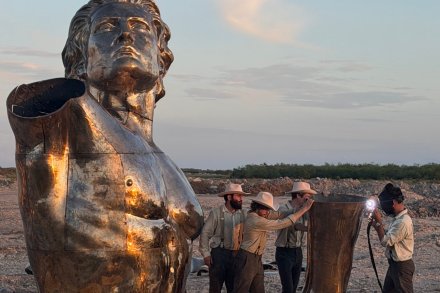
Late last week, the New York Times once again floated the idea that President Trump could become the fifth head on Mount Rushmore, to the right of Abraham Lincoln (that’s for sure). He’d be like the fifth Beatle, but yuge. While it’s true that Trump has brought peace to Africa and the Middle East in the last week, and has done an excellent job lining the Oval Office with gold filigree, maybe we should hold off on carving his visage into a mountainside until we see the final fate of the Big, Beautiful Bill. For Trump’s a jolly good fellow, and what nobody can also deny is that there’s available rock space in South Dakota. The President likes nothing more than a good real-estate deal on undeveloped land. But let’s hold off on clearing headspace for the Donald just yet.

Rushmore

Figures emerge like ghosts from Antonia Showering’s canvases

Figures emerge like ghosts from Antonia Showering’s canvases, their sketchy lines and expressionistic color palette relaying an atmosphere of deeply personal narrative as much as an emotional message, wordless but with universal resonance. Take 2025's "The Waiting Room" (2025), from her current show, titled In Line, at Timothy Taylor: A woman, resting on a bed in a pool of maroon, has just given birth; her belly appears aglow in a warm yellow as her newborn, outlined in pale purple, rests next to her, umbilical cord still attached. “I wanted to talk about the vulnerability about someone postpartum,” says the artist. The hues she’s employed are bodily, those of flesh, fat, and veins, yet here transcend into a surreal haze of life’s first moments. Antonia Showering, 5L (2024).

Antonia Showering

Why does Irish art avoid the Troubles?

Almost three decades after the Good Friday Agreement was signed in 1998, it is possible, if not always easy, to see the funny side of the Troubles. Derry Girls, Lisa McGee’s coming-of-age television series, and Milkman, Anna Burns’s surreal novel, wring laughs as well as tears out of mayhem. There are few laughs in Steve McQueen’s Hunger, which did “for modern film” according to one critic, “what Caravaggio did for Renaissance painting.” For those who prefer horror unmediated by fiction, Patrick Radden Keefe’s Say Nothing is the best example of longform journalism since Capote’s In Cold Blood. But along with their setting, these dazzling creations have something else in common: to get made, they all needed the backing of a producer or publisher from the UK or US.

Irish

In ambiguity, Tancredi Di Carcaci finds inspiration

The narratives we tell ourselves about the past are hardly set in stone. It’s in this ambiguity where Tancredi Di Carcaci finds inspiration. Through his practice, the British artist contemplates, and sometimes perpetuates, the blurring of straightforward histories, especially that of art, as traditionally passed down. His sculptures – a mix of ceramic works and assemblages combining cast bronze, ceramic and hunks of marble and stone sourced from Siena, Egypt and elsewhere – have aesthetic and thematic roots spanning the Renaissance, neoclassical revival, Romantic painting and 20th-century modernism.“For me, with art, I don't try and restrict myself.

Palo Gallery

The sad decline of painting

What hope is there for artists following the sale last year of the robot Ai-Da’s portrait of Alan Turing, entitled “A.I. God,” for $1 million? Someone has perhaps paid over the odds for a 3D print with a few marks added by a robotic arm and a few more by studio assistants to areas of the canvas Ai-Da couldn’t reach. Innovation wins. In the 1970s, the walls of art-school degree shows were studded with plaster casts of students’ genitals. By the 1980s, students were discouraged from attempting realist painting, but messy gray abstract works were still acceptable. Then it was found objects and piles of stuff. One young studio assistant I knew in the 2000s had a tutor at art school who’d gained top marks in his degree by filming himself pouring a glass of milk over his head.

painting

The weakening case against museum restitution

When passions are aroused, all of us are liable to overstate our case. Dan Hicks, a curator at Oxford’s extraordinary Aladdin’s Cave of anthropology, the Pitt-Rivers Museum, is perhaps a case in point. A Swedish academic, Staffan Lunden, has convincingly argued that Hicks is guilty of "distortion" when writing about the British raid on Benin in 1897, which brought several thousand objects, including finely wrought brass statuettes, to museums across the world. Hicks published his uncompromising views in 2020 in a prize-winning book, The Brutish Museums: The Benin Bronzes, Colonial Violence and Cultural Restitution.

restitution

The genuine faker John Myatt

John Myatt held his breath as the bidding began in the Christie’s auction room. His drawings were selling, one by one. He had dreamed of having his work on the block since the beginning of his career. He felt a tingle of adrenaline as the paddles went up... and victory as he strolled through the city streets with a wad of money in his back pocket afterward. But the feeling didn’t last long. Eventually, Myatt started to feel empty and disappointed. The psychic void grew as the prices that his agent, John Drewe, sought for his work went up and up.

Myatt