Apple

Flaming phones

From our UK edition

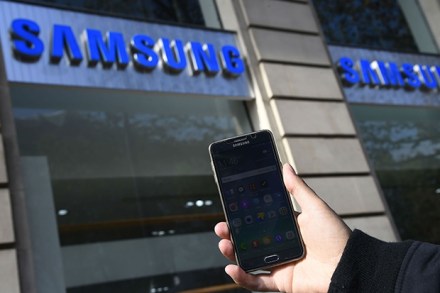
Is that a Samsung Galaxy Note 7 in your pocket, or are your pants on fire? The Korean manufacturer has halted sales of its latest smartphone and advised anyone already an owner to switch off immediately, lest the thing's battery explodes -- as one did on a Southwest Airlines flight in the US, forcing the plane to be evacuated. Meanwhile flights to Seoul are packed with crisis-management PR people -- all carrying Apple iPhone 7s, sales of which are soaring at Samsung's expense, or awaiting delivery of the rival Google Pixel device, due this month. Also set to gain is Huawei, the mysteriously rising giant of Chinese electronics.

Dear God, am I going to start liking Ed Balls?

From our UK edition

What the hell is going on with Ed Balls? Back in the horrible doldrums of the last Labour government, he was the most reliable total bastard around. There was Gordon Brown himself, of course, throwing phones at people and using his special sinister voice when he spoke about children, and Damian McBride, who had a reputation for being the nastiest spin-doctor there ever was, although he only ever texted me twice and actually quite nicely. Balls, though, was the spirit animal who tied the whole thing together. So many years later, it is almost impossible to convey how weary and stale that government was by the end.

A rotten windfall

From our UK edition

It’s strange that, even now, the Brexit vote is routinely referred to as an expression of anger or frustration — as if the most easily baffled half of the population had voted in response to forces they could not understand. In fact, the result of the 23 June referendum seems to look wiser with every week that has passed. Of course, leaving has its risks. But 52 per cent of voters judged that a greater one lay in staying in a European Union that is changing all the time — and invariably for the worse.

Are Apple disrupting the tax system?

From our UK edition

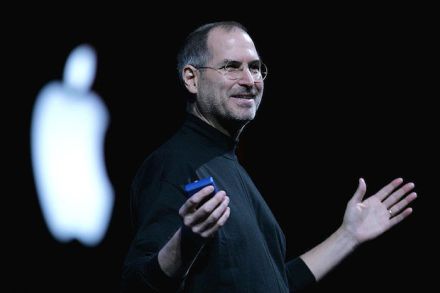
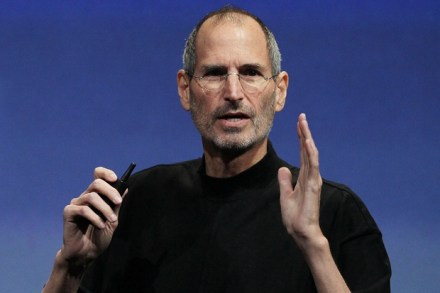
Reading this week about the European Commission’s verdict that Apple should pay €13 billion in back taxes to Ireland (even though Ireland doesn’t want it), I was reminded of Steve Jobs’s famous, if possibly apocryphal, excuse for being unkeen on charitable giving. According to a pair of his friends interviewed by the New York Times in 2011, Jobs always felt he could better serve the world by keeping the cash and expanding his company. As excuses go, it’s a good one, not least because it may even have been true. Embedded within there, though, you’ll find a glimpse of the worldview which makes these tech behemoths all but ungovernable. Tax is the ultimate act of deference to pre-existing societal structures.

Apple’s Irish tax bill is bad news for free-market liberals

From our UK edition

So the European Commission has today released its much-delayed iTax. This time, it’s not an Apple innovation but a ruling ordering Ireland to claw back €13bn in back tax from Apple – a record penalty and one that the company and Ireland have both vowed to appeal. The Commission announced its decision in a typically terse ruling, in which they chuck rotten fruit at Ireland’s low corporate-tax environment. But whilst every one is talking about tax, this fracas between the EC and Ireland over Apple’s bill—what we here locally might call a ballyhoo—actually has less to do with one of the two inevitabilities of life, and much to do with the Commission's Competition Commissioner, Margrethe Vestager.

How your brain buys a sofa

From our UK edition

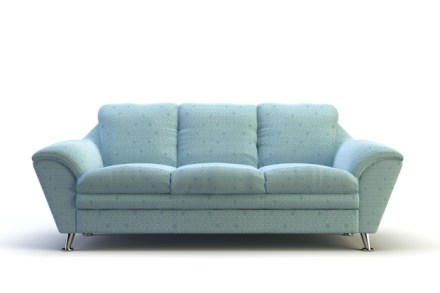
Almost every popular commercial product owes its success to two different qualities. First, it does the job it is ostensibly designed to do pretty well. Secondly, it has some quality that you might call ‘limbic appeal’. It delights or soothes our unconscious mind in ways which defy objective measurement. Much as it delusionally believes that it runs the show, the power granted to conscious reasoning within the brain is that given to a slightly colour-blind, utilitarian man when he buys a sofa with his wife. The man may have his own preferences, but he has a minimal role in the selection, involving as it does many complex factors that defy male comprehension (my wife has names for colours that seem not to exist on the visible spectrum).

High life | 21 April 2016

From our UK edition

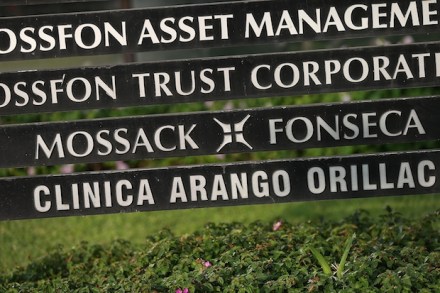
My, my, the rich are under attack everywhere, and I thank God the Panama Papers didn’t include the name of the poor little Greek boy. Legality being my middle name, I took legal advice and stayed away from offshore trusts and shell companies as soon as my daddy died. Steer clear of Mossack Fonseca, they advised; everything’s gotta be on the up and up, which means that I now depend on the munificence of my children and their mother for walking-around money — and that includes change for coffee and a pack of fags now and then. Mind you, it beats being on a Panama list and having all those hacks poring over my not-so-hard-earned moolah. What bothers me is how the word rich has now become a pejorative term.

We’re swamped with nonsense gizmos and it’s all Steve Jobs’s fault

From our UK edition

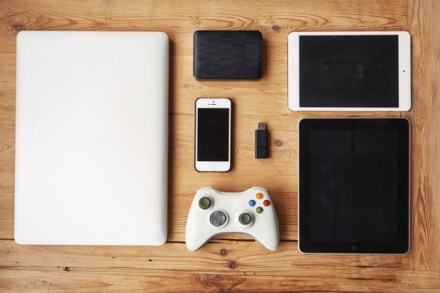
I keep being told that the big hot technological gizmo of the moment is a box that sits in the corner of your room and listens, and I don’t want one. They’re made by Amazon, largely, and the idea is that you tell them to order stuff — such as a pizza, say — by shouting: ‘Alexa! Order me a pizza!’ And Alexa, which is what the thing pretends to be called in this infantile, accommodating, psychotic age of ours, perks up and does so. Or orders books, or summons a taxi. Or it gets your phone to call somebody, or plays you a particular song. The rest of the time it just squats there. Silent. Waiting. Listening. It sounds like a disaster waiting to happen. Probably you’d put it in the kitchen, and probably you don’t often have sex in the kitchen.

Is the next Steve Jobs really among Syria’s migrants?

From our UK edition

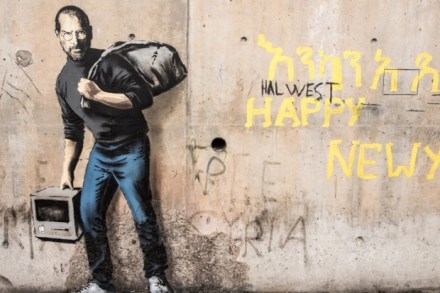
Steven Pinker famously observed in The Blank Slate that ‘Sophisticated people sneer at feel-good comedies and saccharine romances in which all loose ends are tied and everyone lives happily ever after. Yet when it comes to the science of human beings, this same audience says: Give us schmaltz.’ The same is true of the politics of human beings, where educated people want stories of individuals overcoming the odds, and hate discussing depressing, but more useful, overall patterns. A good example is the recent meme that among the recent Syrian influx may be the next Steve Jobs, a theme repeated by that hugely profound modern-day genius Banksy.

Disciple of Duchamp

From our UK edition

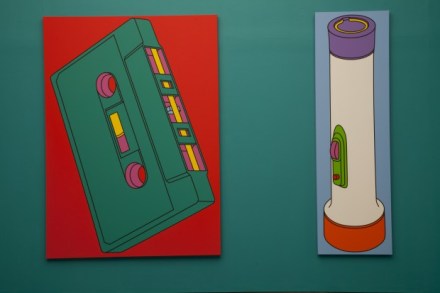
Michael Craig-Martin has had a paradoxical career. He is, I think, a disciple of Marcel Duchamp. But the latter famously gave up painting in favour of something more conceptual — ready-mades and whatnot — whereas Craig-Martin began with Duchampian concepts. He once exhibited a glass of water on a shelf together with a claim that he had mentally transformed these, by a kind of transubstantiation, into an oak tree. Then he metamorphosed himself into a still-life painter. As his current exhibition at the Serpentine demonstrates, for nearly 40 years Craig-Martin’s staple subject-matter has been everyday tools, gadgets and accessories.

The rise and fall of Sony

From our UK edition

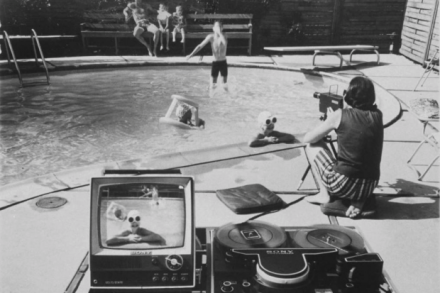
Here is a Japanese fairy tale for Christmas. An allegory of insight, opportunism and a fall from favour. It is 1945. Japan is devastated and disgraced, but two bright young men, Akio Morita and Masaru Ibuka, the first a salesman, the second an engineer, have a plan to turn toxic ashes into precious metal. They have discovered a curious typewritten document published by the Civil Information and Education division of the US Occupation Forces. It is called ‘999 Uses for a Tape-Recorder’. In those days, people needed to be told these things. Inspired, they form a company called TTK and Ibuka writes in its Purposes of Incorporation that it will make ‘imaginative use of technology ...to help restore national culture’.

Was Steve Jobs really a genius?

From our UK edition

Steve Jobs is a film about a man in whom I have little interest, but for 120 minutes I was at least quite interested, which is a result. But this doesn’t make it a great film, and in many ways it isn’t. It never quite pins Jobs down. It never quite works out what it wishes to say about him. That he was such a ‘genius’ it didn’t matter if he was also a bit of a dick? Or that it did matter, totally? Plus, the ending is calamitous. But it is well made, and the performances are ace, as is the dialogue, and I was kept interested, so the journey may well be worthwhile, even if the destination is not.

The vision of Steve Jobs

From our UK edition

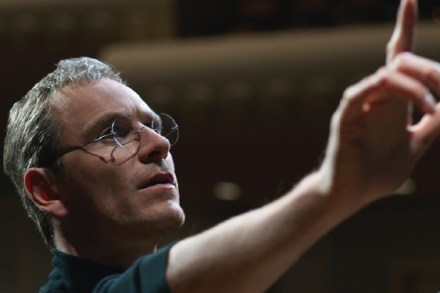
Last week I went to a screening of Steve Jobs, the new biopic about the co-founder of Apple directed by Danny Boyle, and I was impressed. It’s structured like a three-act play, with each act set backstage at the launch of a new product — in 1984, 1988 and 1998 — and then unfolding in real time. Superficially, the film is about the gradual ascent of Apple (and Steve Jobs) as the dominant force in the personal computer industry, but beneath the surface it’s about much more than that. As portrayed by Michael Fassbender, Jobs isn’t just a common or garden perfectionist. He’s neurotic, obsessive, driven, ruthless and almost inhumanly oblivious to the needs of others, including his own daughter.

How Taylor Swift socked it to Apple over a weekend

From our UK edition

All hail Taylor Swift. How she must give baby boomers the fear. Not just baby boomers. Also those who came next, the Generation Xers, who seemed to define themselves culturally mainly via goatees, apathy and heroin. And my own rather listless, half-generation thereafter, with our bigger beards and binge-drinking. Taylor Swift makes us all look old. Because we are old and the world will be hers. You will have heard about her victory over Apple this week — you must have heard about it, because an opportunity to put Taylor Swift on the front of a newspaper is an opportunity not to be missed, particularly now that Elizabeth Hurley is getting on a bit and Princess Kate isn’t getting out much.

The world belongs to Taylor Swift now. There will be no free-trial period

From our UK edition

All hail Taylor Swift. How she must give baby boomers the fear. Not just baby boomers. Also those who came next, the Generation Xers, who seemed to define themselves culturally mainly via goatees, apathy and heroin. And my own rather listless, half-generation thereafter, with our bigger beards and binge-drinking. Taylor Swift makes us all look old. Because we are old and the world will be hers. You will have heard about her victory over Apple this week — you must have heard about it, because an opportunity to put Taylor Swift on the front of a newspaper is an opportunity not to be missed, particularly now that Elizabeth Hurley is getting on a bit and Princess Kate isn’t getting out much.

Apple and IBM may just have changed the future of personalised medicine

From our UK edition

As the FT reports, Apple and IBM have got into bed together. The deal they've struck has major implications for the growing number of people using wearable tech (and indeed mobile phones) to monitor their health. Here are the details. IBM has entered into partnership with Apple and other manufacturers of medical devices to make health data from wearable tech available to doctors and insurers. One outcome will be personalised treatments for diabetics. But that's only part of the picture. This is how it will work. If you're self-monitoring your heart rate, calories and cholesterol levels – as more and more of us are – you will now be able to use an IBM app to store it in a cloud.

The Apple Watch could have been a proper health-monitoring device. But the FDA won’t allow it

From our UK edition

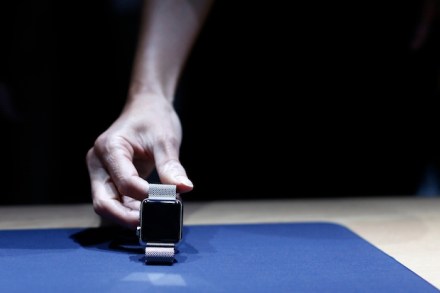
Apple’s new smart watch, unveiled by Tim Cook yesterday, had incredible potential. But its functionality has been hindered by technical hitches – and, especially, overzealous legislators. Their cloying presence must have been felt at every product meeting. Engineers working on Apple’s watch did so with the rasping breath of the US Food and Drug Administration (FDA) on the back of their necks. The result? Apple is nowhere near giving us a device that allows comprehensive self-monitoring of health – thanks to federal regulations. Public health services everywhere tell us that prevention is better than cure.

Portrait of the week | 29 January 2015

From our UK edition

Home Party leaders mercilessly launched 100 days of campaigning before the general election on 7 May. David Cameron, the Conservative leader, said he would reduce the annual maximum household receipt of welfare to £23,000 from the current limit of £26,000. Ed Miliband announced a ten-year plan for the National Health Service, but Alan Milburn, a former Labour health secretary, said: ‘You’ve got a pale imitation actually of the 1992 general election campaign and maybe it will have the same outcome.’ Amjad Bashir, a Ukip MEP, switched to the Conservative party, upon which Ukip said he was being investigated over ‘unanswered financial and employment questions’, allegations he denied.

The technology giants are breathtakingly irresponsible about terrorism

From our UK edition

[audioplayer src="http://traffic.libsyn.com/spectator/TheViewFrom22_27_Nov_2014_v4.mp3" title="James Forsyth and Hugo Rifkind debate the clash between geeks and spooks" startat=37] Listen [/audioplayer]The arrogance and intransigence of some of the technology companies in the fight against terrorism has become extraordinary. We learned this week that one of Fusilier Lee Rigby’s murderers, Michael Adebowale, had Facebook accounts closed. Apparently, this was because it was feared he was using them for terrorist activities. No one told the authorities. Even now, our security services — which have helped prevent 40 attacks since 2005 — have not been given full details of what Adebowale was doing online.

Steve Jobs’s button phobia has shaped the modern world

From our UK edition

Koumpounophobia is the fear of buttons. Steve Jobs had it — or at least a strong aversion, which explained his affinity for touch-screens and turtlenecks. So do an estimated one of every 75,000 people alive today. Your correspondent was only recently made aware of the phenomenon when a friend, K of Cambridge, requested that I refrain from wearing buttoned shirts in his presence. ‘A minor quirkiness with buttons,’ he confessed over email, while we were planning a rendezvous. ‘They make me very mildly uncomfortable.’ I turned straight to Google: ‘fear of buttons’.