Daniel Jackson

AI art is folk art, and a revolt against the arts establishment – which is why they hate it

From our UK edition

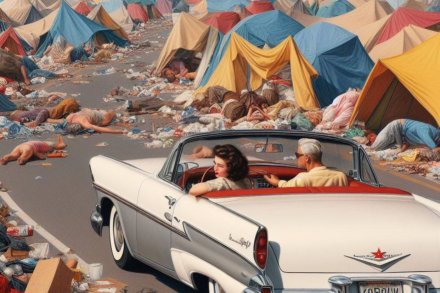
Left-liberals despise AI-generated art. Not because of the themes explored by its adherents (that would be akin to disliking canvas and paint due to the way Goya used them), but because, they say, it has the potential to steal work from artists. Both in the sense that it deprives them of opportunities, and that it uses their images, in aggregate, to inform its output. I suspect the reason for their animus is more culturally contingent than these pragmatic explanations suggest. AI art democratises a medium they see as belonging to them, putting the ability to create arresting images within easy reach of anyone with an internet connection. The monkeys have typewriters, and they're not using them to write Shakespeare.

FYRE reveals disturbing truths about millennial culture

Any attempt to satirize millennial culture is doomed to fail. It’s already too absurd and too self-aware. A caricature would verge on the surreal. The best (perhaps only) way to squeeze some fun out of it is through deadpan objectivity, which is the secret to the success of FYRE: The Greatest Party That Never Happened. The sad and hilarious new Netflix documentary tells the story of an ill-fated music festival that was supposed to take place in the Bahamas. Its organizer, Billy McFarland – imagine Walter Mitty meets Bernie Madoff – used the influencer economy to bootstrap into existence the kind of party billionaire rappers fantasize about, with supermodels in barely there bikinis lounging on yachts levitating over a crystalline sea.

fyre

Can the liberal worldview survive?

From our UK edition

There is a latent consensus among political scientists and highbrow columnists that the liberal era is over and that, following Brexit and Trump, we are entering a period of neo-nationalism. This consensus will develop further if, as I suspect she will, Marine Le Pen wins the French presidential election next May. Two recent editorials in the Economist demonstrate how quickly this is happening. In July, it was argued that ‘the new divide in rich countries is not between left and right but between open and closed’. Last week, we were told that ‘the long, hard job of winning the argument for liberal internationalism begins anew’. The challenge to liberalism is still seen as an argument to be won rather than an irreversible sea-change.

Atheists are embracing Gods and creationism

From our UK edition

Elon Musk, the billionaire inventor and entrepreneur, the twenty-first century’s answer to Howard Hughes, believes we are living in a computer simulation. The chances that we exist in ‘base reality’ are billions to one, he says. Last week he told an audience of Silicon Valley tech evangelists: ‘Forty years ago we had Pong. Like, two rectangles and a dot. That was what games were.’ ‘Now, 40 years later, we have photorealistic, 3D simulations with millions of people playing simultaneously, and it's getting better every year. Soon we'll have virtual reality, augmented reality.

There’s a reason why Prince didn’t release his archive – most of it isn’t very good

From our UK edition

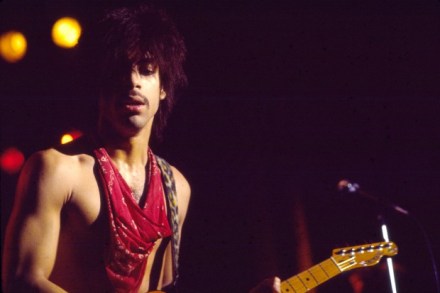
Prince’s vast archive of unreleased music is legendary. The ‘vault’ in Paisley Park, the late musician’s home-cum-studio complex in suburban Minneapolis, contains thousands of hours of recordings that have never seen the inside of a tape deck. The unpublished music tells a story. Material was shelved when band members left, after the tragic death of his newborn son, and at the end of his first marriage. Some projects were cancelled for more prosaic (commercial and legal) reasons. The Black Album, which was abandoned in mysterious circumstances a week before it was due to be released, became one of the most bootlegged records of all time.

Spain has just experienced a very modern revolution

From our UK edition

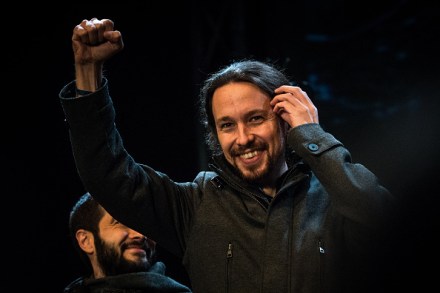
Graffiti artists have added social commentary to many of the billboard advertisements in Madrid, and election campaign posters are no exception. The improbably smooth forehead of Albert Rivera, who leads Ciudadanos, has ‘fascista’ written all over it. The would-be Banksy of the Madrid metro doesn’t elaborate, but the charge seems unlikely. Rivera’s party is, by (almost) anyone’s definition, firmly in the centre ground; it’s endorsed by Guy Verhofstadt, the former Prime Minister of Belgium and one of Europe’s leading federalists. Images of Pablo Iglesias, who leads Podemos, are mostly left alone. Perhaps the vandals like his pony tail, or his parties proposal of a universal ‘citizen’s wage’.

Labour, Prince Charles and homeopathic quacks: Andy Burnham has some explaining to do

From our UK edition

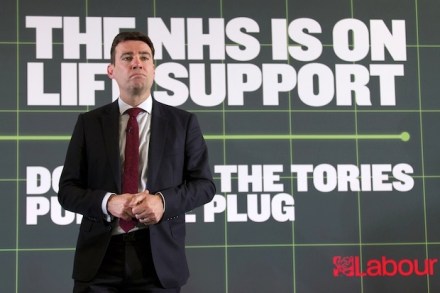
Obfuscation is an important tool in the kit of any snake oil salesman, which helps to explain why the Royal London Homoeopathic Hospital has changed its name. It’s now known as The Royal London Hospital for Integrated Medicine. In this context the word ‘integrated’ is used because it’s suitably vague. It’s a catch-all term to describe any treatment ‘outside of mainstream healthcare’ – or in other words, treatments that don’t work. Homeopathy is a huge embarrassment to the NHS, but it’s not nearly as maligned as it should be. In fact it has one very prestigious backer, with a direct line to the Cabinet and the Prime Minister.

Big Tobacco and the smugglers: do you believe this conspiracy theory?

From our UK edition

In an information sheet on its website, the Tobacco Manufacturers' Association draws a link between the illegal cigarette trade and prostitution, arms trafficking and terrorism. Given the number of people killed by their trade, it’s hard to believe that the TMA is motivated by altruism. So why do these companies campaign against black-market cigarettes? One answer is that they eat into profits. But the scale of the problem also allows Big Tobacco to argue for lower taxes on its products. From the TMA’s website: The UK’s high tobacco tax policy has provided economic incentives for criminals to meet the demand that exists for cheap tobacco products. This has implications for Government revenue and for law and order.

The Stalinist logic behind the SNP’s approach to education

From our UK edition

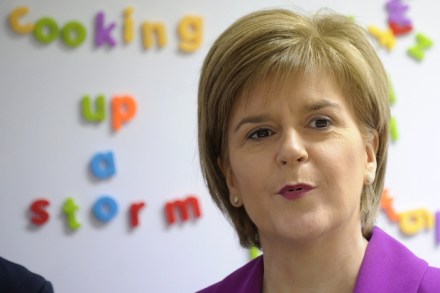
Early in the campaign for Scottish independence the SNP commissioned a party political broadcast called Two Futures. It told the story of Kirsty, a baby due to be born on polling day. ‘What kind of country will I grow up in?’ she asks in a childish falsetto. One vision of the future is full of colour and gap-toothed smiles, with children skipping and laughing on their way to school. A nuclear family sit around the breakfast table in a sun-kissed kitchen eating fruit (this scene acts as a useful reminder that the broadcast is set firmly in the realm of fantasy). The alternative is a future in which Scotland votes to remain in the United Kingdom. In this monochrome dystopia the Palace of Westminster looms above an innocent child.

Why are ordinary British women blowing their savings on gruesome facelifts?

From our UK edition

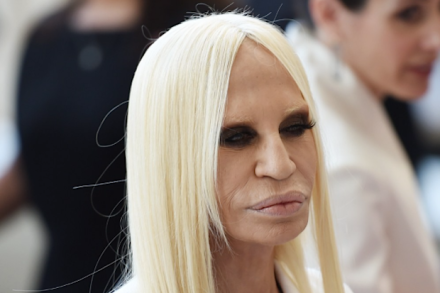
A ‘jobless mother of four’ from Cumbria has jetted off to Budapest for another round of cosmetic surgery. Andrea Dalzell has been saving child benefit money since 2003 for a string of procedures including face and eyebrow lifts, botox injections and a ‘designer vagina’. At that price the question on my lips is ‘designed by whom?’ On Facebook the 48-year-old grandmother said her latest trip to Budapest (for a cheek and brow lift) cost £3,500. The package included flights, food and accommodation. Without wishing to cast aspersions on her particular surgeon, at that price there's a huge danger of corners being cut, so to speak. ‘Package surgery’ is still a relatively new phenomenon.

Dying Without Dignity: a report on end-of-life care that shames the NHS

From our UK edition

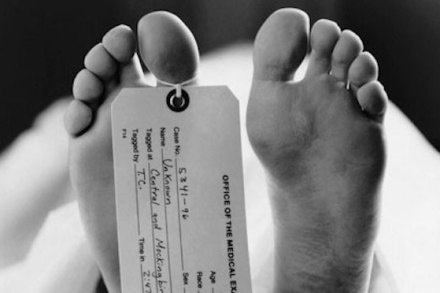
The name says it all. 'Dying Without Dignity' is the parliamentary health ombudsman's report into over 300 complaints of the neglect of terminally ill patients by the NHS. The BBC this morning highlights two horrible examples. One mother had to call an A&E doctor to come and give her son more pain relief because staff on the palliative care ward he had been on had failed to respond to her requests. A 67-year-old man's family learned of his terminal cancer diagnosis through a hospital note – before he knew himself. This 'failed every principle of established good practice in breaking bad news', says the report.

Worried about your weight? Check your waistline, not the bathroom scales

From our UK edition

If you’ve glanced at a newspaper in the last few months you’ll have noticed that obesity is public health enemy number one. The Guardian has a special section devoted to it – seriously. Its mantra is: 'Britain is in the grip of an obesity crisis.' In 2007 the National Obesity Forum issued a report which predicted that half of the population will be obese by 2050; now they are saying that was an underestimate. That’s all well and good, but it’s not much use knowing that we’re in the midst of an epidemic if the tools we use to diagnose obesity aren’t up to scratch.

Women drivers could force a draconian drink-driving limit on us. Why not set a higher limit for men?

From our UK edition

Drink-driving is back. Which isn’t to say it’s on the rise – quite the contrary –but it’s high on the agenda at every level of government. The Department for Transport has recently stopped offering an alternative to the notoriously inaccurate roadside breathalyser. In Scotland the limit was reduced last year from 80 milligrams of alcohol per 100 millilitres of blood to just 50. This was controversial because it means that a pint, depending on alcohol percentage, could put you over the limit. Now the Police Federation has called for the drink-drive limit to be similarly lowered in England and Wales – and it’s all the fault of women, apparently.

Horrible diseases are being ‘edited out’ of the human body

From our UK edition

Some exciting news about the future of medicine was announced today. Unfortunately, you really need a degree in biochemistry – which I certainly don't have – to understand it. But we'd better get used to that, because the eradication of nasty diseases is increasingly a project for geneticists whose findings are difficult to grasp (but easy to misunderstand). Editas, described as a 'leading genome editing company', has announced the highlights of the 18th annual meeting of the American Society of Gene & Cell Therapy (ASGCT) in New Orleans. Here's just one of them: Gene conversion of the hemoglobin locus: Several CRISPR/Cas9 construct variants were evaluated in vitro to target the human hemoglobin beta gene (HBB) in the region mutated in sickle cell anaemia.

New gene therapy for heart disease and diabetes: how will hypochondriacs react?

From our UK edition

The drugs giant AstraZeneca (AZ) has signed a deal with heart researchers in Canada which pushes forward the project to prevent – and even reverse – heart disease and diabetes by identifying the genes that put people at risk. There's been a lot of talk about 'personalised medicine' that offers us our own therapy tailored to our own weaknesses – specifically, the genetic time-bombs lurking our DNA. Until now, GPs have looked at our family history of heart disease, cancer, diabetes etc and (at least inwardly) shrugged. There's only so much they can do. The AZ deal with the Montreal Heart Institute will produce one of the largest genetic screenings to date.

Scotland is on the verge of becoming a one-party state

From our UK edition

My constituency is one of the SNP’s most coveted prizes. If they win in Midlothian they can win almost anywhere. This is Gladstone’s old seat, where the modern political campaign was born. He wrested it away from the Conservatives in 1880, after a series of stirring speeches on the government’s foreign policy failures. On Thursday the SNP are hoping to pull off a similar upset. The momentum behind the nationalists is incredible. Everything I’ve seen and heard in the last couple of weeks points to an SNP victory here. My entire family is voting for them. My mother suggested that I should do the same. ‘Give your dead grandfather a vote,’ she said without irony. A straw poll of my neighbours reveals that the rest of my street have become nationalists too.

Apple and IBM may just have changed the future of personalised medicine

From our UK edition

As the FT reports, Apple and IBM have got into bed together. The deal they've struck has major implications for the growing number of people using wearable tech (and indeed mobile phones) to monitor their health. Here are the details. IBM has entered into partnership with Apple and other manufacturers of medical devices to make health data from wearable tech available to doctors and insurers. One outcome will be personalised treatments for diabetics. But that's only part of the picture. This is how it will work. If you're self-monitoring your heart rate, calories and cholesterol levels – as more and more of us are – you will now be able to use an IBM app to store it in a cloud.

Low income damages children’s brains, says study. If so, that’s a tragedy

From our UK edition

The link between wealth and attainment is a subject that’s close to my heart, or perhaps more accurately my cerebral cortex. Like 20 per cent of the population I was raised in technical poverty. My first home was a touring caravan. It’s safe to say that no statistician would have expected me to amount to anything – especially if they’d had access to the findings of a new study in Nature Neuroscience. Researchers have found that there is an association between low family income and the structure of the brains of children. The study looked at the relationship between wealth and the size of the brain’s surface area. The measurements were derived from a method of analysing of biological form called morphometrics.

Why liberals want us to act like children

From our UK edition

Have you noticed how often adults – particularly of the earnest, nagging variety who work in the public sector – are behaving like children? I don't mean acting childishly, but literally behaving like children. Last week delegates to the NUS women’s conference were using ‘jazz-hands’ instead of clapping – in case it should trigger an anxiety attack. I can think of five-year-olds who would squirm at that spectacle. Meanwhile, Brown University in America recently debated sexual assault on campus. A serious topic, but the authorities deemed it necessary to create a 'safe space' full of play-doh, bubbles, calming music and colouring books. Yes, colouring books. But perhaps we shouldn't be surprised.

Scottish nationalism is hypersensitive and insular. So is the newspaper it has spawned

From our UK edition

Last year Russia Today launched a poster campaign with a fanciful strapline: ‘This is what happens when there is no second opinion’. The extraordinary implication is that the conflict could have been avoided, if only we had listened to Putin. This is such an obvious fallacy that it’s hardly worth dwelling on. But RT (as it now likes to be known, as if people don't know what the 'R' stands for) is producing lightly disguised state propaganda. The viewers know it and so do the mercenaries that make it. In contrast, Scotland’s new pro-independence daily newspaper – ‘The National’– is written with earnest conviction. Its contributors are devout believers, and that’s what makes it so hilarious.