Apple

The Right Stuff gets review-bombed

Cockburn has been unlucky in love of late. He’s married. Third time’s the charm, as they say. But for the generations below, the dating world throws up a number of quandaries. In the post-#MeToo era, you can’t meet at work anymore. Bars and clubs took a big hit with Covid. That’s why so many younguns depend on app-based dating these days. But on Bumble and Hinge (Cockburn’s not well known enough for Raya yet), progressive virtue-signaling is apparently all-too-common. “Swipe left if you’re a Republican” and slogans about “dismantling the patriarchy,” “defunding the police” and “BLM/ACAB” plague the profiles of many users. What are the alternatives if you’re on the right? Cockburn always thought “church.

ryann mcenany the right stuff

The golden noose around Apple’s neck

"Innovation comes from saying no to 1,000 things to make sure we don't get on the wrong track or try to do too much,” said the late Steve Jobs. “We're always thinking about new markets we could enter, but it's only by saying no that you can concentrate on the things that are really important." These days, Team Apple is all about finding new markets, no matter how removed they are from the company's core focus. Jobs once flirted with an advertising-supported operating system but ultimately gave it a pass. Now, in a strange twist, Apple is doing just that — selling ads in its services that are part of its platform. It wants to become a pooh-bah of digital advertising (it had tried before in 2010 with iAds, an effort that fizzled out).

Netflix vs Apple: which streaming subscription offers best value for money?

From our UK edition

Amid rising energy bills, the announcement that Netflix will hike its prices – with its basic package increasing by £1 a month to £6.99 – seemed to pass without too much fuss. But, as the cost of living crisis hits, many households will be looking at which subscriptions to prioritise. But with more of us subscribing to multiple streaming services (thanks, in part, to those spontaneous lockdown purchases) these extra costs have a habit of adding up – until you suddenly find yourself shelling out more than £50 a month on entertainment. All of which begs the obvious question: which streaming service gets you the most bang for your buck?

Congress’s half-baked assault on Big Tech

A major anti-Big Tech bill is heading to the floor of the Senate after a frustrating markup session in the Judiciary Committee. The American Innovation and Choice Online Act, as it's called, majorly changes how online retailers can sell and promote their own branded wares and apps. It even bans Amazon and Google from suggesting their own products over those of a third party. Supporters from both sides of the aisle are portraying the bill as a great leveler of sorts. They believe it helps consumers and the so-called “little guy” against the Big Tech companies.

antitrust hipsters

Ending our corporate dependence on China

In the toxic world of American politics, the bipartisanship showed by the House of Representatives last week in overwhelmingly passing a bill to stop the import of Chinese products made with forced labor from Xinjiang is a rarity. The 428-1 vote on the Uyghur Forced Labor Prevention Act, the second in as many years, is the clearest indicator yet of how a new era in American relations with the People’s Republic of China (PRC) is developing. It's one where national security and moral concerns find common ground in opposing the oppressive and predatory policies of the Communist Party of China (CPC).

taiwan china

The inanity of corporate mask policies

I was dress shopping for a wedding at Tyson's Corner in Virginia last Thursday when I saw two security guards and a man wearing a "Let's Go Brandon" sweatshirt having a heated discussion. Usually I would assume shoplifting was involved and move on, but considering the left's freakout over the "Let's Go Brandon" chants sweeping the country and their insistence on punishing those who use the phrase, I stopped to listen to the exchange. I soon gathered that the man, who later identified himself to me as Alex Caballero, was kicked out of the nearby Apple Store for allegedly violating their mask mandate. Caballero told the security guards that he entered the store because he had a service appointment.

corporate mask policies

Apple’s cowardly surrender to the mob

From our UK edition

A few weeks ago, more than 2,000 employees of Apple Inc. signed a petition that led to the sacking of a clever and capable tech engineer, Antonio García Martínez. García Martínez was fired for sexism — not because he behaved badly towards any women, but because of a passage in a book he wrote five years ago. The book was Chaos Monkeys, an exposé of the Silicon Valley scene, and here’s the offending sentence: ‘Most women in the Bay Area are soft and weak, cosseted and naive despite their claims of worldliness, and generally full of shit… but the reality is, come the epidemic plague or a foreign invasion, they’d become precisely the sort of useless baggage you’d trade for a box of shotgun shells or a jerry can of diesel.

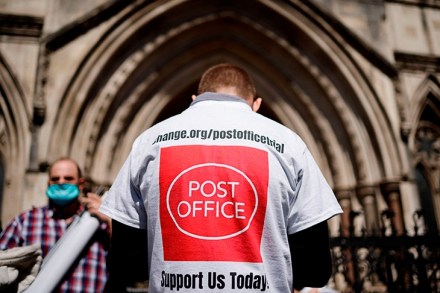
Who’s really to blame for the Post Office scandal?

From our UK edition

The alleged frauds for which the Post Office prosecuted no fewer than 736 of its sub-postmasters has turned out in almost all cases to be the result of faults in a computer system called Horizon which Post Office managers and the system’s supplier, Fujitsu of Japan, were reluctant to acknowledge. That’s the short summary of a miscarriage of justice which also looks like a case of mismanagement to the point of delusion: how could anyone believe a copy-cat crime wave on this scale was sweeping through a cohort of small businesspeople generally seen as the most upstanding of local citizens? And if that wasn’t the belief, the only other explanation is worse: cynical concealment of a 15-year IT cock-up for which no one was willing to carry the can.

Show us the money

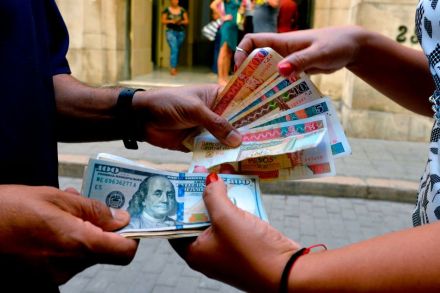
No one likes to waste a good crisis, and the digital-payments industry is certainly trying its hardest to spin the narrative that COVID-19 is about to deliver the coup de grâce to cash. Various lobbying efforts culminated in a recent CNBC report claiming we have all switched to payment apps to avoid catching the disease from dollar bills. A ‘cashless customer’, Heima Sritharan, supposedly speaks for the entire millennial generation: ‘Not that I was using cash that much before, but I find that during Covid especially, I just don’t want to use cash as much because of the germs aspect.’ The report quotes a figure from the Pew Research Center suggesting that 34 percent of consumers under the age of 50 went the previous week without making a single purchase with cash.

money cash cashless

The stock market isn’t the success story Trump thinks it is

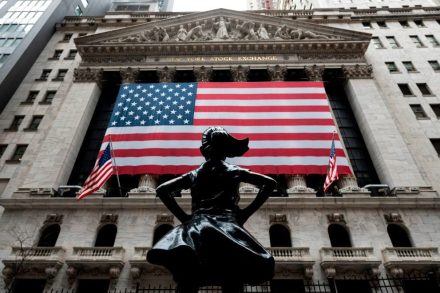
COVID-19 is still raging, with little sign of coming under control. The economy is already a tenth smaller than it was at the start of the year. Joblessness is soaring. And the budget deficit? Don’t even ask. But, hey, perhaps we shouldn’t worry about any of that. As the President of the United States keeps pointing out, the stock market is doing great, and, in his opinion, anyway, that means America, to borrow the kind of slogan that fits neatly onto a baseball cap, is great again as well. There is a problem, however, with Trump’s breezy 21-character analysis. It is not really true. The main equity indices reflect many different things, and the health of the economy is not always one of them. https://twitter.

stock market

Four main takeaways from the House’s Big Tech antitrust sideshow

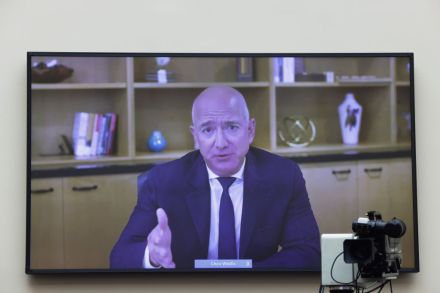
Here’s a terrifying thought: Mark Zuckerberg is the only person in Silicon Valley that the political and intellectual right can trust when it comes to ‘Big Tech’. Wednesday’s ‘Antitrust’ House hearing resembled a group of Neanderthals trying to reason with Data from Star Trek. The worst of both sides was on show as Democrats and Republicans jockeyed for the news cameras, rather than getting real answers on antitrust practices or how Silicon Valley bows to the authoritarian regime in China. I watched the grueling insurance seminar so you don’t have to: here are the four big lessons.1.

big tech

The coronavirus app was always doomed to fail

From our UK edition

For months now, the British public has been told there’s only one way to resume normal life: a successful virus-tracing scheme. Early on in the pandemic, the UK decided to go its own way in this area, rejecting Apple and Google’s established, decentralised app model by trying to launch its own one. NHSX would create a centralised app that funnels contact details to public health officials once somebody reported their symptoms via their phone. Bad for privacy, good for knowing exactly where infection rates were spiking in something close to real-time. Hailed as a soon-to-be ‘world beating’ app by the Prime Minister, it was launched on the Isle of Wight in early May and touted as a necessary part of the UK’s lockdown easing.

I admit it – I’m a smartphone addict

From our UK edition

I am often extremely dismissive of people immersed in their smartphones. I tut at the mole-ish pedestrians who step out into the traffic, faces uplit and shocked when a car goes by. Last week, in a toddler playgroup, I actually hissed at some poor father. We were in the middle of ‘The Grand Old Duke of York’, with actions, when he got stuck in an iPhone trance. There he stood amid the marching midgets swiping from text messages to email to Twitter and back again. It was when he tapped on the bus times app that I snapped. Well, what a hypocrite I am. And how is it that I’ve only just noticed? I was on my bike, in sight of Spitalfields Market, when I realised what I’d become.

The record bull run must end soon. So is it time for a return to gold?

From our UK edition

All good things must come to an end, including summer holidays and bull markets. The bull run in US shares that began in the aftermath of the financial crisis in March 2009 has now officially passed the previous record of 3,452 more-up-than-down days from October 1990 to March 2000. This time round, the S&P500 index of US stocks has risen by more than 300 per cent — and that rise has continued throughout Donald Trump’s reign, despite his trade war threats and other follies. But it has not been reflected in major European markets, which have drifted sideways, and has been increasingly sustained by a small number of top tech stocks that have outperformed everything else on the planet.

What does the future look like for Apple?

From our UK edition

In case you missed it,  Apple’s market capitalisation has now hit the $1trillion mark – something which is as mind boggling as it was inevitable. Everyone with a newswire, Twitter feed and website seems to have latched onto the milestone. You'd have thought they'd all successfully predicted this event on 1 April 1976, when the company was founded. But the question now is whether the valuation has made a fool of all of us? According to Mike Ingram, Chief Market Strategist at WH Ireland, 'In just over a decade Apple has transformed itself from a niche tech company for nerds to a global consumer goods powerhouse. While it currently deserves its status, there is the real possibility that Apple may be pipped by the next big thing.

iAddicts

From our UK edition

For many years The Spectator employed a television reviewer who did not own a colour television. Now they have decided to go one better and have asked me to write a piece to mark the tenth anniversary of the iPhone. I have never owned an iPhone. (In the metropolitan media world I inhabit, this is tantamount to putting on your CV that you ‘enjoy line dancing, child pornography and collecting Nazi memorabilia’). But, even though I’m a diehard Android fan, I still cannot help paying attention to every single thing Apple does and says. I don’t think this happens in reverse. I doubt Apple owners pay any attention to the next phone announcement from LG or Nokia — any more than Anna Wintour lies awake wondering what Primark’s autumn season has in store.

The iPhone X could be a feelgood deal

From our UK edition

Am I ready to shell out £1,000 for an iPhone X with its exciting new ‘Face ID’ feature? Of course not. Readers may recall I was keen to take several tech-steps back to the retro Nokia 3310 that was relaunched in March — but when I finally plucked up courage to take my unloved iPhone 3 to what turned out to be a Carphone Warehouse inside a Currys PC World on the York bypass, I was so hypnotised by the sales patter that I swiftly lost my willpower. Within moments I had given so much personal data that the salesman (as he acknowledged with a thin smile) could have emptied my bank account and assumed my identity before I got home. Had I really survived this long without their £10-a-month insurance deal on top of my contract? OK, sign me up. How about a £19.

A tale of two Valleys

From our UK edition

Silicon Valley looks like a cross between Milton Keynes and the set of the Stepford Wives. Row after row of ordinary houses and picket fences, clustered in villages notable only for the mega-companies they serve: Menlo Park (Facebook), Cupertino (Apple) or Mountain View (Google). There’s the odd charm, but it’s generally clean, sterile, young, overpriced. Life here, they say, is five years ahead of everywhere else. Well, if that’s the case, I’ve seen the future and it is a bit disturbing. The surface ordinariness of the Valley hides a deep utopianism. In the late 1960s San Francisco was the home of both hippie counterculture and the early computer communities. Both groups shared an aversion to the existing order.

The joys of the Nokia 3310

From our UK edition

I’m eager to order a Nokia 3310, the classic mobile phone of the millennium that was relaunched this week. The original was famed for its simple functions, unbreakable casing and ultra-long battery life; my earlier 3210 was just as good. I lost it on a coach trip 15 years ago and haven’t been truly happy since, having never learned to love my iPhone. But what’s more interesting about this revival is what it tells us about the turbulent evolution of the mobile device market, as well as the curious history of Nokia itself. Nokia is Finland’s contribution to corporate parable.

Instant gratification

From our UK edition

Instant photography already existed long before Edwin Land, the ingenious inventor and founder of Polaroid, went for a walk with his daughter in Santa Fe in 1943. ‘Why can’t I see the pictures now?’ she asked her father on the way home. But the photographic systems available at that time were really just ‘experimental portable darkrooms’ rather than truly ‘instant cameras’. Only a few hours after his daughter’s question, Land got hold of a patent lawyer and by Christmas the first test versions of ‘Polaroids’ had been developed in the lab. Land was an incredible visionary. He was not just researching an innovative film system. He was on the hunt for a completely new tool for life.