Angela merkel

Why Brexit Britain should root for a Merkel landslide

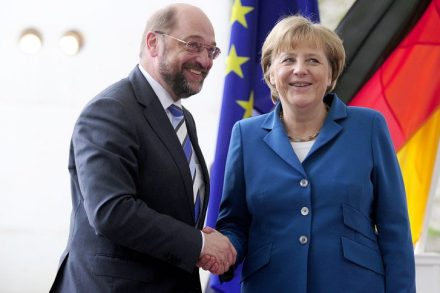
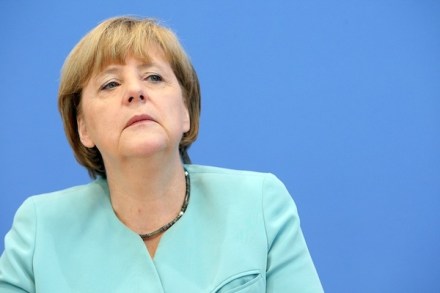
Never mind Eurovision. For Germany, the state election in North Rhine Westphalia on Sunday was the big one – the best indication of how Germans will vote in their national election in four months time. The result was a ‘political earthquake’ according to German media – a humiliation for Martin Schulz’s Social Democrats, and a spectacular victory for Angela Merkel’s conservative CDU. For Merkel, a dead woman walking a year ago, September’s national election now looks like hers to lose. How did she manage this remarkable comeback? And what are the implications for Britain, and the EU? Yesterday’s result may have taken German pundits by surprise, but Merkel’s support has been growing steadily for some time.

A little too perfect

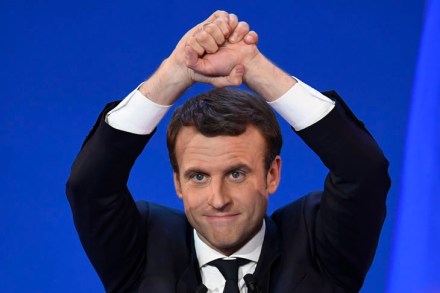
Emmanuel Macron is going to be the next president of France. I know people are saying Marine Le Pen isn't out of the race and it's important to keep the suspense going as long as possible. But I see no scenario in which the French will vote her into the Elsyée.  Le Pen's attempt to distance herself from the toxic National Front founded by her father, declaring herself an independent, just like Macron, is entertaining. But it will change nothing. The French may claim to be revolutionaries but they are terrified of change and Marine scares them. Avec raison.  So the serious questions are, who is Emmanuel Macron, the future president of the republic, and what should we expect from his forthcoming quinquennat?

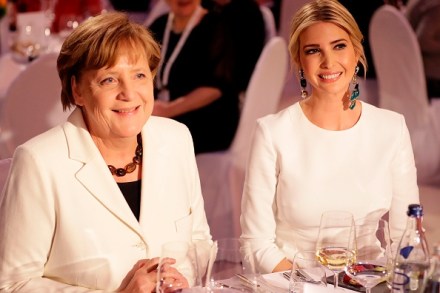
Taking Ivanka Trump seriously is a masterstroke by Angela Merkel

Is Ivanka Trump’s visit to Berlin a triumph for Angela Merkel, or a diplomatic disaster? As always, that depends on which newspapers you read. Germany’s Suddeutsche Zeitung called it a ‘a veritable coup for the chancellor,’ but the headlines in the British press have focused on the boos that greeted Ivanka at yesterday’s W20 Summit, when the President’s daughter described her father as a defender of women’s rights. Sat alongside Ivanka on the conference platform, Merkel looked distinctly awkward - but Ms Trump’s appearance wasn’t entirely met with groans and jeers.

Theresa May makes a stand against Saudi dress codes

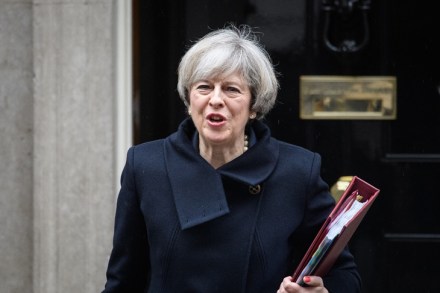
Well, Theresa May met half of the Foreign Office’s dress code for women in Saudi Arabia when she arrived there yesterday. Her coat was loose, you couldn’t take exception to her trousers, but it was the hair that was the great thing. She was bare-headed, just like Angela Merkel was when she turned up in the Kingdom. The vicar's daughter and the pastor's daughter have both made a stand, in a country where women normally have the equivalent of a bin liner to wear when it comes to fashion.  This kind of thing matters.  For a woman head of government to dress for a visit to the Kingdom pretty well just as she would have done anywhere goes right against the normal approach for important women going to Saudi.

The reports of Angela Merkel’s political demise have been greatly exaggerated

Once again, the pollsters got it wrong. Yesterday’s election in Saarland was supposed to be the beginning of the end for Angela Merkel, and the start of the SPD revival under their new leader Martin Schulz. And yet, against the odds, Merkel’s conservative CDU has beaten the left-leaning SPD by more than ten per cent, a result which bodes well for her election campaign this autumn, and her bid to win a record-breaking fourth term as Chancellor. Last week, the signs for Merkel’s CDU seemed pretty bleak. Saarland’s CDU leader, so-called ‘Mini Merkel’ Annegret Kramp-Karrenbauer, went into this election with just one more seat than the resurgent SPD.

Saving the children

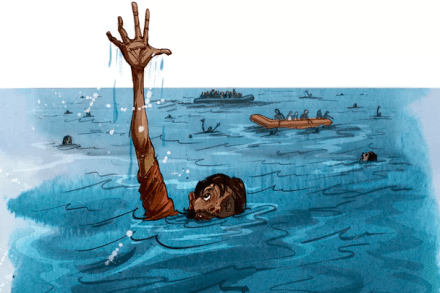
When a humanitarian tragedy disappears from our newspapers, there are two possibilities: that the crisis is over and life for survivors is gradually returning to normal — or that the human toll has become so routine as to no longer be considered newsworthy. Sadly, the deaths of migrants from North Africa and the Middle East as they attempt to cross the Mediterranean to seek a new life in Europe fall into the latter category. Eighteen months after the photographs of little Alan Kurdi’s body on a Turkish beach generated a huge swell of public emotion, entire families are still dying on a regular basis. In the first ten weeks of this year, some 525 people were lost crossing the Mediterranean. Europe is still no closer to ending this outrage.

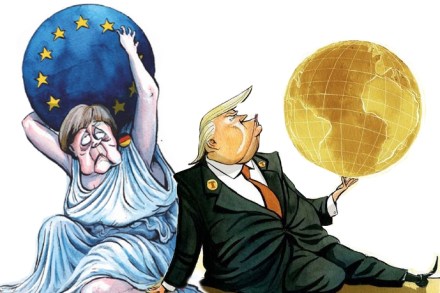
On trade, and much else, Donald Trump and Angela Merkel are worlds apart

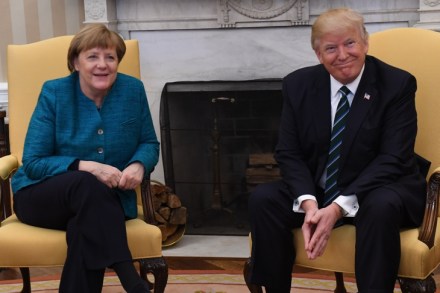
Oh dear. Anybody who thought that, contrary to expectations, Angela Merkel and Donald Trump might get along seems to have been gravely mistaken. The meeting between the two world leaders was meant to have been held on Tuesday, but was put off by a snow storm. Things still looked pretty chilly in Washington today. Seated next to each other in the White House for the first photo-op, the Donald and the Angela – two leaders with obviously antithetical worldviews – looked terrifically awkward. They didn't shake hands. Angela seemed slightly more civil. She tried to talk to the president. He just ignored her. The press conference was only slightly warmer.

How will Mummy Merkel deal with Toddler Trump?

The irresistible force meets the immovable object in Washington tomorrow, as Donald Trump finally comes face to face with Angela Merkel. It seems highly unlikely that they’ll emerge from this meeting holding hands. Not only do these two world leaders disagree about (almost) everything, their personalities could hardly be less compatible. Mrs May may simper that ‘opposites attract’ but Merkel, not May, is Trump’s polar opposite. There’s little prospect of any personal chemistry at the White House this time around. But does this antipathy matter? Of course not. If anything, it’s a plus.

Theresa May’s racing certainty

There are few things more predictable than people talking about the unpredictability of politics. We live in an age, we are told incessantly, in which anything can happen politically — and regularly does. Yet there is one exception. Westminster is already sure about the result of the next general election: a majority for Theresa May. One long-serving Tory MP tells me the party has never been more certain of victory in his lifetime. The Tories, with their 15-point poll lead, do look far better placed today than they did, say, 18 months before either of the Thatcher landslides, in 1983 and 1987. It isn’t just the Tory tribe who are convinced they’ll win, either. Labour MPs are looking for jobs now to beat the rush that they suspect will follow the next election.

High life | 26 January 2017

 Gstaad The snows came tumbling down just as the camel-drivers headed back to the Gulf. In fact, they never saw the white outdoor stuff. And a good thing it was, too. The outdoor stuff makes everything look so pretty that the glitzy types might have been tempted to return. God forbid. Let them stick to the indoor white stuff. The problem with Gstaad is the local council. They remind me of the EU: they’re intransigent, short-sighted and stick to a losing game. In Brussels they keep passing more and more laws and regulations. In Gstaad, they keep putting up their prices and building more and more apartments. As a gentleman with a close association to The Spectator told me, ‘My son doesn’t come here because there are no young women around.

Why the Germans are so worried about the Trump administration

One of the advantages for Theresa May in being the first foreign leader to visit the Trump White House is that other European government are eager for information about what he actually plans to do. Both Handelsblatt and Spiegel have good pieces detailing the German government’s concerns about its lack of contact with, and information about, the new administration. Spiegel reports that an offer from Angela Merkel’s team for her to travel to the US at short notice to meet the new president has not yet received a reply. While the German Ambassador to the US’s last meeting with Jared Ksuhner, Trump’s son in law and—by general agreement—the most powerful figure in the new White House, ended with Kushner asking, ‘What can you do for us?

Unlike Merkel, Trump understands the Islamist threat to the West

The reaction in Europe to Donald Trump's recent remarks critical of the continent was all too predictable. It was an echo of the response when, following the Islamic terror attacks in November 2015 that left 130 Parisians dead, Trump said: 'Paris is no longer the same city it was....they have sections in Paris that are radicalised, where the police refuse to go there. They're petrified.' On that occasion the liberal media and the French Establishment reacted with outrage, rejecting the idea that the Republic had lost control of parts of Paris. The mayor, Anne Hidalgo, even threatened legal action against Fox News when they repeated Trump's assertion. Now it's Angela Merkel who is up in arms.

Trump has given Merkel a new lease of life

Donald Trump’s Times interview has been a big story in Britain, but the President Elect’s parallel interview with Bild Zeitung (Europe’s largest circulation newspaper) has made an even bigger splash in Germany. Why so? Because Trump’s comments about Germany were a lot more pointed – and specific - than the pro-Brexit platitudes he tossed to Michael Gove. Trump’s remarks about Merkel’s ‘catastrophic mistake’ of ‘letting all these illegals [sic] into the country’ hardly came as a surprise. After all, when Merkel won Time Magazine’s Person of the Year, Trump tweeted that ‘they picked the person who is ruining Germany.

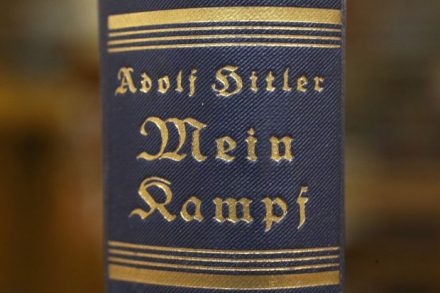
The truth behind Germany’s ‘Mein Kampf’ sales boom

A dead white man called Adolf Hitler has sold nearly 100,000 copies of his memoir, Mein Kampf, since a new edition was published last year in Germany. The book wasn't officially banned in the country, but the copyright was owned by the state of Bavaria which prevented new editions being made. I have to admit to never having read Mein Kampf, largely because I'm quite small-minded and if everyone says a book is terrible I can't be bothered to try it.  Hitler wasn't much of a thinker; even his many detractors would admit he was more of a doer. So what explains the renewed success of his book in Germany? Is this publishing sensation linked to the rise of a new Fascism in Europe? No.

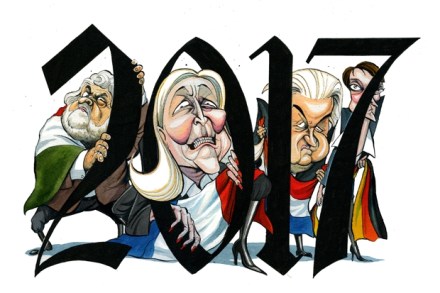
Europe’s year of insurgency

After the tumult of 2016, Europe could do with a year of calm. It won’t get one. Elections are to be held in four of the six founder members of the European project, and populist Eurosceptic forces are on the march in each one. There will be at least one regime change: François Hollande has accepted that he is too unpopular to run again as French president, and it will be a surprise if he is the only European leader to go. Others might cling on but find their grip on power weakened by populist success. The spectre of the financial crash still haunts European politics. Money was printed and banks were saved, but the recovery was marked by a great stagnation in living standards, which has led to alienation, dismay and anger.

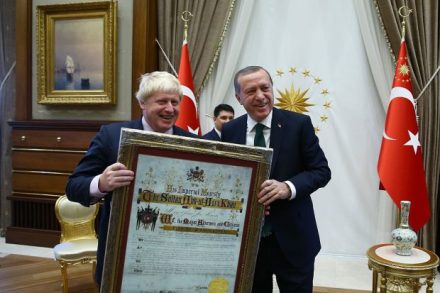
Boris Johnson’s award-winning entry in the ‘President Erdogan Offensive Poetry’ competition

We’re closing 2016 by republishing our ten most-read articles of the year. Here’s No. 4, in which the future foreign secretary Boris Johnson was named as the winner of Douglas Murray's 'President Erdogan Offensive Poetry' competition I’m pleased to announce that we have a winner of The Spectator’s President Erdogan Offensive Poetry competition, and here it is: There was a young fellow from Ankara Who was a terrific wankerer Till he sowed his wild oats With the help of a goat But he didn’t even stop to thankera. The author of this winning entry is former Mayor of London and chief Brexiteer, Boris Johnson MP.

It’s not only Germany that covers up mass sex attacks by migrant men… Sweden’s record is shameful

We’re closing 2016 by republishing our ten most-read articles of the year. Here’s No. 5: Ivar Arpi's piece, which was written following the mass sex attacks on women celebrating New Year’s Eve in Cologne. In his article, Arpi says that authorities in Sweden covered up similar incidents involving migrant men    Stockholm It took days for police to acknowledge the extent of the mass attacks on women celebrating New Year’s Eve in Cologne. The Germans were lucky; in Sweden, similar attacks have been taking place for more than a year and the authorities are still playing catch up. Only now is the truth emerging, both about the attacks and the cover-ups.

Germany remains a prisoner of its past

In 1942, a man called Manfred Alexander turned up, unannounced, on my grandfather’s doorstep in Berlin. My grandfather knew him only slightly. He hadn’t seen him for several years. Like countless Jews, Manfred had been herded onto an eastbound train the year before, bound for God knows where. He’d ended up in a Concentration Camp in Minsk, run by the Ukrainian SS. There, after a terrible winter, a German guard whom he hardly knew hid him beneath the coal in the tender of a steam train which was carrying wounded German soldiers back to Berlin. Back in Berlin, cold and hungry, Manfred headed straight for my grandfather’s apartment on Grolmanstrasse. It was opposite the police station but it was the only address he knew. My German grandfather was no saint.

Anis Amri’s unchecked passage across Europe is nothing short of a scandal

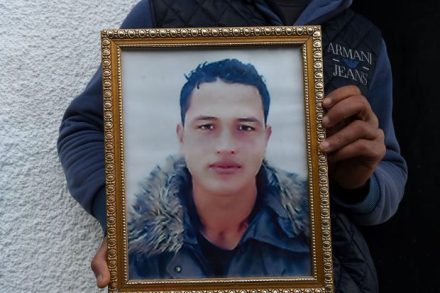
That the Tunisian terrorist who slaughtered 12 people in Berlin on Monday was even in Europe, let alone able to move about Europe with ease, is a scandal. It shows that the policy of the European Union and its member nations on the migrant crisis is a complete and dangerous failure. The collective refusal of the European liberal elite to face up to this fact promises further disaster. Anis Amri, 24, had no legal let alone moral right to be in Europe, and yet he had been here since 2011 when he arrived in a migrant boat on the tiny Italian island of Lampedusa. Shortly afterwards, he was jailed for four years after he set fire to a migrant welcome centre in Sicily. On his release in 2015, he was ordered by Italian authorities to return home.

Germany is facing a ticking time bomb of rage

I've learned that it's best not to say anything about a terrorist atrocity on social media, especially not if it confirms one's political prejudices. It just looks crass, or it has when I've done it. Try not to say anything profound either, as it will probably look insipid; also ideally do not make any point about similar atrocities occurring in less well known parts of the world, as people will quite reasonably think you're just scoring points. And best not to bother with the tweets of solidarity, which are superfluous these days surely; France and Belgium and Germany are our close allies, friends and neighbours, and it goes without saying that when one of us is attacked we feel for them.