American Life

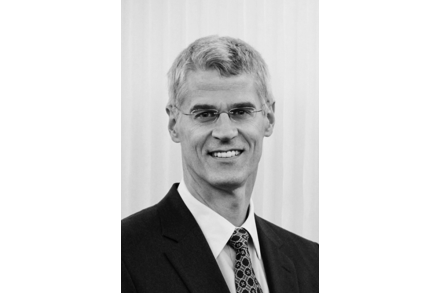
The life of Karl Zinsmeister

It’s strange interviewing a friend who is dying, but Karl Zinsmeister is at peace. I met Karl in Washington, DC, in the spring of 1981, when we two Upstate New York hicks were new to the staff of Senator Pat Moynihan. The first thing I learned about him was that he and his girlfriend (and later wife) Ann, while on some do-gooder mission in Africa, had wandered into Tanzania and been held on suspicion of being spies. (They weren’t.) Karl threw himself into both intellectual and manual labor with fierce enthusiasm, doggedness, even hard-headedness. Over the past 45 years he has edited magazines, renovated ruined tenements, been embedded in Iraq, raised three kids, lived with Ann on a houseboat, served as White House chief of domestic policy and produced more than 20 books.

karl zinsmeister

The pros and cons of losing my hearing

Ah, the indignities of age. Over the past year I’ve suffered significant hearing loss. “Huh?” has become my favorite word and I’ve developed a strange new respect for the loonies who hear voices. Aspiring to stoicism, I informed Lucine, my wife, “When I hit 60 I figured that I was entering a stage in which the physical setbacks, some quite unexpected, would mount. So I told myself that I could either whine about it or I could accept all this with grace and good humor.” Lucine didn’t miss a beat. “Then why have you chosen to whine?” Thanks, dear! I mean no disrespect to the late Freddie Mercury when I say ‘We Will Rock You’ sounds better muffled I confess to the occasional maudlin moment.

A Neil Young concert in the waning days of summer

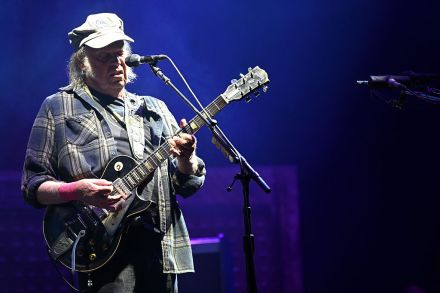
By the time we got to Woodstock… actually, we never got to Woodstock. Bethel, the town in which the fabled festival of mud and myth took place, is about 50 miles as the crow flies from the famous musical happening’s eponym, and it was at the Bethel Woods Center for the Arts that we saw and heard Neil Young in the waning days of summer, when melancholy always spices the air. It boggles the mind that half a million kids – the youngest of whom are now hoary-headed septuagenarians – flooded Sullivan County on a rain-soaked weekend in August 1969, but it is almost as remarkable that despite the drugs and unhygienic conditions, only three concertgoers died.

Young
Kennedy

‘Democracy’ in New York State

Batavia, New York Election Day in New York just ain’t the same anymore, thanks to nepo numbskulls George W. Bush and Andrew Cuomo. Though I always vote for longshots and losers, radicals and reactionaries, I have such happy memories of early November Tuesdays. Mr. Milward, dressed as Uncle Sam, would tour the polling places of my hometown, benign and reassuring in a way that his model — the autocratic “I Want You!” martinet — was not. When I was a tyke, I trailed my mother as she cast a 1964 ballot for LBJ. The gray-haired election inspectors panicked — “There’s a child in the voting booth!” — but my violation of polling-place etiquette paled in comparison to Landslide Lyndon’s stolen US Senate election of 1948.

Thoughts on moving houses

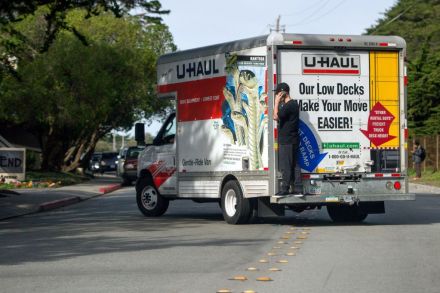
“A house for sale is not a home,” says Wendell Berry, which is perhaps why we have delayed putting our home up for sale as we slowly move, box by box, the five short – long? – miles down the road to the house my grandfather built in 1938. We are moving from Chapel Street to Bank Street, which I trust does not indicate a moral demotion from my lofty spiritual perch to the world of grubby materialism. I know for certain it does not augur riches. We are holding off on selling our Chapel Street home till we’ve cleared it out and are fully moved into Bank, though I nurture a ridiculous hope that before then I might unearth a rusted coffee can filled with 19th-century gold pieces that will enable us to keep both.

moving

It’s a frustrating time to be a college football fan

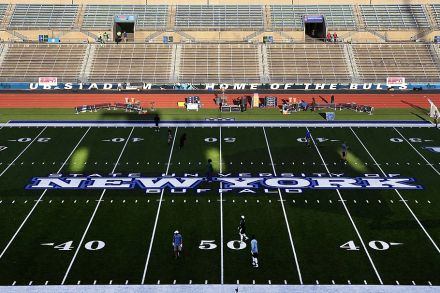
Another pigskin season kicks off, and despite the multitudinous sins committed against the game and its culture by ESPN, university presidents, major conference commissioners, take-the-money-and-run athletes and other votaries of Mammon, I’m once again giving it the old college try. Which is why I picked up my copy of Lindy’s College Football Preview the other day. (Lindy’s ranks my local team, the University of Buffalo Bulls, 85th in nation –we’re movin’ on up!) It’s a frustrating time to be a college football fan. Tradition is sacked by the almighty buck, as it typically is in the land of the dollar bill, and healthy sentiments and institutional affections are warped, processed and sold back to us in tawdry and expensive packages.

football

The Erie Canal at 200

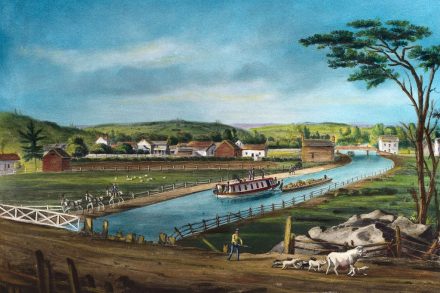
I’ve got a mule, her name is Sal              Fifteen miles on the Erie Canal               She’s a good old worker and a good old pal              Fifteen miles on the Erie Canal I’ve a pal named Sal – he’s no mule, alas – but it’s only a 15-mile trip for me, too, up Route 98 to the Erie Canal, which turns 200 years old this October 26. I while away the occasional summer morn sitting by its banks, editing or writing or reading, coffee washing the donuts down my maw. I love the old canal town of Albion (where perfidy has no place!), its tumbledown Main Street blessed by the silver-domed Orleans County Courthouse. The Upstate New York folklorist Carl Carmer grew up here, as did the sleeping car magnate George Pullman.

Erie

Remembering Jackson C. Frank

Before venturing to the North Park Theatre in Buffalo to catch a one-night-only showing of Blues Run the Game: The Strange Tale of Jackson C. Frank, the new documentary about the Queen City’s doomed native-son folksinger, I shared Frank’s most famous number, “Blues Run the Game,” with our friend Pat. “That could be the saddest song I’ve ever heard,” she said. Yet Frank wrote it during his very brief wine, women and musical heyday. One shudders to imagine what he composed as an obese, one-eyed, homeless paranoid-schizophrenic. Frank’s western New York contemporary, the novelist John Gardner, said that “art begins in a wound, an imperfection, and is an attempt either to learn to live with the wound or to heal it.

Frank

How Major League Baseball lost its soul

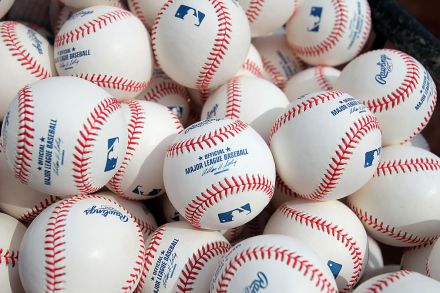
I highly recommend Homestand, Will Bardenwerper’s new book contrasting the community-enhancing qualities of grass-roots baseball with the soulless corporate product that Major League Baseball has become – and it’s not just because I am a central character therein. The book is at once a beautiful portrait of bleacher-level society and a scathingly effective indictment of the automatons who are destroying the American game. Will spent the summer of 2022 in and around Dwyer Stadium, home of the Batavia Muckdogs, an independent team of college ballplayers. This amateur ball club was the feisty successor to professional teams that had graced our fair city since 1939.

baseball

Asteroid 2024 YR4 and the geekoisie

"Giant Asteroid" has been a popular also-ran in the last three presidential elections, at least judging from bumper stickers, and those wiseacres who preferred planetary annihilation to Hillary, Biden, Kamala and Trump may finally get their wish in 2032, when the newly discovered asteroid 2024 YR4 has — according to current calculations, liable to change — about a 3 percent chance of hitting Earth. The geekoisie has been all a-twitter over this forecast, as visions of tsunamis and extinction-level events and the hot astrophysicists who adorn disaster movies dance in their heads.

asteroid

The controversy of Daylight Savings Time

Batavia, New York I bear no ill will against golfers — I triple-bogey easy holes and miss gimme putts with the worst of them — but President Trump’s demand that we eliminate Daylight Saving Time (DST) is a double eagle out of the blue, especially as Trump had earlier advocated a move to year-round DST. Although Benjamin Franklin is often credited as its progenitor, the real father of Daylight Saving Time, according to Michael Downing, author of Spring Forward, was the golfing British architect William Willett, who deplored “the waste of daylight.” The British Royal Astronomer dismissed Willett’s idea with the counterproposal that “between the months of October and March the thermometer should be put up ten degrees.

daylight

With reference to

"You spend your life waiting for a moment that just don't come," sang Bruce Springsteen many moments ago. But sometimes it comes and catches you off guard. Perhaps once a decade you are gifted a sentence begging completion or a question inviting the perfect answer, and if you don’t spit out the mot juste you spend the rest of the day cursing on the staircase, pained by a bad case of l’esprit de l’escalier. (And that about exhausts my C-minus college French.) You never know when or wherefrom these pitches are coming. I doubt that even Oscar Wilde could hit much above .500 in this league. I’m probably closer to Cornel Wilde, but I have driven a few into the gaps. Let me explain. Last spring I was toting a garden-shop tray that my wife was filling with plants.

reference

On embracing the winter years

Batavia, New York I sit in hospice at the bedside of my beloved Aunt Jane — who never let us use the honorific, as “Aunt” made the perennially youthful Jane feel old — and the jukebox in my mind plays its saddest song: “Who Knows Where the Time Goes?” by Fairport Convention. Jane, who is eighty-nine and till a few weeks ago looked twenty-five years younger, was my hip and happening aunt of the 1960s who lived in Buffalo and dated pro athletes and bopped along to WKBW’s Top 40. She taught my brother and me to write letters, which is why I still have an autographed photo of Minnesota Vikings kicker Fred Cox, and my brother has his signed picture of Rams quarterback Roman Gabriel.

years

An ode to six-on-six

Once again, high-school gyms across America resound with the thump-thump of balls dribbled on hardwood floors, the clang of three-point bricks bouncing off steel rims and the rubber-soled roar of twenty sneaker-clad feet running up and down the court. Yes, basketball is back — and I curse the imagination-deprived standardizers who succeeded thirty years ago in banishing four additional feet from roundball courts in the Hawkeye State. Iowa, the historic hotbed of girls’ basketball, is hailed today for producing the superb Caitlin Clark, but for most of the twentieth century its hundreds of small-town bandbox gymnasiums were alive with the wonderfully idiosyncratic sporting variant known as six-on-six basketball.

six-on-six

A matter of presidents

Virginia spawned four of the first five US presidents. Between Reconstruction and the roaring twenties, Ohio’s executive fecundity earned it the sobriquet “Cradle of Presidents.” But the next time fate, or providence, guides you to western New York, the friendly folks at the Buffalo Presidential Center will set you straight on the most president-haunted city this side of Washington, DC.

presidents

Back to 1984 with Robert Dean Lurie

Robert Dean Lurie, who had written very good books on worthy rock music subjects (REM, David Bowie and the Church), sure picked the right year — 2020 — to slip into a time machine. Instead of finding Morlocks and Eloi, as H.G. Wells’s time traveler did, this married father of two in Tempe, Arizona, encountered Walter Mondale and Night Ranger — and he lived to tell his entertainingly perceptive tale. Lurie explains, “In 2019, I had a premonition that 2020 was going to suck. So I decided to spend the year re-experiencing my favorite year from my [Minneapolis] childhood: 1984.

Lurie

How one bad scene can ruin an otherwise great movie

Can one egregiously bad scene ruin an otherwise great movie? When I go on an early 1970s jag — revisiting the golden age of American cinema — I can never bring myself to rewatch Five Easy Pieces (1970), in which Jack Nicholson plays an upper-middle-class piano prodigy turned downwardly mobile oil field worker. It’s a fine character study poisoned, for me, by the famous scene in which a petulant Nicholson berates a diner waitress who stubbornly refuses his request to add tomatoes to his omelet.

scene

The awesome Alan Pell Crawford

The great nineteenth-century novelist Harold Frederic (The Damnation of Theron Ware) had a character complain “I cannot read or listen to the inflated accounts” of the role played in the Revolution by Massachusetts and Virginia “without smashing my pipe in wrath.” Frederic’s pipe-smasher would smoke in peaceful raptness while reading Alan Pell Crawford’s engrossing new book, This Fierce People: The Untold Story of America’s Revolutionary War in the South.

Crawford

Gazing at the eclipse in Walt Whitman’s perfect silence

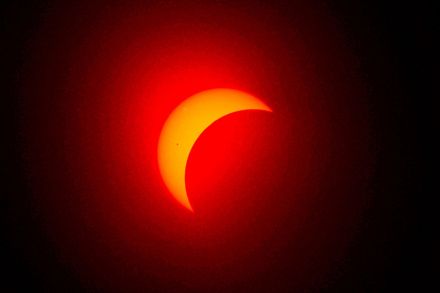
The day before the April 8 eclipse — our postage stamp of ground sat smack dab in the middle of totality — we abounded in sunshine and birdsong, with nary a cloud in the sky. The day after, too, was dominated by the yellow star moseying along the ecliptic, but on the big day — we won’t be similarly situated for another 120 years — ole Sol was obscured by thick gray clouds. (Which parted, as if on mischievous cue, two hours after the celestial spectacular.) This is why Western New Yorkers exhibit a cheerful “oh well” fatalism, and why we know that the Buffalo Bills kicker will always miss the game-ending field goal. The hungry and hotel-hunting eclipse trackers who were predicted to overrun our rural county, leaving a spoor of tourist dollars, never showed.

eclipse

The story of Vince Maney

Batavia, New York  'Tis spring, and if a young man’s fancy lightly turns to thoughts of love, as Tennyson opined, an older man’s reveries turn — no, not to lawn-mowing — to baseball. Not, in my case, to the grotesque parody of the American game on display in the major leagues, with their automatic extra-inning runners and TV timeouts and $100-plus tickets, but to the sandlot, the high school or college field, the amateur and independent and minor-league ballparks built on a human scale and played in with joy, even in error, by mere mortals.

Maney