American Life

My biggest regrets

Regrets, I've had a few, but unlike Mr. "My Way," mine are enough to mention. (Didn’t Hoboken Frank at least regret slapping Ava Gardner or hanging out with Joey Bishop?) “When you see the end of things coming close and staring at you,” as Jason Robards tells his son in Ray Bradbury’s filmic adaptation of his own novel, Something Wicked This Way Comes, “it’s not what you’ve done that you regret — it’s what you didn’t do.” (For good or ill, cataracts prevent me from seeing the coming end.) Surely some missed opportunities are worth missing. For instance, I doubt if any of the awestruck Lou Reed fans whom the rock’n’roll coprophage famously invited to defecate into his mouth regretted turning down the chance.
regrets

An introduction to presidential grave-hunting

Where better to talk about dead presidents than over beer and wings at Jim's Saloon in East Pembroke, New York, three days before Millard Fillmore’s birthday? Across the table from me is Pat Weissend, a convivial bank manager and former museum director who has visited the gravesites of all thirty-nine dead presidents and all but two of the forty-three dead vice presidents of the United States. (The hard-to-get veeps are Walter Mondale, whose ashes have yet to be interred under the cold hard Minnesota ground, and Nelson Rockefeller, whose private and inaccessible burial spot is the Holy Grail of the grave-hunting community.

presidents

Remembering George Eastman

George Eastman, founder of Eastman Kodak and benefactor of Rochester, New York, told my late friend Henry Clune (1890-1995 — and no, that’s not a typo) that he had never laughed until he was forty — and the camera tycoon wasn’t exactly a chuckle-factory in his old age, either. Eastman put an end to the grimness with a bullet to his head in 1932. He left a suicide note that read, “My work is done — Why wait?” Clune, star reporter of the Gannett newspapers, habitué of poolhalls and burlesque palaces and country clubs, a man who read Macaulay for enjoyment and composed panegyrics to strippers and barkeeps, occasionally visited the “lonesome little old man” in his home or office. (Henry’s mother had coated photographic plates for Eastman’s fledgling company in 1881.

eastman

Remembering John Gardner

"Art begins in a wound, an imperfection,” said the late novelist John Gardner, one of the last American writers to grow up on a farm, “and is an attempt to either learn to live with the wound or to heal it.” Gardner’s wound was more gaping than most: on April 4, 1945, the eleven-year-old was driving a tractor hauling a two-ton roller called a cultipacker. His six-year-old brother Gilbert fell from the tractor’s hitch. John turned around just in time to see his brother’s skull crushed under the huge implement. (Marge Cervone, a Gardner family friend, told me that “Gilbert was the kind of kid who would never hold on.”) “He was not to blame,” said John’s mother. “Nobody could have stopped that thing happening.

gardner
voting

Voting with a vengeance

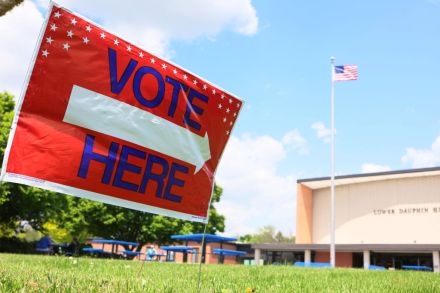
Weeks have passed since I voted in the November election, and I'm still ticked off. You would be too if it happened to you. Once upon a time — that is, before 2022 — New York was one of the friendlier states toward third parties. Whether Green, Constitution, Socialist Workers, Libertarian or Communist, all were welcome on the ballot so long as they passed an easily surmountable petition threshold. This pro-participation access was called “democracy.

Revisiting Gettysburg

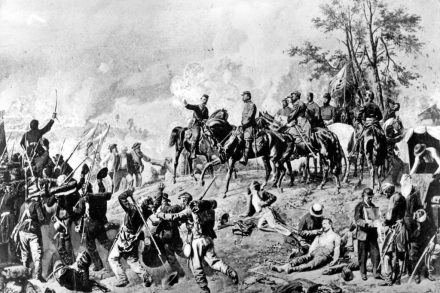
The Civil War, said Gore Vidal, is “the great single tragic event that continues to give resonance to our republic.” Gettysburg was its climacteric battle, and Ron Maxwell’s epic Gettysburg (1993), filmed on and around the battlefield, is the definitive cinematic treatment of the most consequential, written-about and argued-over military engagement in the history of the United States. (I would call it the most stirring as well but then I remember the words of the eminent historian J.G. Randall, best-known for his four-volume Lincoln the President: “That there was heroism in the war is not doubted, but to thousands the war was as romantic as prison rats and as gallant as typhoid or syphilis.

Gettysburg

The cemeteries of New York State

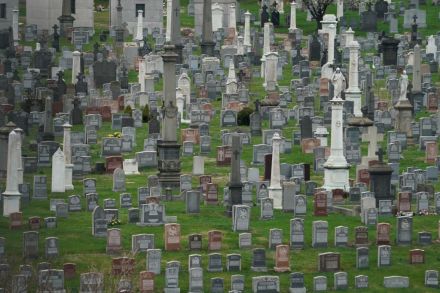
Prose may be deathless, but authors are not — and some of us honor those who compose with visits to where they decompose. I’m afraid that I am one such pilgrim: heck, my wife left her bridal bouquet at the grave of Jack Kerouac in Edson Cemetery in Lowell, Massachusetts. The epitaph for “Ti Jean” is “He Honored Life”; so, paradoxically, do those who make sepulchral sorties. The noted poet Steve Huff knows his way around a necropolis, and he brings us along for the ride in his new book, Resting Among Us: Authors’ Gravesites in Upstate New York from Syracuse University Press. Huff wants “to help raise Upstate New Yorkers’ awareness of our literary heritage.” New York schools have failed miserably at this task.

gravesites

Roque is alive and well in Angelica, New York

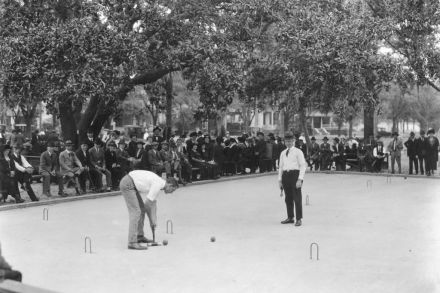
Goose-pulling is dead and gone, and lawn darts are on life support, but roque is alive and well and avoiding the roster of extinct sports thanks to the good folks of Angelica, an attractive village of fewer than 1,000 souls in the southwestern corner of New York State. What’s that: you’ve never heard of roque? Affix a “c” to its left and a “t” to its right and you have its sporting parent. Roque is a nineteenth-century American variation on the erstwhile European pastime of the leisure class. A hybrid of croquet and billiards, it is played on an oval-octagonal court of sand and clay with fixed wickets and hardwood boundaries off which a player can ricochet shots. Its mallets, shorter than those used in croquet, are now either homemade or handed down from roquers past.

roque

Rage against the baseball machine

In a lifetime of attending perhaps a thousand professional baseball games, all but ten or so in the minor leagues — quondam site of the sport’s heart — I have finally encountered an umpire I would despise, disparage, spit upon, kick, and, yes, kill: ABS, colloquially known as “Robo-ump.” It happened in Rochester, New York, where the storied Red Wings took on the Scranton Wilkes-Barre RailRiders. The game being played on the field was recognizably baseball, but there was something off about the experience, rather like when the niece meets the pod-person version of Uncle Ira in Invasion of the Body Snatchers (1956).

umpire

How the NCAA twisted women’s sports

This has been a banner, or perhaps baneful, year for women’s intercollegiate sports, what with trash-talking basketballers, record TV ratings and biological men swimming in the distaff pool. But the focus on celebrity female athletes only emphasizes the degree to which the NCAA has twisted women’s sports into a depressing duplicate of the Y-chromosome side of the street. It wasn’t supposed to be this way. The pioneers of women’s collegiate — not necessarily intercollegiate — athletics conceived and promoted a healthy and democratic ideal that was antithetical to what they saw as the elitist, corrupted and sloth-inducing male version.

sports

Michael Cimino’s gift to cinema

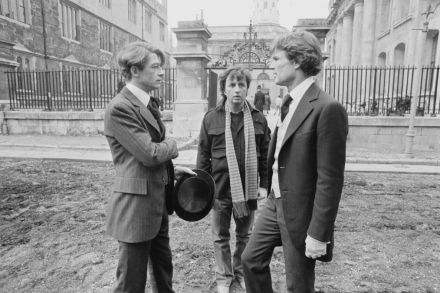
In the spring of 1981, I committed what the entertainment press of that day regarded as an act of self-abuse: I bought a ticket and sat through Michael Cimino’s epic flop Heaven’s Gate, and then I went back for another viewing before the universally reviled film ended its one-week run at the local cinema. In the four decades since, I have abused myself in similar fashion four or five more times. Heaven’s Gate is a 200-minute-plus mess of beautiful incoherences and stupefying contradictions, its pattern set by a gorgeously preposterous prologue in which forty-something actors Kris Kristofferson and John Hurt waltz across the greensward as newly minted Harvard graduates, class of 1870.

cimino

How Karl Hess went from Mr. ‘Ultra-Conservative’ to supporter of the New Left

Some of the more interesting political figures of our day — Tulsi Gabbard, Glenn Greenwald, Tucker Carlson — crossed the street to find new friends, but few in our history have ever switched teams with the dramatic flair of Karl Hess, the centenary of whose birth we will toast this May 25. Born in Washington, DC to a beautiful switchboard operator and a rakish Filipino millionaire, Karl Hess quit school at fifteen and embarked on a career that turned into an anti-career. He was a police reporter, a Newsweek editor, a corporate flack, a Republican ghostwriter, and, ultimately, Barry Goldwater’s speechwriter and traveling companion during the Arizona senator’s 1964 presidential candidacy.

hess

Ernest Hemingway’s Idaho playground

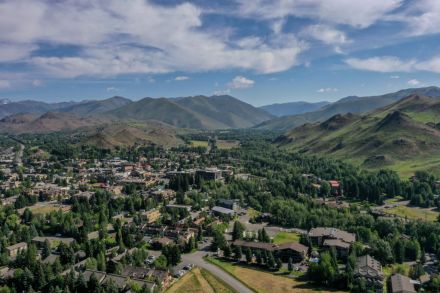
In Ketchum, Idaho, heart of the skiing mecca of Sun Valley, my wife and I found ourselves on Picabo Street — the avenue leading to the Warm Springs ski lodge, that is, not the 1998 Olympic gold medalist in the women’s supergiant slalom. We walked past a “private residence club” denominated The Hemingways, which called to mind the author’s complaint that Sun Valley boosters were using him for public relations purposes. “I love Idaho,” Hemingway wrote Peter Viertel in 1948, but “when they are having pictures painted of you and hung in real estate promotion offices it is past time to blow.

ketchum

The unfortunate ubiquity of smartphones

Arlington, Virginia Wandering through suburban Washington, DC's National Airport — I always liked the libertarianish ex-congressman from South Carolina Mark Sanford for voting against renaming it Ronald Reagan Airport on the grounds that the nomenclatorial decision belonged to locals, not Congress — I was refused service when trying to buy a bagel. It wasn’t because of my race, gender or vaccination status; rather, the eatery in question, which had no cash registers, accepted orders only from smartphones. As I have never owned a cell phone of any kind, let alone a smartphone, I was outta luck. I couldn’t plead food insecurity, to borrow the silly euphemism of our day, for soon enough I would be dining on the nine almonds that constitute an airline repast.

smartphones

Oneida: the nineteenth-century sex cult behind the flatware giant

If ever I write a sex farce — the demand so far has been muted — I need only head east 150 miles and detour back 150 years to the Oneida community, the utopian experiment in free love that thrived from 1848-80 before the colony’s unorthodox sexual arrangements led to its collapse — and, in a characteristically American turn of events, its road to riches. Headquartered in a sprawling mansion house — open today to visitors of all carnal habits — Oneida was a cerebral nineteenth-century soap opera awash in high-minded American radicalism and directed by the brilliant and charismatic megalomaniac John Humphrey Noyes. As a Yale Divinity School student, Noyes had declared himself free from sin: a perfected Christian.

Oneida

Detroit detour

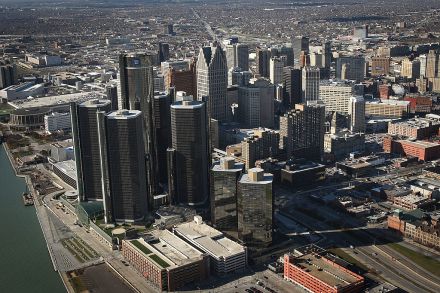
Detroit, Michigan A cowboy's work is never done, as Sonny Bono once croaked. (I interviewed Sonny shortly after he was elected to Congress in the Republican wave of 1994. He confirmed to me that Cher thought that the faces on Mount Rushmore were a natural formation.) Segueing from one Armenian American to another: when I lured my wife from the Chandleresque precincts of Southern California to the Edenic plains of New York’s Burned-Over District (“married an LA doll and brought her to this small town,” as John Mellencamp growled), she asked to visit two cities: Utica and Cleveland. Having made her dreams come true, as is my wont, I thought my work was done. But no.

Detroit

An LA adventure

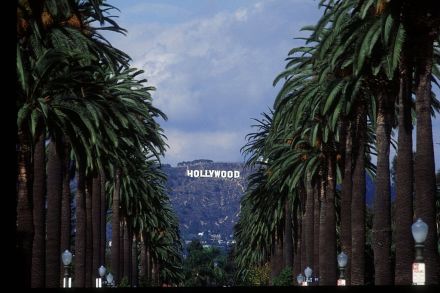
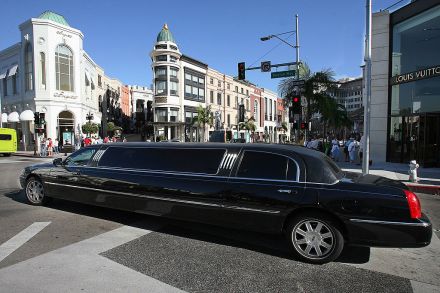
For years I have read the likes of Raymond Chandler and John Fante and rewatched Chinatown in preparation for our occasional sojourns to Los Angeles (my wife is a native Angelena), but after the stupefaction induced by our last trip, I chose Charles Bukowski, the flophouse poet of hangovers, for our first post-Covid invasion. “Los Angeles is a Cross, and we all hang here, stupid little Christs,” wrote Bukowski in a 1967 letter. That line seems off to me, self-consciously poète maudit, but I always cut poets of place a break.

Los Angeles

Keeping Syracuse time

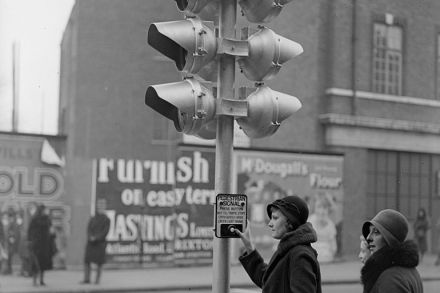
I have my flaws, but I do know how to treat a lady. Five years ago, for our thirtieth anniversary, I took my wife to a nineteenth-century mental hospital. (We didn’t check in.) This year, to celebrate her birthday, I showed her a traffic light — and as a lagniappe, we gandered at a clock, too. It’s not quite as quotidian as it sounds. Well, maybe it is, but now that I’ve got you on the line, let me tell you why we drove two hours to Syracuse, the Salt City, to inspect a pair of everyday sights. First, the light. In 1925 or thereabouts, the city of Syracuse installed a traffic signal with green on top and red on bottom in the Irish neighborhood of Tipperary Hill. This was done at the behest of an alderman surnamed Ryan. A proud Paddy politico, apparently.

Syracuse

The downfall of Niagara Falls

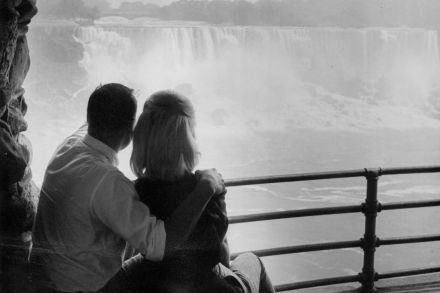
If ever I pee on the grave of an American it will be that of Robert Moses, the highwayman whose roadbuilding and neighborhood-obliterating projects in New York City and New York State threw half a million people out of their homes, as Robert Caro estimated in his biographical masterpiece The Power Broker. To those who had the temerity to object to their ejection, the monster Moses hissed, “When you operate in an overbuilt metropolis, you have to hack your way with a meat ax. I’m just going to keep right on building. You do the best you can to stop it.” So it was with teeth gnashing that I drove down Robert Moses Parkway in the city of Niagara Falls, New York, en route to the annual Armenian festival at St. Hagop Armenian Apostolic Church.

niagara

The selfishness of rich socialists

God damn this virus! It’s not so much that I mind the coughing — as a schoolboy I heard every mock-hacking variant of “Cough-Man” — as that Covid’s wretched timing caused me to miss Opening Day for baseball’s Muckdogs for the first time in decades, as well as the premiere of Brothers at Odds, a play about our town’s eccentric nineteenth-century Brisbane family, whose manse faces an uncertain future. I did catch the second performance of both play and ballclub, though, and I can report that greed, bigamy and utopian spider webs are as American as balks and catcher’s interference. Albert and George Brisbane, the titular siblings, were less Cain and Abel than Vain and Stable.