American Life

A day in DC

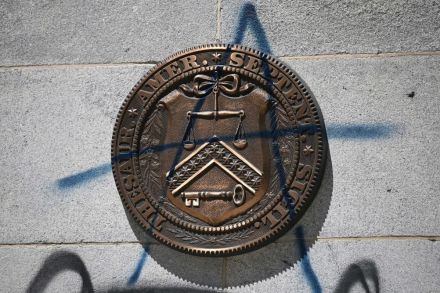
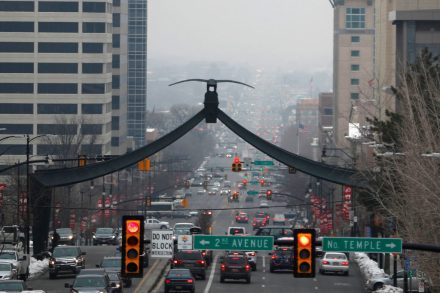
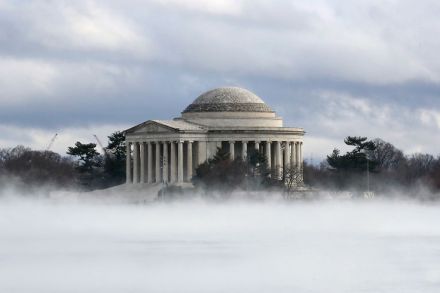
An epoch or so ago, when Joe Biden was just a lightweight quadragenarian blowhard, I spent my salad days (stretching over several years) in Washington, DC. Boy did I have fun, though eventually, as Exene Cervenka screamed, I had to get out! Get out! For a while I got back with some frequency, though my visits have been scarce ever since the parts of the city I lived in acquired their post-9/11 police-state trappings. Hell, my roommate and I used to toss around the football on the front lawn of the Capitol on a Saturday morning. I suppose we’d be shot on sight for doing that today. Edmund Wilson, choleric upstate New York man of letters, said as he approached the door marked Exit, “I have come to feel that this country, whether or not I live in it, is no longer any place for me.
DC

A eulogy for the Democrats of yore

In my days as a budding political scientist — nipped, fortunately for the discipline, in the bud — I learned that party identification is frequently due to non-ideological, and to outsiders irrational, factors. I’m sure this is less true today, as corporate and social media herd us into Team Red and Team Blue cattle pens, but this knowledge offers comfort every biennium, when primary elections roll around and I wonder why the hell I remain a registered Democrat. The die was cast, I suppose, when as a tyke I discovered in my grandparents’ attic a “Peace, Preparedness, Prosperity” button promoting Woodrow Wilson’s 1916 reelection. (How was I to know that smug bastard lied?

democratic

Hoosiers of New York

Poor March. It has so few defenders. Yet annually, on the first day of the month, I stand in the snow or sleet or icy rain and recite William Cullen Bryant in hopeful placation: “Ah, passing few are they who speak/ Wild stormy month! in praise of thee.” Bryant went on to speak in measured praise of the third month not so much for its qualities, such as they are, as for the promise it contains of the eventual arrival of the fifth month. For me, though, unheralded March offers the spectatorial pleasure of basketball.

hoosiers

Rum, Rome and rebellion

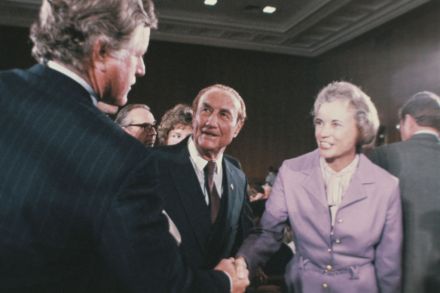
As a piss-poor Catholic I am about the last person who should express an opinion of the propriety of President Biden receiving Holy Communion, but as a native of the county whose nineteenth-century women’s college (Ingham University) employed the chancellor whose phrase “rum, Romanism, and rebellion” may have flipped the 1884 presidential election to Grover Cleveland — how’s that for a tenuous connection? — I feel it within my competence to say a word about anti-papism in American politics. I had a bibulous lunch with Senator Pat Moynihan, my long-ago boss, several months before his death in 2003. Over more Pinot Grigios than I can remember, Moynihan said that he was disturbed by rising anti-Catholicism in the Democratic Party.

catholic

Rules for anarchists

Anarchists have gotten a black eye over the past year, what with the antisocial cretins of antifa laying claim to a name that befits them as illy as ‘artist’ does Hunter Biden. It’s reminiscent of the late 19th century, when the A-word, which accurately described promising ventures in mutual aid and voluntary cooperation, was besmirched — and how! — by the disturbed Leon Czolgosz, who assassinated President William McKinley in Buffalo, thereby casting a serious pall over the Queen City’s Pan-American Exposition and escorting into the White House the bloodlusting Teddy Roosevelt, whom novelist Henry Blake Fuller derided as the ‘Megaphone of Mars’. American anarchism has always been a literary conceit more than a political (or anti-political) program.

anarchists

Coffee with Coleen

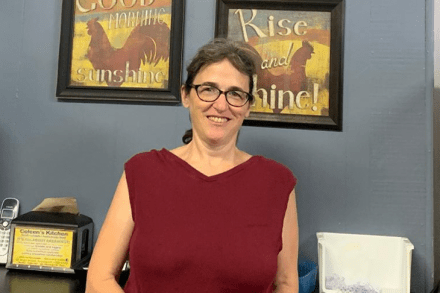
I’ve eaten a lot of breakfasts in my time — hell, it must be approaching 20,000 by now — and few if any have equaled those consumed at Coleen’s Kitchen on Main Street in the lived-in Erie Canal village of Brockport, New York. It takes a few minutes before you sense that there’s something not quite wrong about Coleen’s. Upon entering the restaurant you pour your own coffee at the beverage station. Maître d’ Coleen directs you to your seat. She hands you the extensive four-page menu, which warns that ‘you will be charged 59 cents if you ask what kind of bread I have’. Read it well and don’t waste Coleen’s time, you lazy bum! Waitress Coleen takes your order.

coleen

In the footsteps of Shoeless Joe

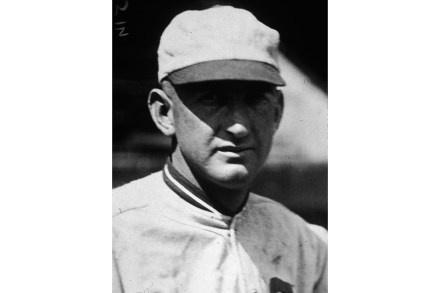
A visit to another state should be prefaced by reading one of its poets, so for a trip to Greenville, South Carolina, I chose Henry Timrod, the poet laureate of the Confederacy, over Hootie and the Blowfish. ‘Cling to the lowly earth, and be content!’ commanded Timrod, a favorite of Bob Dylan’s. The Nobelist borrowed a few words (‘along yon dim Atlantic line’) from Timrod for ‘Cross the Green Mountain’, an eight-minute Stonewall Jackson-flavored masterpiece he wrote for Ron Maxwell’s Civil War film Gods and Generals (2003). Dylan, an equal opportunity sampler, also filched lines for the song from ‘Come up from the fields father’ by that barbaric yawper of the Union, Walt Whitman.

shoeless

Thelonious Monk deserves the last note

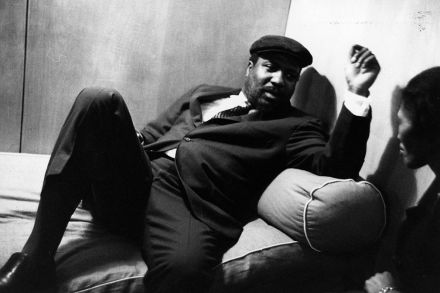
A friend of mine, a lawyer of radical disposition who typically defends nuns who pour blood upon weapons of war, or peace activists who trespass upon military installations, recently told me of his latest case. He is representing a young person who defaced a statue depicting a Confederate soldier. I told him that while I usually applaud his vandal-defendants, I am not in sympathy with this one. The answer to monuments of which one disapproves is not destruction or removal or whinging about your hurt feelings, but rather the creation and emplacement of new monuments. I don’t mean glorifications of dead politicians or military figures — we’ve had enough of those to last a national lifetime, thank you.

monk

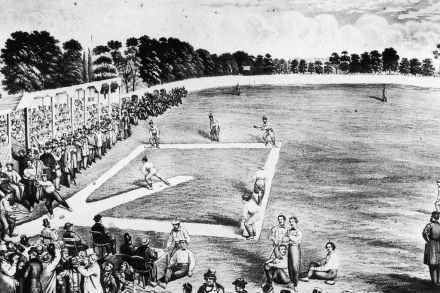
What is true in life is true in baseball is true in politics

Batavia, New York For years I was vice president of the Batavia Muckdogs, one of the only community-owned teams in professional baseball. (There is no ownership setup more roundly detested by profit-minded speculators in pro sports.) We teetered on the financial ledge, the poor sister of the New York-Penn League, and it wore on us. Sometimes during a game I would stare at one of the faithful — maybe Alice, a lifelong fan whose bandana covered a head balded by cancer treatments; or Mark, a retarded older man whose imagination, like mine, was coterminous with Dwyer Stadium’s boundaries — and think how crushed he or she would be if we lost our team.

baseball
peckinpah classic cinema

What can we learn about coronavirus from classic cinema?

Batavia, New York With the first blizzard of every winter I take John Greenleaf Whittier’s Snow-Bound off the bookshelf, and though I never quite make it through to the end, when the snow is ‘melted in the genial glow’, I feel as if I have hunkered down for the week with the ‘Barefoot Boy’ poet’s besieged shut-ins. So when the Kung Flu — excuse me; I forgot for a moment that mild humor is now as verboten as sweaty raves and square dances — kicked its way into our lives, but before the local library shut down, I, like everyone else — well, like a tiny sliver of the populace — reached for Camus’s...Camus’s...oh, the hell with it: The Plague by Albert Camus.

Steve Hawley and the case for two New Yorks

Whenever New York governor Andrew Cuomo — that churning mass of grating sanctimony, unwarranted arrogance and personal nastiness — hurls petty edicts (No gatherings greater than 10 at Thanksgiving! Chicken wings don’t count as food in restaurants!) at his subjects, Steve Hawley, erstwhile pig farmer and our assemblyman, is usually there to throw them back. I spoke recently with Hawley while sitting on a bench outside his insurance office in the Genesee Country Mall. An imbiber at the fountain of youth, he looks a good 15 years younger than his age of 73, and the imp within coexists easily with his role as deputy minority leader of the New York State Assembly’s Republicans.

hawley

The women who argued against their right to vote

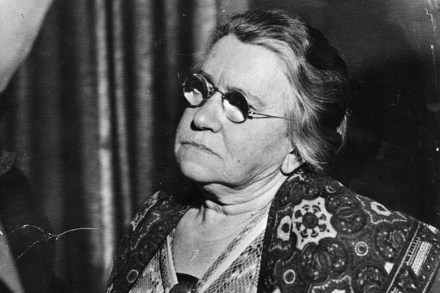
Batavia, New York To think I almost let 2020 slip by without recognizing the centenary of the ratification of the 19th Amendment to the Constitution, which guaranteed women the right to vote in all (then) 48 states of the union. Shame on me! This is a matter of Upstate New York regional pride — and confusion — on several counts. The 1848 ‘Declaration of Rights and Sentiments’, a rewrite of the Declaration of Independence along feminist lines, was drafted in Seneca Falls (the village generally thought to be the model for Bedford Falls in Frank Capra’s It’s a Wonderful Life). The suffragist avatar Susan B. Anthony spent her adulthood in Rochester.

vote 19th amendment

The next so-called civil war

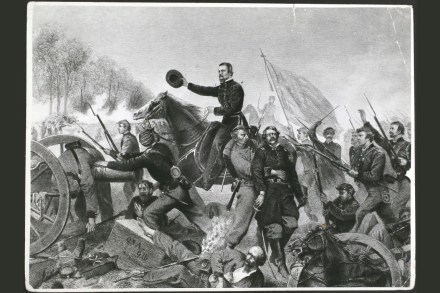
Batavia, New York On a brutally hot and wasp-swarming late summer mid-afternoon I walk our town’s old cemetery, as is my wont — hey, if I’m gonna live here for eternity I may as well get to know the neighbors. Walt Whitman swooned over one of this boneyard’s residents, and I have come to read the relevant passages to the boy who rests under the sod. His name was Stewart Glover, and he appears in Whitman’s diaristic Specimen Days to illustrate ‘the terrible and tender realities’ of war-death. Glover, Whitman tells us, grew up in Batavia with his father, John Glover, ‘an aged and feeble man’. (I dunno: his gravestone says Pop lived to the ripe age of 83, dying in 1873.

civil war
batavia new york

I am a part of Batavia, New York

This article is the American Life column from The Spectator’s inaugural US edition. Subscribe here to get yours. Batavia, New York, my favorite place in the world, was described by Alexis de Tocqueville on his American tour: ‘Scattered houses then marshes. Rooms built of tree trunks.’ OK, it wasn’t the Frenchman’s most memorable passage. But Tocqueville was more charitable than my landsman John Gardner, the 20th-century novelist who called Batavia a symbol of ‘both spiritual death and the death of civilization’. Gardner, a nomadic academic who had left town years earlier, was responding to the federally funded razing of Batavia’s core in the 1960s under the cruelly misnamed Urban Renewal Program.

How to restore civility in politics

Batavia, New York When I toiled in the world’s greatest deliberative body back in those carefree days before 9/11 and COVID-19 had given the state an excuse to try to make Every Man a Caitiff, an old US Senate hand told me a story about the crone who ran a little newsstand perhaps a punted football’s distance from the Russell Senate Office Building. It seems that the aged proprietress had been the paramour of James Eastland, the law-and-order worshipping, segregation-championing Democratic senator from Mississippi who never met a civil liberties violation he didn’t like. Eastland, chairman of the Senate Judiciary Committee, was well regarded within the Senate, however, and considered a fair dealer by his colleagues. One of them was Sen.

civility

Stargazing under lockdown

This article was originally published in Batavia, New York Paranoia will destroy ya, as the great Muswell Hillbilly Ray Davies sang, but so can blithe unconcern, and damned if I can find the equipoise. Case in point: a saintly friend of my mother’s distributed masks to those of us who had been engaging in acts of unprotected grocery shopping. Mine bore the emblem of the Buffalo Bills. (I’m surprised some underemployed NFL patent attorney isn’t hounding the mask-maker as I type.) I dropped by to see my parents en route to the grocer’s. ‘I dunno,’ I said to my father. ‘A mask. Whaddayou think?’ ‘You’d look like a candy ass,’ he replied.

Two Perseid meteors peltier

A June election in Genesee County

Batavia, New YorkWhen our daughter was growing up, she and I would sit on the front porch every summer solstice and read the opening chapters of Ray Bradbury's Dandelion Wine, as fine an evocation of a childhood summer as has been written. True, dandelions are a May flower — don't you dare call them weeds! — but old Ray had earned his literary license. A stiff shot of dandelion wine would be welcome fortification for those of us voting in the special congressional election in the 27th district of New York on June 23, coincident with our state's presidential primary. That day we will choose the successor to the disgraced Republican resignee Chris Collins, who has yet to begin serving his 26-month sentence in the federal pen for insider trading.

election

The guns of Alexander

Batavia, New York I’m motoring down Route 98 on my yearly trek to the triannual Alexander Gun Show, held in the Alexander volunteer fireman’s hall. I’m croaking, blissfully off-key, to the music of Gram Parsons, the Florida trustfund Harvardian (one semester) who countrified the Byrds and sought to bring together hippies and rednecks and truck drivers and churchgoers and groovy chicks under his Cosmic American Music banner. It’s a dream still worth dreaming.

guns alexander

Let Utah be Utah

This article is in The Spectator’s December 2019 US edition. Subscribe here. Salt Lake City, Utah Here I sit in a Salt Lake City coffeehouse, wishing I’d donned the uniform (white shirt, black tie, nameplate) of a Mormon missionary. Now that would throw the ambient hipsters for a loop. Last time I buzzed through the Beehive State was the dawn of 1984, when I fled the Imperial City on the Potomac after 30 months legislatively assisting Sen. Pat Moynihan. I went to Washington a left-of-center populist and returned a novice in what Henry Adams called the Conservative Christian Anarchist party, of which he mistakenly thought himself the only member.

utah