Afghanistan

How stable is the Taliban government?

From our UK edition

Some western governments and media have been involved in a collective act of wishful thinking in recent months over the Taliban—believing them somehow to be ‘moderate’ and on the way to forming an inclusive government. The idea began with their elevation of status as a partner in negotiations with the US in Doha. They were legitimised, so some believed they had changed. The last remnants of that belief must have been burnt out by the appointment of the Taliban cabinet this week, which was not inclusive in any sense, but was the result of three weeks of bartering between different Taliban factions, only resolved by the intervention of the head of Pakistani intelligence, the ISI, General Faiz Hameed.

The disconnect

President Biden’s impromptu remarks on 9/11 spoke volumes. His erratic and frequently irritated presence in recent weeks — when, that is, he has been present at all — reflects a presidency that is struggling to maintain its focus and its sense of reality. Biden was promoted in 2020 as the candidate of restoration. Despite nearly five decades of successful operation in Capitol Hill, one of the least normal places on Earth, Biden, we were told, represented normalcy, common sense and empathy. Candidate Biden did his best to deliver all three, when his handlers let him. President Biden has delivered none of them — when, that is, he has delivered at all, for no modern president has dodged the cameras and questions so assiduously.

disconnect

You can’t keep an American exceptionalist down

From our UK edition

Like millions of other Americans I was riveted by the images of chaos and despair at the Kabul airport as US forces finally left Afghanistan, yet another sad result of a forever foreign policy driven by ignorance, overreach and hubris. But as distressed as I was by the sight of desperate Afghans clinging to the exterior of a moving US Air Force cargo jet, what truly horrified me was the flood of belligerent anti-withdrawal nonsense uttered in print and on TV by an American political and media establishment that has apparently learned nothing since the Korean War, when General Douglas MacArthur provoked China’s invasion of North Korea by pushing too close to the Chinese border.

The War on Terror is a war of religion

From our UK edition

Compare the world 20 years after the 9/11 attacks to the world two decades after Pearl Harbour. World War Two was a vivid presence in popular culture and national memory in 1961, but America in the first year of John F. Kennedy’s administration was in no sense living in the shadow of Japan’s attack. That war had ended 15 years ago; Japan was now our ally in the Cold War with the Soviet Union. Twenty years after 9/11, the US has only just ended its war in Afghanistan, and the result of that conflict, which lasted five times longer than the one with Imperial Japan (and Hitler’s Germany), was the immediate return to power of the regime we set out to depose at the start. After Afghanistan, the US is still fighting a War on Terror against al-Qaeda and similar groups.

The rise of Taliban Twitter

From our UK edition

The Taliban takeover of Afghanistan was swift, but this victory wasn't won overnight. For years, the Taliban has been waging a softer fight: one on social media. Since it was removed from power, the Taliban has dedicated enormous resources to developing its presence online.  As it successfully recaptured Afghanistan, the propaganda opportunities which it put to use on Twitter as the eyes of the world watched suggested these efforts have paid off. Images and videos of Taliban forces easily gaining ground and advancing into Afghanistan’s cities – picking up military hardware left by the Americans along the way – spread like wildfire online. Islamists around the world were delighted.

The 9/11 anniversary marks a painful moment for squaddies

From our UK edition

The sweet salvation of the summer recess over, we returned to Sandhurst for our final term of officer training. It was 11 September, 2001 – a day that started with a hike in the sunshine and which came to define my time in the British Army. The events of 9/11 would lead to my own deployment in Afghanistan and Iraq, and the loss of dear friends and comrades. Of course, on that September morning none of us knew how events 3,000 miles away – and the political decisions taken in the aftermath of those terrible attacks – would have such a momentous impact on our lives. After the buses dropped us off, the hike started jollily.

9/11 and the war on terror kiddie table

The thing about childhood is that eventually you're supposed to grow up. It's with this in mind that we turn to Sen. Lindsey Graham, who when he ran for president in 2016 polled so low that he was relegated to the so-called 'kiddie table' GOP primary debate. It had to chafe. Graham back then was a loud Trump critic, yet there was Trump eating off the fine china while Graham moodily stirred his wagon wheel mac and cheese around his Toy Story bowl. At one point, the ultra-hawkish Graham did try to get the grown-ups' attention. If you're tired of fighting wars, he declared on Fox News, 'don't vote for me!' Republicans stopped eating for a moment, then took him at his word. I thought of that today, perhaps because it's almost the 20th anniversary of 9/11 and I needed some levity.

lindsey graham earn

Portrait of the week: Tax rises, Tube gets busier and Taliban names its government

From our UK edition

Home Boris Johnson, the Prime Minister, announced a new tax in the Commons branded a ‘health and social care levy’. It would increase National Insurance paid by employees and employers by 1.25 percentage points from April 2022. A year later it would become a separate tax that even pensioners still earning would have to pay. Share dividends would also see an extra 1.25 per cent tax rate. Of the £12 billion a year raised, only £1.8 billion would go to social care for the next three years. Some of the tax would go to meet the increased tax bill of the NHS as an employer paying the levy. From October 2023 there would be a cap on personal care liabilities of £86,000 over a person’s lifetime, though this would not cover accommodation.

Life under the Taliban’s charm offensive

From our UK edition

The Taliban Cultural Commission sounds a contradiction in terms but for all foreign journalists it’s the first stop in the new Afghanistan. There, in a dusty office on the first floor of the old Ministry of Information, I was handed a letter which allowed me to go anywhere in the country, except Kabul airport or military installations. In a neighbouring office I met Anamullah Samangani, a Taliban commander from the northern province of Samangan. He’s an Uzbek, resplendent in crisp white shalwar kameez, black waistcoat and black and white silk turban. He told me he has read one of my books. ‘Do you feel safe in Kabul, have you had any difficulties?’ he asked. He assured me that the new Taliban just want to be friends.

Is it time to defund the world’s policeman?

From our UK edition

It gets lost in the many creative purposes successive American administrations invented to justify remaining in Afghanistan, but the primary goal of the original aerial assault in 2001 was clear and primitive: revenge. Not always a dish best served cold. That military operation was an attempt to satisfy public thirst for payback, and also for agency. 9/11 made the country feel powerless. Given today’s glorification of victimhood, it’s worth remembering that when Americans were granted victimhood en masse, they didn’t care for it. If in the eating revenge is often thin gruel, so also is the experience of being proved right. I opposed the extended occupations of both Afghanistan and Iraq.

Ahmad Shah Massoud was Afghanistan’s best hope

From our UK edition

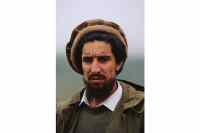
Ahmed Shah Massoud was described as ‘the Afghan who won the Cold War’. While famous in France (he was educated at the Kabul lycée, and the French saw him as the ultimate maquisard who drove a super-power out of his country), he is not a familiar figure in Britain. This book, a rich and detailed account of the travails and tragedy of Afghanistan between 1976 and Massoud’s murder in 2001, will correct that. Sandy Gall’s knowledge of the jihad is encyclopaedic. He was the first well-known journalist to make the dangerous journey into occupied Afghanistan and bring the human cost of this terrible war to our TV screens. To produce such a book at the age of 93 deserves admiration. Many warlords are also writers: Babur, T.E.

How the fight against terror in Afghanistan will change

From our UK edition

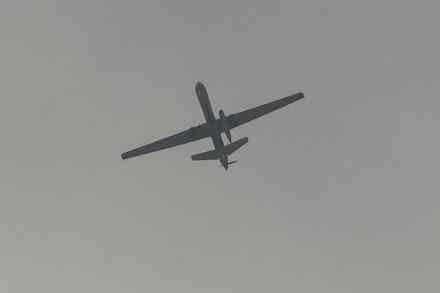
In the aftermath of the 9/11 attacks, the West entered a new age: it was the era of the 'shadow war', in which American – and Western – might was ranged at preventing the export of terrorism from the Middle East. That was, of course, before the futile exercise of 'nation building' in Afghanistan and Iraq. Twenty years on, we are back where we started: Afghanistan is in the grip of a radical Islamist regime. Again it is likely to become a launch pad for Al Qaeda (and Isis) attacks in Europe and America. So how can the West defend itself from the threat? Amidst the debacle of the hasty American withdrawal from Afghanistan, there is some good news: weapons technology has moved on considerably.

congress

Congress got mad about Afghanistan 20 years too late

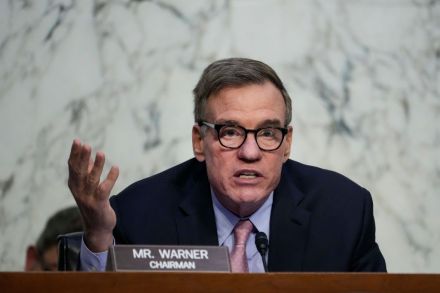
Nearly a week after the last American C-17 flew out of Kabul, the Biden administration remains in the middle of a firestorm. Lawmakers are shouting about what they consider a botched withdrawal and evacuation process from Afghanistan. Calls for oversight and accountability on Capitol Hill go beyond President Biden’s traditional opponents. Multiple Senate committees are planning to conduct investigations into why officials weren’t prepared for worst-case scenarios, why the administration believed the Afghan army could hold out longer than it did, and why tens of thousands of Afghans who assisted the US military during the war were unable to be airlifted out of the country.

The West is being played by the Taliban

From our UK edition

There have been some curious juxtapositions in Afghanistan this week. On the one hand, the under-19 Afghan cricket team was allowed to leave for a planned tournament in Bangladesh, as if things were normal, while on the other there was a sinister military parade taking place in Kandahar this week. After the lines of horsemen in flowing white robes, a deliberate image of Islamic warrior superiority, came the fleets of captured Humvees. And at the side of the procession lay a car packed with a bomb, suicide vest, and large plastic bottles of explosives from a roadside bomb. This is a government-in-waiting promoting terrorist weapons that indiscriminately kill civilians.

The Deobandi sect and the Taliban’s cheerleaders in the UK

From our UK edition

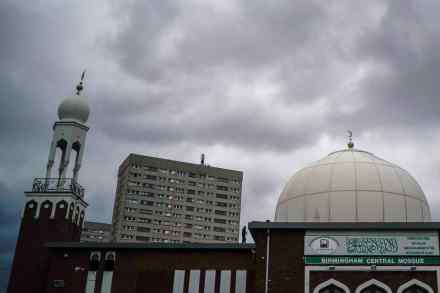
The Taliban is now bedding in for its second regime in Afghanistan and desperate Afghans continue to flee what is likely to become a brutal, heavily armed theocracy. Meanwhile in the UK it has come as a shock to many that some British Muslims applaud the Taliban’s resurgence. Speaking on BBC Radio 4’s Sunday programme, the Islamic sharia council member Khola Hasan claimed that ‘every single person that I know, as a Muslim’ was celebrating the return of the jihadist group and that ‘The problem is that we don’t give [the Taliban] a chance’, sparking outrage from more liberal minded British Muslims.

Don’t be fooled: the Taliban hasn’t changed its spots

From our UK edition

Has the Taliban really changed its spots? Those who advocate talking to the Taliban make the case that they have. The organisation, they say, has recognised the mistakes it made in the years culminating in 9/11. Others claim that the organisation is now committed to local and national aims, not international terrorism, and that the Taliban have – or can be moderated – via the tool of engagement. All of these approaches seem to share the view there is a disconnect between the west’s reaction to events in Afghanistan, and the reality. But is this really the case?  Pakistan's national security adviser, Dr Moeed W Yusuf, has suggested the time has come to face facts: we need to accept the Taliban has won, negotiate with them and treat them as partners.

blob friedman

Why can’t we fire the Blob?

Let’s say that two decades ago you were wondering where to invest your savings for retirement and the money that was supposed to pay for your kids’ college years, and decided to consult with your financial adviser known to be a market wizard. Let’s call him Tom Friedman. 'Don’t pay attention to all the bullish talk about Steve Jobs and Apple', Friedman said. 'I would bet all my money on two of the market’s crown jewels, Alta Vista and Enron'. Well, to make a very long story short, you are now spending your retirement years in a trailer park in Nevada, while your son is dealing drugs and your daughter works for an escort service to pay for their college studies.

The Democrats damned Biden by impeaching Trump

Joe Biden is officially a victim of the new rules that every Democratic president is going to face from here on out. That's thanks to his party’s overzealously tying an impeachment around Donald Trump’s neck before the 2020 election. Both Biden and the Democrats are not going to like where those new rules lead when the Republican party, in all likelihood, takes back the House of Representatives in early 2023. Traveling back in time for a moment, remember that Donald Trump’s first impeachment was based on a third-party whistleblower who notified Rep. Adam Schiff of a phone call between Trump and Ukrainian president Volodymyr Zelensky.

biden

Joe Biden has treated Britain with disdain over Afghanistan

From our UK edition

Congratulations, Joe. No US President has simultaneously alienated (and abandoned) so many of his compatriots or exacerbated threats to the West with such efficiency as Biden this past week. Biden defiantly sees ‘an extraordinary success’ in the chaotic and deadly withdrawal from Afghanistan, but disaster currently flows in the President’s wake. And one of the consequences is the mortal danger to America’s most important diplomatic and military alliance: the UK-US Special Relationship. Biden’s speech on Tuesday was a deranged, dramatic tragedy. He lashed out at critics of his calamity which saw the Taliban reinstalled in power and strengthened with new deadly capabilities.