Afghanistan

Afghanistan: five shocking claims made by the Foreign Office whistleblower

From our UK edition

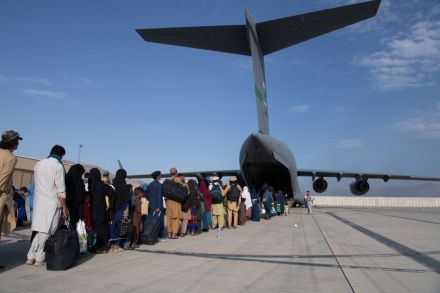
Dominic Raab faced the media round from hell this morning. The former Foreign Secretary faced a series of questions about evidence published by a former Foreign Office official over the government’s handling of the Afghanistan crisis. Raphael Marshall – an Oxford graduate with three years in the diplomatic service – worked in the department’s special cases team during the evacuation efforts. In testimony given to the foreign affairs select committee published on Tuesday, Marshall has given an account of the dysfunction and chaos he says dominated the government response. Among the most eye-catching claims: 1.

Afghanistan is starving to death and there is nothing the West can do

From our UK edition

The scale of the human tragedy unfolding in Afghanistan is hard to comprehend. The economy has collapsed, some 20 million people face death by starvation and international agencies like the World Food Programme have already doubled their estimate of what they will need just to keep people alive. They are appealing now for a staggering $2.4 billion (£1.8 billion) to get food stocks into position and keep a pipeline of supplies into the country through the winter. There have been reports of parents selling their babies and there are scenes of daily humiliation as people pile up household goods in the street to try to sell for scraps of food. The banks have hardly any cash to circulate and the Taliban have added to an acute liquidity crisis by banning the use of foreign currency.

Joe Biden takes his failures on tour

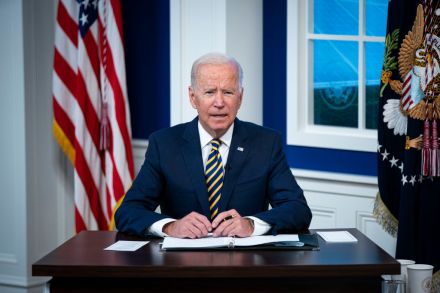
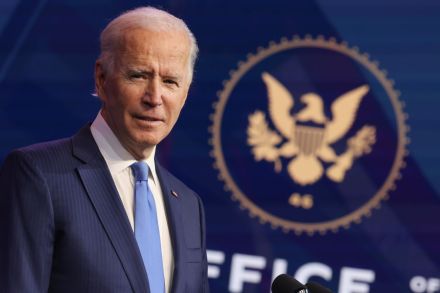
How’s the ice cream in Rome? Joe Biden is about to find out. Word is he is excited about the gelato, which is A-OK, since it may distract him from the fact that he has nothing to report when he gets there. The president — I mean, Joe Biden — was supposed to reestablish “normality” to an office so badly bruised by the mad tweeter — no, make that “ex-tweeter” — who came before. “Normality” was one big selling point. The other was Biden’s vaunted foreign policy experience. Reality check one: was Joe Biden’s performance at that town hall with Anderson Cooper last week an exhibition of “normality”? Or was it yet another disagreeable instance of elder abuse, parading a man suffering from senile dementia before the cameras?

failures g20 cop26 biden

Can Beijing buy the Taliban?

From our UK edition

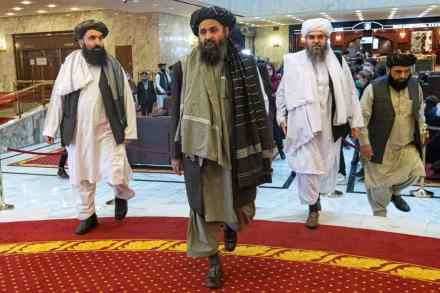
China is seeking a grand bargain from the Taliban: eliminate the groups Beijing says are stirring up trouble among its Muslim Uighurs in exchange for massive aid to rebuild Afghanistan. It sounds enticing for both sides as they sit down in Doha this week, but there are numerous questions about whether either can deliver, and a good chance that China will become the next imperial power sucked into the ‘graveyard of empires’. Mullah Abdul Ghani Baradar, the Taliban’s deputy prime minister, and Wang Li, China’s foreign minister, are reportedly meeting in the capital of Qatar just as the Taliban faces a growing number of attacks from Isis-K, a provincial affiliate of Islamic State. Baradar is insisting that the security situation is ‘under control’.

The Taliban learn just how hard governing Afghanistan is

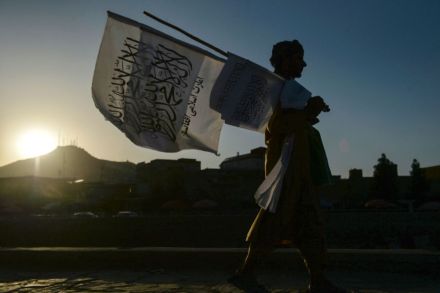
For the first time in two decades, and arguably for the first time since the late 1970s, there is a semblance of calm in Afghanistan’s countryside. The US troop withdrawal last August, ending Washington’s 20-year misadventure in the country, has ushered in a period when airstrikes, IEDs, and Taliban-orchestrated bombings are no longer daily facts of life. Afghans who haven’t seen their relatives for years are now able to travel the roads without worrying about getting menaced by Taliban gunmen or fleeced by corrupt Afghan army troops. At the same time, Afghanistan is at a perilous moment in its history.

taliban

We should never have been in Afghanistan

From our UK edition

Two important studies have been published this autumn on the apparent failure of our almost 20-year war in Afghanistan. In the Times Literary Supplement my friend Rory Stewart has been reviewing The Afghanistan Papers by Craig Whitlock; and last week I went along to the launch at the Frontline Club in Paddington of the BBC correspondent David Loyn’s The Long War, my copy of which has just arrived. Both look like brilliant accounts of what went wrong, both will surely prove useful guides to a lamentable episode in modern statecraft, but both — and Rory too in his own TLS assessment and recommendations — appear to me to be missing the point.

How Muslim are the Taliban?

From our UK edition

I first met Haji Mir, a tribal elder from Helmand, in Herat in western Afghanistan in 2002, not long after the fall of the Taliban. He had come to Herat to ensure the safety of Helmand under the new American-backed administration. At the end of the trip he protected us when we were stoned by a mob after filming a large outdoor event marking Eid. Mir was a decent local leader in a system that valued his skills. But when I tried to track him down ten years later, at the height of British military involvement in Helmand, I was told he had been targeted and killed by the Taliban.

Now I’m a backbencher, I’m free to speak my mind

From our UK edition

Politicians are supposed to have a survival instinct. Mine didn’t kick in last week, so I had no idea that my evidence session to a House of Lords committee on Wednesday would be my swan song. I was speaking about the work of the Ministry of Justice, where I had been lord chancellor for two years. The work, I said, is more than a series of desiccated processes. It is, and should always be, rooted in the rule of law, fairness and equality. With that off my chest, I rushed to Prime Minister’s Questions. In the middle of it, I received a text message saying that the Prime Minister wished to see me. By 2 p.m., my time in the cabinet was over and I was leaving government.

The foreign policy amateur

Since Joe Biden was elected in part as a salve for Donald Trump's perceived foreign policy blunders, it seems reasonable nine months in to go searching for the Biden Doctrine, to assess his initial foreign policy moves, to see what paths he has sketched out for the next three years. ...is that a tumbleweed? Well, OK, there was Afghanistan, Biden's most significant foreign policy action. Biden won election in November and took office in January. There was ample time for replanning and renegotiating anything that had been left behind by Trump, especially since Biden and his team had muddled in Afghanistan during the Obama era and knew well the mess they'd helped create. The rush for the last plane out was a fully expected unexpected event.

biden foreign policy

The Biden presidency is in free-fall

Eight months in and I am perilously close to employing one of the worst political clichés in existence — Joe Biden’s honeymoon is over. You’re not imagining things — the Biden presidency is in a state of free-fall. This is not a joke. It’s not an overreaction. It’s not about Biden’s opponents pouncing or seizing. Biden’s presidency has a very real chance of completely foundering within its first year. After a promising start where he inherited a vaccination process that was already in progress, albeit briefly, under Trump, his vaccine strategy has stalled to the point of him now demanding mandates on private businesses, a step he assured the electorate he would not take.

free-fall

Punch-up at the palace: why the Taliban is tearing itself apart

From our UK edition

The office of the Afghan president, the Arg, sits in more than 80 acres of parkland, quadruple the size of the White House estate, and more than twice the size of Buckingham Palace grounds. Since it was built in the late eighteenth century, most of its occupants have died violently in one of the elegant buildings, built inside a large square compound of thick stone walls as a copy of an ancient fortress. But there has rarely been a scene like the one earlier this month, following the visit to Kabul of the head of Pakistan’s intelligence service, the ISI, Lieutenant General Faiz Hameed. He had come to Kabul to impose Pakistan’s will on the shape of the new Taliban government.

Biden is losing Nato

From our UK edition

The forming of the Australia-UK-US (Aukus) military alliance in the Pacific shows how everything Trump can say, Biden can do. The problem is, Biden isn’t doing it very well. Biden’s administration, like Trump’s, is committed to building its Pacific alliances while sustaining Nato. Yet on Australia as in Afghanistan, the Biden team are doing exactly what they accused Trump of: unpicking the frayed bonds of Nato without a clear idea of what might replace it. The government has three tasks: to keep American workers at work, win contracts for American exports, and secure America’s interests overseas. Two cheers for Biden for getting the Trump memo on the first two points.

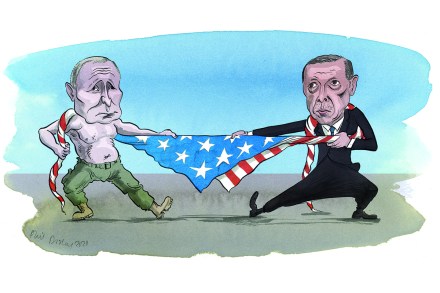
History returns for Putin and Erdogan

Washington’s allies are deploring the Biden administration’s mismanaged withdrawal from Afghanistan, and they’re worrying publicly about its implications for Nato. Russian leaders, resisting the urge to gloat, express well-founded concerns over the spread of jihadist terrorism northward into Central Asia. And China is moving in, cutting deals with the Taliban to mine lithium and other critical minerals. The reaction in Turkey has been more ambiguous, but also more interesting. Early in the evacuation, Turkey sent soldiers to Kabul to secure the airport. It is already clear that Turkey’s Islamist government is ready to recognize and work with the Taliban — while also loudly discouraging Afghan refugees from trying to enter Turkey.

turkey

Should we listen to Shamima Begum’s verdict on the hijab?

From our UK edition

What should one make of Shamima Begum's appearance on Good Morning Britain? The London schoolgirl left the UK in 2015 to join Isis in Syria, but it appears she's converted to common sense in recent times. Dressed in a sleeveless top and a baseball cap, Begum made a number of frank admissions, including how she 'felt very constricted in the hijab. I felt like I was not myself.' The cynic will suggest it is an act in an attempt to be allowed back to Britain. Perhaps. Or maybe we should give Begum the benefit of the doubt. She was young and naive at the time. Now she understands how an enforced dress code demeans women – a reality that woman in Afghanistan are now living through.

climate change

Afghanistan and climate change: the West’s twin failures

The West’s humiliation in Afghanistan has an older brother: climate change. As siblings, the two share characteristics, most obviously an inability to confront unwelcome facts. In Afghanistan, there was a large constituency led by the Pentagon invested in the mantra of proclaiming progress in the fight against the Taliban. Climate has its own industrial complex of NGOs, climate scientists, renewable energy lobbyists profiting from the energy transition, eager helpers in the media, and politicians posing as world saviors. Energy experts tell us renewable energy is cheaper than building new fossil fuel power stations. If they’re right, why did China build the equivalent of more than one large coal plant a week last year?

The great unraveling

The smart money says that Donald Trump will not run in 2024. The smarter money says that he might, but that he shouldn’t because he’s too old and too divisive. I have no accounts at either of those depositories, so am not going to participate in that panel discussion. Instead, I propose to make a few obvious points. If they’re obvious, why make them? Because the obvious is not always so obvious. René Descartes is widely detested by all the clever people, for whom ‘Cartesian’ is term of snobbish contempt. I think Descartes was a great genius but one who was wrong about a couple of important things. No, I do not mean what he says about ‘extended substance’, the ‘Cogito’ or any of his other epistemological and metaphysical flights.

biden
taliban

Will Biden deal with the Taliban?

When President Joe Biden tapped longtime aide Antony Blinken to be his secretary of state last November, Blinken landed his dream job. Here he was, a man widely respected in foreign policy circles, continuing the family business (his father and uncle were both ambassadors and his stepfather was an adviser to John F. Kennedy). What Blinken could have lived without, however, was the grandstanding, bravado and livid speeches from lawmakers responsible for overseeing his work. Unfortunately, fielding self-righteous questions is a part of the job description.

The myth of the good Afghan war

There’s a disgusting scene I can’t stop thinking about. It comes about midway through This Is What Winning Looks Like, a 2013 VICE documentary about America’s efforts in Afghanistan you can watch for free on YouTube. The film switches between the documentary footage itself and a sort of metafilm in which the filmmaker, Ben Anderson, discusses aspects of his work with Eddy Moretti of VICE, with Anderson’s footage from his time overseas frozen on a computer monitor behind them. The scene in question starts at 51:00 in the YouTube cut, was filmed around 2012, and involves a series of horrific murders. These were perpetrated not by the Taliban, but by America’s supposed allies: the country’s nascent police force.

afghanistan

It’s not cricket: should we ban Afghanistan from playing?

From our UK edition

The Taliban takeover in Kabul left the west flailing. But when it comes to cricket, the new ruling regime in Afghanistan is being shown little mercy.  Cricket Australia has announced that it will almost certainly cancel the historic Test match with Afghanistan, which was scheduled to start in November. The reason? The Taliban’s mooted ban on women’s cricket. Australia’s Test captain Tim Paine said it is 'hard to see' Afghanistan being a part of next month’s T20 World Cup, implying that the ICC should ban the country and that teams should pull out from facing them in the tournament.

Joe Biden cheapened 9/11

With the 20th anniversary of 9/11 having come and gone, many have turned to reflection. Some meditate on the solidarity and sense of national purpose that act of terror engendered; others view it as a dramatic opening to our miserable 21st century. What comes to my mind are the images of our hasty retreat from Afghanistan over the last month. As is often the case, my best thinking has already been articulated by the late Charles Krauthammer. In the introduction of his best-selling collection of essays Things That Matter, Krauthammer explains his evolution from psychiatrist to public intellectual.

9/11