Afghanistan

More diplomacy won’t stop the advance of the Taleban

From our UK edition

On 11 August, at Russia’s initiative, an ‘extended troika’ will meet in Doha, Qatar to take stock of the Taleban’s major offensive to take over Afghanistan. The United States, scheduled to withdraw its forces by the end of this month, has been invited to this ‘Moscow format’, as have China and Pakistan. As of yesterday, the violent Islamist group had taken control of six provincial capitals in Afghanistan – though not the most important cities in the country. The US negotiator at Doha, Zalmay Khalilzad has warned that ‘a Taleban government that comes to power through force in Afghanistan will not be recognised.’ But so far the militants have refused to engage in negotiations with the elected Afghan government.

What we can learn from our mistakes in Afghanistan

From our UK edition

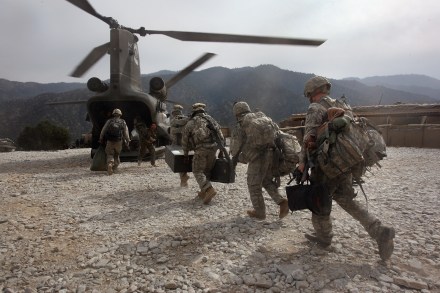
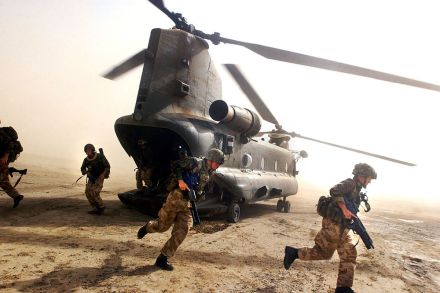
After two tours of Iraq as a soldier, I spent six months in Afghanistan in 2007 as part of Operation Herrick VI. My deployment came a year after the then Defence Secretary, John Reid, said we would be ‘perfectly happy to leave the country in three years’ time without firing one shot’. However, the very first night I arrived in Lashkar Gah, the capital of Helmand, troops were battling the Taleban across the province, with thousands of shots fired every day. Plans were being made about how we would evacuate our camp if it was overrun. Today, 14 years on, as the final US troops depart, left behind are more than 47,000 dead Afghan civilians, more than 3,500 dead soldiers from the coalition, and a country on the cusp of civil war.

What was the point of the war in Afghanistan?

From our UK edition

On 7 October 2001 President George W. Bush launched Operation Enduring Freedom – the invasion of Afghanistan. The operation sought to bring the architects of 9/11 to justice and reduce the threat of terrorism. Twenty years later, President Joe Biden has pledged to withdraw all troops from Afghanistan by 31 August, bringing to a close the United States’s longest-ever conflict – known colloquially as ‘the forever war’. But Biden, who supported the invasion, is pulling out at a time when the Taliban – the highly-conservative Islamic organisation that was harbouring al-Qaeda in 2001 – is sweeping through half the country, killing civilians and human-rights defenders and besieging three cities.

Letters: The clock is ticking in Afghanistan

From our UK edition

Out of Afghanistan Sir: Boyd Tonkin’s review of Anna Aslanyan’s Dancing on Ropes highlights the post-war abandonment of local Afghan and Iraqi interpreters by the US and UK (Books, 17 July). The UK’s response, up until last summer, deserved every bit of Tonkin’s strictures but the past year has seen a ‘strategic shift’. Ben Wallace and Priti Patel were clearly determined to change our approach and to give sanctuary to our former staff. More generous regulations were introduced in December and April but the imminent withdrawal of Nato forces now raises the fearful prospect of a Taleban takeover, or Taleban-induced paralysis of the Afghan government, before the necessary evacuation can take place.

How the US military got rich from Afghanistan

The departure of American troops from Afghanistan is being lamented (or hailed — see the Chinese press, passim) as a defeat. But this is a shortsighted attitude, at least from the point of view of the US military and the multitude of interested parties who feed at its trough. For them, the whole adventure has been a thumping success, as measured in the trillions of taxpayer dollars that have flowed through their budgets and profits over the two decades in which they successfully maintained the operation. The truth of this was forcefully brought home to me once by a friend of mine who, as a mid-level staffer, attended a conclave of senior generals discussing Donald Trump’s Afghan mini-surge back in 2018.

afghanistan military

Give peace a chance

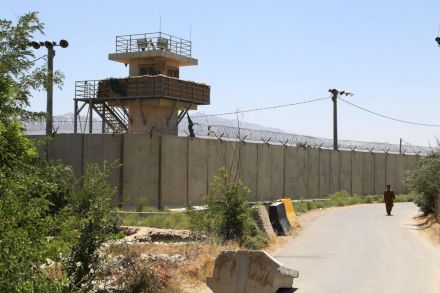
The American war in Afghanistan is over. In the predawn hours of July 2, US troops slunk away from Bagram Air Base, without even informing the local Afghan commander. It was a sorry end to a sad and futile war. For 20 years Bagram was the Gibraltar of American power in Afghanistan, the single largest Nato base in the country, housing 10,000 troops, thousands more support personnel and a Pizza Hut. Now Bagram, and the adjacent prison holding 5,000 Taliban fighters, are in the hands of the Afghan military, which soon showed its mettle by letting an army of looters plunder the base.

George Bush’s attack on Joe Biden’s Afghan strategy is hard to take

From our UK edition

The world doesn’t hear a lot from George W. Bush these days. The former president of the United States has spent his post-presidential life in a cozy, somewhat secluded existence on his Texas ranch in Crawford, about a two-hour drive south of Dallas. Other than issuing the occasional statement and urging Americans to get vaccinated, Bush largely spends his time painting or hanging out with his wife, former First Lady Laura Bush. Apparently, though, the nearly-complete US withdrawal from Afghanistan is too much for the ex-president to bear. Speaking to German television broadcaster Deutsche Welle, Bush all but excoriated president Joe Biden for pulling the troops out and ending the longest war in US history.

The Afghan withdrawal will only embolden the West’s enemies

From our UK edition

‘How many thousands more Americans, daughters and sons, were you willing to risk?’ Biden asked critics of the decision to withdraw forces from Afghanistan last week. He has the support of the American public – most of whom also wanted to see troops leave Afghanistan after 20 years of fighting and 2,400 fatalities. This risk aversion is one of the reasons America decided to withdraw its forces from Afghanistan. There’s a diminished appetite in the US for prolonged military involvement in the Middle East, especially large-scale deployments of ground troops that inadvertently cost lives.

afghan interpreters

We must help the Afghan interpreters

‘The United States has no obligation to evacuate one, or 100,001, South Vietnamese,’ Sen. Joe Biden of Delaware intoned on the Senate floor as South Vietnam neared collapse in 1975. Thankfully, the Ford administration ignored this shameful advice. One of the more regrettable statements of its decade, it was likely one of the positions former Obama defense secretary Robert Gates had in mind when he wrote that Biden ‘has been wrong on nearly every major foreign policy and national security issue over the past four decades’. When the United States left Vietnam in 1973, it took two years for Saigon to fall to the Communists.

The Soviet spectre haunting Afghanistan

From our UK edition

As US and British forces pull out of Afghanistan, further victims of the ‘grave of empires’, Russia is experiencing a mix of satisfaction, exasperation and trepidation. It has its own bitter memories of the country, after all. In 1979, as a friendly regime was falling back in the face of a mounting Islamic fundamentalist insurgency, Soviet forces rolled into Afghanistan. The idea was that by installing a new leader and mounting a brief show of force, the rebels would be intimidated back into line. Six months, the old men in the Kremlin told themselves, that is all it would take. And so began a vicious ten-year war that saw the deaths of 15,000 Soviets and hundreds of thousands of Afghans.

Leave, convert or perish: The fate of Afghanistan’s minorities

From our UK edition

President Biden’s decision to ‘end the war in Afghanistan’ means the complete withdrawal of 3,500 US troops by the 20th anniversary of 9/11. However, what may be domestically popular — particularly among Trump voters — will soon have consequences for the Afghans left unguarded by foreign troops. The Taleban and other jihadist militias are already making significant territorial gains while nuclear Pakistan will be strengthened by the vacuum left by the US military. But it is Afghanistan’s non-Muslims who will really suffer. Extinction is a word normally associated with dinosaurs — but it’s no exaggeration to say some minority religions (including my own) will now face that fate at the hands of Isis, Al-Qaeda, and a resurgent Taleban.

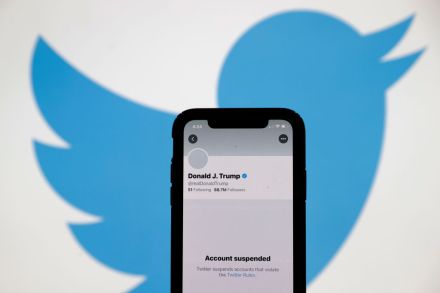
Why is Trump banned from Twitter when the Taliban isn’t?

As we approach the final withdrawal of all US and Nato forces from Afghanistan, it’s worth pointing out a shocking double-standard that has so far gone strangely unnoticed. How can it be that Twitter has banned a US president, who even in defeat garnered more than 74 million votes in 2020, yet still allows the Taliban to pump out propaganda on its platform? Let’s be clear. The Taliban is a hard-line Islamist group that extols jihad, opposes democracy and is engaged in a brutal war of attrition against a democratically elected government in Afghanistan. As Paul Wood noted in these pages on June 24, Twitter is the Taliban's preferred social media platform.

taliban

Can the US redeem itself in Afghanistan?

The objectives of the Authorized Use of Military Force approved by Congress in 2001 have long been accomplished. Once Osama bin Laden was killed in Operation Neptune Spear in 2011, the last element of the AUMF was met. Our mission in Afghanistan was complete. But we did not leave. Why? The arrogance of a Military Industrial Congressional Complex that saw an opportunity to turn Afghanistan into a Jeffersonian democracy, using American taxpayer money to fund the experiment, over a 20-year period. It failed. A dirty secret: most of the money spent to help Afghanistan and its people was spent in Washington DC to enrich individuals and corporations that did nothing to help develop Afghanistan — a sad truth that my late friend Jerry Doyle called ‘combat to commerce’.

afghanistan

We are all Donald Rumsfeld

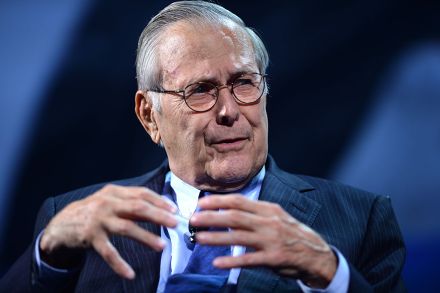
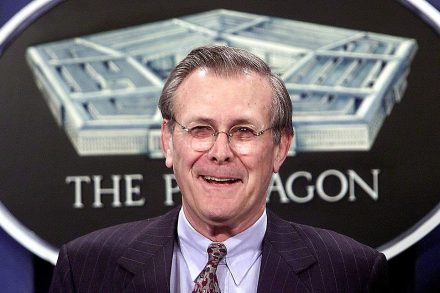
Donald Rumsfeld died this week — and it’s just so easy, isn’t it? It’s so convenient to dance on the grave of the man who helped bring about the disastrous Iraq war. For Rumsfeld, the old dictum, de mortuis nihil nisi bonum, seems to have been discarded almost from the start. The obituaries, mostly in left-leaning publications like the Atlantic and the Daily Beast, have been downright vicious. Rumsfeld was George W. Bush’s first defense secretary who, alongside Dick Cheney, pushed hard for deposing Saddam Hussein after 9/11. Because of this, he’s been labeled a war criminal. He’s been held responsible for hundreds of thousands of deaths, both in Iraq and in Afghanistan where he refused to accept a Taliban surrender.

donald rumsfeld

Lay off the President: it’s a holiday weekend, man!

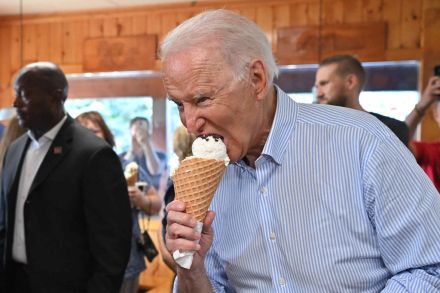
C’mon man! That was Joe Biden’s message to the country on the Friday before his holiday weekend. Joe Biden is just a dude. He’s the dude for this time and place. He just wants to get home, crack a cold one, spend some time with his cars, his dog (RIP Champ) and his grill. Why is this so hard to understand, America? Today the last of the US forces stationed at Bagram Air Base in Afghanistan were making their final departure, as the Biden administration began the handover to a fragile alliance. But who really needs to answer questions from the press on that kind of monumental foreign policy decision when there is a giant cooler of 16-cent hotdogs waiting in the yard in Delaware?

holiday weekend

Donald Rumsfeld succeeded at everything — so why did he fail in the end?

What kind of man was Donald Rumsfeld? A successful one, by almost every measure. Ivy League scholar-athlete, captain of Princeton’s football and wrestling teams. Successful candidate for office, easily reelected to Congress twice before he left to join the Richard Nixon administration. There he proved a success at navigating both the federal bureaucracy and the internal politics of the scandal-consumed administration. He survived Nixon’s resignation and soon became Gerald Ford’s chief of staff — and after that, the youngest man ever to serve as secretary of defense, taking charge of a newly-minted all-volunteer force whose morale and discipline were in shambles after Vietnam.

donald rumsfeld

Joe Biden’s Afghan Pride

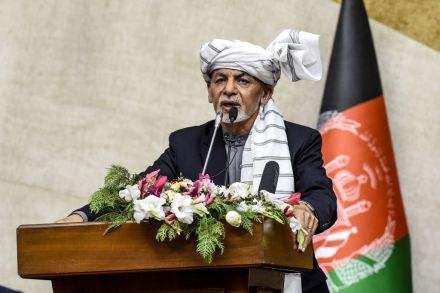
President Joe Biden will honor Pride Month this Friday — just before meeting with the leader of a country where the maximum penalty for sodomy is death. Biden 'will deliver remarks to commemorate LGBTQ+ Pride Month,' the White House announced this week. And later, 'the President will welcome Afghanistan president Ashraf Ghani and Afghanistan High Commission for National Reconciliation chair Abdullah Abdullah to the White House to highlight the enduring partnership between the United States and Afghanistan as the military drawdown continues’. Staffers will undoubtedly rush to box up the rainbow neck beads and Pride flags when Biden steps off stage to avoid an awkward bump in the hall when Ghani rolls up to the West Wing.

afghan pride

Triumph of the Taleban: the unfolding disaster in Afghanistan

From our UK edition

There’s an apocryphal story, told and retold by journalists many times over the course of America’s longest war. A Taleban prisoner is sitting, relaxed, across the table from an American interrogator: ‘You may have all the watches,’ the prisoner says, ‘but we have all the time.’ Now, the Taleban’s patience is finally paying off. President Joe Biden has promised that the last US soldier will be out of Afghanistan by the heavily freighted date of 11 September. In fact, all the troops may be back on American soil by the even more symbolic date of 4 July. Other Nato soldiers — including a small British training mission — are hastily lowering their flags and scuttling out. They leave in their wake an unfolding disaster.

Adios, AUMF

Saddam Hussein was executed at the gallows in 2006 — but the Authorization for the Use of Force used by the US military to topple his regime in Iraq is still alive and kicking, a legacy the Pentagon has been loath to bury along with that war. That legislation, passed in October ahead of the March 2003 invasion of Baghdad, authorized then-president George W. Bush to use the Armed Forces of the United States ‘as he determines to be necessary and appropriate’ in order to ‘defend the national security of the United States against the continuing threat posed by Iraq; and enforce all relevant United Nations Security Council Resolutions regarding Iraq’.

aumf

Afghanistan — the long defeat

In announcing his decision to withdraw all remaining US troops from Afghanistan, President Joe Biden declared that 'it’s time to end America’s longest war.' The wording of the President’s announcement left little room for backtracking so his decision appears to be definitive. It’s also necessary and long overdue, if not without risk. But it will not actually 'end' the war that began just weeks after the 9/11 terrorist attacks when US special operations forces and CIA paramilitary units entered Afghanistan. The conflict that Americans are accustomed to calling the Afghanistan War will continue, albeit without any overt US military involvement.

afghanistan iraq military