Afghanistan

What the withdrawal from Afghanistan says about the UK

From our UK edition

When the Secretary General of Nato announced last week that all alliance troops were to be withdrawn from Afghanistan, it was made to look like a nice, clean, enunciation of a joint decision. The end date was set for 11 September, 2021 – 20 years after the terrorist attacks on New York and Washington – and it was in line with the oft-repeated alliance maxim: we went in together; we will come out together. Except that, on closer examination, it was all rather messier. This was partly because the withdrawal from Afghanistan had actually been Trump’s policy, so here was Joe Biden, the anti-Trump, co-opting a policy from his predecessor (a policy Trump had been so keen on that he tried to accelerate the withdrawal after he lost the election).

A tale of two Afghanistan withdrawals

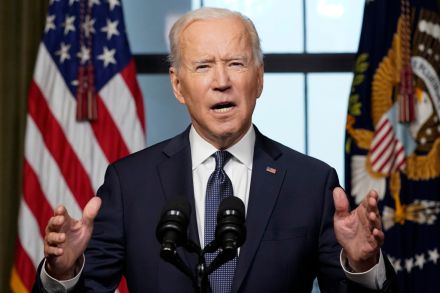
President Joe Biden announced this week that he was pulling all remaining American troops out of Afghanistan by September 11 — and the media rushed to frame the decision positively. They are technically correct — it makes zero sense to continue to put American lives at risk and spend taxpayer dollars on a decades-long 'war' with no foreseeable end nor desire to 'win'. But as you can guess, when former president Donald Trump announced he would withdraw troops from Afghanistan just last year, the media hysterically warned that he was emboldening the Taliban and making America less safe. 'Trump administration to cut troop levels in Afghanistan despite Pentagon warnings,' the Washington Post reported.

afghanistan rich

The dark Prince

‘No modern US war would be complete without the involvement of Blackwater founder Erik Prince,’ wrote journalist Jeremy Scahill in his seminal book Dirty Wars. That was back in 2013. Since its founding in 1997, Blackwater, Prince’s private military outfit, has been reincarnated several times under different names. But Prince has stayed the same. Iraq, Afghanistan, Libya, Somalia — Prince, a very 21st-century mercenary, has wreaked havoc in all these places. He comes, he spoils, he leaves a mess that is impossible to clear up. Take Libya.

prince

Has Britain learned from its failures in Afghanistan?

From our UK edition

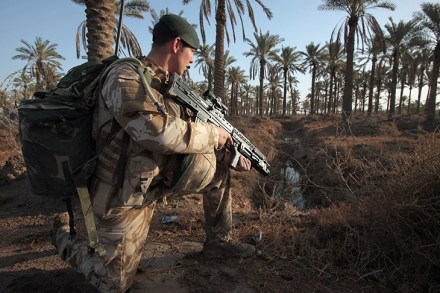
As the Americans prepare to leave Afghanistan, and in the UK we hold our own Defence Review, should we not be asking: have we really learned from the lessons of our failures there? I was in Afghanistan for a brief and intense time in 2007 when I was filming for Channel 4 Dispatches and CNN. We saw a country that had been brutalised for decades by the Russian occupation, the ensuing civil war and then American carpet bombing to ensure US troops met no resistance. A country which was becoming restive as the allies seemed increasingly unable to help them rebuild, or for that matter interested in doing so once they had been distracted by Iraq. It was a pivotable moment. In the first five years after the 2001 invasion, only a handful of British troops had died in Afghanistan.

The British army in the 21st century under scrutiny

From our UK edition

In his history of the Pacific War, Eagle Against the Sun, Ronald Spector described the state of the US army on the eve of the second world war: ‘The main enemies were boredom and debt. The answer to such problems was often liquor.’ When the officer corps was not boozing, it was sufficiently obsessed with athletics to derail training, for ‘success at football and boxing could be as important to a man’s career as success in manoeuvres’. Its weapons were decrepit and its ranks ragged. George Marshall, the future chief of staff, commanded a notional battalion that numbered fewer than 200 men. That portrait of antebellum decay came to mind when reading The Changing of the Guard, a scathing account of the British army in the years after 9/11.

Is the truth about burn pits too toxic?

In June 2020, while COVID raged and cities rioted, my older brother Pat was promoted to major in the Marine Corps and diagnosed with thyroid cancer. I went down to the base at Quantico, Virginia on a Monday to see Captain-now-Major Pat get ceremonially ‘pinned on’ with the golden oak leaf before a formation of Marines. On Wednesday, Pat ran eight consecutive six-minute miles and went in for minor surgery to remove a suspicious growth on his thyroid. I’d packed my bags for a week to help out with my two- and four-year-old nephews while my sister-in-law drove back and forth to Walter Reed.

burn pits

The wars go on

America’s longest war has just entered its 20th year. The US invaded Afghanistan in October 2001 to overthrow the Taliban and destroy al-Qaeda. Now, nearly a decade after the death of Osama bin Laden, the Afghan war continues. And everyone expects that if the Americans ever leave, the Taliban will return to power. Yet the Taliban who take charge will not be the same as those who harbored bin Laden. The median age in Afghanistan is around 19 years old: half the country’s population was born after the war began. The US is not fighting a limited reservoir of Taliban militants; it is fighting a cultural force that has renewed itself over a generation.

wars

Joe Biden’s endless wars

In just over a week, the Empire hopes to strike back. Joe Biden personifies the foreign policy of endless war that Democrats and neoconservatives pursued for 25 years, from the end of the Cold War until the election of Donald Trump in 2016. Biden voted for the biggest and most foolish intervention of that era, the Iraq War of 2003. He has not so much repudiated this act as tried to exculpate himself for it, claiming that in voting to authorize military force he didn’t think military force would be used. This is not credible on its face, and not the way anyone understood the vote at the time. It was as clear a vote for war as any vote has been since World War Two.

joe biden endless wars

BREAKING: Pompeo to sign historic peace agreement with Taliban

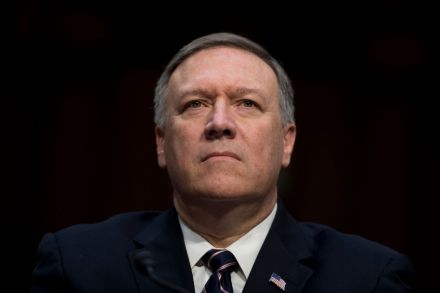
Secretary of state Mike Pompeo is soon traveling to sign a historic peace deal with the Taliban, President Donald Trump said in a statement Friday.Defense secretary Mark Esper will be signing a joint declaration affirming the administration’s partnership with the Afghan government in concert with the Taliban peace deal. The president described the ceremonies as 'a powerful path forward to end the war in Afghanistan and bring our troops home'.President Trump has been pushing for a peace deal with the Taliban in order to keep his campaign promise of ending the decades-long war in Afghanistan. Under the proposed deal, the US would gradually withdraw troops from Afghanistan in exchange for promises from the Taliban that they will not engage in or fund terror.

Secretary of State Mike Pompeo

Trump and the troops

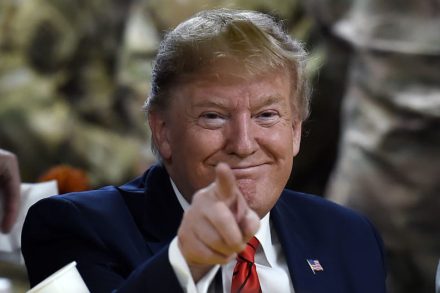
This article is in The Spectator’s January 2020 US edition. Subscribe here. Thanksgiving Day, the most American of holidays, found President Trump performing one of the nation’s few remaining civic rites: supporting the troops. When the President secretly flew to Afghanistan to feed and thank servicemen at Bagram Air Base, he got a cheering hangar full of airmen in return. Those turkey-stuffed troops were a captive audience, of course. Still, enthusiasm for Trump among American servicemen, both active-duty and veteran, seems to be one of the more genuine things about this surreal phase of American politics. In polls, support for the president among veterans far outpaces that among Americans at large.

troops

Neither ‘Mad Dog’ nor ‘Warrior Monk’, General Jim Mattis is a thoughtful strategist

From our UK edition

General Jim Mattis ended his remarkable career as a four-star US marine general, and finally as US secretary of defense. His book Call Sign Chaos is co-authored with Bing West, also an ex-marine and one-time assistant secretary of defense. It is partly an autobiography and partly a treatise on leadership. The autobiography relates his career from second lieutenant to general by way of three wars: the liberation of Kuwait in 1991 after Saddam Hussein’s invasion of that neighbouring country; the removal of the Taleban from Afghanistan in 2001 following 9/11; and the invasion of Iraq in 2003. Finally come his days — a total of 712 — as defense secretary, from January 2017 to December 2018. Throughout this account Mattis develops his philosophy of leadership.

In Afghanistan, Trump and the Taleban want the same thing – Americans out

From our UK edition

‘Incoming! Incoming! Incoming!’ As morning alarms go, this one leaves a lot to be desired. Normally I wake up to the long, trippy build-up of ‘Shine On You Crazy Diamond’, which I used to love in the searing heat of Mogadishu. But this is Kabul and the occasional grating siren is part and parcel of life in the Green Zone. It turns out to be a false alarm, but not before I have thrown myself to the floor in my duvet and buggered my back. Talking of bed linen, Al-Shabaab suicide bombers once attacked the Somali capital’s presidential compound where I lived. They missed the president but killed my best friend Mohamud, the prime minister’s chief of staff. Seven corpses of brainwashed young men were piled up outside my bedroom.

Voices of import

From our UK edition

By the age of eight Vaira Vike-Freiberga had learnt that life was both ‘very strange and very unfair’. Her baby sister had died from pneumonia the previous year because of the harsh conditions of life in a refugee camp in Germany (this was late 1944 and her family had fled their native Latvia for fear of the communists). Her mother soon had another child but when Vaira went to see her new brother in hospital she observed the young woman in the next-door bed turning her face to the wall against her wailing baby, product of a gang-rape by Russian soldiers. The nurses had given this unwanted baby girl the same name as Vaira’s much-mourned sister.

A matter of life and death | 11 July 2019

From our UK edition

One of the advantages that podcasts have over the scheduled array of programmes is the space that can be given to a subject, turning what would have been a one-off into a whole series sometimes three or four hours long. This can be offputting. Who has the time to give so much to one programme? Even more so now when there’s so much else on offer to distract and entertain. But in the case of the new podcast ‘dropped’ this week by the Beyond Today team those three hours (in six half-hour episodes) have been used to best effect, allowing the story to build, the voices to become clearer, the families and the horror of what they have experienced to become more real.

The McMaster disaster

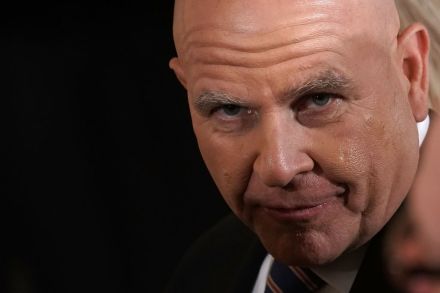
Former national security adviser Lieutenant-General H.R. McMaster says that the American public is misinformed by a false ‘defeatist narrative’ that has undermined the United States’ long war in Afghanistan.McMaster made this curious remark at an event held by the Foundation for Defense of Democracies, where he is chairman of the Center on Military and Political Power. Even more peculiar was McMaster’s suggestion that only certain kinds of people are in any position to render a verdict on America’s military interventions: ‘A young student stood up and said, “All I’ve known my whole life is war.” Now, he’s never been to war, but he’s been subjected, I think, to this narrative of war-weariness.

h.r mcmaster

Afghanistan’s got talent

From our UK edition

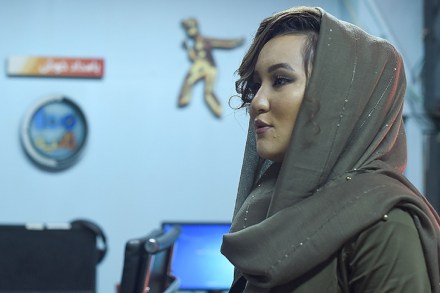
The cheering fans, the dramatic Hollywood-style drum rolls, the excitable host all sound just like The X Factor or The Voice. It’s hard to believe that beyond the lights and cameras there’s a huge security operation keeping the singers, TV staff and audience safe. But the Afghan version of the talent show is still under attack from the Taleban. In The Art of Now: Afghan Stars on Radio 4 (produced by Roger Short) we heard from Massood Sanjar, who set up the TV company that produces the programme, and Zahra Elham, this year’s winner, voted to the top spot by the audience, the first woman to win the show in its 14-year history.

Conservatives shouldn’t get too excited about Tulsi Gabbard

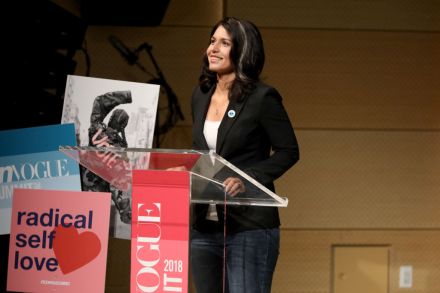
When Tulsi Gabbard announced that she would seek the Democratic nomination in Hawaii’s 2nd district in 2011 she was quickly endorsed by a laundry list of liberal institutions including the Sierra Club and Emily’s List. She was asked to speak at the 2012 Democratic Convention and by 2015 she was Vice Chairman of the Democratic National Committee. National Democrats were eager to boost this rising star, but now that she is running for president they are just as eager to snuff her out. So why are Democrats giving her the cold shoulder? For starters, during the last election, Gabbard was not down with Team Clinton or the corruption that follows them.

tulsi gabbard

Trump should use the State of the Union to end the Afghanistan war

Excited speculation is mounting in Washington tonight as rumors circulate that President Trump may use his State of the Union to announce a state of emergency to secure the funding Congress has denied his border wall with Mexico. But Trump has a historic, monumental opportunity to give the American people a more significant lasting legacy – not a wall, but a permanent end to America’s policy of forever-war. Afghanistan is now the longest war in US history, yet Sen. Mitch McConnell deemed it necessary to move against what he called a ‘precipitous withdrawal’ from Afghanistan and Syria this week. ‘How do you leave precipitously after 17 years?’ asked Sen. Rand Paul. ‘We are no longer fighting anyone who attacked us on 9/11.

afghanistan war

Iron in the soul

From our UK edition

‘I hate Indians. They are a beastly people with a beastly religion’, said Winston Churchill as prime minister in 1942, to his secretary of state for India, Leo Amery. Like John Nicholson, Churchill had soldiered on the subcontinent as a young man, and both men saw fighting on the North-West Frontier. Nicholson was a career officer in the East India Company army. ‘I dislike India and its inhabitants,’ he said as a young man, and never changed that opinion. Duty, obligation and a career kept both men in a country they loathed; the graves of more than two million Britons in India demonstrate that it was not simply a place to get rich in, but a place, too often, to die in at an early age.

Ten years on: My life after death

From our UK edition

Ten years ago today, I was pronounced dead on the front line in Afghanistan. I had collapsed with acute heatstroke in temperatures of 52°C during a military foot patrol. I am a reporter not a soldier, but for four minutes, as a medic attempted to restart my stopped heart, I was a category A. That’s Army speak for ‘goner’. Six days later, as much to my own surprise as to that of the incredible soldiers who saved my life, I walked out of Selly Oak Hospital in Birmingham on my father’s arm and into the cool of an English late summer’s evening. It was starting to rain. Cars were beeping on a nearby dual carriageway. The smell of cut grass mingled with that of an overflowing bin on which a seagull was solemnly picking at a kebab. I thought it was wonderful.