Actors

The day James Blunt stripped off in front of me

The beautiful British actress Samantha Eggar has died in LA. I hope that will be the last in a spate of deaths among friends and celebrities in the past three months. First it was Terence Stamp, the handsome actor who starred with Samantha in The Collector, which made them both into stars. Then the legendary Robert Redford, whose many fabulous performances in exceptional movies make today’s film output look positively anaemic. The Way We Were, Butch Cassidy and the Sundance Kid, The Sting and Indecent Proposal are just a few of the brilliantly entertaining films he starred in. I met him only once, on a flight from New York to LA. He was charming, standing up from his first-class seat to exchange pleasantries.

Why does Jared Leto still have a career?

From our US edition

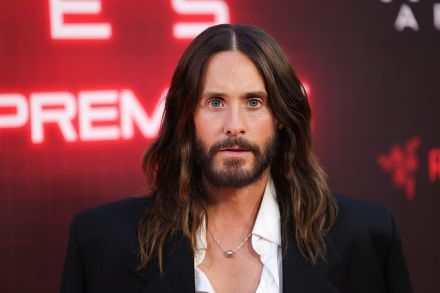
This weekend, Tron: Ares releases across US cinemas, and is expected to make a decent, rather than record-setting, amount of money in its opening weekend. It is a curious film franchise in that neither of the two films that precede it are especially beloved, but both have iconic soundtracks composed, respectively, by electronic music pioneer Wendy Carlos and French electro duo Daft Punk. (The honors this time around fall to Trent Reznor and Atticus Ross, aka Nine Inch Nails.) Yet whatever the strengths and weaknesses of Tron: Ares – and the early reviews have not been kind – there is one aspect that can only make audiences groan in anticipation, and that is the casting of its star, Jared Leto.

The greatness of Bob Odenkirk

From our US edition

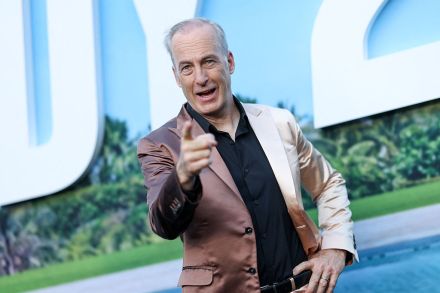
If viewers of Breaking Bad had taken bets during the show’s original run on which of the cast was likely to become a breakout action-film star a decade after the series finished airing, Bob Odenkirk would likely have been near the bottom of that list. The young actor Aaron Paul was perhaps the most obvious prediction, but Jesse Plemons, Dean Norris – even a grizzled and pumped Bryan Cranston – were all more predictable choices to do an alpha-male Liam Neeson-meets-Keanu Reeves act than the foppish comic relief Jimmy McGill, aka criminal lawyer (in both senses) Saul Goodman.

Bob Odenkirk (Getty)

Why disaffected actors often make excellent playwrights

Actors are easily bored on long runs. Phoebe Waller-Bridge once revealed that she staged distractions in the wings to amuse her colleagues. On the last night of Hay Fever, egged on by another actor, she bent over ‘and showed [her] arsehole’ to the on-stage actors. Nabokov’s plays are seldom performed. But he was alive to middling, mediocre dramatic clichés, fashions long-forgotten, but invaluably preserved in his 1941 lecture ‘The Tragedy of Tragedy’: ‘The next trick, to take the most obvious ones, is the promise of somebody’s arrival. So-and-so is expected. We know that so-and-so will unavoidably come…’ This is the lost convention, the stand-by that Beckett was frustrating in Waiting for Godot – with its tedious announcements and its adamantine disappointment.

Val Kilmer should be more appreciated in death than he was in life

From our US edition

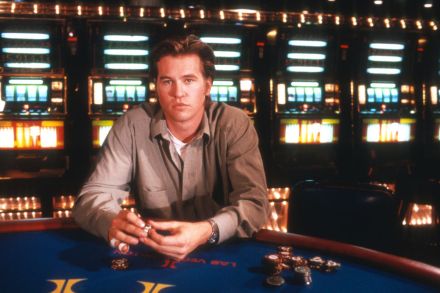
The late Val Kilmer was difficult. That word is a kiss of death in Hollywood, because as soon as it’s murmured that you are hard to work with, your career declines inexorably. Kilmer had directors lining up to say how impossible he was. Joel Schumacher, who made Batman Forever with him, barely stopped kvetching about the actor, calling him “overpaid, overprivileged and psychotic.” Shortly after the film’s release, Schumacher said “He was badly behaved, he was rude and inappropriate. I was forced to tell him that this would not be tolerated for one more second. Then we had two weeks where he did not speak to me, but it was bliss.

Kilmer

Michael Richards’s memoir is heavier on introspection than laughs

From our US edition

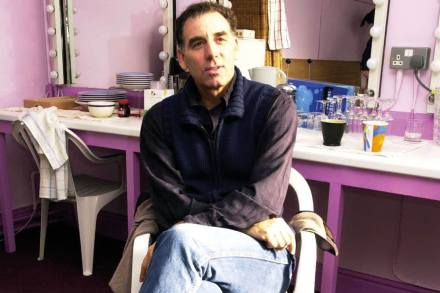
An unusual disclaimer greets the reader on the title page of this memoir of an actor chiefly known for starring as the lovable goofball Cosmo Kramer on the hit TV sitcom Seinfeld. “Neither the US Army nor any other component of the Department of Defense has approved, endorsed, or authorized this book,” it notes. But in the event the Pentagon probably needn’t have worried. Drafted into the army in 1970, the actor in question, Michael Richards, seems to have avoided any Sergeant Bilko-like shenanigans and instead separated from the service with a heightened appreciation for the punctuality, discipline and meticulous preparation that characterized his later career.

Richards

Freddy Gray, Mary Wakefield, Gareth Roberts and Rachel Johnson

28 min listen

This week (01.13) Freddy Gray, on why Ron De Santis is no longer ‘de future’ in the race for the Presidency, (09.50) Mary Wakefield recounts the train journey from hell,(16.10) we hear from Gareth Roberts about the screenwriters and actors striking over AI potentially taking their jobs and (22.24) Rachel Johnson shares her diary of SAS adventures and mishaps in New Zealand.

The best theatre podcasts

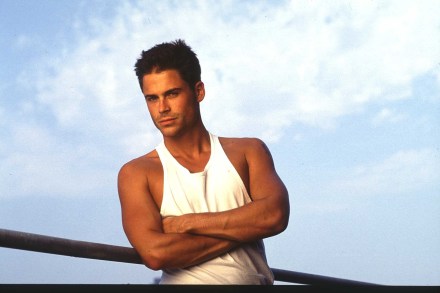
All the world’s on stage again so where to go to for insight into what to see and why? Podcasts, of course. Lowe’s ‘luck’ is that he happens to be friends, neighbours, or have starred, with everyone he interviews Let’s start with Literally! With Rob Lowe. An hour-long conversation between the most swoonable actor in the world who we’ve all forgotten, and everyone he knows and likes, from Alec Baldwin and Oprah Winfrey to St Elmo’s Fire co-star Demi Moore. It’s a wonderful and eye-opening listen. Lowe combines the enthusiasm and curiosity of the best interviewers with a knowledge and experience that makes conversation flow until the cup spilleth over.

The hypocrisy of actors

I’ve been keeping a journal for nearly 60 years. There are piles of the damn things in archives and covered with shoeboxes on high closet shelves. I’ve never looked back at one word in them. Being a vain sinner, I’ve entertained the fantasy that others would but, as it seems I’m not going to be remembered as a national treasure, I must conclude the journals have served their purpose. This was to get me to write things down. The physical act of transcription forced me to place half-formed thoughts upon the paper, making them concrete; a delusion, or obsession became a fact, and, as such, could be addressed as independent of my mental processes — that is, as other than the vapourings of a madman. Nancy Mitford loved diaries.

Why I’m glad to see the back of Call My Agent!

For the past few weeks I have been binge-watching the Netflix series Call My Agent! (or Dix pour cent, as it is more satisfyingly known in France). Though it’s not quite as exquisite, multilayered and beguiling as my all-time favourite French drama Le Bureau, it has a similar appeal: strong, well-drawn characters in a distinctive setting in another country (France, obvs) where they do things differently because everyone is just so damned French. This time it’s not about foreign intelligence services but a movie talent agency which, though perpetually on its uppers (for the purposes of that TV concept known as ‘jeopardy’, I suppose), nevertheless seems to have on its books all the most bankable stars in France. They crop up, playing themselves, in cameo roles.

No mumbling allowed

In the audience-free world of TV, where ‘acting’ and visuals have become of far greater importance than the actual words, it is no surprise that mumbling has become the fashion. Any ancient Greek actor engaging in such self-indulgent behaviour would quickly learn all about it. Tragedies and comedies were performed by masked actors, required both to speak and sing, and for the ‘choral’ parts to dance and sing to music, with a script that could veer linguistically from sublime limpidity to the most intense complexity. As a result, the highest premium was placed on voice training and the correctness, clarity and euphony of the actor’s delivery.

Would I still hate actors’ rants if they all agreed with me?

I feel a bit sorry for Piers Morgan. On Tuesday, Ewan McGregor was due to appear on the sofa with Piers on ITV’s Good Morning to talk about the Trainspotting sequel, but he failed to turn up. Later, the actor explained on Twitter that it was due to the journalist’s remarks about the women’s marches that took place last weekend, in which he described some of the participants as ‘rabid feminists’ and suggested he should organise a men’s march in response. I had a similar experience about five years ago when the actor Matthew Macfadyen pulled out of an interview he was due to do with me.

Real legs and fake people

The Soho Hotel is an actors’ hotel. They come for press junkets and interviews that reveal nothing because there is nothing to reveal; in fact, I have long suspected that this consuming nothingness, screamed across newsprint with all the conviction of denial, is the point of them; anything to evade reality and bring forth the realm of stupid. So it doesn’t matter that the Soho Hotel doesn’t know what it is; that is a benefit, quite possibly a design. Actors don’t know who they are either, and this is why they feel comfortable in the Soho Hotel. It is another mirror. It is part of the Firmdale Group, which has upholstered a series of London hotels in large, gaudy prints. They favour huge blooms, small ones being of no interest to cocaine users.

Corn again

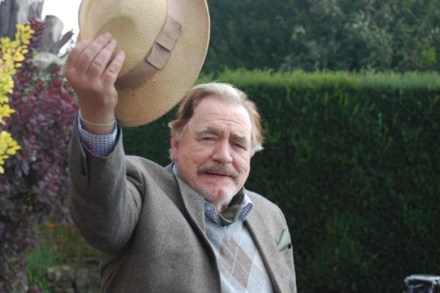
The Carer is a Hungarian-British co-production about a cantankerous old thesp (Brian Cox) and the young Hungarian woman (Coco König) who is dispatched to look after him, much against his wishes, and whom he’ll eventually throw out on her ear. I’m joshing you. She wins him over, naturally, and mutual respect develops, naturally, and a friendship blossoms, naturally, although I wish he’d thrown her out on her ear as that way this wouldn’t have felt like something we’ve seen a hundred times before. There are affecting, powerful films to be made about old age, loss, mortality and dependence, but this, alas, has all the emotional grit of a Driving Miss Daisy.

Good cop, bad cop | 23 March 2016

Which is better, British TV drama or American? A couple of years ago, merely asking the question would have had the hipsters chortling into their obscure US box sets — and even now a strange cultural cringe seems to persist. Nonetheless, I’d suggest, British television drama these days really is in the midst of an era that will have commentators in 20 years’ time routinely (if a bit unimaginatively) reaching for the adjective ‘golden’. Already in 2016 we’ve had War and Peace, Murder, The Night Manager and Happy Valley — and that’s before the hugely welcome return of Line of Duty (BBC2), Jed Mercurio’s riveting thriller about a police anti-corruption unit.

Are theatre audiences getting out of hand?

Laurence Fox has this week joined an increasing band of actors hitting back at misbehaving audience members who seem to forget that they are in public rather than their own living room. He ramped up the drama by launching a foul-mouthed attack on a heckler before storming offstage during a live performance at a London theatre. During the play, The Patriotic Traitor at the Park Theatre, he was heard to say: 'I won’t bother telling you the story because this cunt in the front row has ruined it for everybody.' The audience member had been muttering and heckling during the play and apparently became so loud that, for Fox, it was impossible to deal with.

Is this a golden age of protest?

Are we living in a golden age of protest? A bunch of aggrieved citizens only has to raise a murmur of protest, whether it’s about racism, sexism, homophobia, transphobia or Islamophobia, and the institution they’re targeting instantly capitulates. A case in point is the Academy of Motion Picture Arts and Sciences. No sooner had a group of prominent African-American actors and directors complained about the lack of black Oscar nominees this year — ‘whitewash!’ — than the president of the Academy announced she would be taking ‘dramatic steps’ to address the problem. The Academy will enlarge its membership to include hundreds of entertainment industry figures from diverse backgrounds.

The Oscars have a disgracefully racist record

[audioplayer src="http://rss.acast.com/viewfrom22/donaldtrumpsrise-racismattheoscarsandcameronscentre-rightsecret/media.mp3" title="Rod Liddle and Tim Robey discuss whether the Oscars are racist" startat=1039] Listen [/audioplayer]In 2017 it will be exactly 50 years since a dapper Sidney Poitier announced to Rod Steiger, in the excellent film In The Heat of the Night: ‘They call me Mr Tibbs!’ Rod Steiger, playing a somewhat right-of-centre sheriff of a small town in Mississippi had hitherto been disposed to refer to Poitier — a senior policeman on his way home to Philadelphia — as ‘boy’, if you recall. I say the film was excellent, but the plotting was flawed, convoluted and unconvincing.

Sex acts

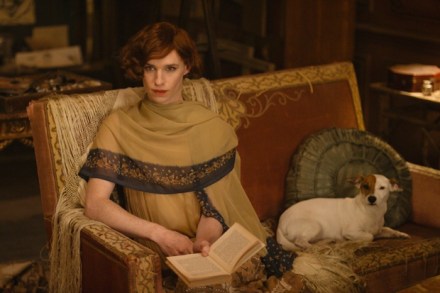
Poor Eddie Redmayne. Just because he looks quite like a girl, he finds himself a spokesperson for the burgeoning trans movement. Recently, he was forced to explain to those of us watching BBC News that ‘the notion of gender being binary’ is now considered ‘antiquated’. People are very excited about being trans at the moment. Countless TV shows and films depict it, Mark Zuckerberg has just called his daughter Max, and a man called Hilary has just talked us into another war. Being trans is clearly catching: hermaphrodite whelks on the undersides of fishing boats are growing penises, and vast swaths of young people, unable to buy a home or get a job, now realise they are trapped in the wrong body. Well, great.

Why should we listen to Benedict Cumberbatch on Syrian refugees?

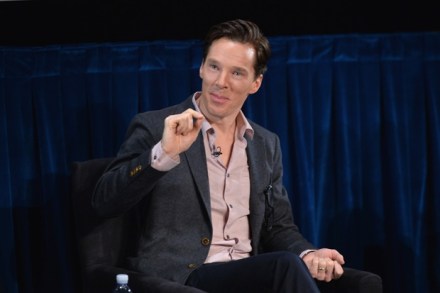
Because I just don’t know what to think about the Syrian refugee crisis — not even after Simon Schama’s powerfully cogent argument on Question Time the other week, where he explained that if you don’t want to house them all in your guest bedroom you’re basically a Nazi — I thought I might pay the scalps a couple of hundred quid or so to see Benedict Cumberbatch as Hamlet at the Barbican. Apparently the really exciting bit isn’t anything he does as the Dane but rather Shakespeare’s rarely performed postscript where Hamlet comes back to life in the terrifying form of a preening, hectoring Old Harrovian luvvie to berate the groundlings for their uncaringness. ‘A pox on the politicians!