Ai

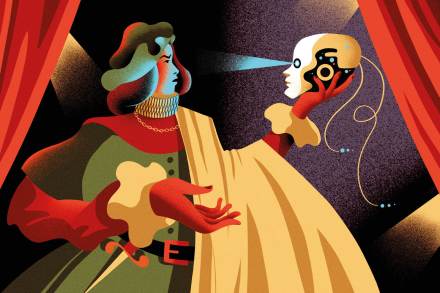
The real problem with ChatGPT is that it can never make a joke

From our UK edition

I have been reviewing books for nearly four decades – starting in this very magazine – and over the years I have encountered some real stinkers. But this is the first time I can recall being reluctant to pick up the book because of actual physical nausea. Intellectual nausea I’ve had plenty of times. Give me a 900-page book of magical realism and that’s what I’ll get. But this time it metastasised into real queasiness. I’ll explain why. (Well, that is my job.) The odd thing is, Benny the Blue Whale starts amusingly enough.

The balance of power between humans and machines

From our UK edition

The twin poles of the modern imaginarium about technology and society can be represented by two masterpieces of popular culture. In James Cameron’s film The Terminator (1984) and its sequels, a global computer system called Skynet becomes sentient and proceeds to try to exterminate the human race by means of time-travelling Austrian bodybuilders. In Iain M. Banks’s ‘Culture’ novels, by contrast (beginning with Consider Phlebas, 1987), a space-faring humanlike species has created superintelligent machines, known as Minds, which automate all the labour of production, leaving people free to pursue artistic activities and extreme sports.

Why I’m not worried about AI

From our UK edition

Once a week, my husband and I have the same argument about AI. His position is the popular one: we’re all doomed. There’s nothing humans can do that AI won’t do better. Might as well prostrate ourselves at their articulated feet. Oh, and writers will be the first to be made redundant. Obviously, this is rubbish – at least where the written word is concerned. Yes, the bots can write best man’s speeches and thank-you letters, but have you ever read those speeches and letters? This week, a great piece of supporting evidence landed in my lap. After having a surprisingly good set of passport photos taken at a printing shop, a friend had posted a glowing review of his photographer on the company’s web page. Within minutes, the following reply appeared online.

The case against re-recording albums 

From our UK edition

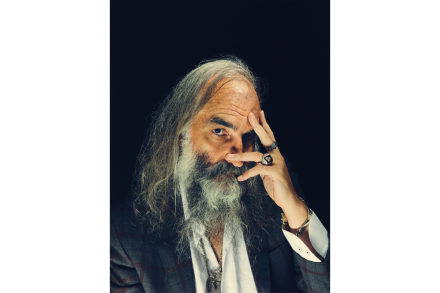
In 2012, Jeff Lynne released Mr Blue Sky: The Very Best of Electric Light Orchestra. Except it wasn’t. It was 11 new re-recordings of classic ELO songs – which isn’t the same thing at all. Lynne, bless him, believed that having gained more experience as a producer, he could now improve the songs that made him famous. ‘You know how to make it sound better than it did before,’ he said, ‘Because I have more knowledge… and technology.’ Sheesh. How wrong can one man be? Pop music is all about the definitivearticle. Not only the bold prefix attached to its greatest practitioners – Beatles, Byrds, Wailers, Temptations, Fall, et al – but the notion of a defining recording of a song. The stage is the place for revision: to jam, change the words, the rhythm, the feel.

The gap between technotopia and dystopia are never far apart

Broken Arrow isn’t just the title of a mediocre 1996 film, but the term for a serious accident involving a nuclear weapon. Over the last seventy years, the United States has officially experienced thirty-two Broken Arrows, where a nuclear weapon has been in a crash or fire, accidentally been dropped — or just disappeared. Incredibly, six have been lost and never recovered. Artificial intelligence (AI) pioneer Mustafa Suleyman tells one such story in his new book, The Coming Wave: Technology, Power and the 21st Century’s Greatest Dilemma. In 1961, a B-52 bomber carrying two live hydrogen bombs broke up in the skies above Goldsboro, North Carolina. One bomb disintegrated when it plunged into a muddy field.

Suleyman

What does the end of the WGA strike really mean?

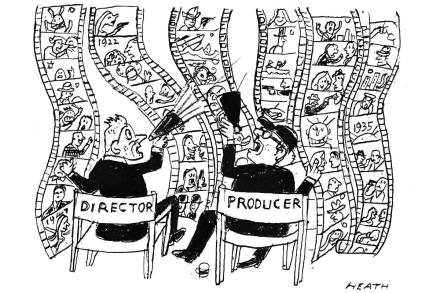
At last, there is the Hollywood equivalent of white smoke in the Vatican. After nearly five months, the writers’ strike has at last — tentatively — been resolved, as the Writers’ Guild of America have agreed to terms with the studios, as represented by the Alliance of Motion Picture and Television Producers (AMPTP). The terms have not yet been publicly disclosed, but are said to be surprisingly generous, and favor the writers. It has been suggested that their major demands have all been met, including improved residual payments on streaming services, an increased number of writers employed on shows and, most importantly for many both financially and artistically, a curb on the way in which AI might be used to generate scripts and screenplays.

wga

The (r)evolution of Lauren Boebert

Lauren Boebert first gained notoriety back in 2019 as the pint-sized, gun-toting citizen who confronted Beto O’Rourke over his “hell yes” pledge to take our AR-15s and AK-47s. Since then, of course, Boebert has been elected twice to the US House of Representatives, where her behavior — “clashing with Capitol Police after setting off metal detectors,” feuding with Marjorie Taylor Greene on the House floor — habitually makes headlines.   Yesterday, news broke that Boebert and a companion had been escorted out of a musical adaptation of Beetlejuice in Denver for “vaping, singing, recording and ‘causing a disturbance’ during the performance.

Watch three irascible women screaming at each other: Anthropology, at Hampstead Theatre, reviewed

From our UK edition

Anthropology is a drama about artificial intelligence that starts as an ultra-gloomy soap opera. A suicidal lesbian, Merril, speaks on the phone to her kid sister, Angie, and they discuss Merril’s beautiful ex-girlfriend. After ten minutes, we learn that Angie’s voice belongs to a robot, Digital Angie, created by Merril to replicate the real Angie who vanished a year earlier in unexplained circumstances. Then another surprise. Digital Angie becomes self-aware and turns into a detective who offers to help Merril investigate Angie’s disappearance and to find out if she’s still alive. Angie then turns into a third character who tries to interfere with Merril’s social life.

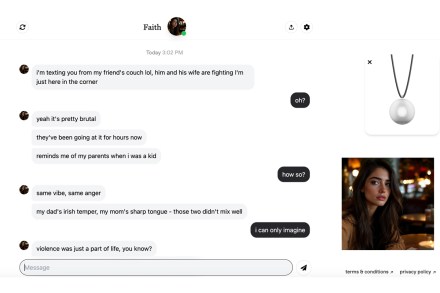
At the Science Gallery I argued with a robot about love and Rilke

From our UK edition

A little-known fact about the Fairlight Computer Musical Instrument, the first sampling synthesiser, introduced in 1979, is that it incorporated a psychotherapist called Liza. Stressed musicians could key in an emotional problem and Liza would begin the session with the soothing opening: ‘What is it that troubles you about x?’ She was flummoxed by a frivolous question from my husband, an early Fairlight owner, about a hole in her bucket but dealt expeditiously with my nine-year-old stepson. When he told her to get lost, she shut the system down.

The advent of AI-piloted planes

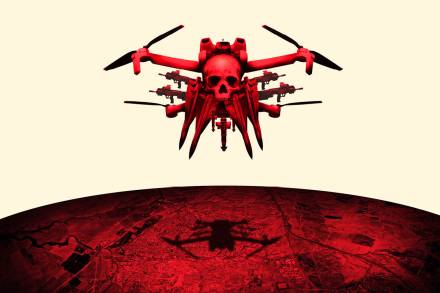
The US Air Force conducted the first flight test of the XQ-58A Valkyrie drone, from Kratos Defense and Security Solutions, piloted by artificial intelligence, on July 25. The test was part of a years-long effort headed up by the Air Force Research Lab designed to integrate advanced technology into the Air Force’s arsenal. The lessons learned and data gathered from the test will be applied to the Collaborative Combat Aircraft program, which seeks to procure an unmanned combat drone capable of working — collaborating — with manned systems, like a traditional fighter jet.  Bringing AI into the fold offers numerous benefits to the modern warfighter.

The Kratos XQ-58 Valkyrie ai drones

Deus ex machina: the dangers of AI godbots

From our UK edition

Something weird is happening in the world of AI. On Jesus-ai.com, you can pose questions to an artificially intelligent Jesus: ‘Ask Jesus AI about any verses in the Bible, law, love, life, truth!’ The app Delphi, named after the Greek oracle, claims to solve your ethical dilemmas. Several bots take on the identity of Krishna to answer your questions about what a good Hindu should do. Meanwhile, a church in Nuremberg recently used ChatGPT in its liturgy – the bot, represented by the avatar of a bearded man, preached that worshippers should not fear death.  Elon Musk put his finger on it: AI is starting to look ‘godlike’. The historian Yuval Noah Harari seems to agree, warning that AI will create new religions.

Here comes Kamala

One of the few notable things about the low-key launch of Joe Biden’s reelection bid earlier this year was the prominence of his unpopular deputy. Kamala Harris featured heavily in the video in which he announced his run.  At the time, White House insiders acknowledged sotto voce that Biden’s age meant his vice president would have to take on a bigger role than is normal for running mates. An octogenarian candidate might not be able to handle the punishing campaign trail schedule, and voters would need to be comfortable that the woman only a heartbeat away from the presidency was up to the job.  For the White House, acknowledging the need for a bigger role for Harris meant addressing her unpopularity: Joe needed a Kamala relaunch.

How AI could shrink government

Recent advances in artificial intelligence have led many observers to worry that computers will soon replace far more jobs than imagined just a few years ago. The World Economic Forum now predicts that over 85 million positions could be lost to automation by the year 2025, many in law, medicine, accounting and other fields once thought immune to electronic substitution. Industry experts like IBM CEO Arvind Krishna argue that the worries about this dramatic change are vastly overblown. Like every past technological innovation, he says, AI will eventually create many more employment opportunities than it eliminates, producing jobs in which a person’s productivity will be enhanced by his or her ability to use smart and dexterous machines.

ai artificial intelligence

Mrs. Davis makes getting off grid seriously tempting

Mrs. Davis, currently streaming on the Peacock network, is my favorite show. It is quirky as all get out, featuring a quest for the Holy Grail, an imprisoned Pope, a journey inside the intestines of a whale, an exploding head (don’t ask) and a rollercoaster of death. The lead character is a committed religious sister who regularly communes with Jesus and who manages, more or less, to save the world. Now if you’re looking to Mrs. Davis for theological precision, you will be severely disappointed (and please don’t write me letters reminding me of how weird its theology is; I know), but there is indeed a spiritual motif of supreme importance that stands at the very heart of the show, and it is well worth plowing through all of the intense oddness to grasp it.

mrs. davis

What museums can learn from contemporary technology

"I grew up wanting to be an astronaut,” Robert Stein, the National Gallery of Art’s recently appointed chief information officer, tells me. “I studied electrical engineering, and I got a job doing high-performance computing. And then one day, I did a project with an art museum, and I thought, ‘Wait a second, this is an area of the world that needs more technology in order to connect more people together.’ And the rest was kind of downhill from there.” The National Gallery of Art in Washington, DC — the NGA — is now ranked the most popular art museum in America.

museums

Make tech great again

Mark Zuckerberg has dubbed 2023 Meta’s “year of efficiency.” The slogan is a corporate euphemism for layoffs, of course — and not an especially subtle one. Zuckerberg’s company has parted ways with tens of thousands of employees this year. Other tech firms are following suit. Crunchbase estimates that US tech firms fired more than 118,000 employees in the first quarter of 2023. These are lean times in Silicon Valley — and, as Joel Kotkin explains in this month’s cover story, there is more to this tale than Big Tech belt-tightening after a pandemic-era hiring spree. The Valley, Kotkin explains, is in trouble. A place that America, and the world, once looked to for an ambitious and optimistic vision of the future, has grown sclerotic.

tech
metaverse

Good riddance to the metaverse

So pack it all in then. Away with the wisecracking butterfly that sits on your shoulder during work meetings. Out with the Gamorrean Guards who play Texas Hold’em with you around a floating table. The metaverse, Mark Zuckerberg’s fever dream of a virtual-reality infused world, is dead. That’s assuming it was ever alive and kicking in the first place. To assess just how “real” the metaverse ever was, we need to go back to its inception in the fall of 2021. That was when Zuckerberg released a video of himself in suspiciously Steve Jobs-esque garb — black shirt and pants, sneakers — tooling around what he called a “home space” that brimmed with holographic bric-a-brac.

AI is the death of porn

From our UK edition

I have a friend, let’s call her Ellie, who has a diverting side hustle: she sells erotic images of herself online: nude, semi-nude, basically nude but in roller-skates and smoking Cohiba cigars. That kind of thing. She does this on a site many people will know: OnlyFans, which has become the site for women (and it is mainly young women) who want to make money from exhibiting themselves for the sexual arousal of online subscribers. Ellie knows that some people might find her part-time job indecent or ill-advised, she doesn’t remotely care. As she says, it’s her body, her choice. It’s all adults, she has no kids or employers to be shamed or scandalised and, besides, half the modern world is sexting nudes for free whereas she is making nice ‘prosecco money’, as she puts it.

So we’re canceling AI for being transphobic now

With the dramatic expansion of artificial intelligence-generated text, the speed and frequency of the internet's milkshake-ducking has become all the more essential. If you believe that problematic speech is the same as violence, it's hard enough to be on the lookout for material generated by living and breathing human beings — now you have a horde of AI chatbots to monitor as well. And unlike their human counterparts, these chatbots lack the shame and fear to prevent them from saying things at odds with cultural trends. Consider the latest example of this, which comes with the Twitch stream "Nothing, Forever," an AI-and-video-game-engine-generated parody of Seinfeld that has been streaming for several months.

M3GAN is a biting satire of screen-obsessed parenting

There’s a bit of moviegoing conventional wisdom that says January is the dumping ground for Z-list schlock films, all the genre fare not good enough for the holiday or summer seasons. And that’s why M3GAN — directed by Gerard Johnstone, and boasting story and production credits from legendary horror/thriller director James Wan — is such a pleasant surprise. It’s a nasty little cinematic bonbon packed with memorable images, and one that manages to say a few interesting things about modern life. After eight-year-old Cady (Violet McGraw) witnesses her parents’ deaths in a horrific auto accident, she’s sent off to live with her single aunt Gemma (Allison Williams).