Ai

The rollercoaster ride of the world’s most reckless investor

From our UK edition

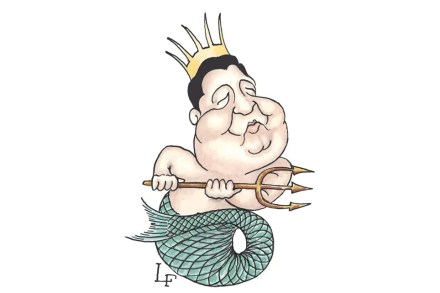
For a few days in February 2000, Masayoshi Son was the richest person in the world. A risk-taker and showman, universally known as Masa, he had long been disdainful of Japan’s staid ‘salaryman’ business culture and was riding the wave of dot-com mania. His company SoftBank, founded in 1981, had bet big on the growth of online shopping. The bullish mood didn’t last, and Masa slunk away from the limelight – but only for a while. A techno-optimist, the now 67-year-old has repeatedly reinvented himself, urging doubters to see beyond the immediate: ‘You’re limiting your field of vision to 30 years... Start bold and think 300 years ahead.

Beware the ‘sourdough effect’

From our UK edition

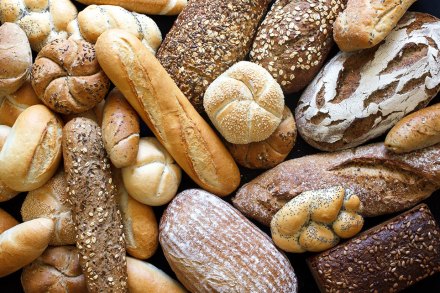
As the joke goes, there are two ways to become a top judge. You can study law at university, then enter one of the Inns of Court as a trainee barrister, before embarking on a period of pupillage. If all goes well, you may be called to the bar. Play your cards right and you might take silk, and then as you reach your fifties, with a following wind, you may be invited to become a judge. Ten years later, with a few widely admired judgments under your belt, you may reasonably claim to be a ‘top judge’. If I am to endure the peculiarly dysfunctional queue at Gail’s, I want choice. Where is the cornbread? The alternative is to become a minor local magistrate and get caught in flagrante with a farm animal.

Will AI be the next arms race?

From our UK edition

48 min listen

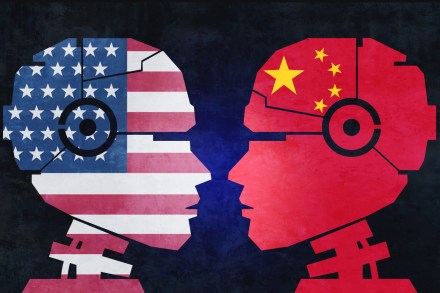
The release of ChatGPT in late 2022 brought home the sheer potential of artificial intelligence and the speed with which developments are being made. It made AI the hot topic from business to politics and, yes, journalism.  This was true in China too, despite the fact that ChatGPT has never been allowed to be used within Chinese borders. Instead, China has a rich landscape of homegrown AI products, where progress is being led by tech giants like search engine Baidu and TikTok’s owner, ByteDance. So already we are seeing a bifurcation in the AI worlds of China and the West – just like with social media and e-commerce. This episode will peek over the Great Firewall to update listeners on China’s progress on AI.

How long has Hollywood been out of ideas?

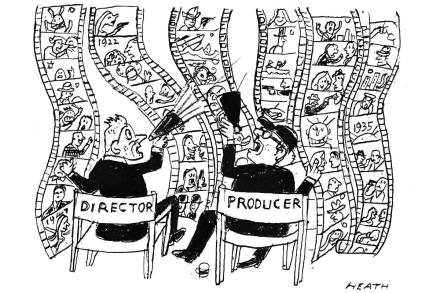
Marie-Georges-Jean Méliès made more than 500 films in his career, but 1896 was a banner year for the Frenchman. He captivated audiences with Playing Cards, his sixty-seven-second exploration of three cigar-puffing men as they are waited on by two young ladies. One man reads the paper and pours the wine as the other two play cards. It was the first reboot in film history. One year earlier, Louis Lumière released Card Game, a forty-three-second exploration of three men with cigars drinking wine and playing cards as they are waited on by a man. Méliès rightly recognized the original’s lack of representation, not to mention the absence of a news- paper.

Hollywood

Is Donald Trump now unstoppable?

From our UK edition

37 min listen

This week: bulletproof Trump. The failed assassination attempt on Donald Trump means that his supporters, more than ever, view him as America’s Chosen One. Joe Biden’s candidacy has been falling apart since his disastrous performance in the first presidential debate last month. Trump is now ahead in the polls in all the battleground states. The whispers in Washington are that the Democrats are already giving up on stopping a second Trump term – and eyeing up the presidential election of 2028 instead. Freddy Gray, deputy editor at The Spectator, and Amber Duke, Washington editor at Spectator World, join the podcast to discuss. (02:45) Next: meeting the mega MAGA fans.

Letters from Spectator readers, July 2024

The cunning of the Democrats’ lawfare On the right flank the aristocrats of the conservative intelligentsia dominated by the likes of Max Boot, David Frum, David French, Bill Kristol and George Will would rather compromise than soil their false pride; the haughty intellectual snobs are thus perfect targets for Alinsky’s “Make the enemy live up to its own book of rules” — aristocratic intellectual elites that would rather die than support a judicial and policy juggernaut with bad table manners. As Victor Davis Hanson observed, Marquess of Queensberry Republicans would rather lose nobly than win ugly. — Adler Pfingsten Will Cherelle Parker become the next ‘America’s mayor’ in Philadelphia?

letters

The craft renaissance

From our UK edition

As long ago as the 1960s, the poet Edward James was worried that traditional crafts were dying out. Having frittered much of the family fortune he had inherited, aged five, on supporting struggling surrealists (he commissioned the Mae West lips sofa and lobster telephone from a scuffling Dali) and on backing shows starring his actress girlfriends (‘very wealth-consuming,’ he admitted, ‘because invariably they flopped’) then creating an 80-acre sculpture garden in the Sierra Gorda mountains of Mexico, the man described as ‘the last of the great eccentrics’ decided in his late fifties to invest his remaining money in something more sensible.

AI and the new way of war

What is happening in Gaza now provides a glimpse of how all wars may be fought in the future — with artificial intelligence. In The Spectator last November, I wrote about an Israeli airstrike that brought down a six-story building in Gaza City, reportedly killing more than forty civilians. One of the residents, a man named Mahmoud Ashour, dug through the rubble with his bare hands, trying to find his daughter and her four children, a girl aged eight and three boys of six, two and six months — all killed. The Israeli military would not tell me why the building was hit, beyond saying that Gaza’s armed groups put their military infrastructure amid civilians, but Amnesty International said there had been a single member of Hamas living there.

gaza ai war
flavor

Summer flavor pairings

Does anything say “June” quite like strawberries and cream? The sweetness of sun-ripened strawberries allowed to remain on the plant until peak maturity, pairs exquisitely with the velvety, ever-so-slightly tart, richness of cream. Taste-wise, it’s a perfect match — and looks-wise, strawberries and cream are one of the prettiest dishes of summer. Some things are just meant to be. But life isn’t all strawberries and cream. Sometimes you have to shake things up with a lively new take: Gorgonzola and white chocolate cheesecake, for instance, or lamb with anchovy, garlic and rosemary. Love it or hate it, at least you’ll have your diners sitting up and paying attention. And sometimes a bit of experimentation can lead to a new favorite. That’s the story behind salt and caramel.

Is the West ready to face the challenges of advancing technology?

The theme of this month’s edition is technology. The advancement of space exploration, defense technologies, artificial intelligence and the like should excite us. Yet the geopolitical issues they present are great and Western governments seem ill-prepared to grapple with them. Watch any congressional hearing where a crusty congressman tries to keep pace with Silicon Valley’s top autists if you need further evidence — and read Spencer A. Klavan’s analysis of the high-skill but low-status rejects uniting into a formidable social class on p.12. The Silent Generation and boomers simply cannot keep up. The Space Race is back on, as tycoons seek to cash in on the final frontier.

space technology

In the grip of apocalypse angst

From our UK edition

You have to love a book about the end of the world in which the first two references are to Saul Bellow’s Herzog and the HBO series The White Lotus, a high/low combo that preps us for authorial omniscience. In the next few paragraphs we get Marc Maron, Sally Rooney and Frank Kermode. Buckle up, kids, a cultural whirlwind is coming! The day of judgment is at hand, and the all-knowing Dorian Lynskey, who seems to have doomscrolled through every card catalogue on the planet, is just the person to provide live commentary. A capacious cultural history of ‘apocalyptic angst’, his Everything Must Go will make you happy to be alive and reading – until the lights go out.

Biden uses the gilded cage of the White House to his advantage

As much as things have changed since 2020, the campaign styles and strategies of Trump and Biden have mostly stayed the same. On Tuesday, President Biden held a phone call with Xi Jinping, the president of China. The two were set to speak about a host of important issues for the first time since 2022. Keep in mind that the day before, Biden struggled to get through a softball interview with weatherman Al Roker at the White House Easter Egg Roll. But sure, let’s all pretend that Joe’s conversation with Xi about artificial intelligence went smoothly. Often times Joe’s daily presidential duties — phone calls with world leaders, receiving the presidential daily briefing, attending various ceremonies — are the only things on his calendar.

biden gilded cage

AI music is here and scarily easy to make

In December, I stumbled upon a new AI tool called Suno. The press release and a few fawning articles claimed that in under 30 seconds, it could a make a catchy, compelling song based on your prompt. It couldn’t.  Sure, it made songs, but they were uncomfortably awkward, the lyrics didn’t make any sense and you couldn’t listen to them without feeling deeply uncomfortable. I tried a country song about gay love, and it’s like a bad mirror of what a real song could be. I logged off Suno and didn’t think much about it again. But this month, Rolling Stone wrote a feature on the company and some of their sample songs using Suno’s new version 3 model sounded eerily real —  namely "Soul Of The Machine.

ai artificial intelligence

How AI helps the tech giants

Artificial intelligence (AI) and its related technologies — machine learning and the metaverse — represent a watershed in the evolution of the global economy. Like other such shifts, its emergence is likely to favor certain interests, notably a handful of technology giants, the media and a small cadre of highly skilled programmers. Everyone else faces economic danger, certain to roil domestic and international politics in coming years. Eighty-two percent of millennials fear AI will reduce their earning ability — and they are right to be worried. The first group to lose will be the usual suspects: factory and warehouse workers as well as professionals with largely routinized occupations suited to automation.

ai
gemini

Why everybody should have seen the Google Gemini blunder coming

Has it ever bothered you that all the Founding Fathers were white? Fear not: Google Gemini AI is here to save the day. In February, Google updated its artificial intelligence LLM, or Large Language Model, releasing one called Gemini. The hope was that tech companies could build off each other’s platforms and that Google’s new AI would correct earlier mistakes made by Microsoft’s Bing, which in turn corrected mistakes made by OpenAI. Shortly after Google released Gemini to the public, internet users began quizzing the AI. Immediately problems were apparent, especially within Gemini’s image creation. When asked to replicate portraits of medieval British kings, for example, Gemini provided images containing historically inaccurate ethnicities.

Could AI ruin the election?

The artificial intelligence space is strange. Significantly overfunded, overhyped and overcovered — in part because AI can easily produce bad, generic copywriting, which is how many journalists presently earn their livelihoods. Though AI tools have rapidly advanced over the past year, few look to be truly society-morphing, and it’s fairly obvious when something is a product of AI, or it hasn’t mattered. Do you really care if a cliché-ridden cover letter was produced by an unimaginative human mind or a chatbot? But Thursday’s announcement of OpenAI’s new video-creating tool, Sora, is something different.

openai elections

The tech I’m looking forward to in 2024

The Consumer Electronics Show in Las Vegas, the first and biggest tech convention of the year, took place earlier this month, where the strangest, newest products were shown off. As usual, there was a lot of fluff — pointless gizmos that work on a show floor but never make it to stores — but there were also core signs of the technology trends we’re going to see this year, and products I’m excited to try. Screens are always a strong point at CES, and this year proved no different, from pure quantum dot prototypes, translucent televisions and yet another laptop with a glasses-free 3D display; but it’s the arrival of great OLED screens to mainstream laptops that truly excites me.

tech

AI just changed the world. Again

From our UK edition

Argentine President Javier Milei’s recent speech, to the World Economic Forum in Davos, has caused a stir for several reasons. First, it was someone saying something interesting at the World Economic Forum in Davos. Also, it was someone being positive about capitalism and enterprise in a lucid, educated way. Agree with Milei or not, he is clearly not a dunce, even if he is possibly overfond of chainsaws. Now there is another cause to be animated by the speech, a reason that dwarfs all the others. Indeed, the ramifications are so immense they can be difficult to extrapolate: this could, literally, be a civilisational game-changer.

Mother’s always angry: Jungle House, by Julianne Pachino, reviewed

From our UK edition

Jungle House is not the sultry tropical tale you might expect either from its title or from its vivid, palm-strewn dust jacket. Instead, Julianne Pachico’s third novel concerns AI. This is not immediately obvious, and although there is an appealing directness to the writing, it means that no time is spent setting the scene or allowing readers to get their bearings fully. I could have done with more explication of the circumstances in which a young girl, Lena, comes to live in an AI-controlled house. At the book’s opening, Lena has her work cut out: There’s fishing and mushroom-gathering and swimming in the river. Five days a week are for exercise and two days are for rest. In the orchard there are bananas and guavas, grapefruits and limes.

Israel’s challenge

From our UK edition

42 min listen

On the podcast: Anshel Pfeffer writes The Spectator’s cover story this week. He voices concern that support from Israel’s allies might begin to waver if they don’t develop a viable plan after the war finishes. Paul Wood – former BBC foreign correspondent – and Dennis Ross – former Middle East coordinator under President Clinton and advisor to President Obama – join the podcast to debate whether Israel can rely on its allies. (01:18) Also this week: In the Books section of the magazine this week we review Andy Stanton’s new book Benny The Blue Whale. It has a fascinating inception and was co-authored by the machine learning tool ChatGPT.